

Sir Keir Starmer had hoped to spend this Sunday being the first prime minister to watch England win the World Cup since Harold Wilson in 1966. Another dream turned to dust. In this case, at least, no one can fairly blame him for the failure.
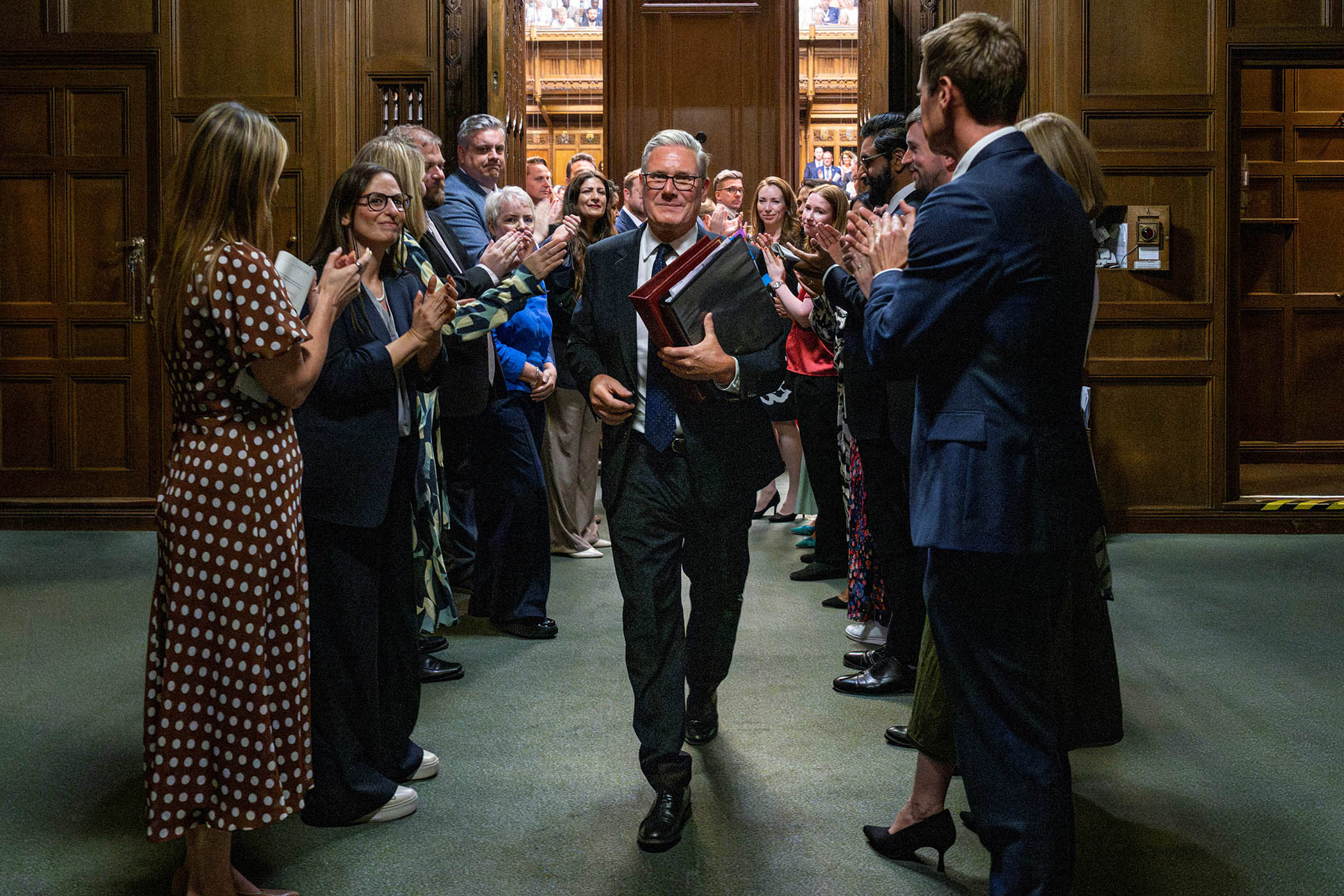
At his valedictory PMQs, he claimed that “every prime minister knows when they take up the torch that the day will come when they have to pass it on”. That’s an elegant gloss on the brutal truth: the torch has been wrenched from his grasp after a mere two years at Number 10 by the Labour MPs who hypocritically applauded him out of the chamber.
When a prime minister is defenestrated, it is usually possible to identify a definitive cause of the downfall. Margaret Thatcher was poleaxed by her poll tax. David Cameron self-destructed when he called and lost the Brexit referendum. Partygate brought to a head all the anger about the ethical depravities of Boris Johnson. Liz Truss stuffed herself with the mega-disaster of her mini-budget.
Sir Keir’s fall is, like the man himself, trickier to characterise. He didn’t crash the economy. He didn’t take his country into an illegal war. He hasn’t been found guilty of a disgraceful example of corruption. As scandals go, the free suits and specs affair that marred his early weeks in office was characteristically small beer.
He will depart tomorrow making the case that he is leaving Britain in better shape than he found it. NHS waiting lists have fallen, more money is being spent lifting children out of poverty, no-fault evictions and zero-hours contracts have been outlawed, he kept the UK out of Donald Trump’s calamitous conflict with Iran, he’s played a leadership role in the support of Ukraine, and relations with Europe have been repaired. He’s the first UK prime minister to receive France’s Legion d’honneur, a more prestigious leaving gift than the carriage clock presented by his tactless cabinet.
‘[Starmer] is fundamentally no good at politics. He doesn’t excel at communication or policy development or strategy’
‘[Starmer] is fundamentally no good at politics. He doesn’t excel at communication or policy development or strategy’
Former senior aide
Ask around Labour people and there’s a common explanation for his fall. “At a time when politics is more difficult than ever, Keir is someone who is fundamentally no good at politics,” says someone who was one of his senior aides. “He doesn’t excel at communication or policy development or strategy.”
There was a plan, largely engineered by Morgan McSweeney, to save Labour from perpetual opposition and this was executed with ruthlessness and success. Given the dire state of the party he inherited, it was a remarkable achievement to take Labour from its worst defeat since 1935 to a landslide majority in one term. Sir Keir thinks he is not getting enough credit for that.
What they didn’t have – as Mr McSweeney, chief of staff for a large stretch of the Starmer premiership, has recently acknowledged – was a plan for government. There was an assumption, both naive and conceited, that simply not being the Tories would be enough in itself. No-drama Starmer, who arrived at Number 10 promising “a government unburdened by doctrine”, was to be a soothing technocratic balm after the lurid psychodramas of the Tory years. For a time, his regime even adopted the rather Orwellian mantra “stability is change”.
Some members of the cabinet got stuff done, but the Starmer government always seemed to be less than the sum of its parts. There was no cohesive project to unite and drive it forward. The “Missions” authored by Peter Hyman might have provided the dynamic, but they were marginalised and then abandoned. One senior Labour figure who talked quite often to Sir Keir once told me: “I can never really work out why he wants to be prime minister other than for the Wikipedia entry.” Thrashing out ideas with colleagues, mediating disputes between ministers, building alliances, driving reform. These are the meat and drink of the political trade; Sir Keir treated them as poison.
When the country was looking for reasons to be cheerful, he was the joyless morale-pooper
When the country was looking for reasons to be cheerful, he was the joyless morale-pooper
He was allergic to the idea that a leader must be a storyteller. His speeches were more often the recital of lists than vehicles for making an argument. When the country was looking for reasons to be cheerful, he was the joyless morale-pooper whose first big address in office told everyone that things would get worse before they got better. Sometimes, as with the notorious and subsequently disowned remark about the UK becoming “an island of strangers”, he paid a stunning lack of attention to the texts that others had written for him to read out.
Newsletters
Choose the newsletters you want to receive
View more
For information about how The Observer protects your data, read our Privacy Policy
The absence of political craft bears responsibility for his government’s most egregious blunders. A prime minister with more nous would have vetoed the Treasury when the chancellor proposed the removal of the winter fuel payment from millions of pensioners. That’s when his personal ratings started to crater, never to recover. A more supple prime minister would have avoided abject humiliation at the hands of his backbenchers over welfare reform, the revolt that broke his authority. A cannier prime minister would have been more alive to the great perils of appointing Peter Mandelson as ambassador in Washington. Allowing himself to be persuaded that this was a risk worth taking proved to be a calamitous error by a man who had made a big thing of his sound judgment.
He struggled to make himself relatable to voters. He was also poor at nurturing relationships with colleagues to the point where Ed Miliband, who he thought to be his best friend in cabinet, became the first minister to tell him he had to quit.
All this led to what one Labour committee chair calls a “double power failure” as he lost the respect of both voters and colleagues. The lethal level of Labour’s defeats in the May elections ignited a wildfire of terror in the party. He was left standing, as one cabinet minister puts it, “on a burning platform”. In the words of a different senior minister: “Keir didn’t have any cards left.”
Andy Burnham is a much more political animal. As recent weeks have demonstrated, he has the audacity to seize an opportunity and he can tell a story. “I know what to do,” he declared in his speech accepting the leadership on Friday. “I have a plan.” That had better be true because a story is ultimately meaningless tosh unless it is accompanied by a plan.
The sorry tale of Sir Keir’s foreshortened premiership is a cautionary one for the man who succeeds him. Promising popular change is much easier than delivering it. Fail and Mr Burnham will also find himself “passing on the torch” more quickly than he can imagine today.
What are your thoughts on this? Send us a letter to letters@observer.co.uk
Photograph by House of Commons/AFP via Getty