
Andy Burnham will find his Downing Street in-tray filled with economic and social challenges. We asked eight experts how he should tackle them. In this analysis, Bernard Gray looks at defence. Click here for the rest of the series
The challenges faced by Andy Burnham and his new defence secretary go well beyond the £5bn of unfunded commitments in the defence investment plan (Dip) published last month. Indeed, if the problems were that small, whoever becomes the defence secretary on Monday could probably have a long lunch and take the rest of the afternoon off.
Sadly for them, the problems are much larger and more deep-seated than that. There are two big defence challenges in the prime minister’s in-tray.
First, the armed forces are in a very poor state after 30 years of constant fasting since the end of the Cold War. Like a homeowner who has preferred foreign holidays to house maintenance, cumulative neglect has left much defence equipment either unusable or in need of substantial work to return it to battle-readiness.
Just last week the Ministry of Defence (MoD) officially confirmed the retirement of two more Type 23 frigates, Richmond and Iron Duke, despite having spent more than £100m on the refit of the Iron Duke in the past five years, and on fitting the new Naval Strike Missile to the Richmond in March 2025. The cumulative problems that remained with both vessels meant that they are uneconomic to keep going.
That leaves the Royal Navy with five frigates, one of which is in refit, and six destroyers, three of which are in deep maintenance. Compare that with the situation in 1997, when the Navy had 33 such ships. The situation in submarines is even worse, with only one of five Astute-class submarines anywhere near usable, compared with 12 nuclear attack submarines when Tony Blair became prime minister.
The same story is replicated in the British Army and the RAF. Just getting the equipment we already have up to an operable standard will cost huge sums, conceivably more than £20bn in catch-up work.
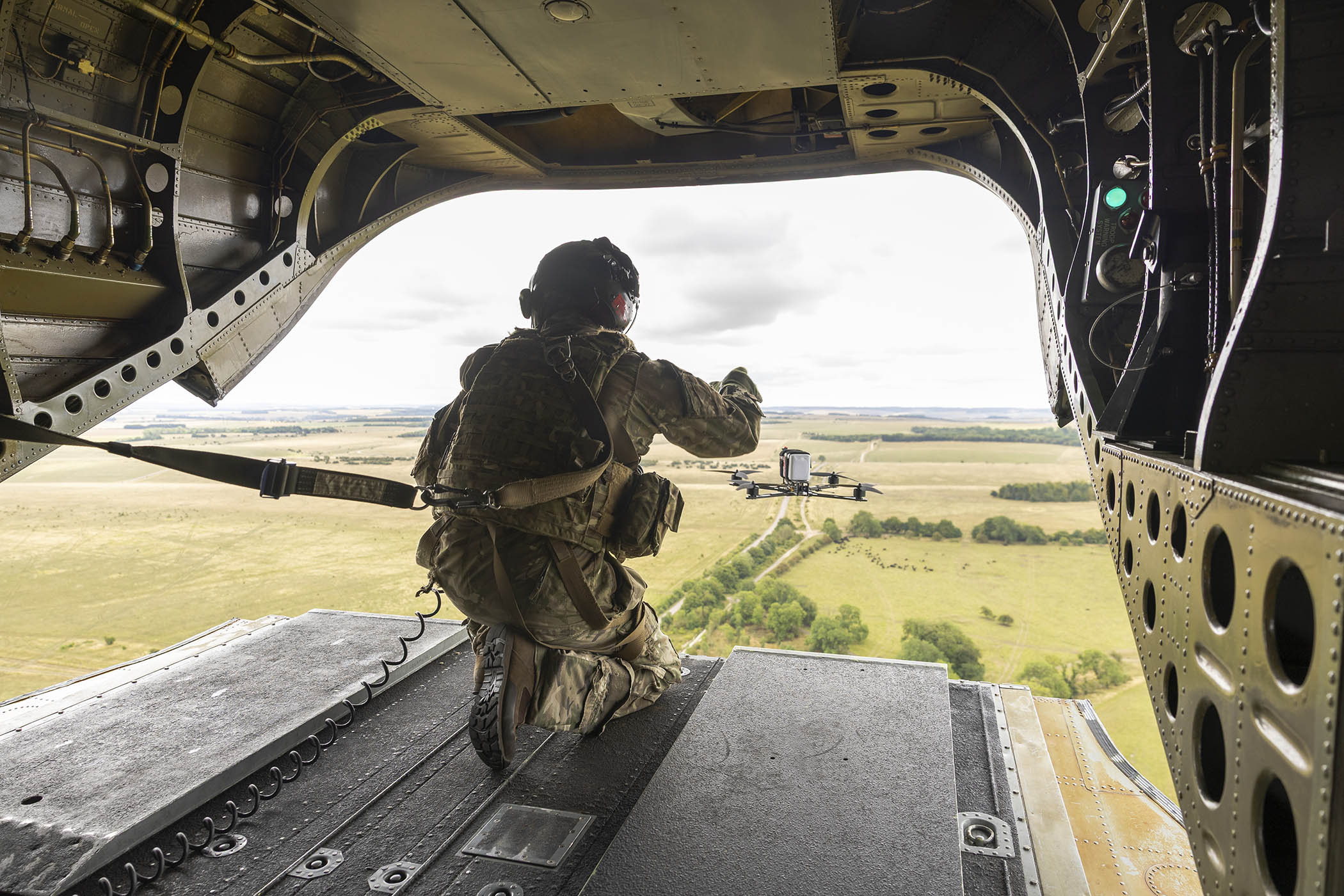
The second problem is the need to modernise. Ukraine has shown how drones and fast prototyping have changed all aspects of warfare, from shredding armour on the ground, through sinking Russian ships in the Black Sea to nightly air warfare and striking at oil production facilities as far away as St Petersburg. Britain needs many more weapons and an additional layer of rapidly produced, rapidly iterated drone designs. This would take a revolution in working methods in the MoD and the defence industry, as well as lots of cash.
We need to tackle both issues because one alone will not be enough to defend British interests at home and overseas. Optimists hope that we can skip straight on to the new types of warfare, but such transitions are technically harder and take longer than PowerPoint presentations pretend.
Large injections of cash, as well as a dramatic increase in urgency and a can-do attitude, are all needed if these challenges are to be met. Which would be fine, if the UK were genuinely on a trajectory to spend 3.5% of national output on defence by 2035, a commitment made a year ago. But we are not. The recent Dip only calls for a rise of 0.08% of gross domestic product (GDP) from about 2.6% to 2.7% of GDP by 2030.
Newsletters
Choose the newsletters you want to receive
View more
For information about how The Observer protects your data, read our Privacy Policy
It is simply not credible to imagine that spending will increase at 10 times that rate in the next parliament. Burnham is going to have to choose to fish or cut bait – and soon.
An early indication will come from who the new prime minister chooses as his defence secretary. If he reappoints John Healey, who resigned over the failure to meet these challenges with the necessary funds, then real change may be on the way.
If he keeps Dan Jarvis, then pretending will be the order of the day. If it’s Al Carns, we will leap to Star Wars fantasies.
And if it’s some sorry sap with no background in the subject, then that person will be like the poor bloody infantry sent over the top on the first day of the Somme.
Bernard Gray was chief of defence materiel and UK national armaments director from 2011-2015
Photograph Crown copyright 2025
______________________________
Other articles in this series: