The passing of the German philosopher Jürgen Habermas is also the passing of an age and of a way of thinking about politics and philosophy.
The last of the great postwar philosophers, his work bears the marks of the postwar order and of its paradoxes and contradictions.
Much of the discussion over the past week has interwoven an acknowledgment of Habermas’s intellectual significance with puzzlement about the meaning of his life’s work. Was he a radical or a liberal? Did his work acquiesce to capitalism or challenge it? How could a thinker who placed such great store by universal ideals be so provincial in ignoring struggles and movements outside the west? The answers lie partly in the context of his writing.
Born in 1929, shortly before the Nazis seized power, Habermas came of age at the dawn of the postwar era. The question of how to sustain democracy in postwar Europe became his abiding intellectual concern.
In 1956, he joined the University of Frankfurt’s Institute for Social Research, popularly known as the “Frankfurt school”, as a research assistant to one of the school’s most famous luminaries, Theodor Adorno. Founded in 1923 by a group of Marxist scholars who increasingly moved away from Marxism, the Frankfurt school became best-known for its development of “critical theory” – social critique that sought to transform society as well as describe it. The irony is that few of its leading intellectuals engaged in social or political struggle.
Habermas’s work was an attempt to negotiate a path between Marxism and liberalism. He wrestled with many philosophical issues from politics to ethics, from nationalism to religion. He also intervened in public debates from genetic engineering to the nature of the Holocaust. But perhaps the two key concerns that define his philosophy lay in his concept of the “public sphere” and his argument about rational communication.
From his seminal early work, The Structural Transformation of the Public Sphere, published in 1962, Habermas argued that democracy could only flourish if there existed a space distinct from the state, the economy and the family, within which private individuals could deliberate and exchange ideas in open, rational debate.
He traced the beginnings of the public sphere to the coffee houses, literary salons and the printing presses of the 17th century. This space represented, for Habermas, the public use of reason, and the birthing ground for “public opinion”. It subsequently decayed, he argued, under the pressures of mass society, the welfare state and the marketisation of social life, all of which both interpolated society with the state and fragmented it, transforming a reasoning public into passive consumers, and politics into opinion management.
Habermas envisaged democracy as a process grounded in mutual respect and rational dialogue among individuals within the public sphere
Habermas envisaged democracy as a process grounded in mutual respect and rational dialogue among individuals within the public sphere
Habermas’s second major theme, which he elaborated in his monumental two-volume The Theory of Communicative Action, related to how people should interact within the public sphere. He envisaged democracy as a process grounded in mutual respect and rational dialogue among individuals within the public sphere.
Habermas’s argument was an important defence of democracy and open debate. It was also an idealised view that mostly ignored the power relations that shaped the public sphere and restricted its scope. What opened up that sphere was not just rational dialogue but social struggle, as organised movements of those denied entry – women, the poor, the working class, the racially excluded – forced the gatekeepers to move aside. Or, to put it another way, what we now regard as the main features of liberal democracy – universal suffrage, equal rights, freedom of speech, and so on – became socially established not through liberal thought but through radical action that ensured that liberal norms were universally applied and not simply the property of a privileged few.
Newsletters
Choose the newsletters you want to receive
View more
For information about how The Observer protects your data, read our Privacy Policy
The postwar period had a paradoxical impact on such radical struggles. It was a period of immense social transformation. Colonialism crumbled and new nations emerged across Africa, Asia and the Caribbean. Women, gay people and minority groups gained new rights, especially in the west. It was also a period that nurtured disaffection with ideas and values traditionally associated with the left, and eventually led to the containment of social struggle, especially class struggle.
Many on the left came to see Nazism as the product of Enlightenment rationalism, leading to disenchantment with the Enlightenment, even with modernity itself. Many came to despair, too, about the working class as an agent of change, viewing workers as having been bought off by consumer society. The politics of class gave way to the politics of culture and identity. The rise of “neoliberalism” in the 1980s, the crushing of labour movements and of radical struggles reinforced these trends.
Habermas rejected much of the pessimism that came to colonise the left, continuing to be sustained by the emancipatory promise of modernity, the Enlightenment and universalism. But he, too, was confronted with an age in which collective agency had decayed. Dialogue came, in his work, to replace social struggle, almost as if humans could talk their way to a better, more democratic future.
The loss of agency shapes so much of contemporary politics, from the popular disenchantment with mainstream institutions and parties to the marketisation of social life. The growth of authoritarian illiberalism, the rise of technocratic governance, the revival of a philosophy of “might is right” and the yearning for tradition also have a big impact.
For all the flaws of his arguments, Habermas’s hopefulness about human possibilities remains something to cherish. But the ghost that haunted his work – the question of how to bring about social transformation in an age with diminished collective agency – is one that today confronts us all.
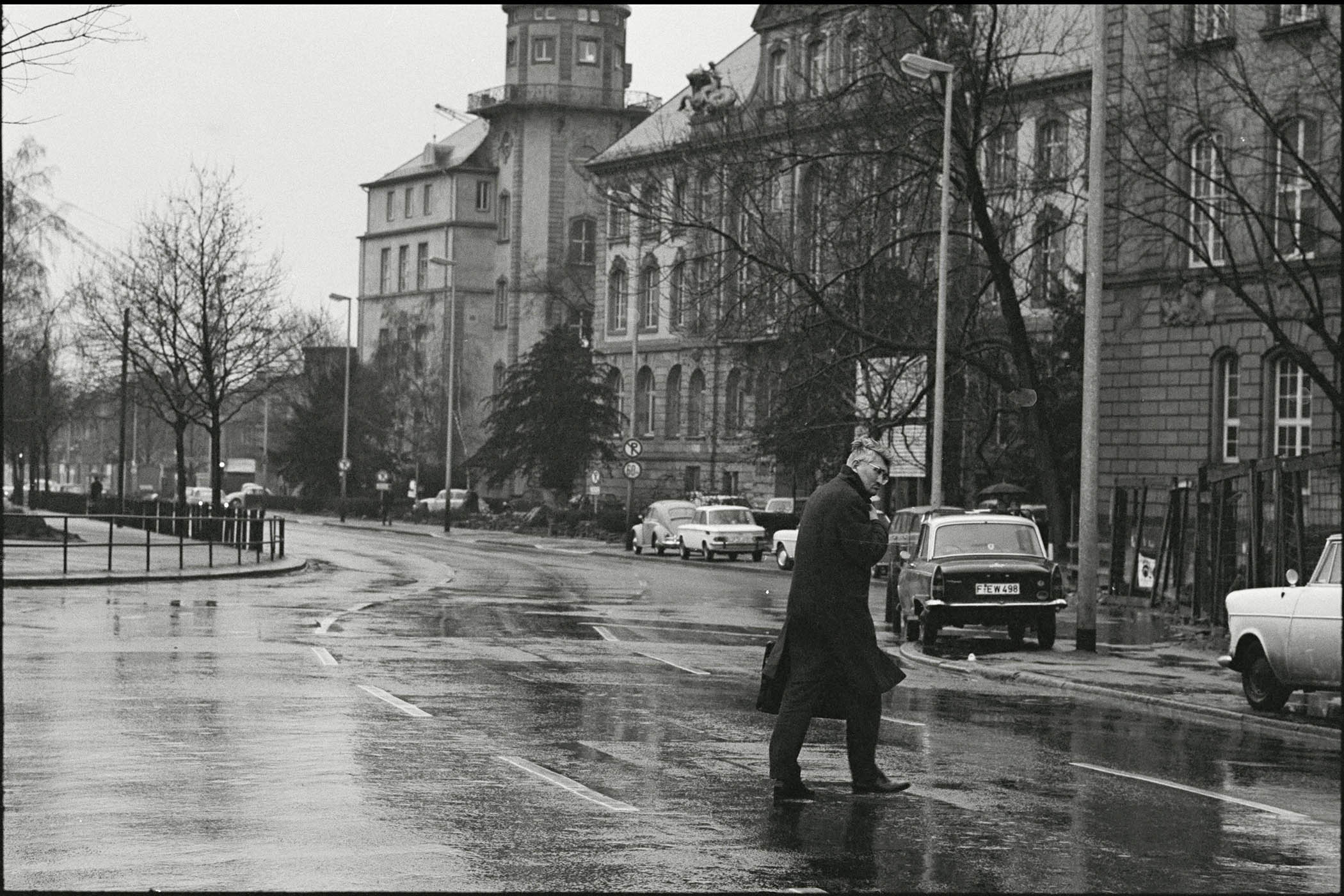
Photograph by Max Scheler/SZ Photo