
When the US military extracted Venezuela’s dictator from his compound in Caracas on 3 January, more than 100 people – mostly mothers and wives – hurried from their homes across the country to El Rodeo prison, just outside the capital, brimming with hope that they might finally see their relatives who had been political prisoners for years.
Four months on, only some have been released. Dozens of relatives are still camped outside the prison, where they occasionally hear cries for help coming over the walls. The prisoners who were freed have told them they were tortured inside.
“I’m not leaving here until they release my son,” said Carmen Hurtado, the mother of an air force sergeant detained in 2020.
María Fuenmayor fears that her husband will not be released until there is a real political change. “They are constantly threatened by the guards inside that they will never get out and will die there.”
Whatever changed on 3 January, it did not mean the end of the regime.
As the helicopter carrying Nicolás Maduro landed in the US, Delcy Rodríguez, the former vice-president, replaced him at the top — and began taking orders from the US at the end of a gun. The regime, which had held power for more than two decades, more recently by repressing its people and rigging elections, became a kind of US protectorate overnight.
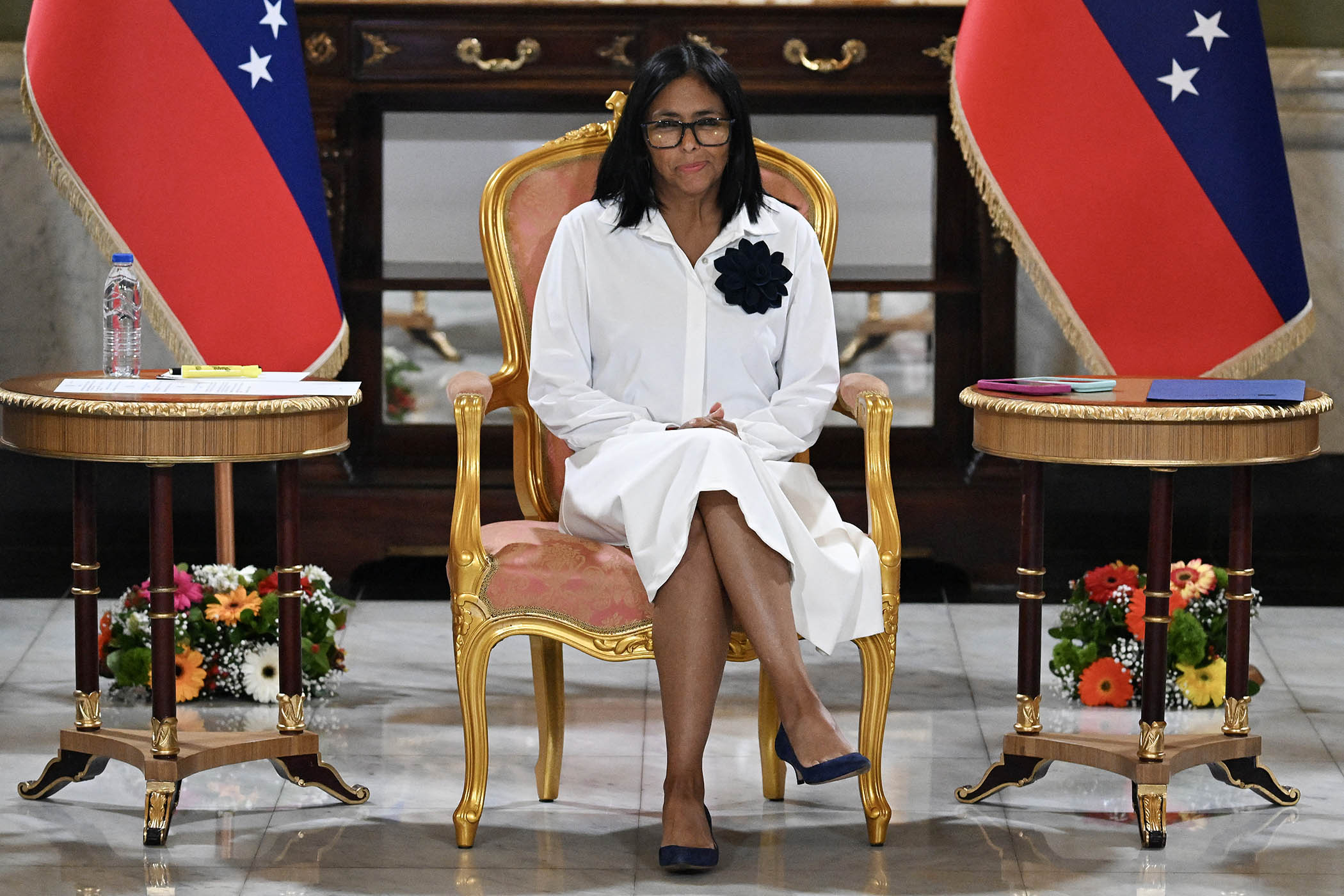
Delcy Rodriguez, Venezuela’s interim president
A new model for Donald Trump’s foreign policy was born. As was a new Venezuela — but only for foreign investors, not yet for Venezuelans.
Washington’s plan for the country was first sketched out by secretary of state Marco Rubio on 7 January as a sequence of steps: stabilisation; economic recovery and reconciliation; and only then, transition.
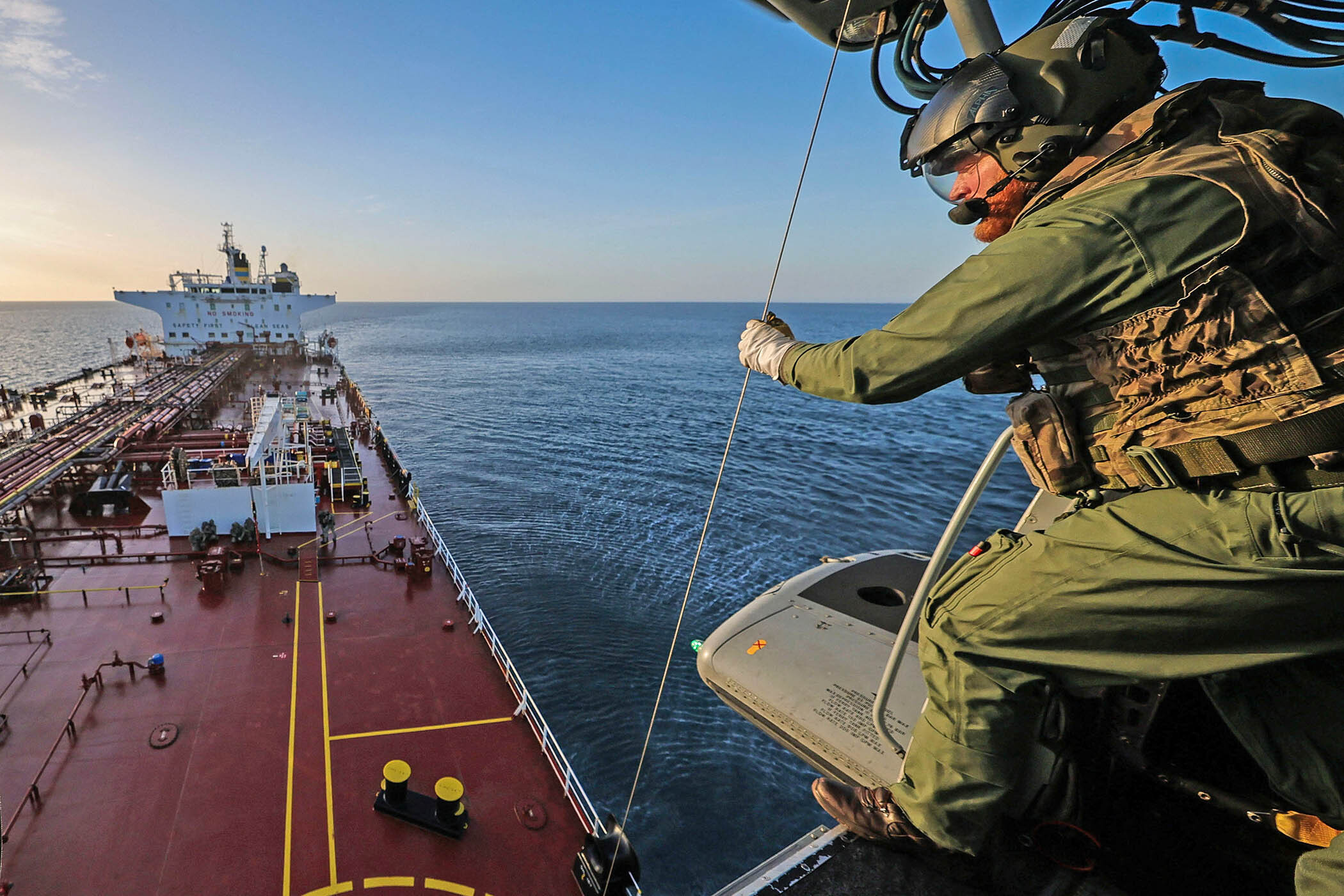
To ensure the first, the Trump administration chose to keep the regime in place while securing control of the engine of Venezuela’s economy: oil. All of Venezuela’s oil income now goes to the US before being disbursed to Rodríguez’s government.
At the same time, Washington began opening up Venezuela’s economy. The regime that railed against US imperialism for 20 years has now restored ties with the International Monetary Fund and rubber-stamped reforms to hydrocarbons and mining laws designed for foreign investment. The US, in turn, eased sanctions.
Newsletters
Choose the newsletters you want to receive
View more
For information about how The Observer protects your data, read our Privacy Policy
These seismic changes in the economy have been accompanied by more modest ones to relieve the regime’s repression of its opponents and civil society, including an amnesty law for political prisoners, and a slightly more permissive attitude to protest.
“There’s a sense that people can speak their minds in ways they couldn’t before, even if only in very limited ways,” said Christopher Sabatini of Chatham House, the international affairs thinktank. “Rodríguez is now consolidating her own power within the government. She’s making it less the Maduro repressive regime, and more her own.”
But while the regime’s boot might have been lifted, it is still there. Apart from Maduro, the same people are in power. The coercive apparatus to suppress dissent — the police, the paramilitary groups and the intelligence services — remains intact.
At the end of April, Rodríguez announced the end of the amnesty law after just nine weeks, describing it as “very successful”. However, according to Foro Penal, an NGO, more than 450 political prisoners remain behind bars.
Outside El Rodeo prison, the relatives of some of those prisoners have been sleeping in tents or on mattresses in the open for months, despite the stifling heat and a stream of foul-smelling water that runs by the prison.
“The president [Rodríguez] is just lying to us, mocking us,” said Elia Correa, who has diabetes and high blood pressure and uses a crutch to walk. Her son was arrested in 2025.
“Maduro is out, but the structure of the regime has not changed,” said James Story, US ambassador to Venezuela from 2018 to 2023. “Tarek William Saab, who oversaw some of the worst abuses in the country as attorney general, is now the Ombudsman.”
Nevertheless, on 16 April, deputy secretary of state Michael Kozak declared that phase one of Washington’s plan – stabilisation – was complete. Next up is economic recovery and reconciliation. When asked about elections, Kozak said no date had yet been set.
Rodríguez will not call elections any sooner than she has to. In the meantime, she is strengthening her position by installing loyalists and hoping an economic surge boosts her popularity. “The regime has no intention of leaving power,” Story said. “They’re doing what they have always done: kicking the can down the road to buy time.”
Economic recovery has yet to materialise. The war in Iran has boosted the value of Venezuela’s oil exports, but the only companies that have announced investment plans are the few that managed to keep operating in Venezuela even under Maduro. Others are hesitant, not least because whatever rules have been established now might not last.
‘The regime has no intention of leaving power. They’re doing what they have always done, kicking the can down the road’
‘The regime has no intention of leaving power. They’re doing what they have always done, kicking the can down the road’
James Story, former US ambassador to Venezuela
“The investors I’ve spoken to are planning beyond the Trump administration, and they want to know whether US oversight is permanent or temporary,” said Asdrúbal Oliveros, director of Ecoanalítica, a consultancy in Caracas. “And they want to know whether Venezuela will undergo an orderly political transition that results in a legitimate government.”
The question is how long Venezuelans will tolerate the lack of political change without signs of economic improvements.
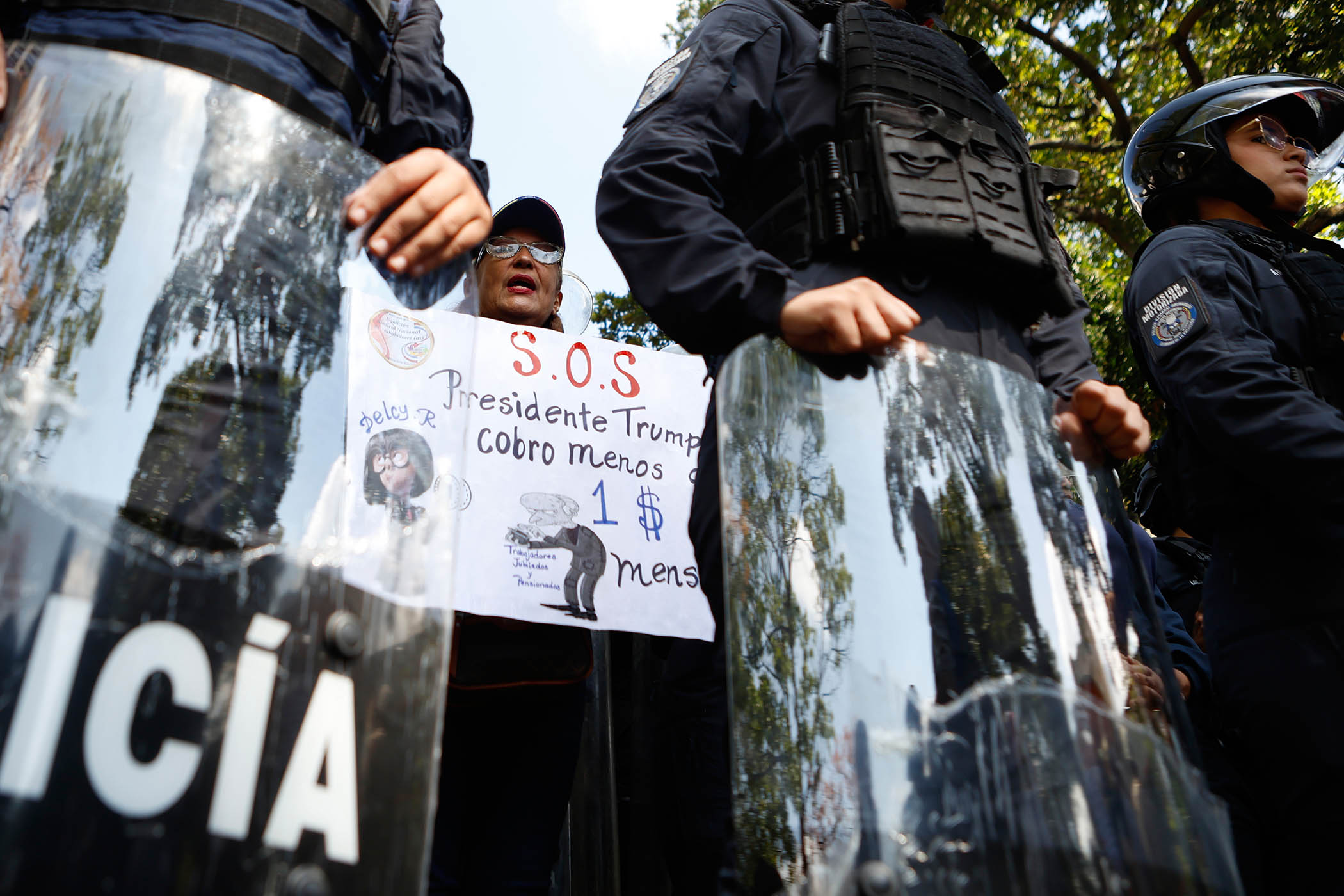
On 30 April, as the governments celebrated the first commercial flight between the US and Venezuela since 2019, union members gathered in Caracas to march to Miraflores, the presidential palace, demanding wage increases after years in which inflation has gutted the value of their earnings. Some were also calling for presidential elections.
“Every day, prices go up. This can’t go on,” said Mónica Mendoza, who took part in the rally. “Nothing has changed since January; there’s no sign of improvement.”
Before 3 January, such protests would have been violently suppressed. Even now they were hemmed in by hundreds of riot police, who stopped people joining and blocked the way to the palace. In the end, Rodríguez announced a minimum wage hike of roughly 26%, although inflation had already hit 71% in the first three months of the year.
“I think it will reach a boiling point — but I don’t think we’re there yet,” said Sabatini. “There’s a desire to see how things progress, but also the legacy of fear and oppression.”
There is one person who could push it over the edge: María Corina Machado. The popular opposition leader was banned from running in the 2024 election, but her followers managed to collect voting tallies from polling stations showing that her stand-in, Edmundo González Urrutia, had won. Maduro claimed victory.
After that, Machado went into hiding, before escaping Venezuela in dramatic fashion to collect the Nobel peace prize, which she then presented to Trump in January, hoping he might send the order for elections in Venezuela. But Trump has declared himself pleased with Rodríguez and the so-called Venezuela model, and even seems to want to apply it elsewhere, such as Cuba.
Still, Machado holds one other card. She could go back to Venezuela, call on her supporters to take the streets and demand elections. “The Trump administration has shown that it wishes Machado would cool her jets a little bit,” said Sabatini. “But you don’t get anywhere by being a shrinking violet.”
Photographs by Pedro Mattey/AP, Juan Barreto/ AFP via Getty Images