

What makes art “for women”? Beyond passing the Bechdel test or some other embarrassingly crude metric that only conveys basic respect for women’s lives, the best women’s art shows the richness of our experiences. It highlights the nuance in our perspective, prioritises the female gaze. It’s art that refuses to pander to sexist tropes that collapse women into stereotypes, that fail to capture the nuance of what womanhood is and can be.
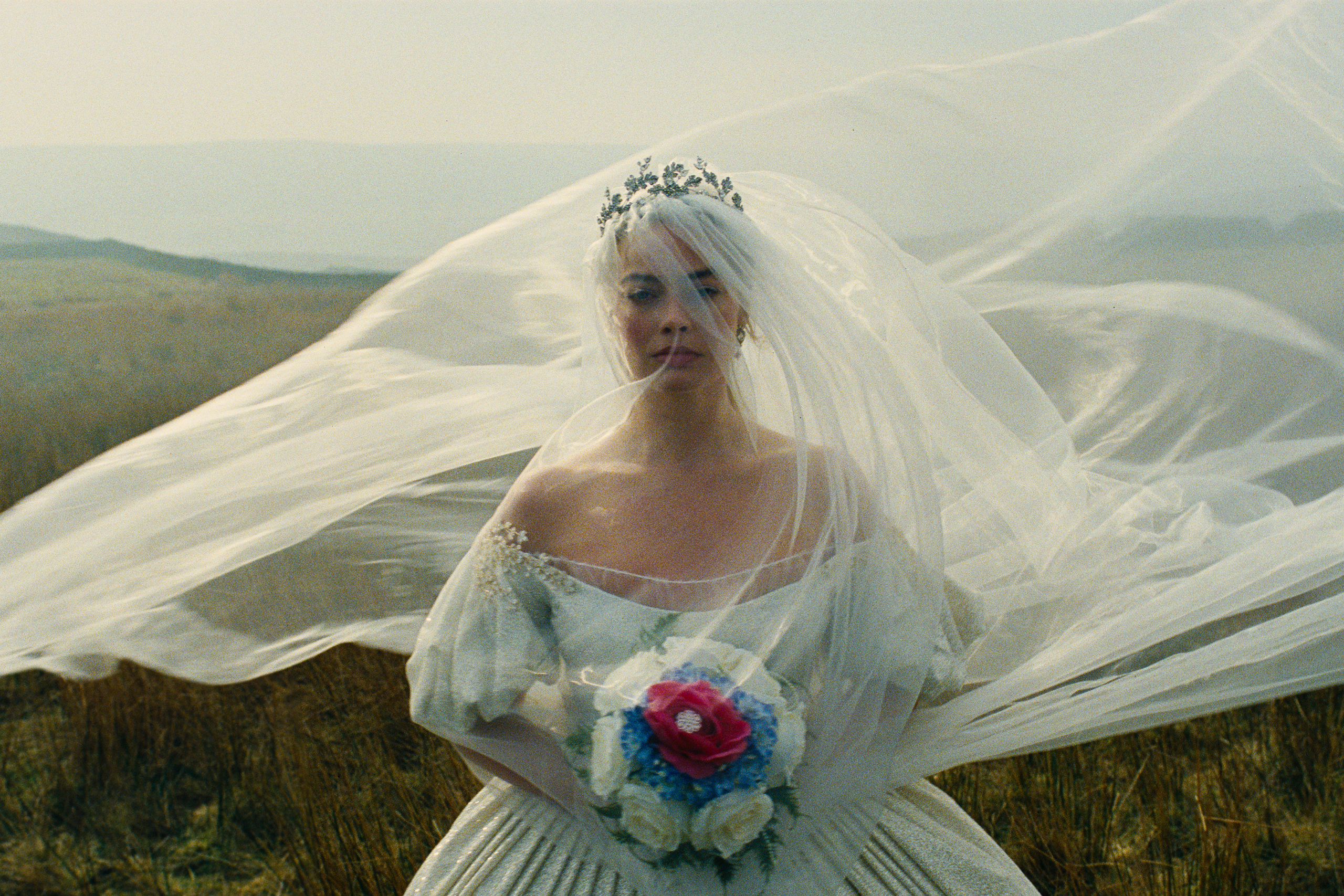
That is, if you take issue with this kind of collapsing. In recent years mainstream feminism has taken a turn towards heralding some of the most offensively stereotypical work as bastions of female desire. The latest entry to the canon is Emerald Fennell’s adaptation of Wuthering Heights, which, in response to its widespread panning, has been defended as an immensely valuable piece of women’s art. A viral piece for Grazia summarised the argument best: “Wuthering Heights Is a Hot, Horny Riot Made For Women – Of Course Critics Hate It”. (At the time of writing, the article has more than 36,000 likes on Instagram.) The case for Fennell’s interpretation, and work like it, is that it hasn’t been made for critical praise or in pursuit of accolades, but instead – instead being the operative term – for a female audience defined as lusty and yearning, and desperate to watch something that’s just simple, pretty and fun.
Detractors of Emerald Fennell’s film are cast as old and male. But the ones I know are intelligent young women
Detractors of Emerald Fennell’s film are cast as old and male. But the ones I know are intelligent young women
These days it’s hard to avoid this kind of response. I remember feeling jarred by the aggressive reactions offered to anyone who said they found Barbie’s feminism thin, or were confused by how a film trying to sell a proportionally impossible doll was supposed to be a radical feminist manifesto in the first place. The same goes for criticism of romantasy novels or underwritten, algorithmic pop music.
During these arguments, women are tacitly placed in one camp, and the people who appreciate complex work are put squarely in another. But do all women go to the cinema seeking a warped version of a groundbreaking female work because it features two attractive actors having sex? Can they not themselves be the othered critics? Despite the casting of the detractors of Wuthering Heights as uniformly old and male, all the ones I know are intelligent women in their 20s and 30s, who were far from titillated by Fennell’s adaptation. If anything, they left the cinema bored. This line of thinking suggests that women are a reductive caricature of womanhood: wanting pretty colours, easy messages, hot men, heterosexual romance, fantasy. It pushes a generalised image of women’s intellect, not to mention their desires, completely forgetting the diversity of experiences that typically makes great women’s art so satisfying.
We are ultimately living in the long shadow of poptimism, a necessary corrective that arose in the 2010s to redress the misogynistic belief that pop music, because women liked it, was trashy. Poptimism morphed into a wider movement that heightened anything coded as feminine into high art, flattening it all into one in the process. It dovetailed with the popularity of choice feminism, where we were told any decision a woman made for herself was feminist. And we’ve now been spat out into a 2026 culture that, even if well-intentioned, invokes womanhood to defend work that often upholds stereotypes and, frankly, is rarely high-quality. The impact isn’t just to feminism. Audience tastes define what gets made in the future. I find it hard to believe most women want more stories told with less detail and less richness, which sacrifice the meticulous depictions of womanhood that, on screen, can be universally electrifying.
The idea that misogyny doesn’t still devalue women’s art is a farce. Women’s stories, written by women, are still in desperate need of championing. Loving Fennell’s interpretation of Emily Brontë doesn’t preclude you from this feminist project, nor does enjoying high art mean you can’t also sometimes enjoy things that are bad. There’s real harm in the insistence that women are defined by the very clichés feminism has tried to help us escape and that this work represents our homogenous desires. We don’t get that better, vivid work by holding art made by women to a lower standard – and especially not through the suggestion that that lower standard is, in fact, synonymous with women’s art.
Newsletters
Choose the newsletters you want to receive
View more
For information about how The Observer protects your data, read our Privacy Policy