
If you read the right-wing press or follow its online offshoots, you would think London is some sort of Mad Max-themed dystopian hellhole. In these lurid visions, it’s a city in which gangs of iPhone grabbing thieves will stalk you out of M&M’s World, wielding machetes. But, no doubt to the deep annoyance of those publications, this doesn’t seem to be putting people off: tourists are flocking to the capital; in 2024, 154 million people visited London for a night out and the number of people coming from elsewhere in the UK rose by a third. (US visitors to London rose by 8%, which will be no surprise to anyone who has been within shouting distance of an American tourist. Of course, “within shouting distance” of the average American tourist is an area of 70 sq miles.)
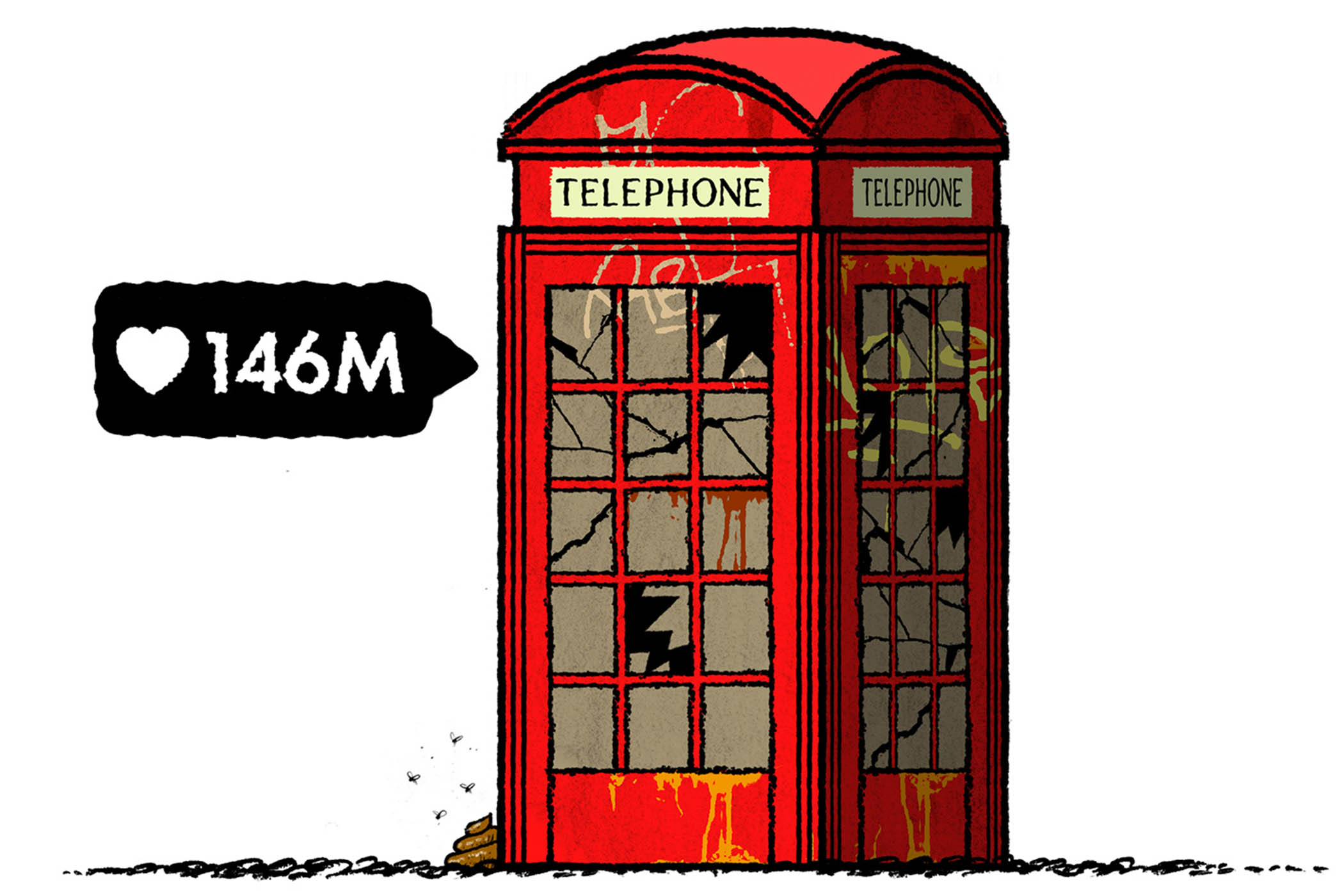
I’m glad that people don’t believe that London is a hellhole. It’s not! But sadly, its tourist attractions increasingly are. When people come to the city, from Arkansas or Hull or Belfast, they might tick off the old traditional sights. They queue to have pictures taken outside that one remaining red phone box in Westminster, even though it smells strongly of piss. They go to watch Harry Potter and the Cursed Child, somehow not one of London’s longest running theatre shows, even though it feels as if they will still be putting on performances after Trump’s nuclear winter has turned the planet to dust. They point at Big Ben from the top of a red open-top bus. But really what they are seeking is not tourism but Instagram content.
Luckily for them, all of modern London’s biggest tourist traps are focused on online reach rather than offering genuine entertainment. They’re assembled for the Instagram grid – and only for the grid. They’re not sights as much as they are “experiences”. There’s the Paddington Experience – a multi-room immersive event which lets you walk through Paddington’s home in Notting Hill, visit “Peru”, sit on a train and eat marmalade sandwiches for the entirely reasonable price of £34 for an adult and £24 for a child.
Such experiences are the sensory equivalent of a Happy Meal – soon over, sickly, spiritually empty
Such experiences are the sensory equivalent of a Happy Meal – soon over, sickly, spiritually empty
There’s Shrek’s Adventure, for which you must disregard Shrek’s complete lack of connection to London, given that he lives in a swamp on the outskirts of Far Far Away. Here, from around £21 for an adult and £16 for a child, you can visit the Poison Apple pub or go on a flying double decker London bus, which – and I cannot emphasise this enough – doesn’t happen in any of the films of the Shrek cinematic universe.
Would you feel slightly cheated if you spent more than £100 for a family on these experiences, and then had to retreat to a pub on the South Bank to pay another £100 for J20s and large wines? I would. I have! I’ve been to some of London’s most hyped “experiences” myself. A few years ago, I went to Dopamine Land, yet another immersive event, this time in Chelsea. I walked through a series of themed rooms in an abandoned office block that were designed to make me feel happier, and I emerged feeling poorer and more depressed. Dopamine Land, much like Shrek and Paddington’s adventures, is aimed towards Instagrammability rather than actual enjoyment.
Such experiences are the sensory equivalent of a Happy Meal – slightly sickly, over quickly, spiritually empty. They are also, it goes without saying, meant to fleece you for all you have (Dopamine Land ended with a rainbow-themed cocktail bar, where you could buy colourful gin and tonics for about 14 quid).
These attractions aren’t just meant to extort the parents of small children who like big lights, who have perhaps endured a delayed LNER train journey or turbulent transatlantic flight for the privilege of their London holiday. There are equivalents aimed at adults, too. Richmond, once a ruralesque outpost of south-west London, has now been transformed into a neverending Ted Lasso-themed immersive event, from pubs to merch shops full of Richmond FC kits. The long-awaited Guinness Open Gate Brewery in Covent Garden is a simulacrum of the Guinness Storehouse in Dublin (which feels like a cultural slap in the face when in fact no Guinness is brewed on site here and Ireland is just over an hour away).
Newsletters
Choose the newsletters you want to receive
View more
For information about how The Observer protects your data, read our Privacy Policy
London’s “most visited tourist attraction” is the Now Building at the Outernet. If you don’t know it by name, you’ll know it by sight. It’s simply a set of big screens outside Tottenham Court Road station and you’ve probably hidden inside it to shelter from the rain at some point. That it is “most visited” probably has little to do with the content of the supposedly communal experience (again, eminently Instagrammable) and more to do with the fact it is directly opposite one of the most used train stations in the entire country.
But is any of it worth it? I suppose there are worse versions of the “day-outification” of the city you live in. I am from Belfast, which underwent its own tourist makeover at some point in the 2000s. Belfast’s reputation as a kind of Mecca for Americans who in their soul believe that they are one-36th Irish grows year on year. Which in some ways is nice, because before that nobody wanted to come to Belfast at all, for obvious reasons.
In reality, the city’s tourist boom manifests itself as stereotypical experiences: stag dos from Manchester on party bikes and a big red open-top London-style bus that rolls through areas which were once hotspots for violence, letting tourists lean out the top and take photographs from a safe distance – its route passes my house and we used to wave to them through the front window while calling them morons from behind the glass.
The same conflict – in terms of tourism, not sectarianism – applies to London today. It’s nice to have visitors. It’s nice for people to enjoy a city that they have been told is fraught with violence. And yet surely, surely there is something better to offer tourists than this.
Illustration by David Foldvari