


After 15 years of almost unending bad economic news, there are signs the pall of despond hanging over the British economy may be about to lift. In truth, it was never as completely broken as every rightwing Jeremiah insists and as Hannah Spencer, victor of the Gorton and Denton byelection, argued in her compelling victory speech. She may be right about large sections of her new constituency – but country-wide the position is more complex.
For there are tracts of the British economy that are better described as stuck rather than broken; moreover, there are significant elements that are actively flourishing – with the Manchester economy itself, as mayor Andy Burnham boasts, an example. The open question is the degree to which the positive outweighs the negative.
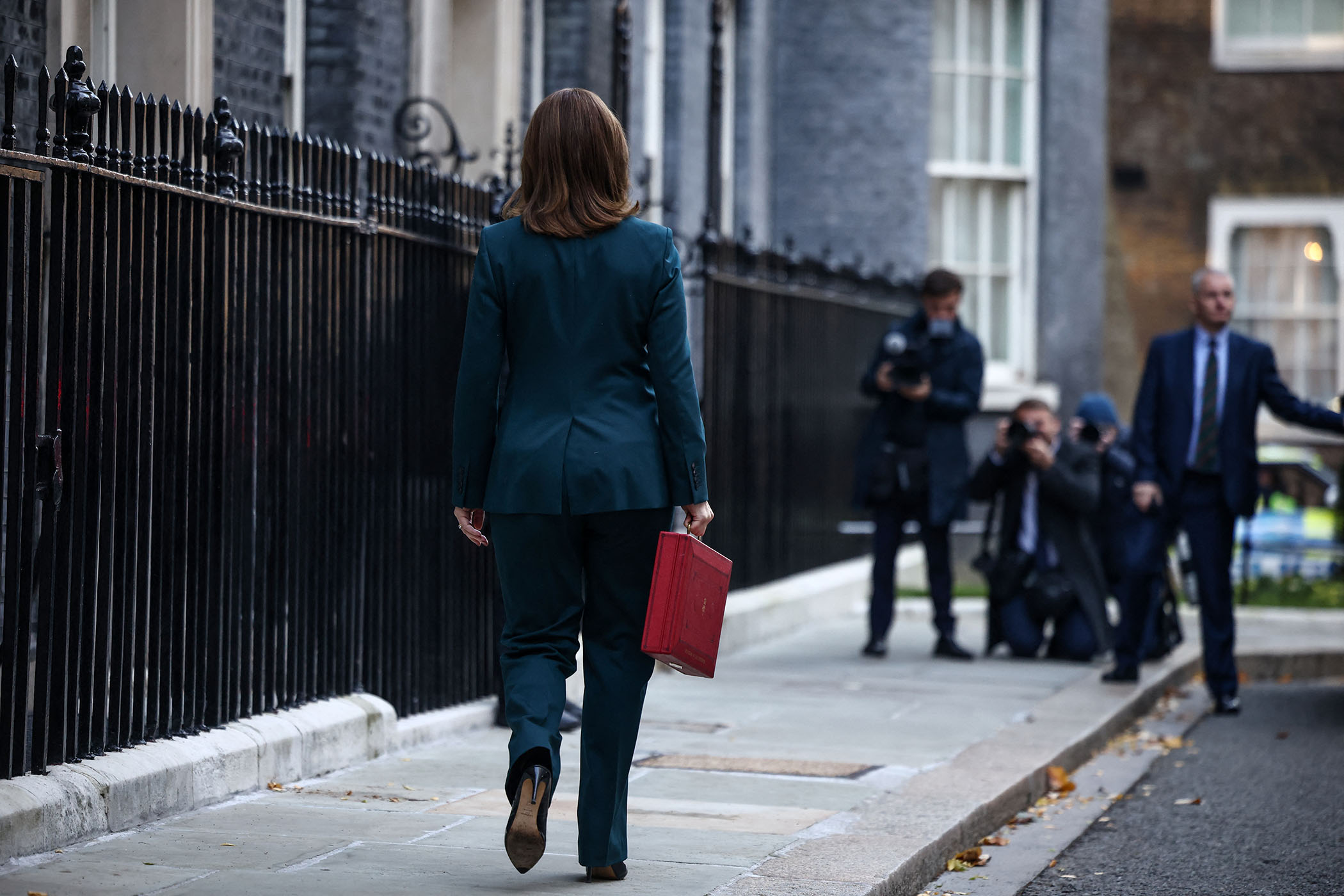
So the intriguing aspect of Tuesday’s spring statement accompanying the Office for Budget Responsibility’s (OBR) six-month economic stocktaking is how much it will capture these cross-currents and allow itself some optimism. Recall last year that it was the OBR’s forecasts of missed deficit targets that triggered the fateful scramble for welfare spending cuts and the subsequent Labour party revolt. Could something similar happen this year?
There are three reasons why not. First, the chancellor has declared that there is only going to be one fiscal event where taxes are lifted or spending cut: the autumn budget. So expect no bombshell fiscal announcements.
Second, after weeks of disastrous speculation last autumn, Rachel Reeves has adopted the mantra that dull is good. Her speech will last 20 minutes and that will be that. And last, since the OBR reported last November several indicators on the economic dashboard have moved in an encouraging direction – interest rates, tax receipts, business confidence, house prices, the stock market, bond yields, success in technology and even productivity. Others flicker less encouragingly, especially a rise in unemployment, a fall away in wage growth and a 70% drop in net migration, now falling like a stone. This may start to end the grievance of all those “raising the colours” up the nation’s lampposts to protest against immigration, but it depresses economic growth. Yet for all that, there is an emergent growth narrative to develop and trends on which to build.
One area genuinely flourishing is Britain’s tech challenge to Silicon Valley. Far from this being preposterous, investment bank Schroders last week issued an upbeat report, “The UK is home to Europe’s Silicon Valley… and its venture market could match it too”, making precisely this claim. In 2025, the bank calculates that £18bn was invested by venture capitalists in young British tech companies, more than was invested over 2023 and 2024 together and as much as France, Germany, Italy, Switzerland and Holland combined. It observes that while the Californian and British economies are broadly the same size, California’s three universities in the global top 20 produce 12,000 graduates every year in Stem subjects while the UK’s comparable four – Oxford, Cambridge, Imperial and UCL - produce 20,000. London alone attracted £13bn last year in venture investment, closing in on the Bay Area, New York and Los Angeles.
The prime minister’s position is weak. The chancellor’s is becoming stronger
The prime minister’s position is weak. The chancellor’s is becoming stronger
These are stunning numbers. To put it in context, Britain spent 0.6% of GDP in 2025 investing in the companies of tomorrow on a scale unmatched in Europe and, as Schroders observes, does it more efficiently than Silicon Valley. California’s venture investment in 2025 was six times higher than ours to deliver proportionally fewer successful tech companies. It has 100 active unicorns for its investments, companies valued at more than $1bn. But Britain has 41 – much more bang for every buck.
But there is a serious catch, as Schroders observes. While American institutional investors anchor California’s success, virtually no British investors or pension funds do the same for Britain. We rely mainly on Americans, and as a result many of our best companies wind up there. The bank praises Britain’s beleaguered Labour government with its drive to create bigger pension funds that would be capable of filling the gap. Get sufficient UK capital to anchor our venture ecosystem as the Americans do, says Schroders, and Britain would emerge as a global tech leader.
It also seems that just as the OBR last November gave up predicting that Britain’s productivity growth would ever rise, instead revising its forecast downwards, it was wrong. When properly measured, 2025 turns out to have been the best year for productivity growth since the financial crisis. Part of the reason is the first impact of artificial intelligence, and part an investment boom in information and communication technologies and the service sector. All this has offered the economy more resilience. Tax revenues in January, the month every year when tax payments are bunched, were a n incredible forecast-busting £133bn, up 13% on January 2025. As a result, over 2026/7 the total bill for the refinancing of maturing government debt and new borrowing together will drop by a cool £50bn.
The OBR, whose gloomy conservatism and poor forecasting record are becoming legendary, will grudgingly have to concede that the government is firmly on track to meet its fiscal rules. This will cement the prospect of further falls in interest rates.
Newsletters
Choose the newsletters you want to receive
View more
For information about how The Observer protects your data, read our Privacy Policy
The chancellor’s preference to make Tuesday’s spring statement as short and as matter of fact as possible after last autumn is understandable. But if I were her I would come out all guns blazing. The economy is on the turn. The fiscal position is improving. There is the imperative and now the capacity to intensify the current framework of economic policies, to make the UK the tech capital of Europe and to do more to alleviate the condition of what the Resolution Foundation call “Unsung Britain”, the country’s hard-working poorer half. If not this, what? The prime minister’s position is self-evidently weak. Hers , paradoxically, is becoming stronger. If he goes, she may prove indispensable to any successor.
Photograph by Jonathan Brady/WPA Pool, Getty Images