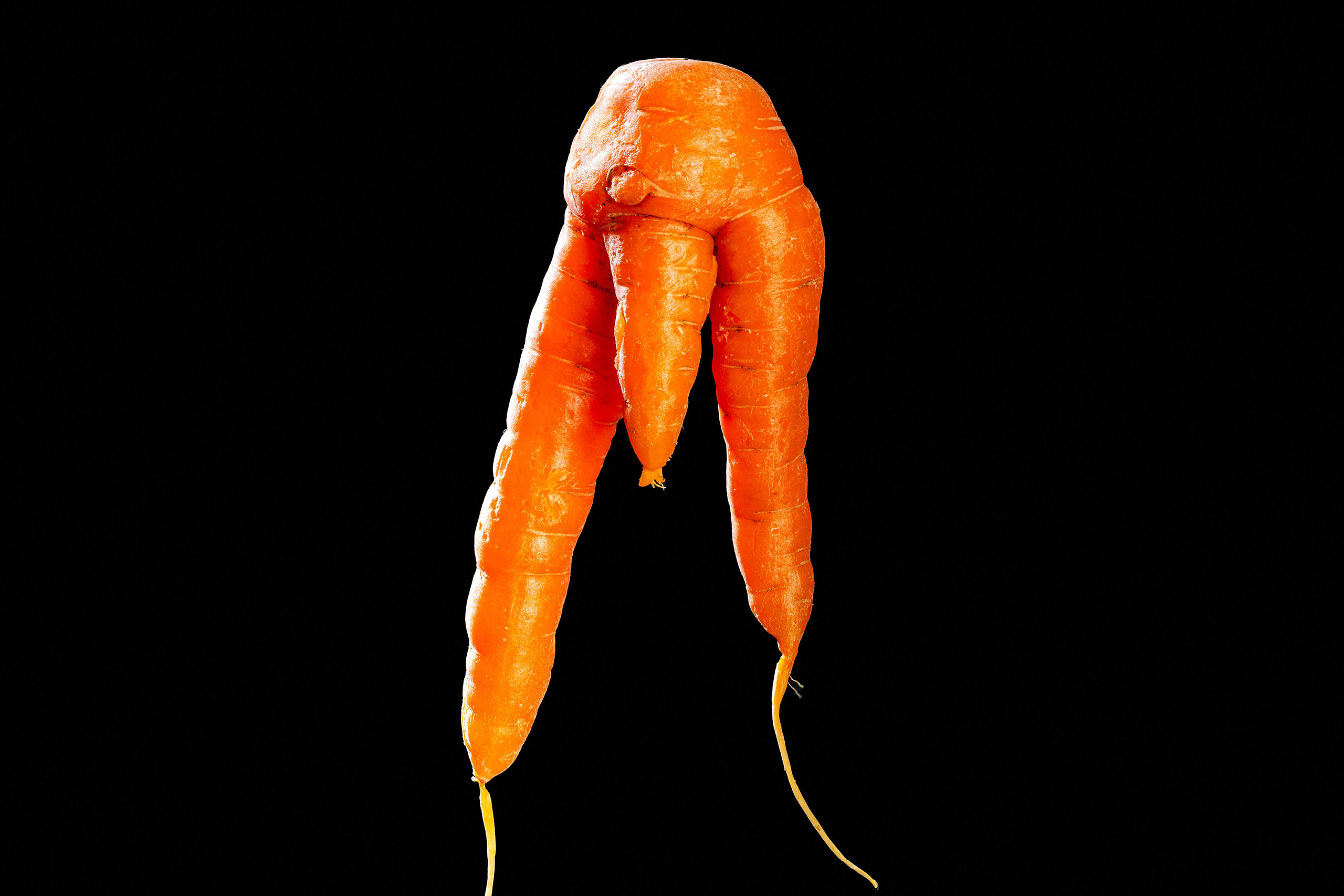
In the new documentary Manhood, a doctor mournfully warns his patient, “I can fill your penis with filler, but I cannot fill the hole in your heart.” We are in, if not the golden age of penis extensions, then at least a gold-plated one, in which vulnerability is discussed as openly as girth.
Though the technology is improving, the big-dick market has always existed, alongside the desire. In the 16th century, the Topinama tribe of Brazil invited poisonous snakes to bite their penises in order to enlarge them. In the early 1950s, the first acrylic penile implants were created, then in the 60s and 70s inflatable silicone implants arrived, intended to treat erectile dysfunction. By the 2000s, penile-lengthening surgeries were becoming more common. Typically, a surgeon cuts their patient’s suspensory ligament that attaches the penis to the pubic bone, dropping the angle of the penis, and increasing it by up to 1.8cm when flaccid. Dermal-filler injections followed, and fat transplantation, and a variety of widely advertised devices, including weights that stretch the penis, and frames that clamp on tightly and claim to make it longer. By 2027, the penile-implants market is expected to reach $640.5m.
Manhood, directed by Daniel Lombroso, curves very slightly to the left. It opens with a quote from Kafka: “I was ashamed of myself when I realised life was a costume party and I attended with my real face” – the scene is set for a story of shame, alienation and inadequacy. There are also a lot of penises. In Bill Moore’s clinic, run out of a strip mall in Dallas, we see big penises, small penises, penises that have become deformed by permanent fillers, lumpen, angry penises that appear weary, withdrawn, misunderstood, penises with the attitude of an old man who has been waiting many hours for a bus. We see the penis, mid-injection, of one of the many law-enforcement officer clients of Moore, including, he says, a number of ICE agents. We see the penis of a patient having fillers because, he says, society associates small dicks with terrorists and criminals, and something to prove. We see the penis of a man who was recently diagnosed with terminal brain cancer, so decided to “make the most” of the time he has left, and live “authentically”. Through a series of injectables, costing around $12,000, he can expect to increase his girth by a quarter of an inch before he dies.
We meet a predatory doctor profiting from insecure men, turning their genitals into lumpen masses of humiliation
We meet a predatory doctor profiting from insecure men, turning their genitals into lumpen masses of humiliation
As the film unfolds, we meet a predatory doctor profiting from insecure men, turning their genitals into lumpen masses of humiliation and guilt. We learn how penis filler has the potential to be the next Viagra, shifting culture, making millions. We learn how male fragility is big business, and how our subjects have found a way to deal with life’s inevitable trauma and messiness by focusing on controlling a single body part that, unlike the rest of their life, appears, at least sometimes, solid.
I scribbled down questions as I watched. Would these men be less fixated on increasing the size of their penises if there was wider cultural representation of normal bodies, or if porn was less ubiquitous? Or what about if mainstream porn was more diverse – alongside Readers’ Wives, why no Readers’ Husbands, average-sized and proud? Does the desire for a large dick reflect how men view their roles in society? How does the growth of the penile-enhancement market correlate with a reported crisis of masculinity? Would Ruben, the working-class father of five whom we see spending his family’s last dollars on penis fillers, be less inclined to do so were he not listening to Joe Rogan in one earbud the entire time he’s talking to his wife – who, by the way, says she liked him just fine the way he was?
It becomes quite quickly clear that the penis, for all these men filmed obsessing over its size, is a dangling metaphor rather than an organ they value for pleasure or pleasuring. It’s a symbol of power, of desire, authority, survival, lack. But still, there’s some sweet sadness in seeing their feminine vulnerability as they try, expensively, to become more manly. And, as they enter and endure the ritual humiliation, mutilations and ephemeral relief of aesthetic procedures, understand, for the first time perhaps, how it feels to be a woman.
Newsletters
Choose the newsletters you want to receive
View more
For information about how The Observer protects your data, read our Privacy Policy