
I have been thinking about fakery. My daughter doesn’t have a phone, so I said she could join her friends’ WhatsApp group on mine. Very quickly, I realised, these girls were able to ignore the fact it’s my name rather than hers, and that it’s my phone buzzing with all their gossip, that it’s me – a middle-aged lady with skin in the game – who will first see their secrets.
I enjoy occasionally responding to messages as her, both for the linguistic education and intimate opportunity to perform. It reminds me of the early days of the internet, huddled over a chatroom with a friend while we pretended to be busty, or 16, or French. From across the room my daughter will call, “Write ‘cute’, but with five ‘e’s on the end.” I’m getting good at it. Worryingly good. I’ll type “ru” instead of “are you” without being reminded, “ty” instead of “thank you,” etc, quickly adding eight “i”s to the word “ok” (“Nine! Nine ‘i’s please”), the boundaries between my voice and my daughter’s falling pleasantly away. When she writes, she’s pretending, too, of course, or learning how to become a teenager, or we’re all faking it forever, whatever.
For a long time, authenticity was held in the very highest regard. Online, a certain messinessand vulnerability prevailed, a reaction in part to millennial perfection. But as authenticity started to become an aesthetic in itself, its appeal curdled and power waned, and we’ve moved, I think, into a new era of fakery where little is real but… nobody really minds?
On social media we are sorted into different groups, each with its own vivid, working reality. Plastic surgery, while once taboo with its “fake tits” and fillers, has been normalised to the point of tedium. AI is writing personal essays on Substack, and by the way, people love them. Deepfake fraud has gone “industrial”, an analysis published by AI experts said in February. Trump (who once said “one of the greatest of all terms I’ve come up with is ‘fake’”) has helped distort political reality to the point that we now live with the sense that everything we’re shown is suspect, initially attempting to claw back truth, then collapsing en masse into a sort of beanbag of acceptance.
By the time facts have been checked or photos debunked the damage has been done
By the time facts have been checked or photos debunked the damage has been done
It was in this new world that TV star Collien Fernandes, half of one of Germany’s best-known media couples, discovered deepfake images of her distributed across the internet. In 2024, she made a documentary about AI deepfake porn to find the source of content attributed to her, and this March, in German news magazine Der Spiegel, pointed the finger at her now ex-husband Christian Ulmen. Fernandes called it “virtual rape”. Ulmen denies the allegations.
Viewers of deepfakes don’t need to believe it’s real for damage to be done. When I see the AI-manipulated face of a pretty brunette “artisan” in an ad saying, “Stop hiring humans”, I read it not as real, or fake, but as some slippery third thing that takes up residence in my consciousness. In a 2022 study, scientists discovered that not only do “AI-synthesised faces” appeal to us but we find them “more trustworthy”. A paragraph break here, to process the doom.
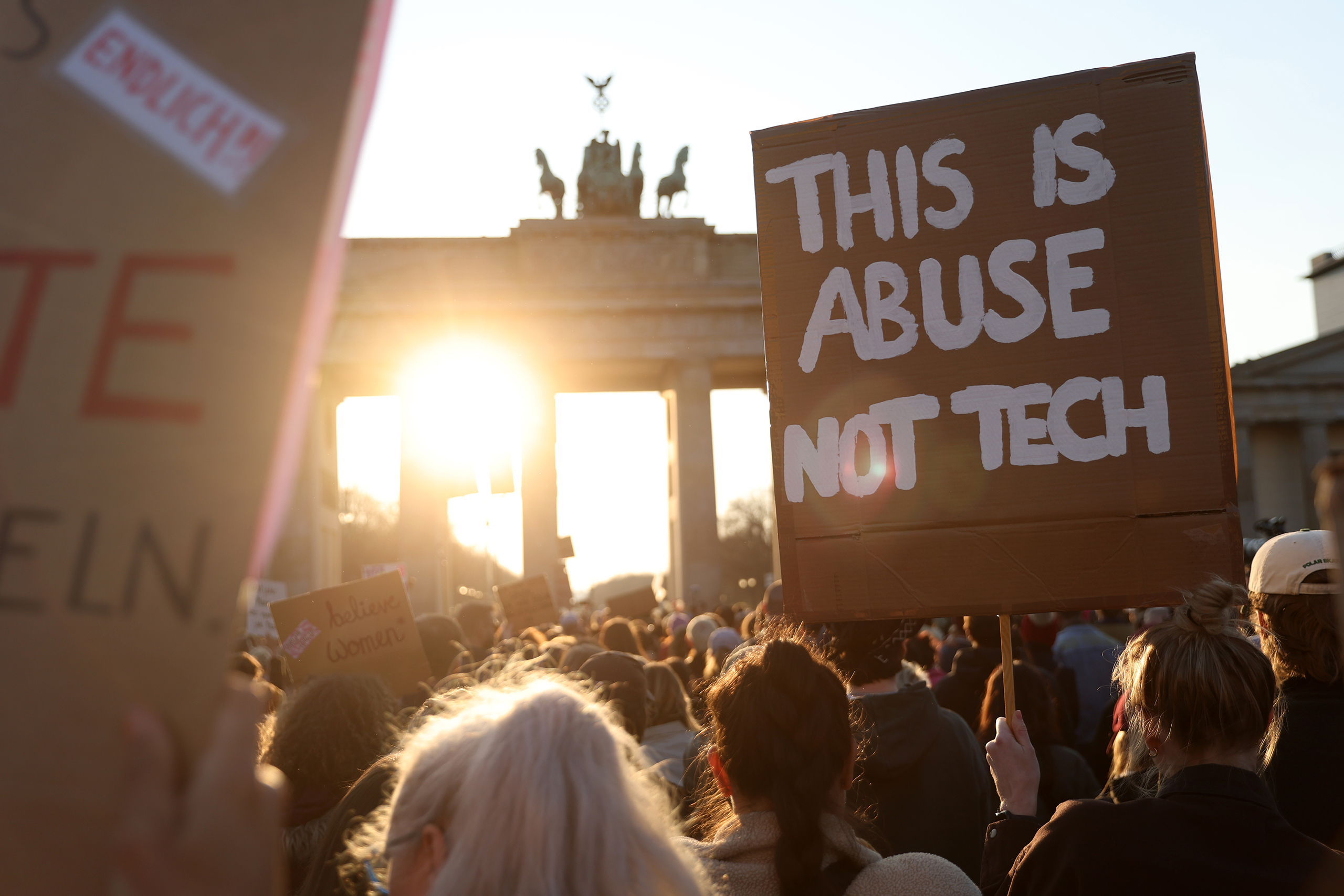
What the Fernandes case tells us is how engrained sexual humiliation is in our society and how fakery facilitates and exposes existing patriarchal structures that degrade women. It also reveals that people are pigs.
The thing about fakery is, we accept it because it affirms some truth we already believe. By the time facts have been checked or photos debunked the damage has been done – we have already been entertained, and the fake has already burrowed into the soft part of our mind that was waiting for it. Fakes reveal uncomfortable truths. A fact I intend to share with my 12-year-old classmates after school (jk).
Newsletters
Choose the newsletters you want to receive
View more
For information about how The Observer protects your data, read our Privacy Policy