

In October 2009, during his first week at law school in Oxford, Aron D’Souza met American tech billionaire Peter Thiel, the man best known for co-founding PayPal and the software company Palantir. Thiel was giving a talk at the university.
“He was the very first billionaire I met,” D’Souza says. “And I was like: ‘Oh, you’re a billionaire. You must not have any problems.’” But Thiel replied that he had plenty. His biggest, he said, was the US gossip website Gawker, “that is writing terrible stuff about me”, D’Souza recalls. Two years earlier, Gawker’s Silicon Valley blog, Valleywag, had outed Thiel as gay. His sexuality was known to close friends, but Thiel considered that information private. He told D’Souza he did not want to sue the publisher himself, for fear of drawing further attention to the negative coverage.
D’Souza, then a fiercely ambitious 24-year-old from Australia, came up with an idea on the spot. “I said: ‘Well, why don’t you find someone who wants to sue them but doesn’t have the resources? And you could wage a proxy battle,’” he recalls. He laid out how this could work.
A few weeks later, Thiel asked him: “How much and how long will it take to destroy Gawker?” D’Souza reckoned five years and $10m.
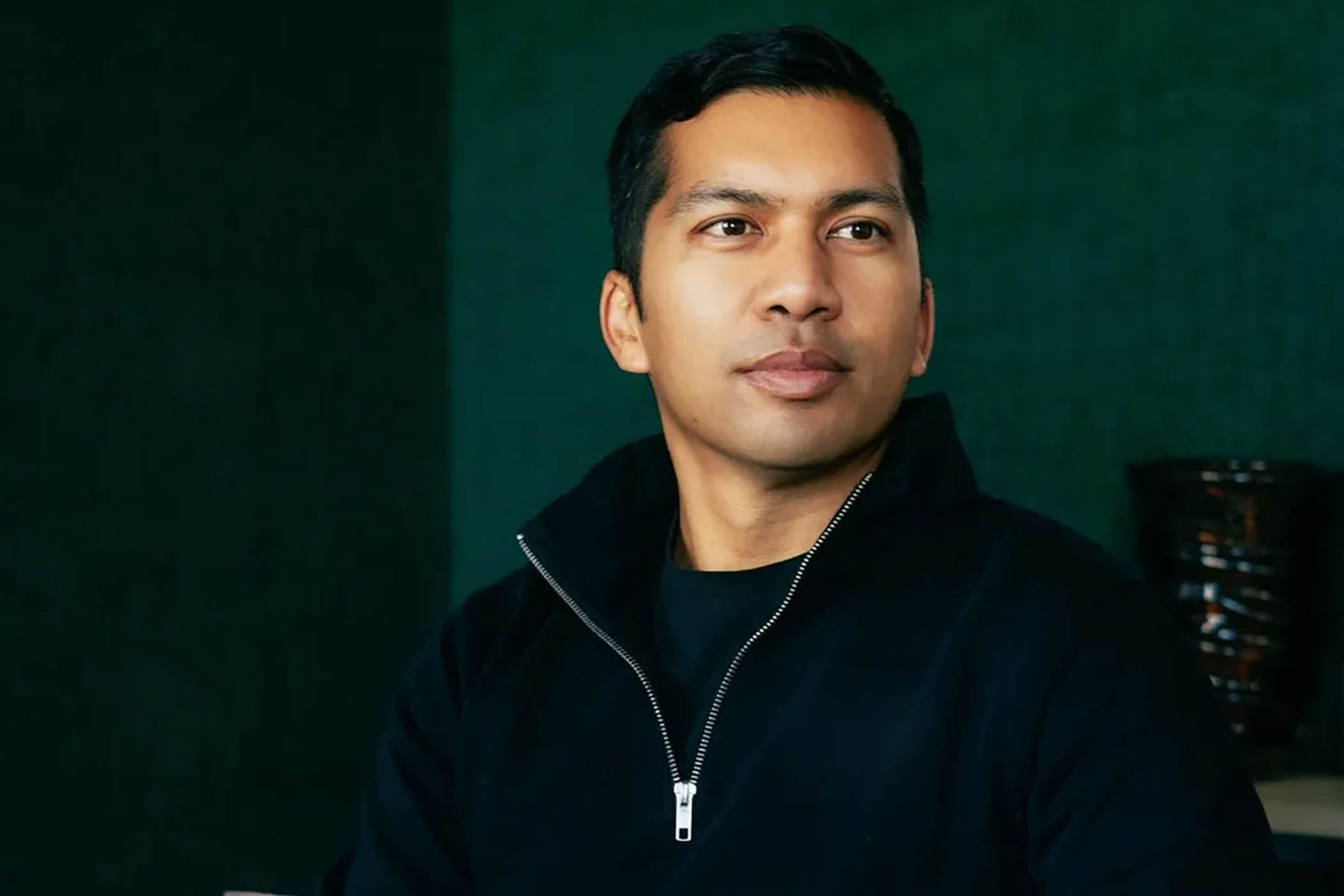
Objection’s Aron D’Souza also founded the Enhanced Games
He was almost right. After Gawker published footage from a sex tape featuring the former wrestler Hulk Hogan in October 2012, D’Souza recruited a celebrity lawyer, Charles Harder, to file a suit on Hogan’s behalf. It was one of several lawsuits against the website that Thiel secretly bankrolled: he spent about $10m over the course of the campaign. In March 2016, a Florida jury awarded Hogan $140m in damages. Three months later, Gawker filed for bankruptcy.
D’Souza has since built a colourful career as a company director and investor. In 2023, he founded the Enhanced Games – in which athletes can use performance-enhancing drugs. But the Gawker case shaped his next big venture.
“Gawker was not unique,” reads the website of his new AI startup, Objection. “It was simply the first large media company to be tested against reality in the age of clicks, outrage, and algorithmic amplification. Since then, the same structural failure has spread everywhere”.
Largely self-funded and backed by Thiel and fellow contrarian entrepreneur Balaji Srinivasan, a crypto investor, Objection says it wants to act as a “private accountability system” for journalism. For a starting price of $2,000, anyone who feels they have been unfairly reported on can file a complaint. A team of investigators then examine the story and submit their findings to an “AI tribunal” – a “jury” of large language models from OpenAI, Anthropic, Google, xAI and Mistral. Journalists are invited to defend their reporting. If they do not, the verdict is issued anyway, and published in a permanent public record.
D’Souza envisages a world in which people refuse to give interviews unless the journalist first signs an agreement to be “bound” by Objection’s rulings: if the journalist is found to have made a mistake or misrepresented a subject, they would agree to go to court to defend their reporting.
For those who do not sign up, Objection carries no legal force. Its power lies in a supposedly objective AI “verdict”, designed to be weaponised in social media and PR.
Newsletters
Choose the newsletters you want to receive
View more
For information about how The Observer protects your data, read our Privacy Policy
D’Souza says his cause is noble given the collapse in public trust in the media: according to a Gallup survey last year, just 28% of Americans express confidence in news organisations to report fully, accurately, and fairly, down from 68% in the early 1970s. Among Republicans, the figure has fallen to 8%.
“Someone needed to fix it,” he says. His argument is that, by subjecting journalism to the kind of scrutiny courts apply to evidence, Objection will force higher standards on reporters and, in doing so, rebuild the public’s faith.
Press freedom groups and media lawyers are not convinced. Fiona O’Brien of the Committee to Protect Journalists calls the platform “deeply chilling”, not because of the concept, which could be considered “gimmicky and crass”, but because of the moment in which it arrives.
“Press freedom is already under extreme pressure,” she says. “This is another avenue for those who would dismantle a free and diverse media.” A record 129 journalists and media workers were killed worldwide in 2025. Across Europe, the number of legal actions designed to silence journalists continues to rise, with more than 1,300 documented strategic lawsuits against public participation – otherwise known as Slapps – between 2010 and 2024.
Jessica Ní Mhainín of Index on Censorship says Objection is a form of “privatised censorship”, allowing wealthy individuals to challenge and discredit journalism. D’Souza says tech bros are queuing up to support Objection, with “more billionaires than I can count” reaching out to him.
Even if no journalist signs up (and so far, it seems none has), Objection’s backers have immense resources and reach. Thiel is one of the US’s best politically connected billionaires. Vice-president JD Vance speaks with Thiel monthly and owes his political career to his campaign donations, and Palantir provides core infrastructure for the Pentagon.
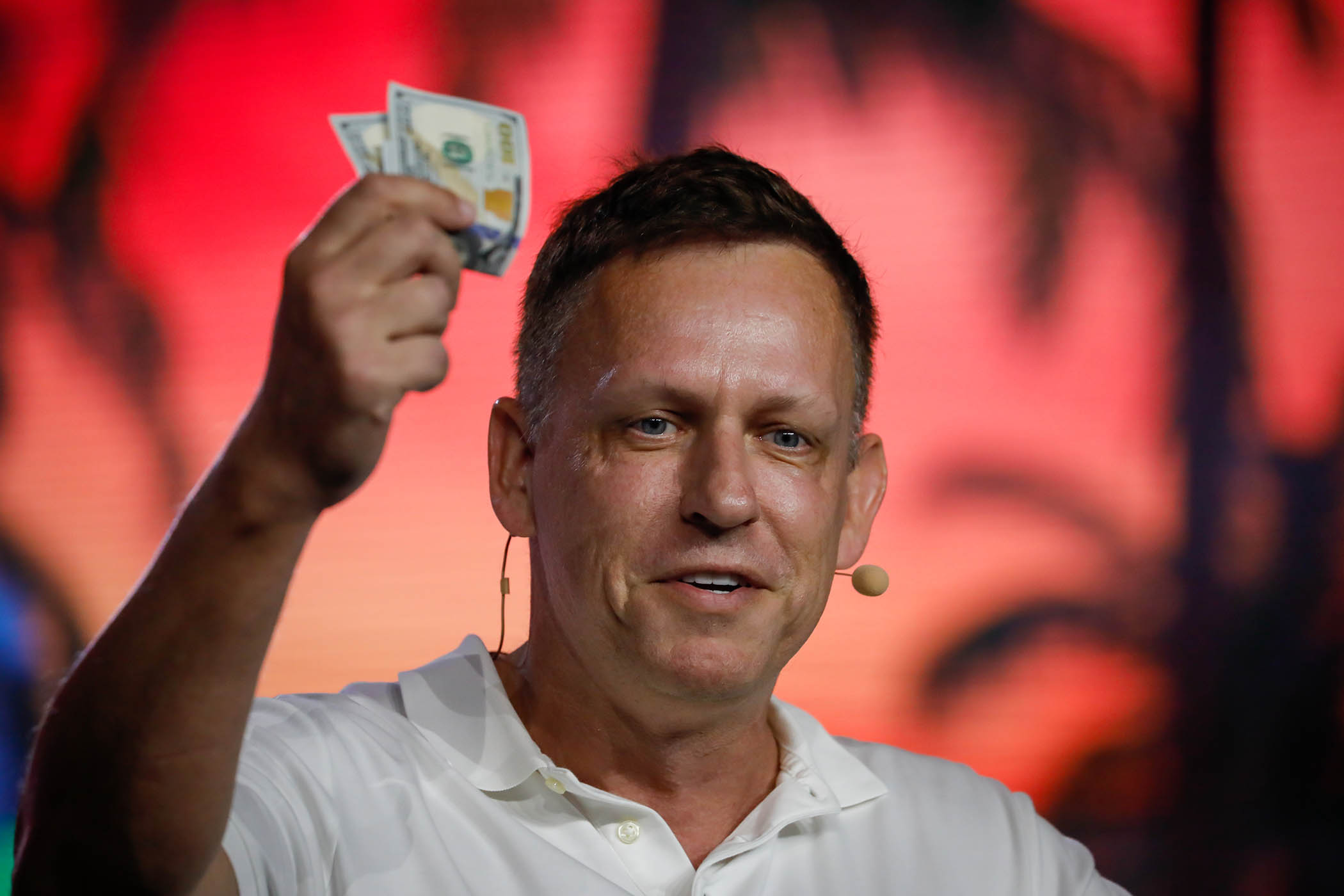
Peter Thiel speaking at a bitcoin conference in Miami, Florida, in 2022
D’Souza has said Objection “industrialises” the process that took down Gawker all those years ago. But where the Gawker stories concerned gross violations of individual privacy, Objection is designed to challenge reporting that its clients consider unfair or defamatory.
D’Souza brushed off the distinction and instead cites a recent article in the New Yorker by Ronan Farrow and Andrew Marantz. The piece, about the chief executive of OpenAI, was headlined: “Sam Altman may control our future – can he be trusted?” It drew on more than 100 interviews with on-the-record and anonymous sources, some of which portrayed Altman as mendacious and, at the extreme, “sociopathic”. D’Souza blames the article for a molotov cocktail that was allegedly thrown at Altman’s house. “That’s the power of narrative.” D’Souza says, implying that the reporting is radicalising readers.
When I point out that Altman has spent years cultivating a narrative about AI that has arguably contributed as much to public fear as any magazine profile, D’Souza doubles down. “Ronan Farrow is as powerful, if not more powerful, than Sam Altman,” he says. “In the current environment, he can use a string of anonymous sources… that can construct a narrative that could literally destroy one of the most important companies in the world and kill its CEO.”
The New Yorker, for which Farrow writes, employs a factchecking team that independently verifies every claim, including calling each anonymous source, before publication. D’Souza says this is not enough; he argues that full transcripts of on-the-record interviews should be published alongside any story, so readers – or AI – can assess the raw material for themselves. Objection invites journalists to submit evidence about anonymous sources for AI verification. Those who refuse risk being “scored” as less credible.
“It puts journalists under incredible pressure,” says Ní Mhainín. If they do not submit their sources, they will be seen as having something to hide, but “if they do, they’ll be completely betraying the ethics of their profession”. She warns that sources would be deterred from coming forward.
You are the factory worker of this era. Just as peasant farmers were displaced by agricultural machinery, white-collar professional workers are now seeing their careers decimated. There won’t be journalists in 20 years
You are the factory worker of this era. Just as peasant farmers were displaced by agricultural machinery, white-collar professional workers are now seeing their careers decimated. There won’t be journalists in 20 years
Aron D’Souza
Silicon Valley founders are seeking to control the narrative more generally. Trae Stephens, co-founder of the defence technology company Anduril, recently declared on X that Wired magazine was “irreparably broken” and floated buying it himself. Executives from Thiel’s Palantir last year launched Founders Films, a production company seeking to remake Hollywood films with explicitly pro-American, nationalistic content.
But D’Souza does not believe journalism as we know it will survive AI. “You are the factory worker of this era,” he tells me. “Just as peasant farmers were displaced by agricultural machinery, white-collar professional workers are now seeing their careers decimated … There won’t be journalists in 20 years.” He predicts that AI will handle the editorial synthesis, reducing human reporters to researchers gathering raw material. This, he argues, will get closer to an “objective” truth and restore trust.
It is true that defamation cases can take years and cost vast amounts. But one media lawyer warns that the balance of power already tilts heavily against journalists, and Objection risks making it worse. The source points to the rise of Slapps brought by wealthy claimants to drain journalists financially and psychologically until they drop a story.
Reputation management companies could use Objection to create AI-generated, cogent-sounding challenges designed to make journalists abandon a story entirely. “This is the start of a new war,” the lawyer says. “It’s AI pitted against human endeavour, and that human endeavour has never been less well resourced.”
Ultimately, however, Objection carries no legal authority. For it to matter, says David Banks , a media law consultant, it needs to become trusted enough that its verdicts carry weight with audiences and publishers. For that, it may need buy-in from the very institution it claims is broken: the press. For now, that seems unlikely.
Photograph courtesy of Objection.ai. Additional photographs by austinliv23, Eva Marie Uzcategui/Bloomberg via Getty Images