

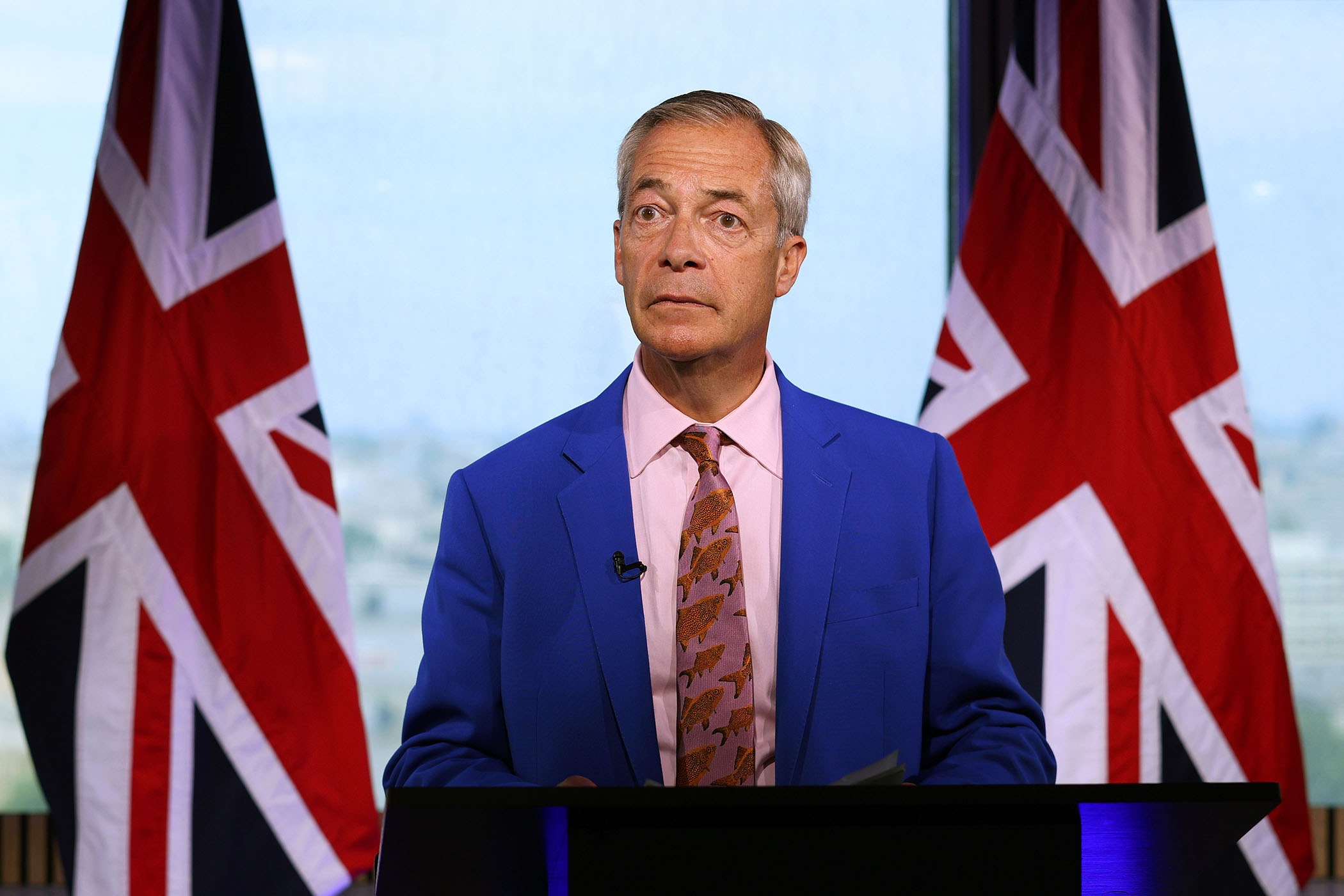
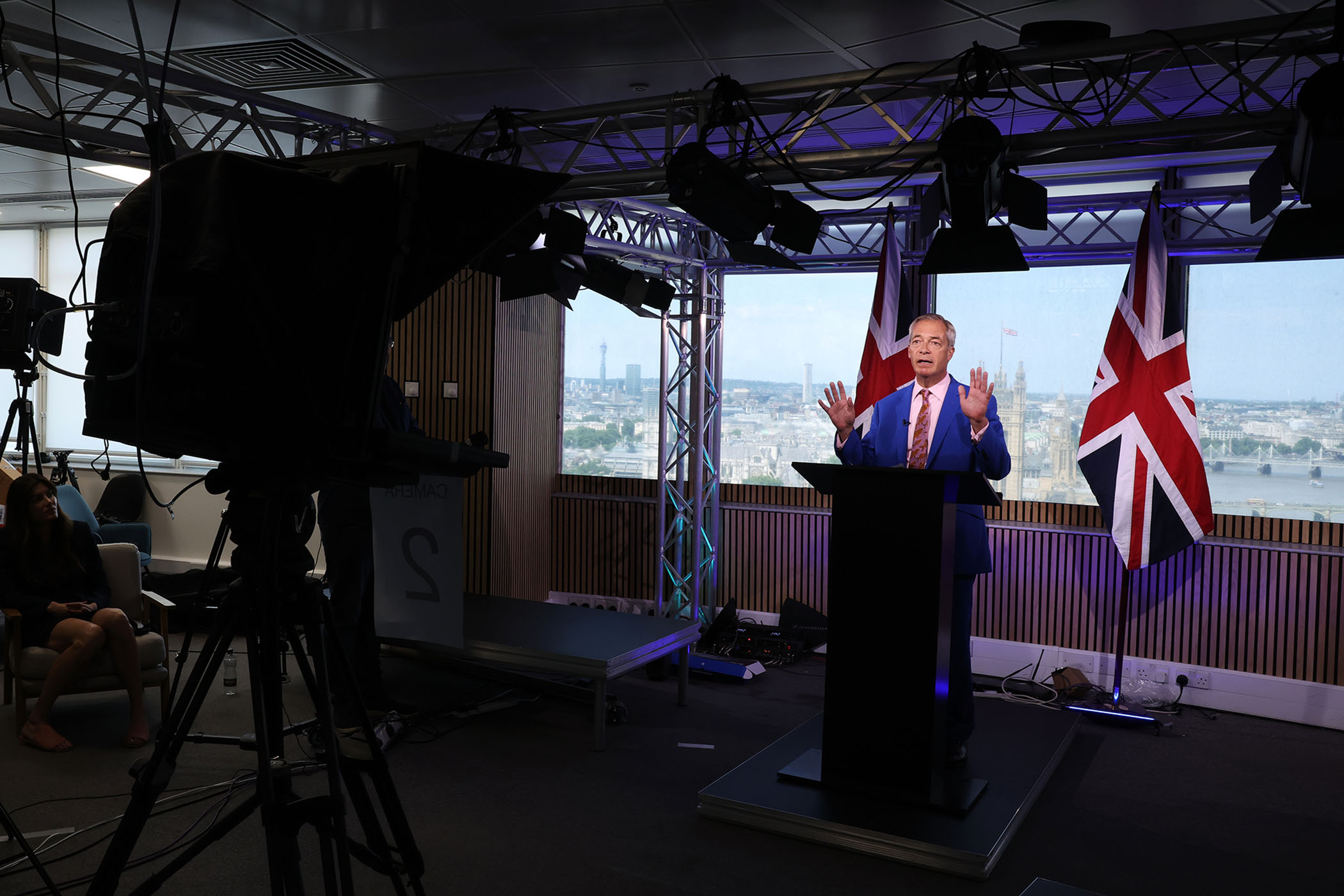
The rise of Reform – the self-proclaimed, anti-elite, people’s party – has certainly forced a recognition of the impact of inequality, if not in quite the way the party intends. Without massive wealth inequality, to which Reform has no objection, there would not have been the billionaires providing the estimated more than £150m that now funds Britain’s populist right-wing ecosystem – from Reform itself to its in-house TV station GB News.
Equally, anybody who turned a blind eye to the dramatic rise of income inequality between 1980 and the financial crisis (2007-09) has been disabused of that illusion. Without the rise in income inequality, together with the stagnating real wages that followed the financial crash, there would never have been the degree of social distress and sense of unfairness among the lower third of our wage earners – fanned by sometimes real and sometimes imagined fears of immigration – that fuel the passion behind the Reform vote.
We are learning what the Edwardians, who last experienced inequality to this extent, knew – it had dark economic and social consequences, but dark political dimensions too.
Politicians and policymakers should never have thought of inequality as something to be attended to only after whatever policy had fostered it. The impact of inequality is so dangerous, wounding and all-encompassing that it should always be incorporated into policy considerations at their genesis – not as a mere afterthought.
This is one of the many illuminating conclusions of the IFS Deaton Review released last month, a six-year exhaustive study, incorporating 97 individual research papers, into the dynamics of Britain’s overlaid inequalities – incorporating almost every branch of social science.
Led by the Nobel economics prize winner Prof Angus Deaton, who coined the phrase “deaths of despair” to describe the desperate impact of the worst of inequality in the US, the hard intellectual yards were directed by the Institute for Fiscal Studies, whose former director Paul Johnson has brought it altogether in a short, readable book – Challenging Inequalities.
In its way, the Deaton Review is as devastating as Charles Booth’s 17-volume investigations into poverty in London between 1889 and 1903, revealing that 30% of Londoners lived in profound poverty and squalor, a revelation that shocked late-Victorian England. Seebohm Rowntree would conduct a separate study of York that reinforced Booth’s findings in London. The studies had a profound impact on Churchill: it was one of the reasons he crossed the floor of the House in 1904 to join the Liberals and two years later their great reforming government.
Today, no leading Tory has even cited the Deaton Review, let alone chosen to address its concerns. The way in which it demonstrates how today’s inequalities are unfairly stacked on each other – from education and health to housing, geography, parenting, inheritance, gender, ethnicity, wealth and income – to make escape from the bottom almost impossible, has received scant media coverage.
Yet, cumulatively the numbers leave you numb. Healthy life expectancy is 52 years in the most deprived areas of England compared to 71 in the least deprived areas. Three-year-old children in the top fifth of the income distribution are three times as likely to be in the top fifth of cognitive development as the others in their peer group. Among those aged 25-39, you are twice as likely to be a homeowner if your parents are homeowners; they will have helped you buy. So, remorselessly, it goes on. No wonder there is an epidemic of depression among our young – the “anxious generation” as jobs tsar Alan Milburn is expected to characterise them this week in his interim report on the nearly a million 16-24 year-olds not in employment, education or training.
The authors of the Deaton Review do not place welfare and redistributive taxation – often poorly designed and contradictory – as their primary focus, although, obviously, they recognise their joint power in leaning against the underlying trends. What is most important is to address what is driving those trends, in particular in the labour market. As they say, people want to work for their living; it offers not only income but status and a sense of self-worth.
Newsletters
Choose the newsletters you want to receive
View more
For information about how The Observer protects your data, read our Privacy Policy
Yet 60% of the British economy is a productivity desert, populated only by underperforming firms offering low-income jobs whose wages will grow slowly if at all. Possession of an university degree is one route out, generally still rewarded in terms of lifetime earnings, but usually requiring migration to the economically vibrant London and the south east – a vibrancy now punctured by Brexit.
For non-graduates the task is to acquire better skills, yet acquiring a skill is far too hard – and becoming harder given the desperate neglect of further education. Nor is there parity of esteem between those educated at university or for a vocation. In any case, too many of those who gain vocational skills join graduates and migrate to London – hardly helping the areas they leave.
So what to do? The aim of the review is less to propose a suite of policies than to generate consensus that the status quo is intolerable and offer directions of travel as solutions. The overriding objective must be to raise growth and productivity, especially in those parts of the country where it is so low. It is obvious that what Boris Johnson called “levelling up” is one precondition to achieve this end – but it is one which requires the repurposing of the British state to devolve genuine power to cities and regions. In addition, there must be consistently higher levels of public investment, especially in skills, to address the disastrous inequalities in housing and wealth and, last but not least, health. Deaths of despair rose by a quarter between 2019 and 2023.
On top of this, the government must decisively get behind the extraordinary number of young, high-growth, scaleup tech companies that Britain has generated over the past 20 years. In a curious way, Reform has done us a favour. To avoid falling into the hands of a movement including quasi-racists, led by a demagogue, Britain had better address these questions fast and urgently.
Photograph by Dan Kitwood/Getty Images