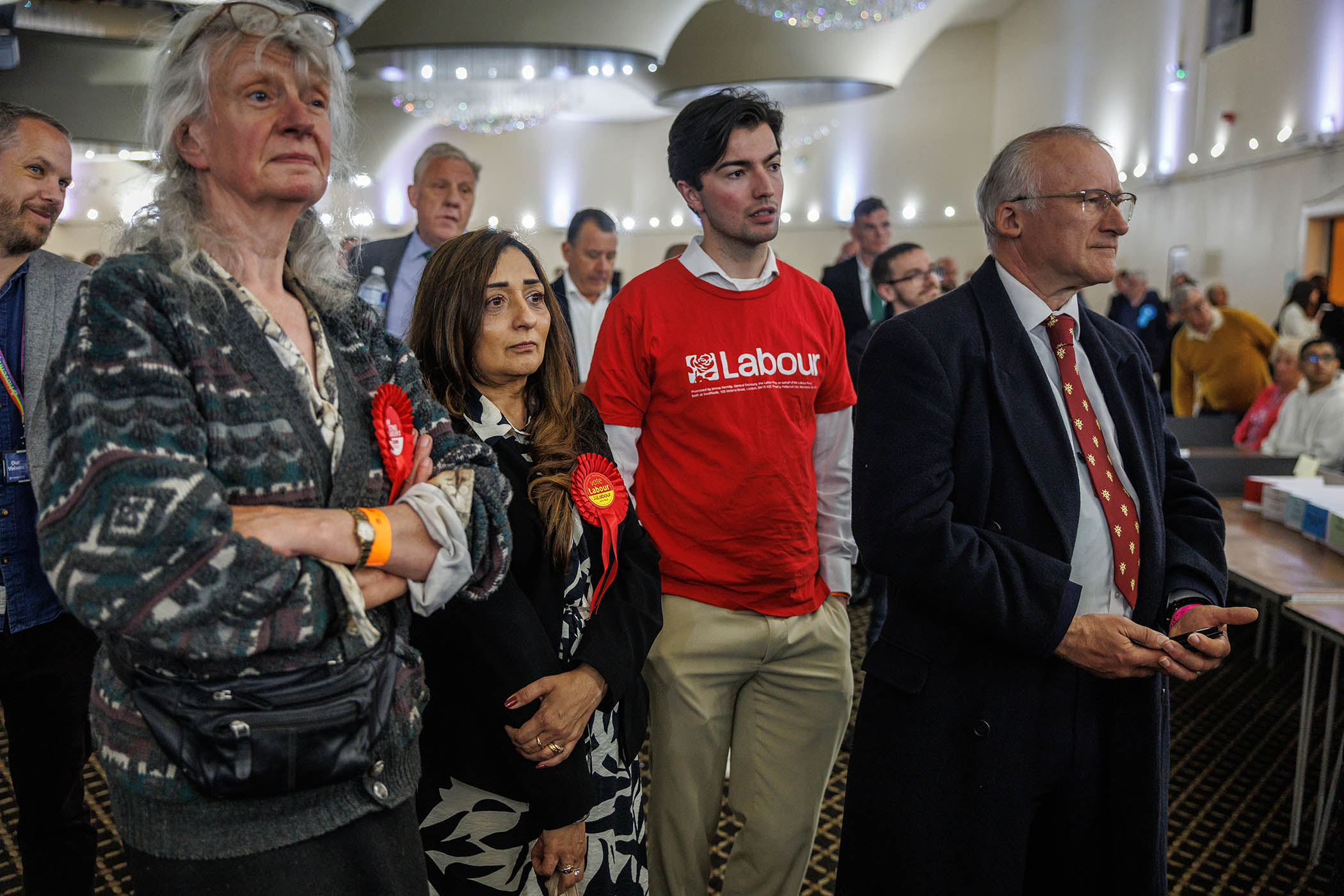


The voters have spoken in the biggest electoral test of Keir Starmer’s Labour government, and their verdict is damning. It was a dire day for Labour in all three constituent nations of Britain, and while the political drama in each country had its own plotlines, some common themes are clear. Labour is struggling, Reform UK is on the march, and the party system is fragmenting as voters hungry for change scatter in multiple directions.
Scotland defied these trends to some extent, as the Scottish National party (SNP) topped the Scottish parliament poll for a fifth consecutive election. Yet there are signs the SNP coalition is beginning to fray as it enters a third decade in power. The overall SNP vote fell sharply to its lowest level since 2007, with the Liberal Democrats, Labour and the Scottish Greens all gaining constituency seats, while Scottish Conservatives held on in the Border regions. While a fragmented opposition helped the SNP dominate constituency contests, despite a reduced vote, these seat gains ensured the nationalists would not get the majority they framed as a mandate for another independence referendum.
The big winners on the opposition benches were Reform, while the big losers were Labour, whose Westminster rebound in Scotland two years ago proved to be a false dawn. Scottish Labour has now lost ground in every Scottish parliament election since 2003. Having lost power two decades ago, it has failed to find a role.
Scotland was a disappointment for Labour. But Wales was a disaster. A century of political dominance, stretching back to the introduction of the universal franchise, was swept away in a single night, as Labour fell to third place in votes, and failed even to return a single Senedd member in many of the six-seat proportional constituencies introduced for this contest. Plaid Cymru emerged as the clear winner, well ahead of Reform, but just short of a majority. With the Welsh nationalists certain to form the next government, all three UK devolved nations will now be led by nationalist parties that favour changing the constitutional status quo.
Change was also the dominant theme in England, where voters emphatically rejected both of the “legacy” parties that have dominated postwar politics for a second year running, as support surged for radical new parties on the left and the right. The Greens proved their polling surge under Zack Polanski was no mirage as they gained 400 council seats in a record-smashing performance. They did best in wards with large numbers of students, young people and Muslims, and the party secured some dramatic swings in places such as Sheffield, Manchester and inner London.
Yet while the Greens made waves this year, the truly seismic shift was again the rise of Reform, which topped the poll in broadcasters’ projections for a second year running, taking more than 1,400 seats and winning outright control of at least 14 councils. Dominance of Brexit England was the key to Reform’s success this year. Nigel Farage’s party won an average of nearly 40% in the most leave-voting wards, enough to brush aside all opponents and achieve near clean sweeps over Labour in leave-voting authorities such as Sunderland and Barnsley.
While this was a historically unprecedented triumph for an insurgent party in local elections, the results raise some questions about the limits of Reform’s appeal. The party’s exceptional strength in some demographics is balanced by enduring weakness among others. Reform ran the board in both the “red wall” towns and rural shires of Brexit England, but it fell short in more diverse, prosperous and socially mixed areas, with disappointing results, for example, in London and the home counties, and fell back on last year’s peak performance in the broadcasters’ overall vote-share projections. While Reform remains by some margin the strongest political party in England, the divisive populism that has driven its rise may also prove an obstacle to further gains among more moderate voters.
With voting fragmenting as never before in England, the first-past-the-post (FPTP) electoral system played a larger-than-ever role in determining the outcome. The result often bears little relation to the pattern of votes cast. Each of the five parties was able to win majorities of the seats on offer on 30% of the vote or less in places where they prevailed over fragmented opposition, while in other areas a similar vote delivers almost nothing against more unified opposition. Many councillors were elected with a third of the vote or less as votes split evenly three or four ways.
Even as fragmented voting delivered more hung councils requiring fractious coalitions, the link between the will of voters and the composition of town halls became weaker than ever before. Calls to look again at an electoral system buckling under the strain of a five-party competition are likely to grow louder after last week, as chaotic outcomes in many English councils coincided with clearer verdicts in Scotland and Wales, delivered via more proportional systems.
FPTP, which has long propped up Labour and the Conservatives, last week amplified their collapse in England. Both parties fell back further where they started strongest, a pattern that increased their seat losses. Labour lost nearly six in 10 of the seats it was defending, one of the worst performances ever for an incumbent. But the Conservatives lost four in 10 of their councillors, an almost unheard-of outcome for a party two years into opposition.
Newsletters
Choose the newsletters you want to receive
View more
For information about how The Observer protects your data, read our Privacy Policy
The traditional parties are waning, but in England, unlike Scotland and Wales, the rising insurgents do not yet look strong enough to replace them. The two-party system that has shaped our politics for generations is teetering on the brink of collapse. But what may replace it is still unclear.
Robert Ford is professor of political science at the University of Manchester and author of The British General Election of 2024
Photograph by Dan Kitwood/Getty Images