


A report caught my eye the other day. It said that BNP Paribas, France’s biggest bank, was joining nine European banks developing a euro stablecoin in a joint venture called Qivalis. The project, said the blurb, “aims to offer an EU-based alternative to dollar-backed stablecoins”.
Pause for some background research. Stablecoins are cryptocurrencies designed to maintain a stable value, usually by pegging their price to a reserve asset such as the US dollar, the euro, gold, or a basket of other solid assets. In that sense, they are different from bitcoins and the near-infinite number of cryptocurrencies now littering the internet. Think of them as crypto for adults.
But why are stablecoins suddenly such a big deal? Because they are digital natives that sit comfortably on blockchains; shared digital ledgers that everyone can see and no one can secretly change, and which automatically keep a permanent record of every transaction. That means that they are useful for monetary transactions, especially of a cross-border kind.
These normally require wading through bureaucratic treacle involving banks that have to correspond with one another, payment processors such as Swift and paying fees to everyone along the way. In principle, stablecoins could bypass most of this. On a blockchain, for example, there are no opening hours. Anyone can send a transaction at any time that clears in minutes and no bank approval is required. In other words, stablecoins could transform any multistep international transfer into a single blockchain transaction at a very low cost. Which is why – eventually – a lot of international trade is likely to be conducted in stablecoins.
But which one(s)? At the moment, there are about 250 of them, and since everything that happens on digital networks eventually winds up as a monopoly or oligopoly, it’d be useful to know which coin is likely to become dominant in the next few decades.
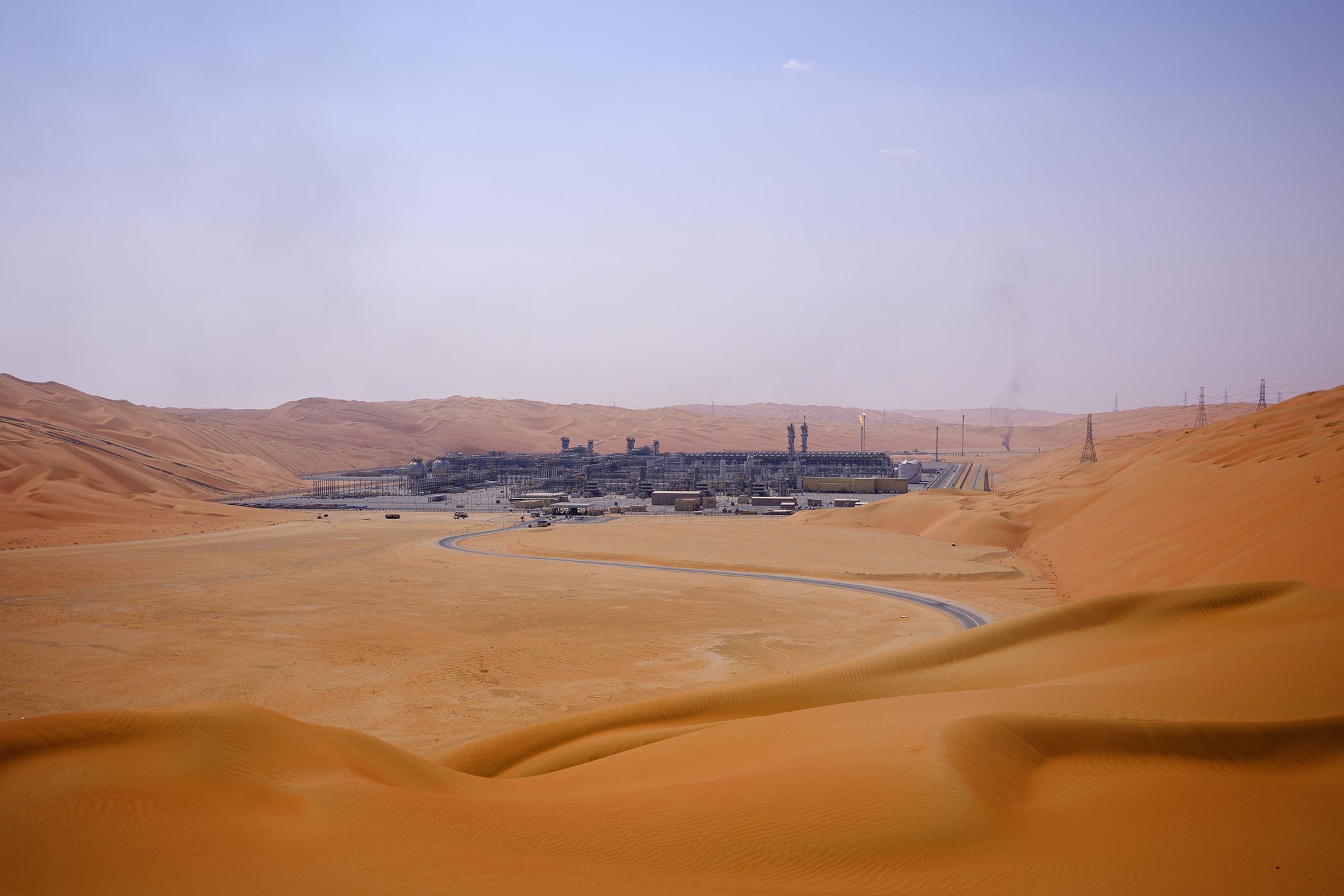
An intriguing answer was provided recently in an essay titled “Barrels to Bytes” on the Currency of Power newsletter by the tech investor and analyst Nicolas Colin and Marieke Flament, chief executive of a blockchain company. In it, they tell the story of how the US dollar became the world’s “reserve currency”, despite having been unhooked from gold by Richard Nixon in 1971. The story recounts the “oil shock” caused by the quadrupling of the oil price after the Yom Kippur war in 1973. In 1974, the US made a landmark deal with Saudi Arabia, then the biggest producer of the industrialised world’s most vital commodity:oil. The US offered the country security guarantees and arms. In return, the Saudis agreed that Aramco, the state-owned monopoly that extracted the oil, would price it exclusively in dollars and that the Saudis would invest their enormous surplus earnings in US governmenttreasuries.
Among other things, this meant that, from then on, every country that needed oil was obliged to buy dollars to keep the vital fluid flowing; and it explains how the mighty dollar became the world’s reserve currency. The result was a kind of perpetual motion machine: oil demand leads to dollar payments leads to Treasury purchases leads to funded US deficits leads to dollar dominance maintained.
Now spool forward to today. According to the International Energy Authority, global oil demand growth is slowing sharply and oil demand could “peak” around the end of this decade under current policies. Since much of the demand for oil is generated by transportation, the spread of electric vehicles may accelerate its decline. It’ll be important for a long time to come because it’s a key element in many other industries, but the AI frenzy suggests that a new must-have resource has arrived.
It’s what the tech industry calls the “compute stack”: powerful parallel processors and AI infrastructure (mostly vast aluminium sheds stuffed with computers). This leads Colin and Flament to propose that scarce, essential compute – namely, high-end graphics processing units (GPUs) – is replacing oil as the commodity that drives structural currency demand. They suggest an intriguing analogy in which Nvidia replaces Aramco (as the controller of the scarce resource); OpenAI becomes Exxon/Chevron (refining and processing the resource); GPUs stand in for barrels of oil; and stablecoins become the modern equivalent of 1970s petrodollars.
Accordingly, the new perpetual motion machine becomes: scarce compute leads to stablecoin settlement leads to Treasury-backed reserves leads to US government funding. Since 95% of current stablecoins are linked to the US dollar, this implies that its role as the world’s reserve currency will continue – and that the US will continue to be able to live beyond its means.
Newsletters
Choose the newsletters you want to receive
View more
For information about how The Observer protects your data, read our Privacy Policy
Of course, it’s only an analogy and, as Freud observed, analogies “decide nothing, but they can make one feel more at home”. But what makes Colin and Flament’s speculation valuable is that it offers a framework for thinking about stablecoins that avoids Amara’s law: we tend to overestimate the short-term effects of new technologies while underestimating their longer-term impacts. If they’re right, the irony is delicious. Europe’s banks are building their euro stablecoin as an alternative to dollar dominance, just as the underlying economics of the digital age may be cementing that dominance more firmly than ever. The petrodollar is dead; long live the “cryptodollar”.
What I’m reading
Word of mouth
Who Was the Foodie? is a fabulous essay by Alicia Kennedy in the Yale Review on what it would mean to take taste seriously again.
Route cause
A Risk of Cognitive Convenience is a very thoughtful essay by David Epstein on what GPS (and similar tools) do to our brains.
Collective consciousness
The Resonant Computing Manifesto is an interesting initiative by good folk who have the touching idea that the tech industry should be interested in human flourishing.
Photograph by Simon Dawson/Bloomberg via Getty Images