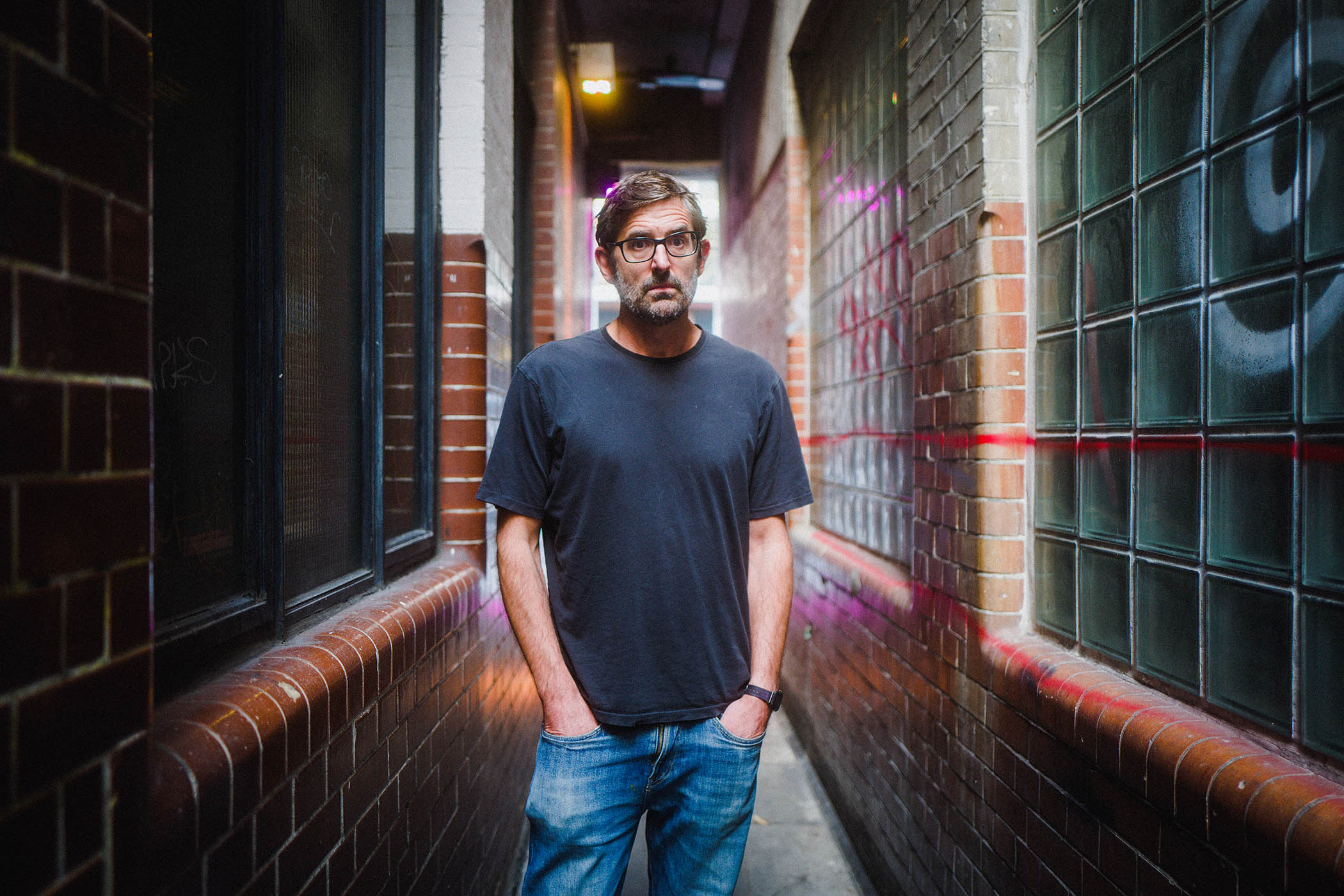
I was first introduced to Louis Theroux’s work in the early 2010s. It was around the time he released America’s Medicated Kids, America’s Most Hated Family in Crisis and Twilight of the Porn Stars. As a teenager in south London, his documentaries were portals into worlds far removed from my own. In an era predating algorithmic rabbit holes, Theroux’s work was the closest thing we had to wandering the internet’s weirdest corners.
Theroux moved through subcultures, interviewing cult leaders, sex workers and people with abhorrent political views, including neo-Nazis. For many, his documentaries were an entry point into investigative journalism. His bumbling, self-deprecating persona was his power, his key to gaining access to foreign worlds. It’s what allowed him to ask disarming questions and let his subjects reveal themselves.
His films arrived at a particular moment in British television. Theroux and the BBC had been tied since the 1990s, but the 2010s was also something of a golden period for Channel 4’s factual programmes. We were watching fly-on-the-wall like Educating Essex alongside provocative shows such as the vigilante The Paedophile Hunter. Vice videos also took us behind the scenes into strange and uncomfortable territory.
Like so many others, I combed through every show Theroux made and studied his approach. He was one of the reasons why, as a graduate in 2016, I was desperate to get into television. When I later became a production trainee at Channel 4, I wore a T-shirt with his face on it.
The depths of millennial devotion became visible to the industry in 2015 when My Scientology Movie premiered at the BFI London film festival. Distribution offers were scarce and, when it eventually landed in cinemas for a limited run, the screenings sold out at speed, packed with younger viewers. He had a ready-made audience.
Part of Theroux’s early appeal is the way he functioned as an analogue version of the internet: a guide taking us through subcultures that were otherwise obscured. But that role has fundamentally shifted. Today, if you want to see how a controversial influencer lives, you don’t need a documentarian to take you there because you can watch and engage with them directly. Subcultures are now being documented in realtime on social media, building audiences in the process. Consider the rise of “Mom Tok” and the now infamous reality series The Secret Lives of Mormon Wives, for example.
Theroux’s recent work, including his Netflix documentary on the manosphere, lands amid this transformation. The men he interviews on the show, influencers who preach a misogynistic gospel about dating, money and success, are already producing and distributing their content to millions. In earlier films, it was solely Theroux and his team who controlled the frame; now, this is somewhat contested. His subjects film him back, clip interviews, and circulate them online before the documentary has aired.
Yet the internet hasn’t erased Theroux so much as absorbed and remixed him. His appearance on Amelia Dimoldenberg’s online show Chicken Shop Date introduced him to a new generation, while the remix of his Jiggle Jiggle song went viral on TikTok. He has appeared on the millennial-led Receipts podcast, gamely offering up relationship advice, and recently posted sponsored content for Nike on his Instagram.
It would be easy to write about Theroux as a relic of a slower, pre-internet age. But for those of us who grew up watching him, that isn’t convincing. If anything, his work feels more distinct now. In an environment defined by speed and extreme self-presentation, his willingness to observe and let people reveal themselves continues to offer something self-broadcasted content simply cannot. It’s why we still revere Theroux and the golden era of factual telly he emerged from.
Listen to Liv Little discuss the week in culture with Miranda Sawyer on We Have Notes, wherever you get your podcasts.
Newsletters
Choose the newsletters you want to receive
View more
For information about how The Observer protects your data, read our Privacy Policy
Let’s chat! Send us your voice notes!
@WeHaveNotes_Pod on Instagram
@WeHaveNotes_Pod on TikTok
wehavenotes@observer.co.uk via email
Photograph by BBC / Mindhouse Productions / Dan Dewsbury