

Finding a simple test for cancer has been a holy grail that has eluded researchers for decades.
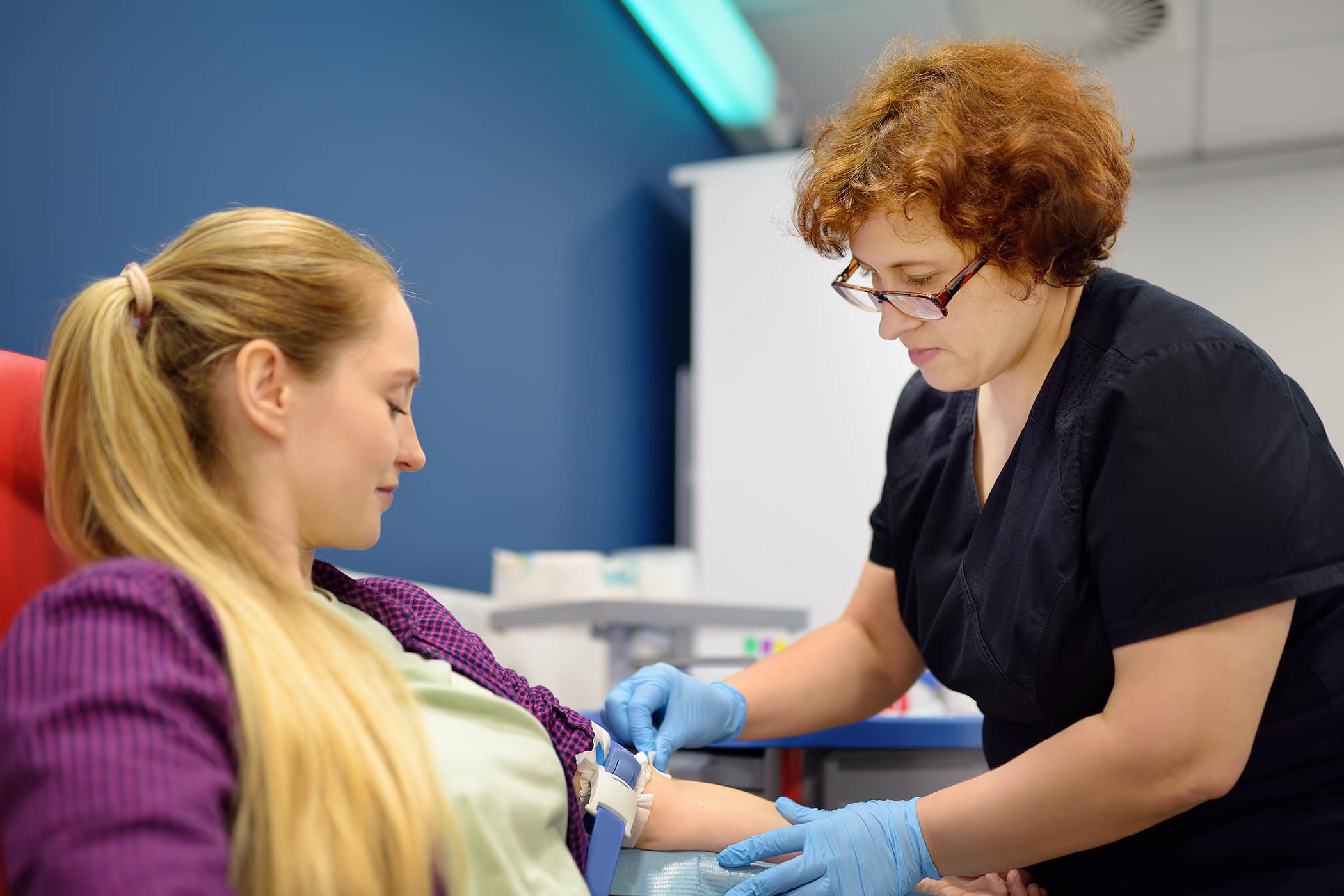
This week the world’s leading cancer scientists heard about a new hope: a blood test that covers 13 types of cancer that its backers say was able to detect 95% of tumours at the earliest stages.
There are plenty of caveats to the announcement by Wholomics, an Austrian company. Its paper has not yet been peer-reviewed but has been presented at the American Society of Clinical Oncology’s annual meeting in Chicago. Its analysis covered 1,400 people. Early trials of cancer tests often look more promising in the lab than in real life. And there is no data to say whether its diagnosis would help any cancer patient live longer.
Still, the claim is eye-catching and will be examined closely by oncologists, researchers and patients desperate for a multi-cancer early detection (MCED) test that works.
There are dozens in development and yesterday was bad news for the best-known, Galleri. It attempts to find more than 50 types of cancer – there are in excess of 200 – by detecting fragments of DNA that break off from tumours and float in the blood stream.
For three years, 142,942 NHS patients aged 50 to 79 who have no symptoms have given an annual blood sample for a clinical trial. But results showed no significant reduction in 12 key late-stage cancers – the main aim of the study.
“It shows the test is not ready yet for UK screening pathways,” said Dr Catherine Elliott, director of research at the charity Cancer Research UK. “But there’s a lot of interesting information there as well.”
The NHS Galleri trial did indicate that some stage IV cancers were detected at stage III, leading to a 14% reduction in stage IV cancers – potentially important “particularly for cancers like pancreatic and oesophageal”, Elliott said.
The ‘promise and potential’ of multi-cancer early detection is exciting
The ‘promise and potential’ of multi-cancer early detection is exciting
“There’s no doubt earlier diagnosis will save lives at scale, and also mean that people can have simpler, kinder treatments,” she said. “Even where we’ve got effective treatments for cancer, they often come with quite vicious side effects.”
Chemotherapy is one – a treatment invented nearly 80 years ago and still one of the main ways of dealing with cancers, but causes nausea, hair loss and fatigue.
Newsletters
Choose the newsletters you want to receive
View more
For information about how The Observer protects your data, read our Privacy Policy
Last Friday, researchers revealed the results of a third test, for breast cancer patients, who usually have surgery to remove a tumour followed by chemotherapy to try to kill any remaining cancer cells.
The Optima study by researchers at University College London showed that some of the 18,000 women who get chemo each year could be spared the ordeal.
The Prosigna test analyses the genomic make-up of breast tissue biopsies taken from patients, and the Optima study found that simply removing a tumour would be enough for women whose cancers have oestrogen receptors, and high levels of a protein called HER2. The survival rate after five years was 94.9% for those who had chemo and 93.7% for those who didn’t.
Dr Simon Vincent, chief scientific officer at Breast Cancer Now, said the trial was “an important step towards more personalised care”.
“We’re heading towards a place where treatment decisions are increasingly guided by an individual’s cancer rather than a one-size-fits-all approach,” he said. “Studies like Optima are an important part of making that a reality.”
Prosigna is one of three genomic tests approved for use by the NHS and has been used since 2018, although provision was patchy until guidance from the National Institute for Clinical Excellence was updated in 2024.
“This trial will be able to give confidence to clinicians to take that group of women out of chemotherapy,” Elliott said. The NHS will have to decide whether or not to pay for Prosigna if the number of patients increases – a test costs about £1,900 although this is dwarfed by the cost of chemotherapy treatments.
The fact that it has taken more than six years to prove how effective Prosigna is means that many women have had chemotherapy unnecessarily – and also demonstrates the problems for MCEDs.
Galleri research is continuing and in a few years is expected to have data on whether death rates have been affected, according to Professor Richard Houlston, head of the division of genetics and epidemiology at the Institute of Cancer Research. “However, on the basis of results from this and smaller trials, there is no evidence base upon which to justify implementation of Galleri at a population scale,” he said.
Professor Nitzan Rosenfeld, director of the Barts Cancer Institute at Queen Mary University of London, said the “only reliable evaluation” for a MCED “in theory, is a lengthy randomised trial with mortality endpoints”.
“The problem is, that to run such a trial to completion would take close to two decades, which means a long delay and high costs, and it means that by the time the trial is complete the technology will likely be obsolete.”
Elliott said there needed to be a way of comparing all the major MCED tests.
“Perhaps there is a way we can compare the tests and work internationally to get trials done faster,” she said. “The story is not finished.
Photograph by SbytovaMN/Getty Images