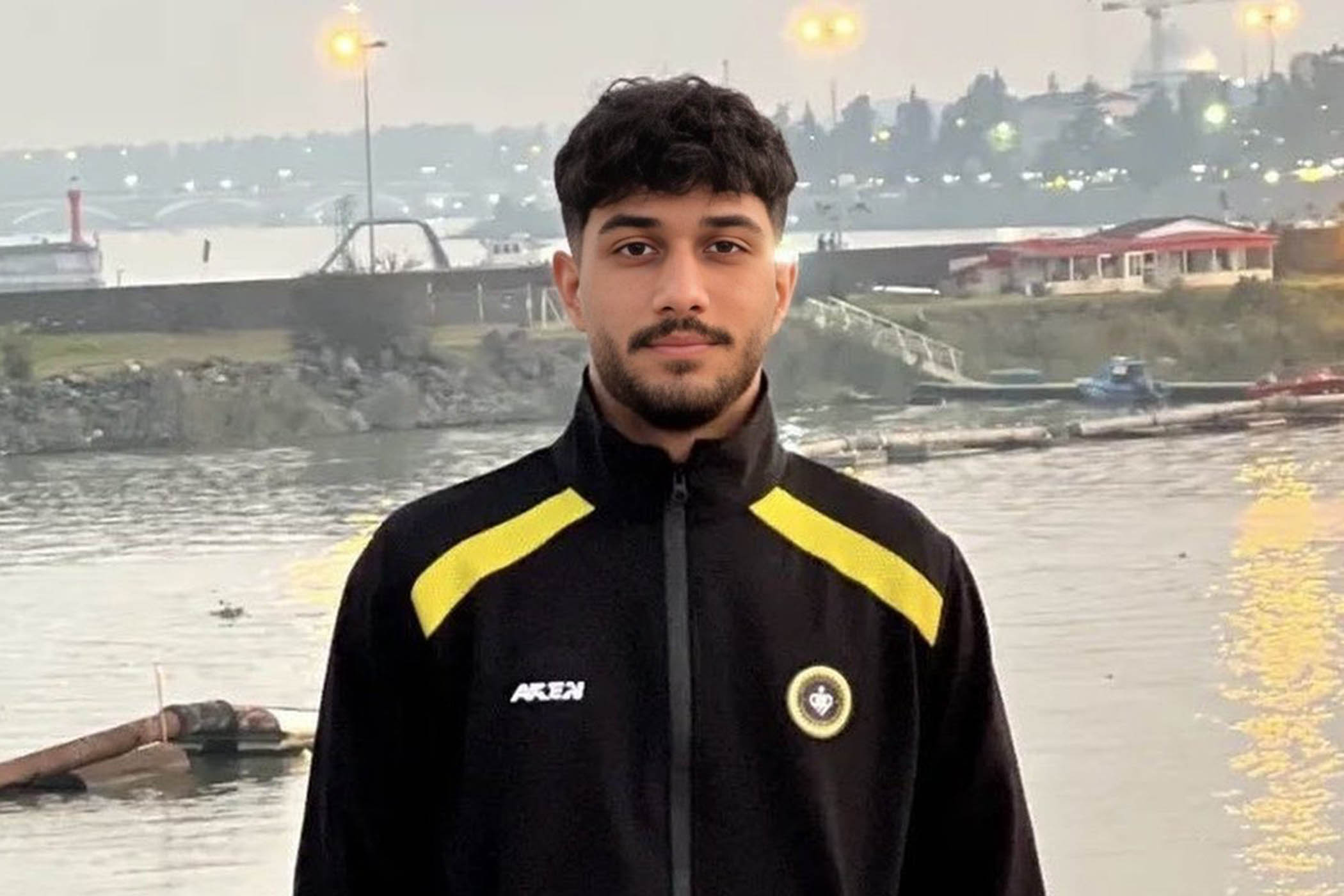

Normally, Amir Hossein Ghaderzadeh spends Thursday afternoons playing football. The 19-year-old plays for Sepahan SC, a club in the city of Isfahan that competes in the Persian Gulf Pro League. His parents had hoped he’d go to university like his sister, but for Amir, football is everything.
On the afternoon of 8 January, instead of going to practice, he and a group of friends joined an anti-government demonstration. What had begun as smaller protests over economic hardship – led by bazaar merchants and shopkeepers – quickly spread. That evening, after the exiled Iranian crown prince, Reza Pahlavi, issued a call for the people to rise up, exceptionally large crowds flooded the streets in cities and towns across the whole country.
Amir and his friends are not particularly political, but the desperate economic situation in Iran had become unbearable. “It wasn't about freedom of speech or women not wearing headscarves. It’s about survival,” said a relative of Amir's, who lives in Switzerland and asked to remain anonymous for fear of her family in Iran facing reprisals.
“They can’t afford the basics; even an orange costs more than £5,” she said. And for ambitious young people like Amir, there are no prospects. “No matter how much effort he puts in, no matter how well he plays, he will never make it to the national team. It’s all about who you know, and unless you have incredible connections, you don’t really have a future,” she said.
When she visited Iran in September last year for a relative’s funeral, none of the women standing at the graveside were wearing headscarves. “The authorities were going easy on people, but now it doesn't matter whether you stand left or right, pro-regime or against the regime. There's a fundamental understanding that they can no longer manage the economy, and that's the thing that people have in common.”
And so Amir and his friends joined the demonstrators on the streets of Isfahan. As the crowd grew in number and surged, police officers opened fire with pellet guns. The teenager was hit in the legs and side, but he made it back home to his parents’ house. He counted himself lucky. Since the protests began a little over a month ago, thousands of people have been killed.
Amir was injured, but his family didn’t dare take him to hospital. Doctors have reported that patients receiving treatment for injuries sustained during the protests have been shot dead by the authorities while lying on hospital beds. Several doctors and nurses who have treated those hurt in protests have been arrested as a result.
Amir’s family called a local doctor who treated him at home. A few days later, at three in the morning, the household was woken by banging on the door. The authorities had begun raiding homes, sometimes based on information gleaned from interrogations, sometimes at random.
'We didn’t know where he was being kept or whether he was being tortured'
'We didn’t know where he was being kept or whether he was being tortured'
The plainclothes men in Amir’s house forced him and his sisters to strip, allowing their bodies to be examined for marks left by the pellet shots fired at demonstrators. It was a terrifying experience, particularly for his 14-year-old sister. Standing there naked, it was impossible for Amir to hide his wounds. The teenager was arrested and then swallowed up by the opaque Iranian penal system. “ We didn’t know where he was being kept or whether he was being tortured,” says his relative.
A week later, his family received a call from the authorities to say that Amir had appeared in court briefly for a judge to pronounce him guilty of “betraying his country”. His sentence was death by hanging. He was not given the opportunity to speak in court, let alone have a lawyer represent him, and he has not been allowed to call his family.
Newsletters
Choose the newsletters you want to receive
View more
For information about how The Observer protects your data, read our Privacy Policy
His parents were informed that their son was scheduled to be executed last week, but so far there has been no news. They have called ministries, prisons and even morgues, but they have not been able to find out if he is alive or dead.
According to the US-based NGO Human Rights Activists in Iran (HRAI), more than 42,000 people have been arrested since the country-wide protests began a little over a month ago. The organisation’s news agency has reported that 2,063 people were executed in Iran in 2025, more than double that of the previous year. But with no independent monitoring of judicial proceedings and an internet blackout further limiting public scrutiny, there is scant information about the number of executions of protesters arrested in recent weeks.
Government statements have drawn a distinction between “legitimate protesters” and what they refer to as “deviant currents”. Tehran maintains that most of those killed were shot by armed infiltrators backed by Israel and theUS. Last week, the intelligence ministry said it had arrested 3,000 people whom it described as members of “terrorist groups”.
Witness reports suggest that the primary force deployed on the streets has been the Islamic Revolutionary Guard Corps (IRGC), an organisation whose entire mandate hinges on protecting the Islamic government at all costs. Amir’s relative has no doubt who has been responsible for the deaths. “The IRGC was built for this, for when the people rise up,” she says. “It was always built for a day like today.”
His family are struggling to imagine how Amir, who is usually shy and reserved, might be coping in prison. “ I like to think that he’s a resilient kid. He’s had to learn to survive in Iran,” his relative says. But it has been over a month since Iranian authorities gave an update about his fate. His relative says that when Amir’s family talk about him, there’s one thing that none of them want to admit: “That maybe the reason why they don’t tell us anything is because he’s not alive any more.”
Photograph by Farhadgol60/X