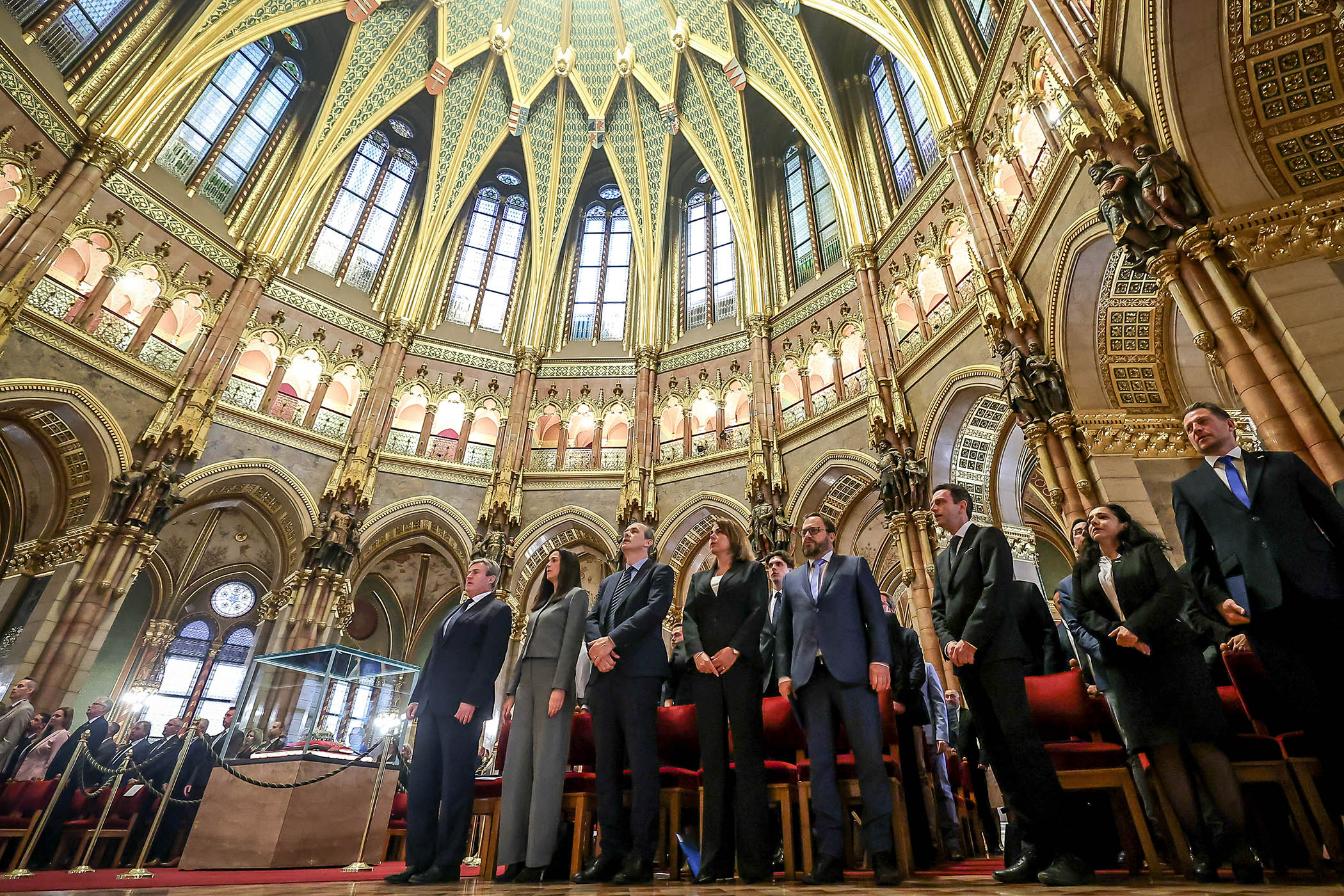

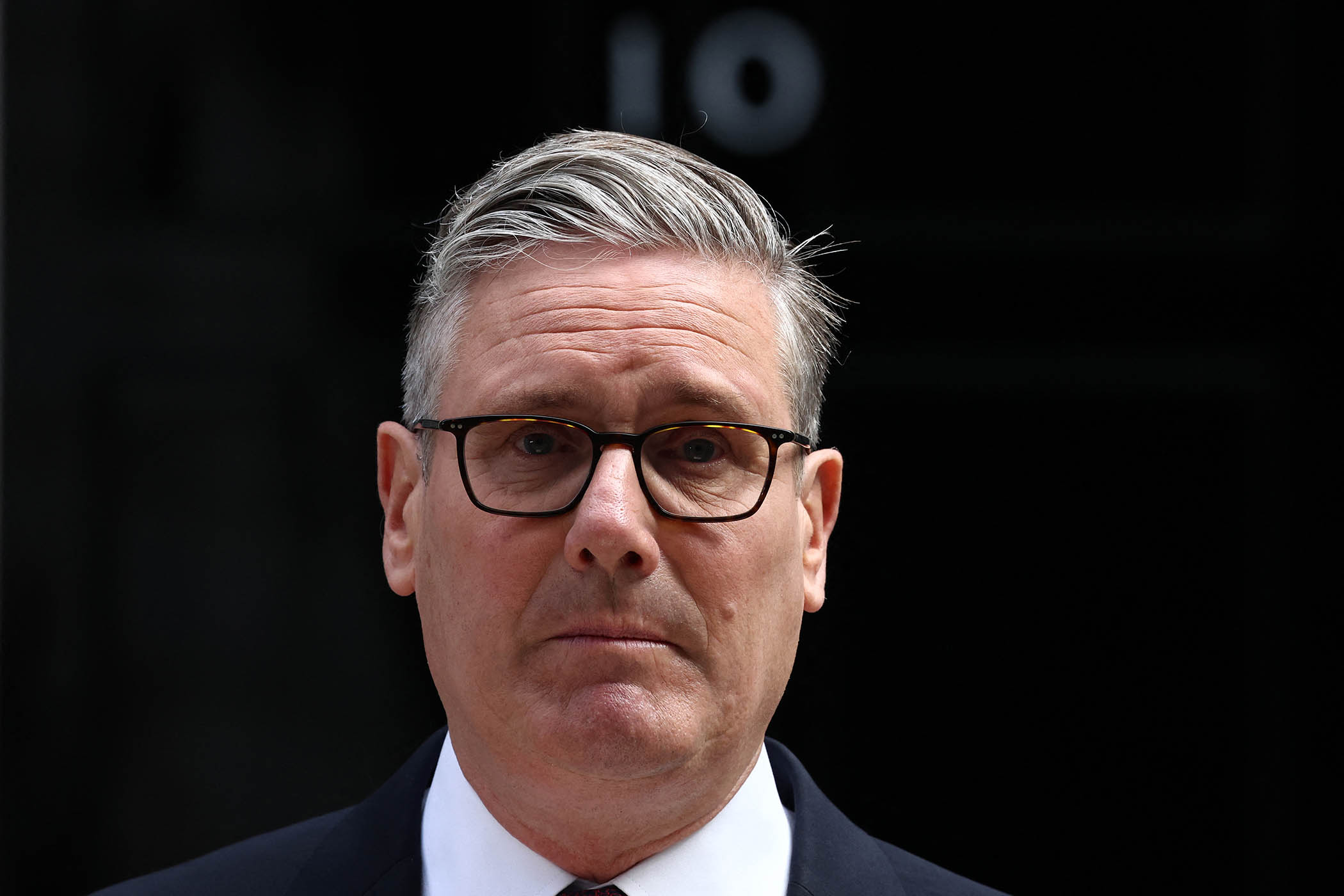
Hungary is launching one of the most abrupt political resets in post-Soviet history, with almost no governing experience.
When its new prime minister, Peter Magyar, is sworn in on Saturday, he will lead a party with 141 MPs, none of whom has previously served in parliament.
Magyar’s cabinet will be just as new to politics: László Gajdos, who will oversee environmental policy, previously ran Hungary’s second largest zoo. István Kapitány, the incoming minister for economy and energy, spent years as a senior executive at Shell. Zsolt Hegedűs, the incoming health minister, practiced medicine in Manchester and Bristol before moving home, and Anita Orbán, set to become foreign minister and deputy prime minister, worked as a director of public affairs at Vodafone Group.
Magyar, the 45-year-old lawyer who ended Viktor Orbán’s long run in power in last month’s seismic election, has promised to restore judicial independence, free public television from political interference and allow the independent press to operate without pressure. He has also pledged to strengthen Hungary’s democratic institutions by limiting the prime minister to two terms and restoring the electoral system.
But the pledge that resonated most powerfully with voters was to end political corruption, holding the oligarchs favored by Orbán to account and returning some of their wealth to the state.
It would be a tall order for anyone – but especially for political neophytes.
Magyar’s Tisza party commands a two-thirds supermajority of the 199 seats in parliament, but key state institutions including the Prosecutor’s office and the media remain staffed by Orbán-era appointees who became champions and practitioners of Orbán’s “illiberal democracy”, testing the EU’s patience and the rule of law almost to destruction.
Magyar’s new team hopes to offset inexperience with enthusiasm.
“I know I don’t know everything,” wrote Ágnes Fortshoffer, a businesswoman who will become speaker of the national assembly, in a social media post showing her studying parliamentary procedure. “Every minute, I’m preparing for the biggest challenge of my life.”
“I think [the speaker’s] post is quite symbolic and a good indication of what we are facing now,” says Gábor Török, a Hungarian political scientist, noting that even after the fall of the Iron curtain, the influx of political newcomers to the national assembly wasn’t so dramatic. “This is a very peculiar situation.”
It is also a fiscally fraught situation. During his campaign, Magyar promised to return the equivalent of billions of pounds in EU funding, frozen over breaches of EU law under Orbán and now vital for rebooting a moribund Hungarian economy. Unfreezing those funds is contingent on looming deadlines and Magyar’s relationship with other EU-members from which Hungary has become increasingly isolated. Orbán’s government drew closer to Russia through energy deals and diplomatic efforts. Voice calls, leaked before the election, showed that Orbán and his foreign minister Péter Szijjártó maintained close relations with their counterparts in Moscow. In February, Orbán blocked a £78 billion EU loan to Ukraine, but he lifted his veto after the election loss.
Magyar has said he won’t oppose the loan, but will opt-out of financially supporting Ukraine. He has invited Ukrainian President Volodymyr Zelenskyy for a meeting, and has promised to visit Warsaw, Vienna and Brussels to restore relations that deteriorated due to Hungary’s pro-Russian stance.
Gábor Török cautions against the assumption that inexperience will translate into weak leadership. With such a dominant parliamentary majority, he expects highly centralised governance. “The political programme of the prime minister will basically determine how the country is run,” he said.
That programme is expected to target corruption above all. Hungary has ranked as the EU’s most corrupt member state for the past four years, and according to a recent poll one in five voters named corruption as the main reason they broke with the previous government. The biggest beneficiaries of Orban’s system included his son-in-law, who became a successful businessmen with multiple hotels in his name; and his childhood friend Lőrinc Mészáros, a plumber who, according to Magyar, has, in 10 years become “five times richer than the English royal family in 400 years”.
Many of those now entering government, including Magyar himself, have roots in Orban’s Fidesz party or the broader conservative camp. “The pendulum did not swing to the other side,” Török says. “What we are seeing is more likely a cabinet with a predominantly moderate right-wing orientation.”
Not all of Magyar’s early decisions have been welcomed. His appointment of his brother-in-law, Márthon Melléthei-Barna, as justice minister has drawn criticism and accusations of nepotism. Bence Rétvári, a senior Fidesz figure, accused Magyar of making key decisions “at the Sunday dinner table”.
But beyond individual appointments lies a broader uncertainty: whether such a large and inexperienced governing bloc can remain cohesive under pressure.
For now, however, Hungary’s new leadership will enjoy a period of goodwill. After years of political stagnation, many voters are willing to give the newcomers time to prove themselves. According to Török, the honeymoon might last a few months, after which we might see changes in parliament and ministries.
“But this is not the right time to talk about this,” Török said. “It’s like bringing up divorce at a wedding.”
Photograph by Andolu/Getty Images
Newsletters
Choose the newsletters you want to receive
View more
For information about how The Observer protects your data, read our Privacy Policy