
Britain is not the only country whose royal family is in crisis following the release of three million documents relating to the late convicted sex offender Jeffrey Epstein. Among the emails and declassified documents made public by the US Department of Justice a week ago, the name of Mette-Marit, the crown princess of Norway, appeared hundreds of times.
The flirtatious tone of her correspondence with Epstein was almost as shocking as the contents, including the revelation she spent four days at his house in Palm Beach, Florida, in 2013.
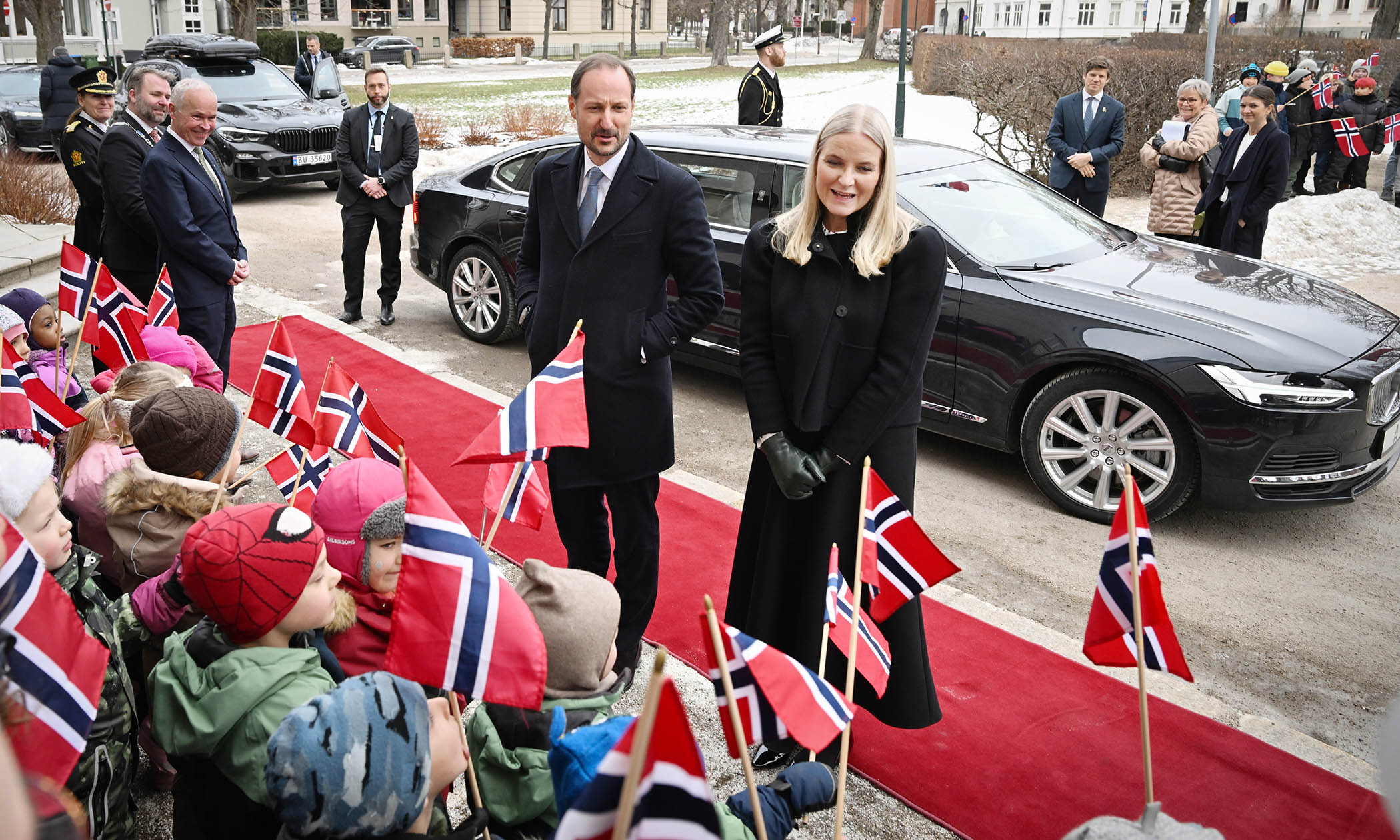
The details about their relationship have raised questions about whether Mette-Marit (pictured with her husband, crown prince Haakon) is fit to be queen, adding to a cascade of crises for the Norwegian monarchy, including an ongoing rape trial.
“This has really added to the drama and deepened the crisis,” said historian Trond Norén Isaksen. “Are people so angry with her that they would rather have a republic than have her as queen?”
In one email sent from her official account, Mette-Marit asked Epstein if it was “inappropriate for a mother to suggest naked women on a surfboard” as wallpaper for her then 15-year-old son. “I miss my crazy friend,” she wrote in another.
But perhaps the most damaging was an email suggesting the crown princess knew more about the convicted sex offender’s background than she claimed after Norwegian media first revealed in 2019 that they had met on several occasions. At the time, Mette-Marit said she would never have associated with Epstein if she had known how serious his criminal acts were.
And yet, in an email sent three years after he pleaded guilty to soliciting prostitution from a minor, she wrote: “Googled u after last email Agree didn’t look too good : )”
She asked Epstein if it was ‘inappropriate for a mother to suggest naked women on a surfboard’ as wallpaper for her then 15-year-old son
She asked Epstein if it was ‘inappropriate for a mother to suggest naked women on a surfboard’ as wallpaper for her then 15-year-old son
“Why did she react like she did? Why did she keep this friendship for three more years after she had Googled him? She can’t leave that unanswered,” said Kjetil Alstadheim, chief political editor of Norway’s paper of record Aftenposten, who wrote an article last week titled “Can Mette-Marit become queen after this?”
Three opinion polls have found nearly half of Norwegian people think she should not. Some have called on Crown Prince Haakon, who is next in line to the throne, to divorce her. With the king and queen of Norway approaching 90, his accession is not a distant prospect.
Facing a barrage of criticism, the royal family restricted comments on its official Instagram and Facebook pages. In an unusually blunt rebuke, Norwegian prime minister Jonas Gahr Støre agreed that Mette-Marit had “showed poor judgment” in her dealings with Epstein.
Newsletters
Choose the newsletters you want to receive
View more
For information about how The Observer protects your data, read our Privacy Policy
“Some of the content of the messages between Epstein and me does not represent the person I want to be,” Mette-Marit said in a statement on Friday, apologising to the royal family and in particular the king and queen. She said she wished to speak about what happened and to explain herself more fully, but wasn’t able to do so at this time.
When Crown Prince Haakon announced his engagement to a former waitress in 2001 it was controversial. By her own admission, Mette-Marit had lived “quite a wild life” before meeting him. She had a four-year-old son from a previous relationship with a convicted felon.
Over the years, however, the public came to accept her. There was an outpouring of sympathy when she was diagnosed with pulmonary fibrosis – an incurable lung illness that makes it difficult to breathe, for which she is expected to undergo a lung transplant.
And then in 2024 the police were called to an apartment in a wealthy district of Oslo after neighbours reported a row between a young man and his girlfriend. Inside, police found a broken chandelier and a knife buried in a wall. The man concerned was Mette-Marit’s son, Marius Borg Høiby, who is not a member of the royal family himself.
More women came forward with accusations against Høiby, who is charged with 38 counts including assault, drug offences and the rape of four women, all of them after consensual sex, and while they were either asleep or incapacitated.
Appearing in court for the first time last week, a tearful Høiby denied the most serious charges and said his extreme need for validation had driven him to excess with sex, drugs and alcohol.
“I am known for being Mamma’s son. Nothing else,” the 29-year-old told the three judges. He could face at least 10 years in jail if found guilty.
The Norwegian Republican Association had been expecting an increase in new members when Høiby’s trial began last week, but the revelations surrounding his mother prompted a surge.
Why did she keep this friendship for three more years after she had Googled him?
Why did she keep this friendship for three more years after she had Googled him?
“We’ve got new members coming in every hour,” said the head of the association, Craig Aaen-Stockdale. “We’ve been contacted by people who have said ‘up until now I’ve been a fan of the royal family and a monarchist, but now this has pushed me over the edge’.”
Despite the backlash, Norway’s parliament overwhelmingly rejected a proposal to change to a republic last week. Just 26 out of 169 members of parliament voted to end the reign of King Harald and his descendants – even fewer than the last time the vote was held in 2022.
If anything, the series of crises have garnered sympathy for the elderly king and queen, who are hugely popular among Norwegians.
Many regard them as one of the most unifying couples in Norway, noting they took commercial flights and have travelled widely across the country. As long as their health holds, the idea of a Norwegian republic seems a way off.
“The royals don’t have an election coming up next year, or the year after, so they have the benefit of time.” said Alstadheim. “Monarchies are very patient institutions”.
Photograph by Rune Hellestad/Getty