“I’m so tired of this,” said Fatima Daoud. “I feel so angry. I’m always feeling sad and depressed.” The 52-year-old mother of four had been forced to flee seven times across three wars – now she had been made homeless once again.
For almost a week, Israeli airstrikes have been pummelling Beirut and southern Lebanon, after Hezbollah fired rockets at northern Israel in the early hours of Monday morning to avenge the killing of Iran’s supreme leader Ayatollah Ali Khamenei.
Residents of Beirut’s southern suburbs, known locally as Dahiyeh, grabbed what they could and ran as missiles fell around them. Many of the strikes come after evacuation warnings are posted on X and Telegram by the Israeli military’s Arabic spokespeople. However, some missiles are fired without warning, to catch high-ranking targets off-guard.
This included a drone strike in the early hours of Sunday morning on the Ramada Hotel in central Beirut.
The attack, which Israel said struck Iranian commanders operating in the Lebanese capital, killed four people and wounded 10 others, according to Lebanon’s health ministry.
The four-star hotel sits on the capital’s corniche, a bustling promenade with views across the Mediterranean sea, and is the first strike on central Beirut since the latest round of hostilities began a week ago.
Israel said it hit key leaders of Iran's elite Quds Force of the Islamic Revolutionary Guard Corps (IRGC) but did not name them.
“The commanders of the Quds Force's Lebanon Corps operated to advance terror attacks against the state of Israel and its civilians, while operating simultaneously for the IRGC in Iran,” the Israeli military said.
The hotel was also housing displaced families from across Lebanon when the drone slammed into the fifth floor. Smoke and blast damage could be seen in the bottom right-hand corner of the facade.
According to the Lebanese ministry of health, 394 people (including 83 children) have been killed so far by Israeli attacks and 1,130 wounded.
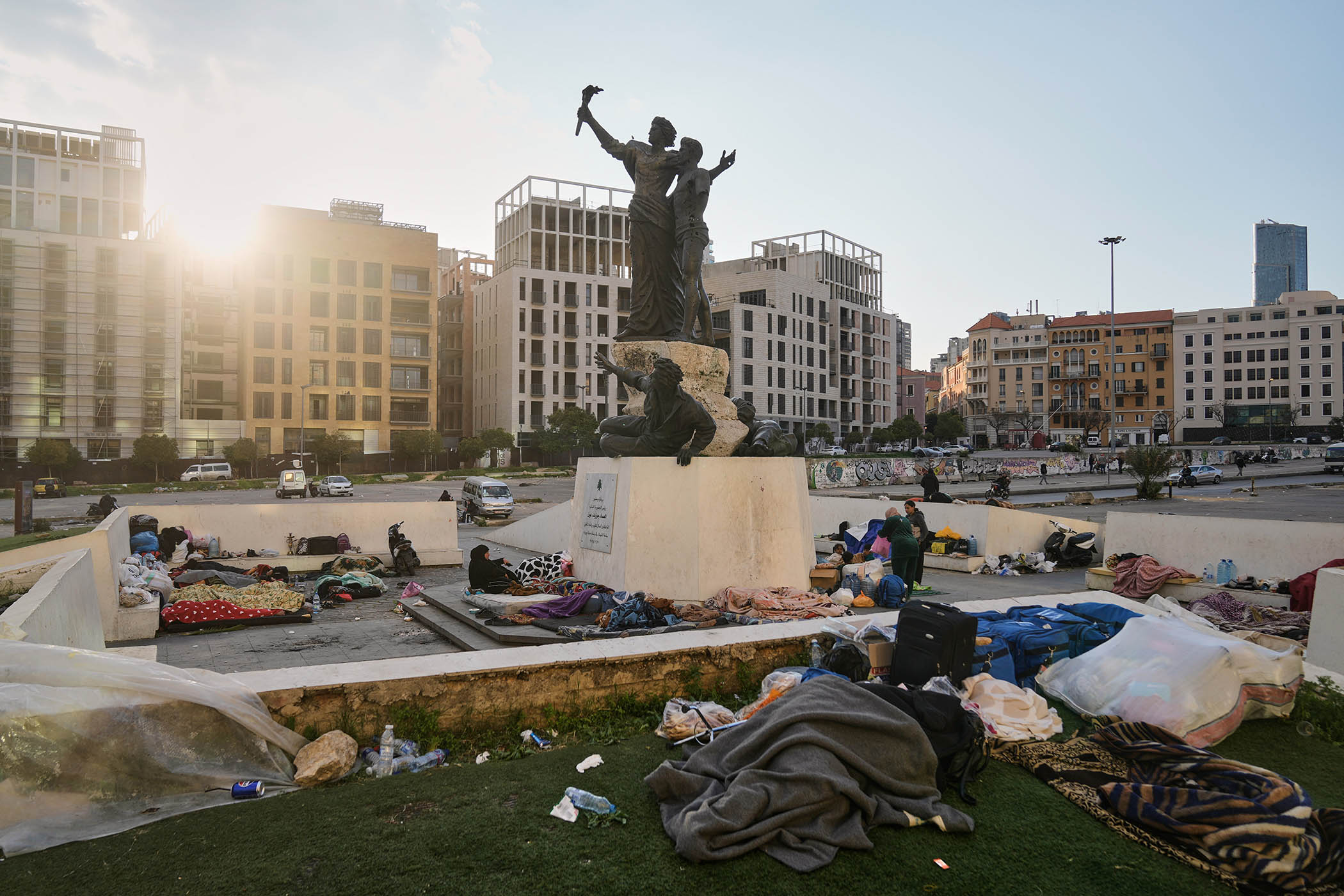
Displaced people fleeing Israeli airstrikes in Dahiyeh, Beirut's southern suburbs, sleep at Martyrs' Square in downtown Beirut.
On Thursday afternoon, the Israeli military issued an evacuation order for the whole of the Dahiyeh, affecting hundreds of thousands of people. An area the same size as the London boroughs of Lambeth, Walworth, Bermondsey and Peckham combined. Or New York's Midtown and Lower Manhattan.
Sitting in the security guard’s room at Sobhi Al-Mahmasani High School, which she now calls home, Fatima Daoud had just finished speaking when her 24-year-old daughter Zeinab cried out that the evacuation had been issued.
Fatima, Zeinab and Zeinab’s sister Reem, 20, ran out of the room just in time to see the family who had taken the room next door in the temporary shelter abandon their evening meal and begin to pack their car.
The school lies on the edge of the new evacuation zone. Fear spread quickly through the corridors.
A simple ping on a phone and suddenly almost half a million people were on the move.
Later, Israel’s far-right finance minister posted on X that “Dahiyeh will look like Khan Yunis,” the Gazan city now reduced to rubble. The statement sent panicked residents running through the streets of Beirut as families fled north and east on foot and in cars, carrying whatever they could. Traffic backed up for miles and families were forced to sleep on the pavement.
Yes the Dahiyeh is a Hezbollah stronghold, but it is home to innocent Shia, Palestinian, Syrian and Christian people, including thousands of foreign migrant workers from West Africa and South Asia with no family to turn to and nowhere to go.
“When Israel killed Khamenei, it wasn’t our fault and had nothing to do with us. I thought, ‘why have Hezbollah entered the fight?’ It’s between Israel and Iran so why did Hezbollah launch rockets?” Fatima said, wiping her eyes. “We have been displaced all these times for what?”
Fatima’s sentiments are echoed by many internally displaced people across Beirut, whose fury with the Shia militia group is growing.
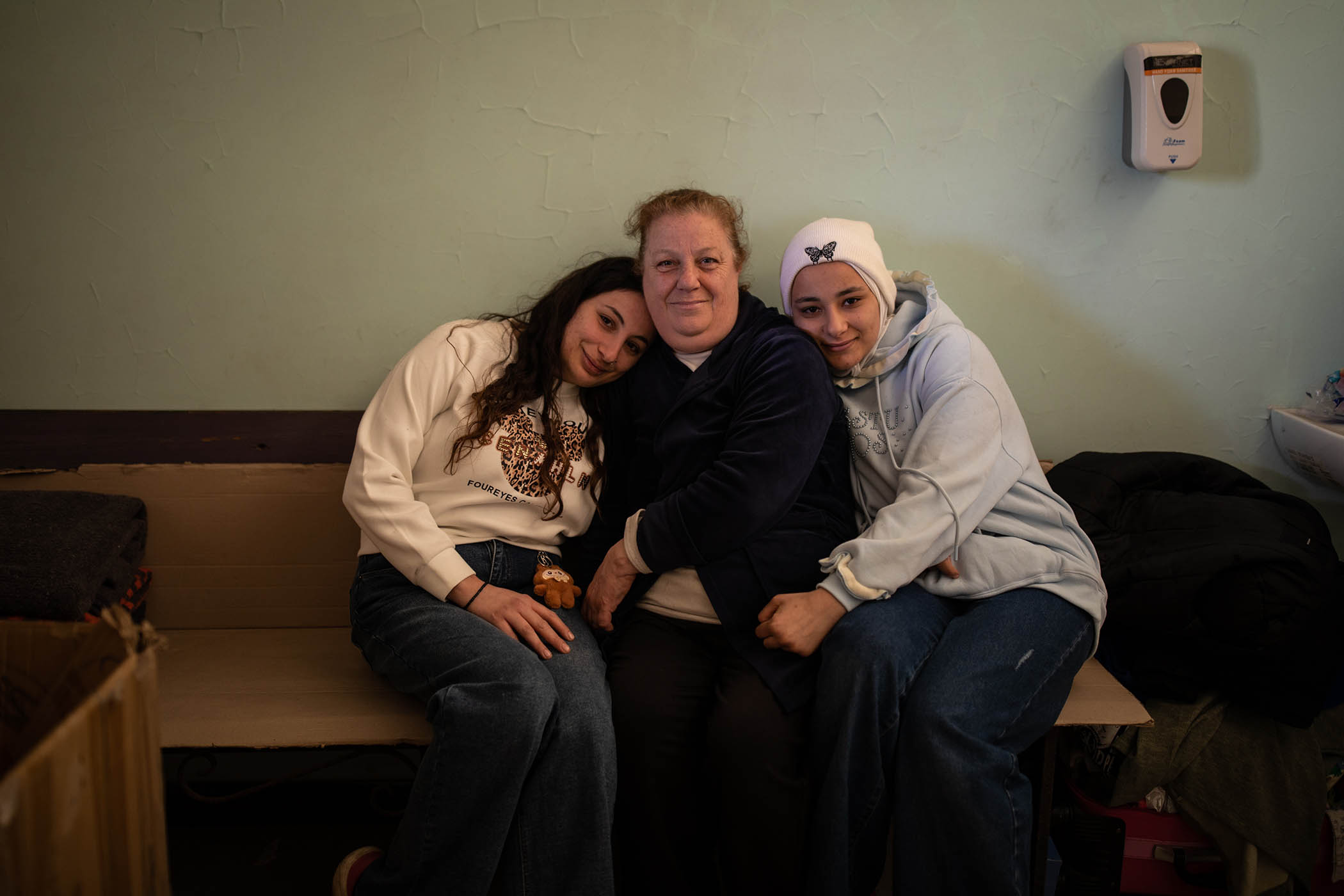
Fatima Daoud, 52, sits in the security guard’s room, with her two daughters Zeinab, 24, (left) and Reem, 20, (right) in the Sobhi Al Mahmasani High School which she nows calls home after being displaced from her home in the Dahiyeh.
Marc Daou, an independent member of parliament in Lebanon’s Progress party, believes that Hezbollah has removed any pretence of being a Lebanese militia.
“The attack was carried out on Iranian orders,” he told The Observer from his office in east Beirut. “The Iranian regime is stuck in a corner. I think all their protégés are now asked to come to the rescue. What Hezbollah did was a diversion, and I think they executed it blindly, which again proves Hezbollah is Iranian.”
The militia’s actions went as far as to infuriate the Lebanese government. In an unprecedented step, Prime Minister Nawaf Salam immediately outlawed any military activities by Hezbollah.
The government's decision, which was rejected by a senior Hezbollah politician, highlighted a dramatic shift in Lebanon's power balance after the once-dominant group, stronger than the Lebanese Army, was pummelled by Israel during the conflict in 2024.
Despite the fact that Hezbollah is still able to fire rockets and drones into northern Israel, the group is facing an existential threat. Its leadership is decimated, its backers are fighting for survival in Iran and its supporter base have been displaced time and again.
Is this the beginning of the end for the Shia military and political group?
According to Michael Young, senior editor at the Carnegie Middle East Centre in Beirut, the goal of the Israelis is to impose a peace treaty on Lebanon, to consolidate what they would see as the marginalisation of Hezbollah.
“But in doing so, they also want to destroy Hezbollah,” he said. “So that the Lebanese army will be in a much better position to disarm them.”
For more than a year Israel and Hezbollah have been trapped in a familiar catch-22. Israel insists it will withdraw from Lebanese territory once Hezbollah disarms. Hezbollah says it will disarm only after Israel withdraws. Meanwhile, it is the Lebanese people who are paying the price.
Forty miles south of Beirut, Mustafa Taha was preparing his evening meal after fasting through the day during Ramadan when his phone rang from an unfamiliar number. He ignored the first call. Then the second. Then the third.
When the fourth distracted him from his preparations he finally picked up. A recorded voice told him in Arabic to flee his home of 16 years before it was targeted.
He, his wife and two children fled just minutes before a missile slammed into the five-story apartment block in the southern city of Saida.
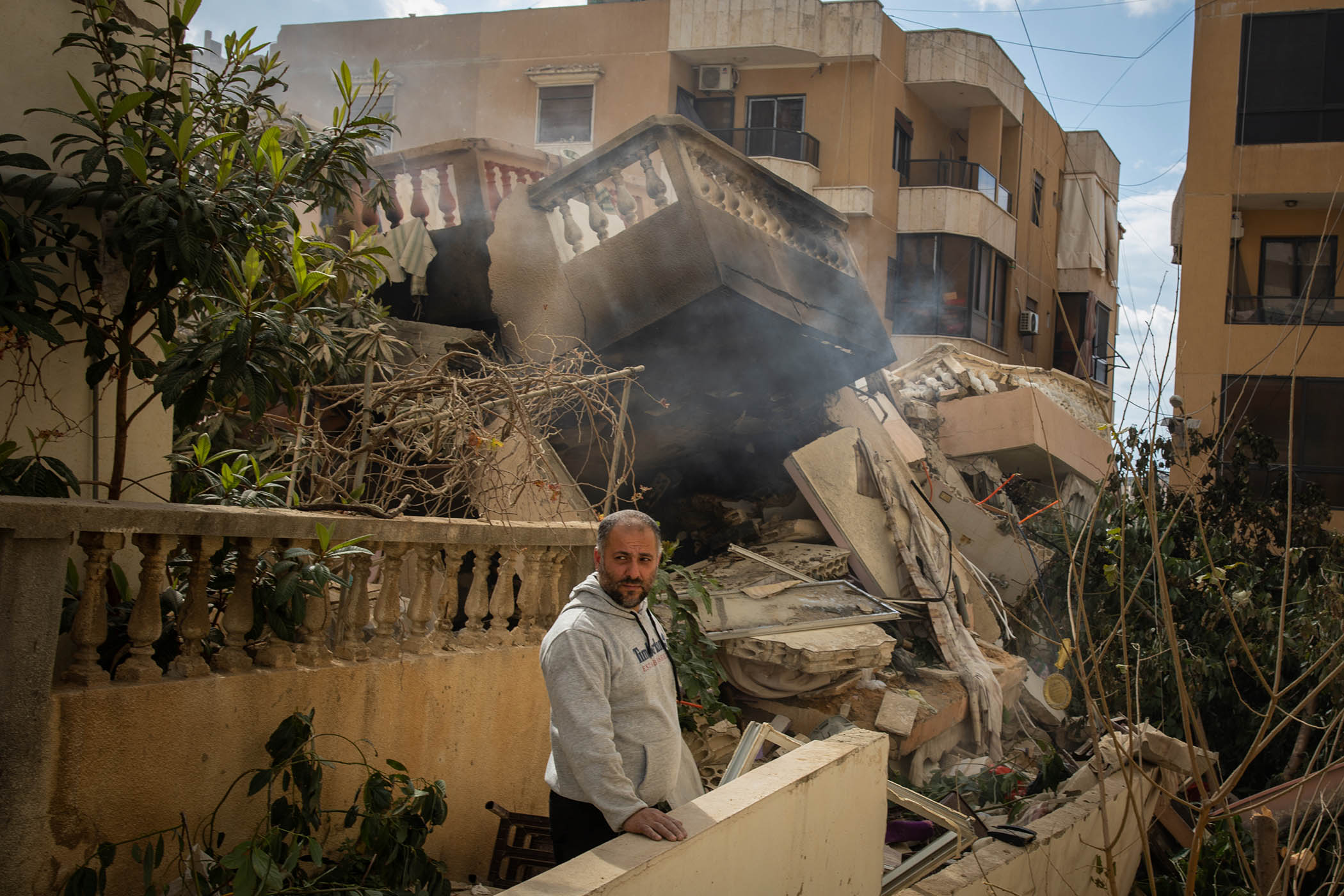
“I ran out in the clothes I am wearing now and took nothing,” the 49-year-old electrician said, standing in front of the rubble that used to be his home, as smoke billowed from the ruins. “No money, no gold, nothing. I don’t even know if I turned the gas off.” Taha said he was not affiliated with any party, but that displaced residents from the south had moved into the building.
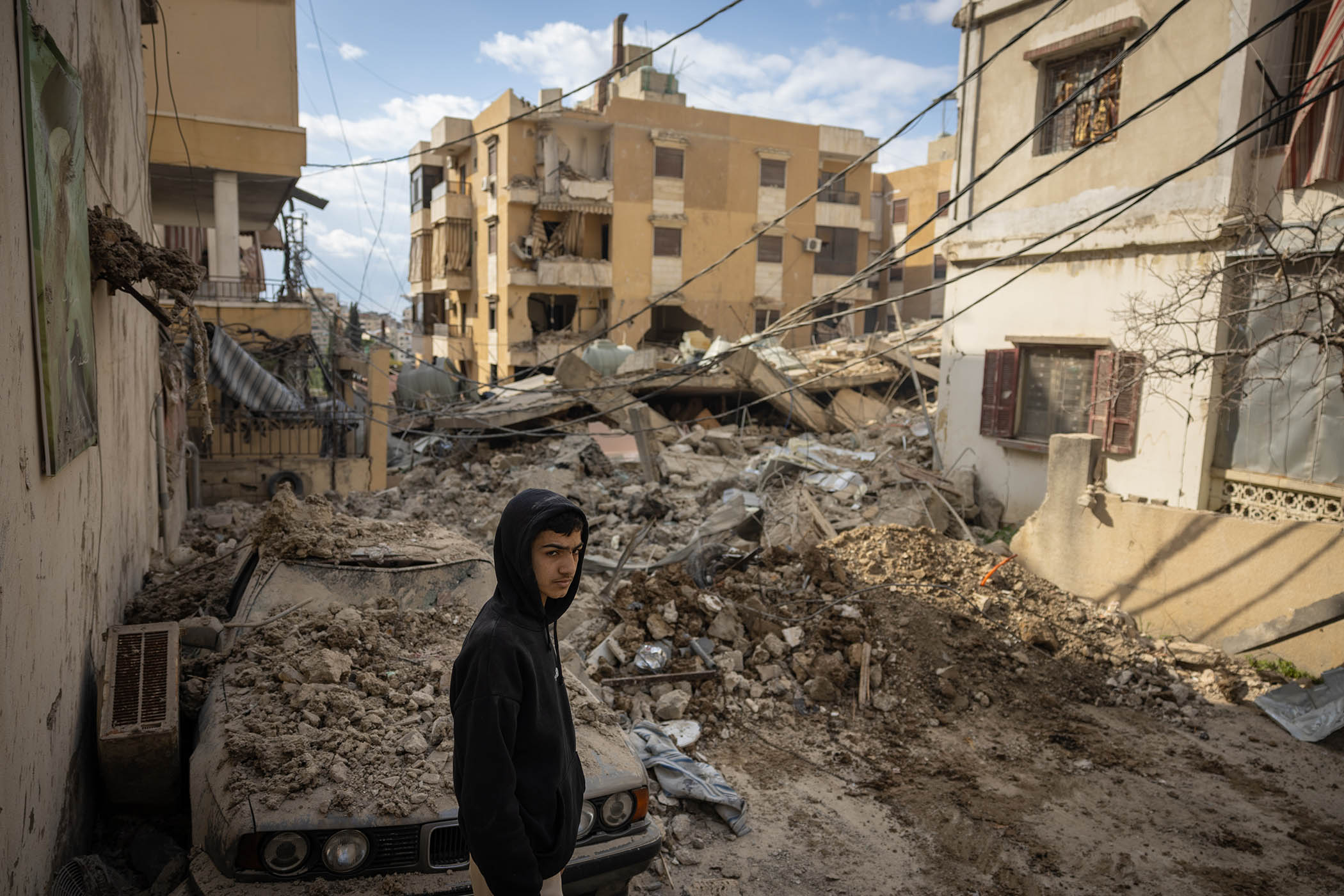
One of many apartment blocks destroyed by an Israeli airstrike in southern city of Saida.
Saida, a predominantly Sunni city, was considered relatively safe in the current conflict raging across the Middle East. The neighbourhood in which Taha lived was a mixed community of Sunni and Shia where the residents “only work.”
Sifting through the wreckage, Taha picked up a photograph. “This is my daughter,” he said, holding a picture of a smiling 13-year-old girl wearing a T-shirt decorated with three large ladybirds. “This was my son’s,” he cried, hitting dust off a deflated basketball.
Marc Daou believes that Hezbollah has shot themselves in the foot. Their actions in the early hours of Monday morning have cemented their own demise.
“People will not defend Hezbollah anymore. They cannot,” he said. “I think their own ecosystem has just fragmented because of what they did today. So with no popular support, they cannot sustain themselves.”
Back in the Dahiyeh, Fatima Daoud looked out of the door of the single room she shares with five other family members as friends and neighbours prepared to leave the shelter.
Hezbollah may be weakened, but the fear it inspires still hangs heavily in the air. Many residents privately criticise the group yet would never speak openly.
Asked what she would say to Hezbollah’s secretary general, Naim Qassem, Fatima paused.
“What can I say? You destroyed our homes, our houses. We are losing men and our villages,” she sighed, casting a lonely figure on the school chair.
“But I can’t say this. All I can say to him is ‘protect the resistance.’”
Newsletters
Choose the newsletters you want to receive
View more
For information about how The Observer protects your data, read our Privacy Policy