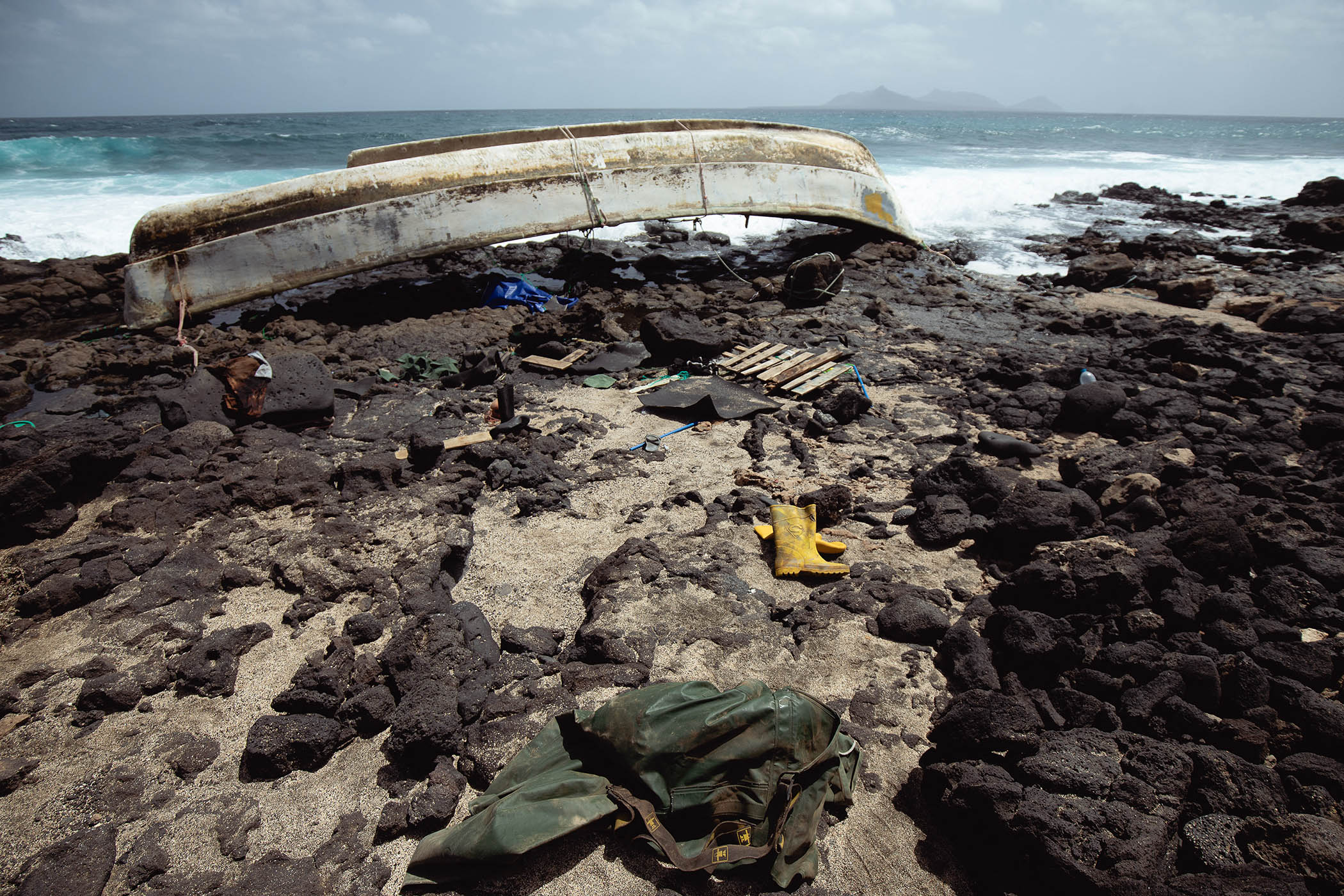

Photographs by Olivia Acland for The Observer
At twilight on the outskirts of Nouadhibou, a city in the west African country of Mauritania, Abdul Diop taps the taxi driver on the shoulder. “It’s here,” he says quietly, gesturing to a stretch of sand and rocks on the edge of the road.
Diop climbs out of the car and stares at a nondescript patch of ground. His eyes instantly fill with tears. He has buried more than 1,000 bodies in this spot over the last 20 years, he says, so many that “it’s hard to count” the exact number. They belong to migrants from across west Africa who attempted to cross the Atlantic in small fishing boats, trying in vain to reach Spain’s Canary Islands.
He says he searches the bodies – usually young men in ripped clothes – for any indication of their names or nationalities so he can reach out to their families. For those who do not have any identifying card or document in their pockets, he loads their bodies on to a truck and brings them here. When 24 people washed up on the beach three months ago, “we buried some here”, he says in a low voice. Diop, a Senegalese migrant who volunteers with a local charity, buries the dead as a service to the community. After all, nobody else is collecting them.
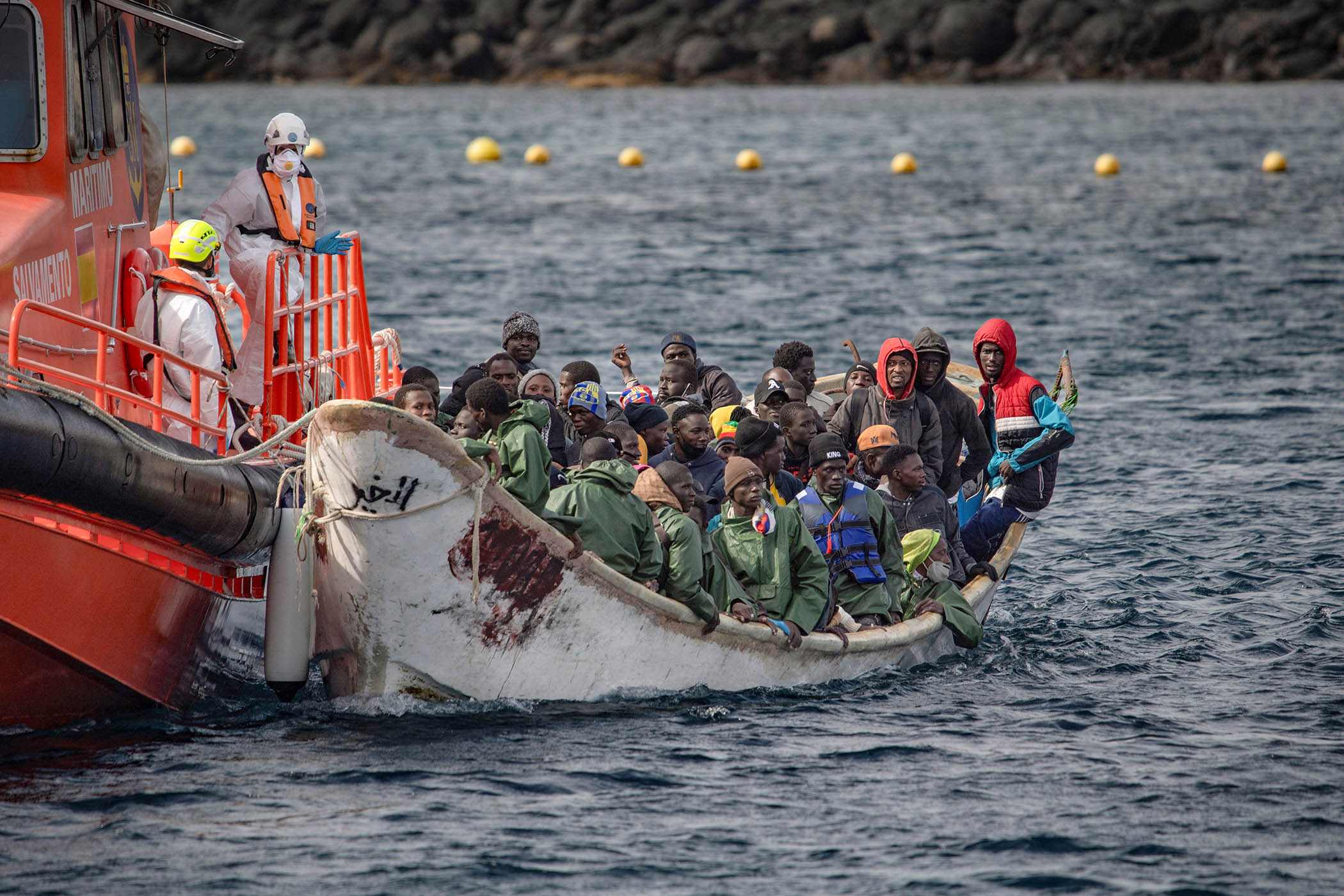
A 'cayuco' boat from Mauritania with 78 migrants onboard arrives at La Restinga port on the Canary island of El Hierro after being rescued at sea by the Spanish Salvamento Maritimo
Over the last five years, the migration route from Mauritania to the Canary Islands has become one of the most popular, and deadliest, in the world. In 2024 an estimated 9,757 people died on it – one in every five – often after days of being battered by Atlantic swells. In the same year, of the 37,000 people who attempted to reach the UK on small boats, about 70 died, or one in every 500.
As passengers die, usually small children and the elderly first, the captains slide their bodies over the edge of the boat.
During our conversations about why they were prepared to risk their lives, one detail kept emerging: social media
During our conversations about why they were prepared to risk their lives, one detail kept emerging: social media
While thousands perished on the journey in 2024, tens of thousands survived and managed to reach the Canary Islands. That year, 46,843 people landed on the archipelago by boat, according to Spanish government figures. This created what the Canaries’ president, Fernando Clavijo, called “an unprecedented migrant crisis”.
Mauritania, a sparsely populated country consisting mostly of desert, has become a major point of departure for migrants, largely because of its long stretch of poorly policed Atlantic coastline. The Canaries, seen as the gateway to Europe, sit a tantalising 500 miles across the water. In good conditions, a small boat can reach them in a day and a half.
In Mauritania, I met migrants from Senegal, Ivory Coast, Guinea, Mali, Niger, Cameroon and Burkina Faso who had travelled there to attempt the crossing. During our conversations about why they were prepared to risk their lives, one detail kept emerging: social media. As a young Senegalese woman in the capital, Nouakchott, put it: “I’m inspired by my ex-boyfriend who made it to Italy. He shares photos of his life online.”
Everybody seemed to know someone who had “made it” and who splashed photos of their glamorous lifestyle across Facebook and Instagram. But it is not just this. Smugglers also use social media to advertise their services, reinforcing myths about the ease of the crossing and the carefree life that awaits beyond it.
Newsletters
Choose the newsletters you want to receive
View more
For information about how The Observer protects your data, read our Privacy Policy
One TikTok account, run by a young Senegalese man, features several videos of grinning migrants on fishing boats. Over one clip, the text advertises “a captivating journey across the Atlantic Ocean where crystalline waters blend into the blue of the horizon and waves rock the pirogue”. Behind the words, a fishing boat full of migrants bobs on a calm ocean. “Every kilometre tells a story of courage and determination,” the text concludes.
Another account, managed by a Guinean man, boasts dozens of videos of migrants in boats – most of which are labelled as “promotional content”. One shows a photo montage of three women grinning into the camera with their life jackets unfastened. “A convoy of 14 people from Mauritania has arrived in Gran Canaria,” the caption reads. “Good luck to everyone.”
What the videos do not show, however, are the thousands of thirsty, starving people who get stranded on boats in the middle of the Atlantic. Nor do they reveal the realities of what life might really be like in Europe as an undocumented migrant.
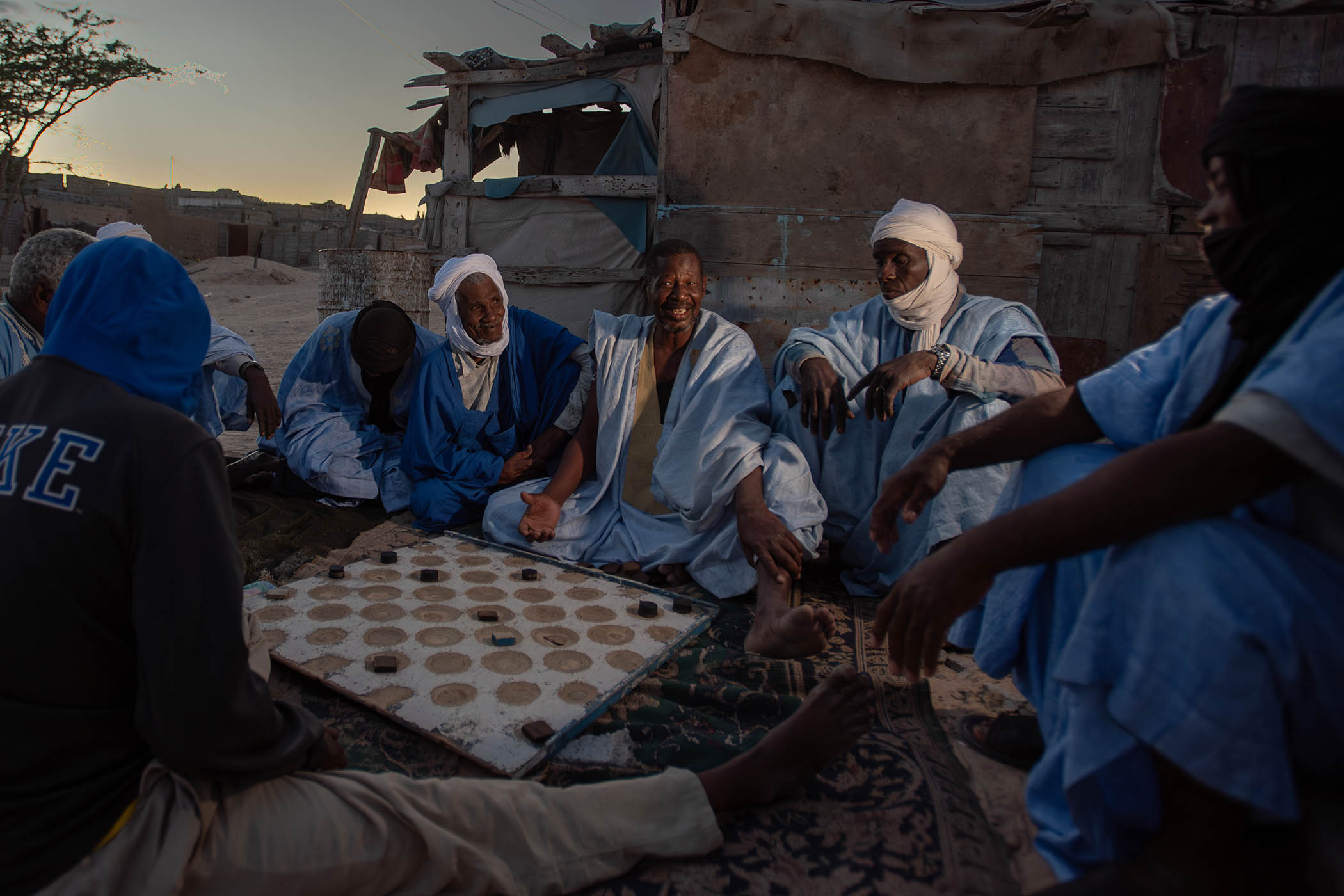
Men in Nouadhibou playing draughts – it can be a long waiting game for migrants
Echerif Niang, who works for an NGO campaigning against irregular migration, the Association des Gestionnaires Pour le Développement (AGD), says: “People think that you arrive and then everything is easy.”
Sitting at his desk on the edge of a traffic-clogged road in central Nouadhibou, the main departure point in Mauritania, he explains: “People don’t realise how difficult it is to get a work permit if you haven’t gone the legal way. Without documents, it is very hard to get a job or even a place to live. People suffer.”
Migrants are often too ashamed to reveal the hardships they experience in Europe, Niang says. They do not want friends or family to know that their expensive, dangerous journeys have only led to more grind and poverty. This is why some share rosy, unreal images of their lives on social media. They do a good job of fooling people. In Nouadhibou, life in Europe looks so seductive that attempting the journey is known as “Doing the El Dorado.”
When there is a setback, migrants who have started their journeys post selfies accompanied by the words ‘zero discouragement’ on social media
When there is a setback, migrants who have started their journeys post selfies accompanied by the words ‘zero discouragement’ on social media
Niang’s staff are trying to change this. They go door to door in neighbourhoods where would-be migrants are staying and describe the dangers of the crossing. They spell out the harsh realities of reaching Spain without papers, and the years that can be spent holed up in grim immigration centres.
“We tell people to stay at home and invest there, instead of giving money to a smuggler,” Niang says. AGD also gathers people on street corners and invites those who have attempted the crossing to tell their stories through a loudspeaker. They recount terrifying nights spent in drenched boats on the open water.
Women face even greater risks, Niang says, as they are confined for days among dozens of unknown men. “We have heard several cases of people being raped.”
While it is hard to measure the success of such campaigns, the number of people setting off from Mauritania dropped sharply in the last year – although this probably has more to do with an £180m package that the EU promised the country in 2024. Much of the funding is going to improve border controls and dismantle smuggling networks.
Something is working – there was a 60% decrease in arrivals to the Canary Islands in 2025, with 17,500 people reaching the archipelago. Fewer also perished at sea – an estimated 1,906 deaths on the route last year.
While in the past, coastguards in Mauritania were reportedly paid by smugglers to look the other way, extra training and an injection of EU cash seem to have made them more effective.
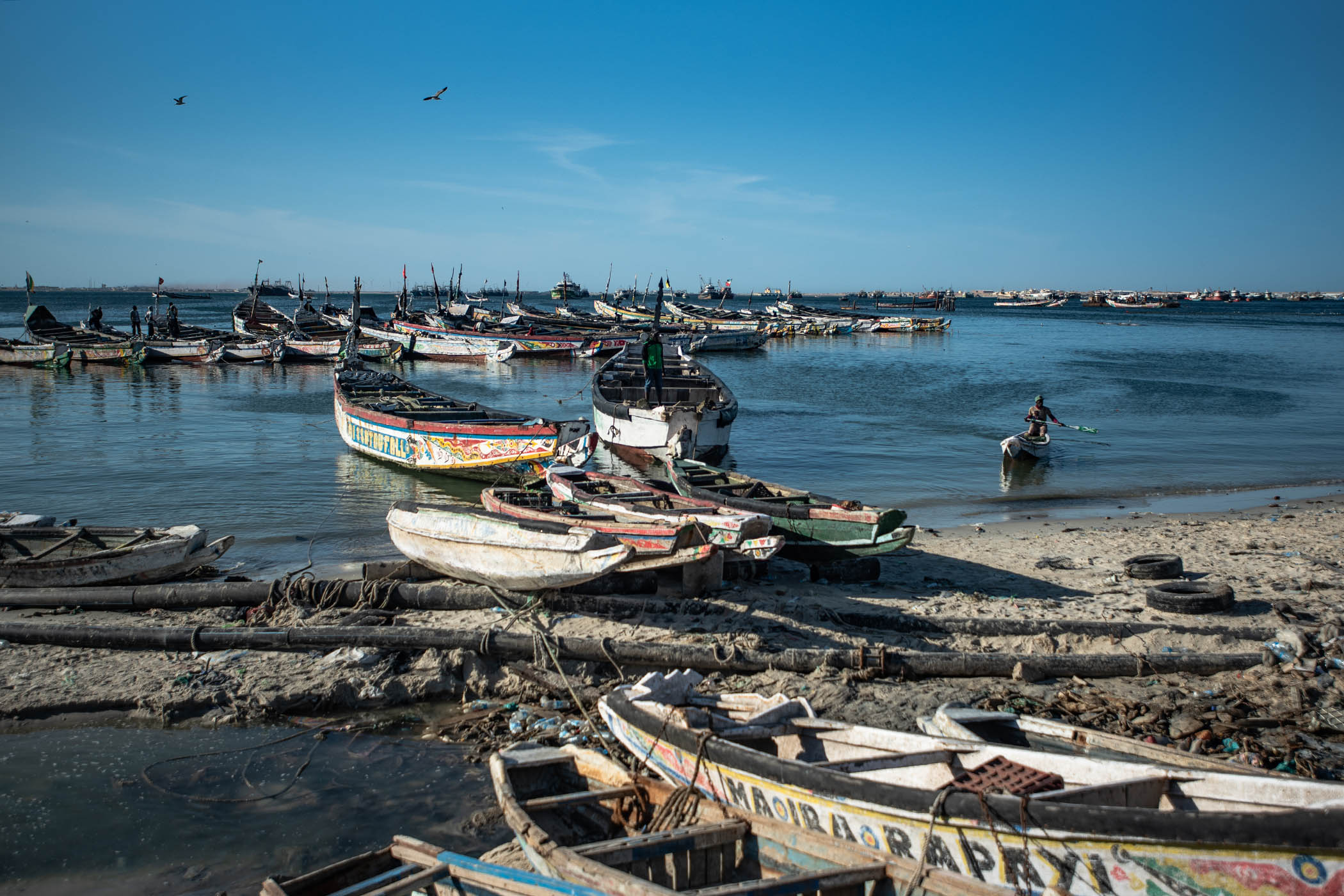
Migrants head out into the Atlantic for the 500-mile crossing in wooden fishing boats like these at Nouadhibou port
The EU’s support for Mauritania’s security forces, however, is not without controversy. Human Rights Watch reports that, with EU backing, Mauritanian police have tortured, arbitrarily detained, and sexually abused migrants. “EU externalization over the years has encouraged and financed repressive approaches to migration control in Mauritania,” the report reads, describing documented cases of “torture, rape … sexual harassment; arbitrary arrests and detention, inhumane detention conditions”.
The watchdog also writes that Mauritanian police have rounded migrants up and dumped them at dangerous border areas, including the desert frontier with Mali, where violent extremist groups operate.
While some smugglers have been arrested, several experts in Mauritania grumble that the “big bosses” are still at large. One smuggler – a former fisherman who runs dozens of boats out of Nouadhibou – has gone into hiding in Dakhla, a city in neighbouring Western Sahara. “Activities have stopped for now,” he writes to The Observer in a text message. “Many friends have been arrested.” Still, his business is so lucrative that he plans to return to it as soon as police operations ease.
The smugglers also have an endless stream of hopeful customers from across the region, many of whom are biding their time too.
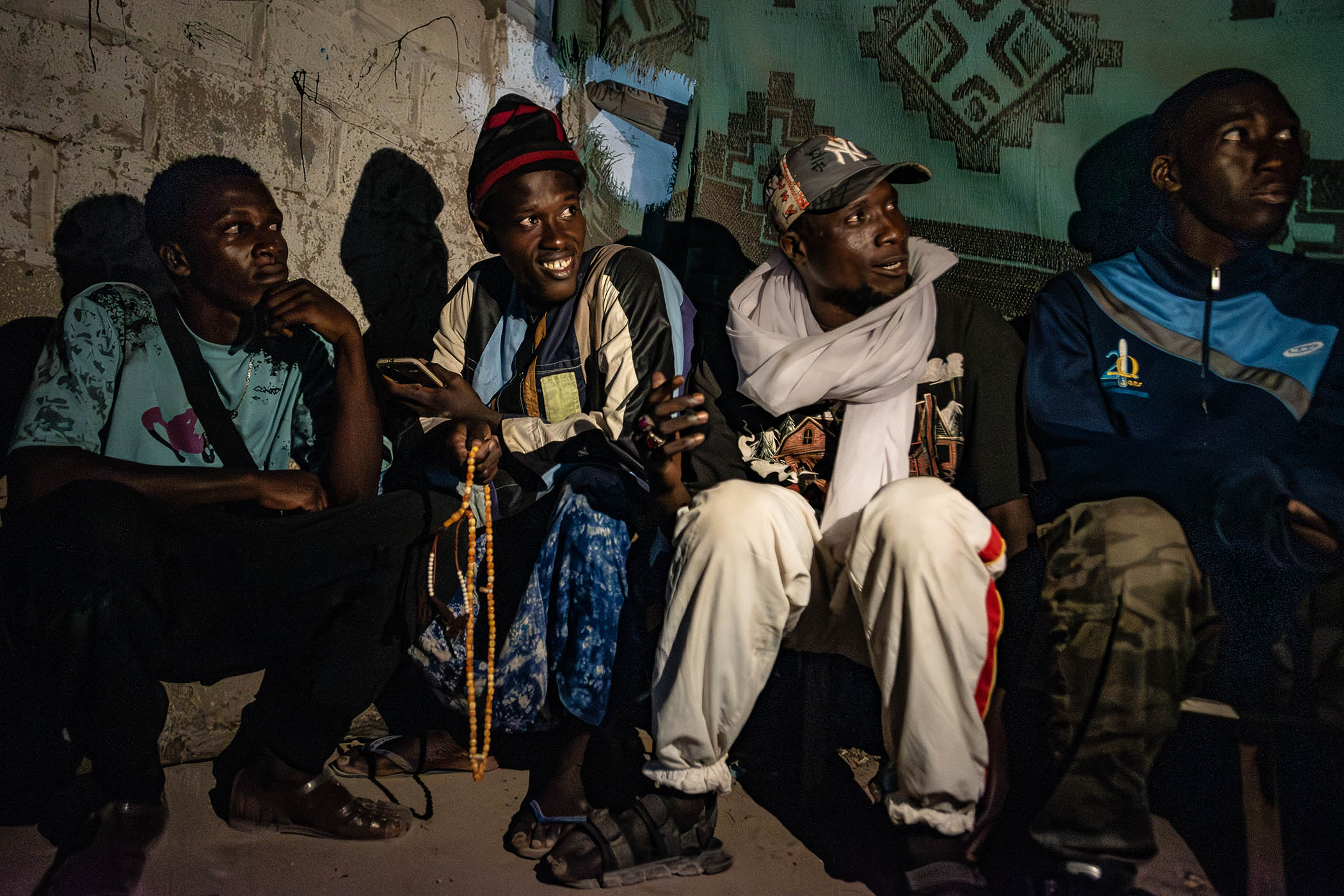
Senegalese migrants hoping to making the crossing pictured in a shelter in Nouadhibou
One morning, several men from Senegal and Ivory Coast gather at a makeshift restaurant in Nouadhibou. Mostly young, they have easy smiles and booming laughs. Several have already tried to cross, only to be intercepted by the coastguard or forced back by bad weather.
They sit around a wide table while the proprietor sizzles onions in an oily frying pan. Passing a flask of sugary coffee from hand to hand, they joke and chat about where they want to go. “England,” says one man. “Spain,” shouts another. An older man says that he would go anywhere where he can earn a living. At this, several of the others nod vigorously.
Some of the men have been in the city for months, others for years, picking up informal construction work and saving to pay a smuggler. The crossing usually costs between £400 and £1,000.
Ibrahim Ba, a 52-year-old fisherman with a wispy grey beard, is among the group. He has been in Mauritania for seven months and has attempted the crossing five times. “I have worked hard for 30 years,” he explains, “but I have no savings, nothing in the bank.” He wants to give his family a decent life. Now, he says, he can barely afford to pay for his children to go to school.
An experienced fisherman, Ba longs for the chance to work on boats in Spain, where a month’s wages would equal his annual earnings back home. He admits that he is also encouraged by photos he’s seen on a friend’s Facebook page – a friend that he once attempted to cross with.
“We were over 100 people,” Ba remembers, describing how they gathered on a beach near Nouadhibou after dark. The migrants were divided into two groups and packed into separate fishing boats. Each was to head out to open water, where a larger vessel would be waiting. Passengers would be transferred for the second stage of the journey. Ba’s friend, another Senegalese man, was assigned to the other boat.
Less than an hour after setting off, the engine on Ba’s boat failed. His pirogue drifted until it was intercepted by the Mauritanian coastguard. Ba was taken back and thrown into prison for several days. His friend, meanwhile, reached the second vessel, which went on to land on El Hierro, one of the Canary Islands.
In the months that followed, Ba began to see photographs appear on his friend’s Facebook page. In one, he steps out of a silver car wearing a blue jacket and an expensive looking wristwatch. In another, he poses at an airport. Ba does not believe the pictures are staged. Instead, they confirm what he has long suspected: that life in Europe is better, richer and freer than anything he could imagine back home.
Most of the migrants I met in Mauritania insisted they would not give up. If the route from Mauritania became too difficult, they said, they would travel south to Gambia or north to Morocco and get a boat from there. Even when there is a setback, migrants who have started their journeys post selfies accompanied by the words “zero discouragement” on social media. The hashtag is trending on TikTok.
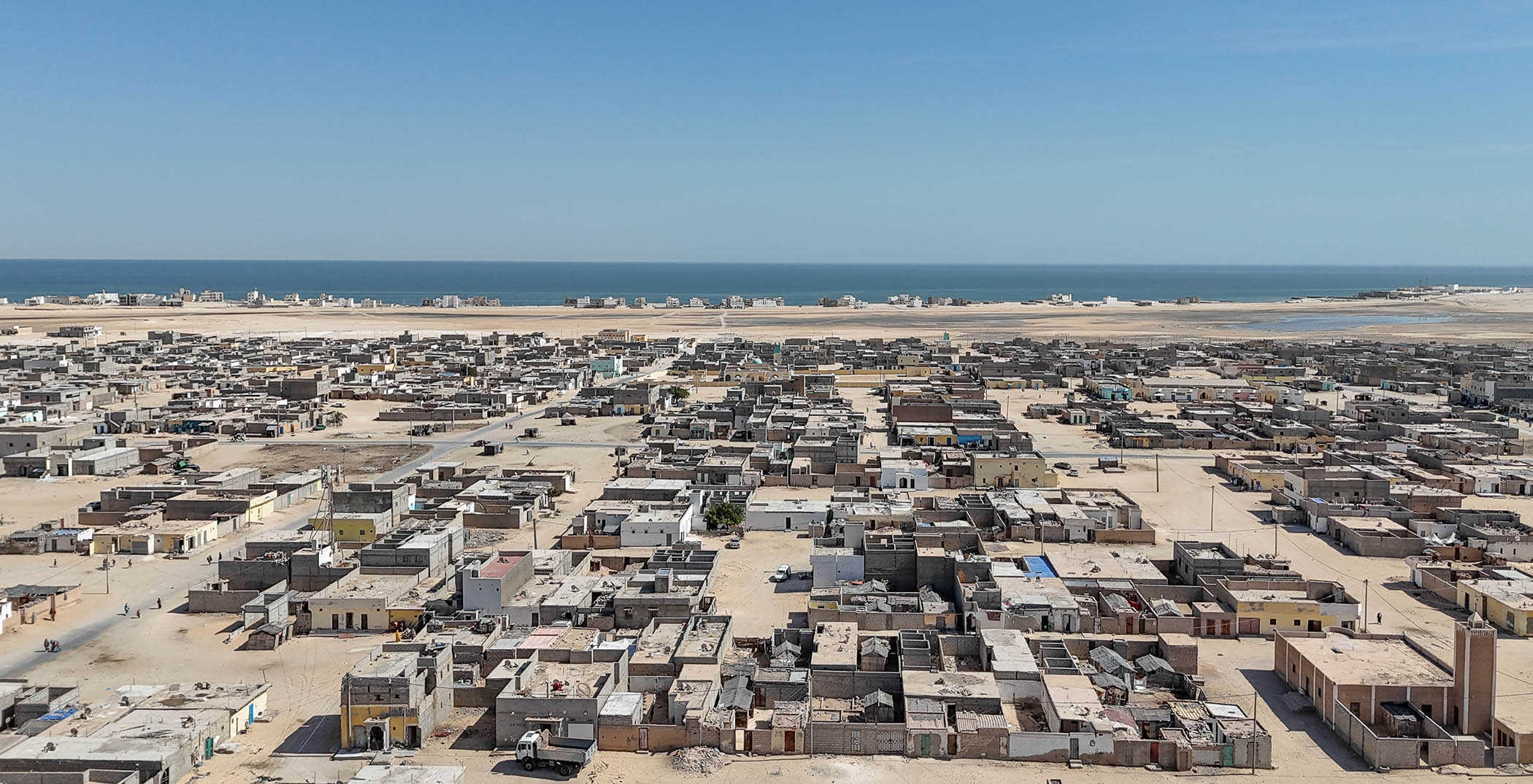
Some migrants have attempted the crossing 10 times from cities such as Nouadhibou
Further south in Nouakchott I spent an evening at a sparse, breeze-block apartment, sitting on the floor with a young Senegalese woman. Her baby cried intermittently in the next room and she kept rushing off to comfort her. The woman was shy and giggled to hide her nerves. “I have tried to cross 10 times,” she told me, smiling awkwardly at the carpet. On one attempt, she had been arrested, held in a police station, beaten and dropped at the Senegalese border days later. “I just got on a bus and came back,” she murmured.
On another attempt the boat engine packed up and passengers spent days at sea. They ran out of food and several people died before the boat was hauled in by the Mauritanian coastguard. Yet despite it all, she said she would keep trying. “Since I was young, I have had Europe in my heart,” she explained.
She spoke Wolof, Senegal’s national language. As she voiced her resolve, my interpreter interjected with a phrase that made her giggle. It was something I had already heard among migrants in Nouadhibou: “Barça or barsaax.” The translation is anything but funny. It reflects the determination I saw in dozens of migrants in Mauritania, preparing to make the crossing at any cost.
“Barcelona or death.”
Additional photographs by Queila Fernadnes/AFP via Getty Images, Antonio Sempere/AFP via Getty Images