I met Hatim Badien on a tugboat at Port Sudan’s dockside in May 2023, two weeks after fighting erupted in Khartoum. The Sudanese capital had become a battleground from which Badien and his children had managed to escape on a bus, navigating a series of checkpoints. Now a Saudi warship waited off the coast, ready to ferry a handful of refugees across the Red Sea to safety.
As Badien left Sudan, he thought the upheaval would be short-lived and that he would return home within a few months. It was a hope shared by millions of Sudanese. “Sudan has endured instability and cycles of conflict before, and there was a real sense that this too might be contained,” he said. “People needed to believe it wouldn’t spiral.”
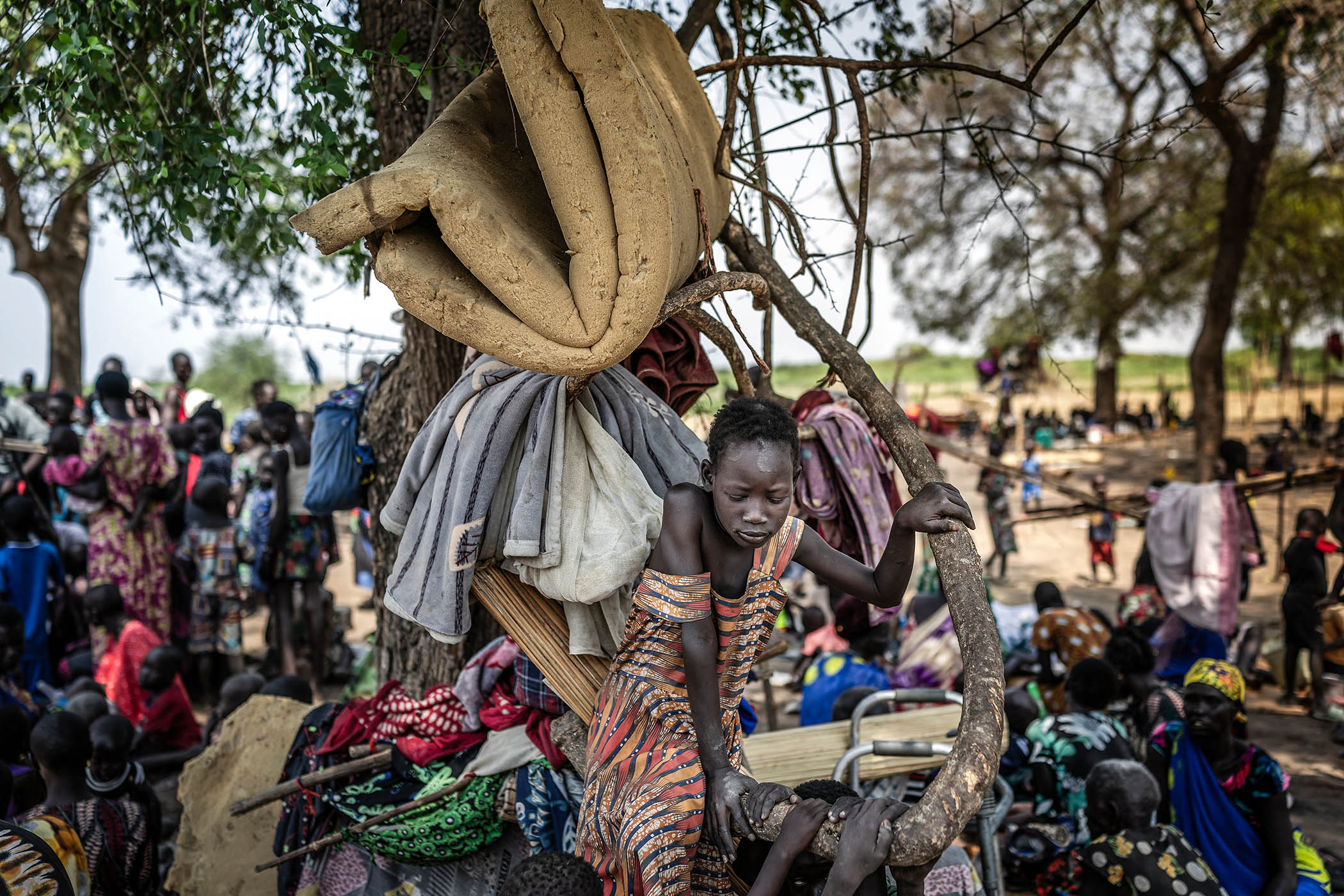
Instead the war spread to practically every corner of Sudan, creating the world’s biggest humanitarian disaster. Roughly two-thirds of its 50m people need humanitarian help, a third have been uprooted from their homes and an entire generation of children has been deprived of an education. Famine is devouring large swathes of the country. This includes much of Darfur, Badien’s home region and the stronghold of the Rapid Support Forces (RSF), the paramilitary group that is fighting the Sudanese armed forces. A UN fact-finding mission says the atrocities committed last year when the RSF captured El Fashir, the capital of north Darfur, “bear the hallmarks of genocide”.
An estimated 6,000 people were killed in three days when El Fashir fell. As many as 15,000 people died when the RSF captured El Geneina, another Darfur city, in 2023. Aid officials say the war has claimed at least 150,000 lives. But in the absence of on-the-ground assessments, the true figure may never be known.
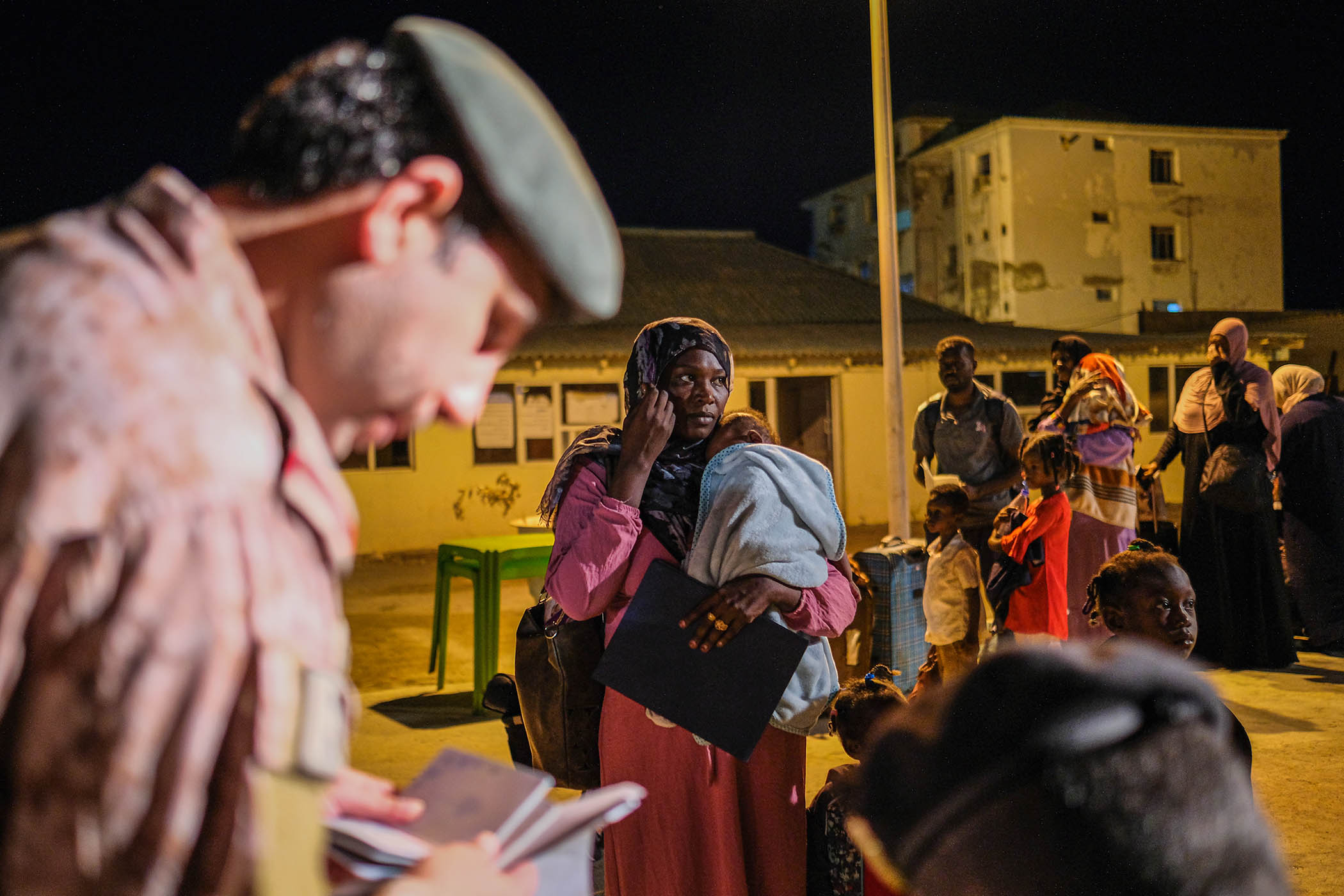
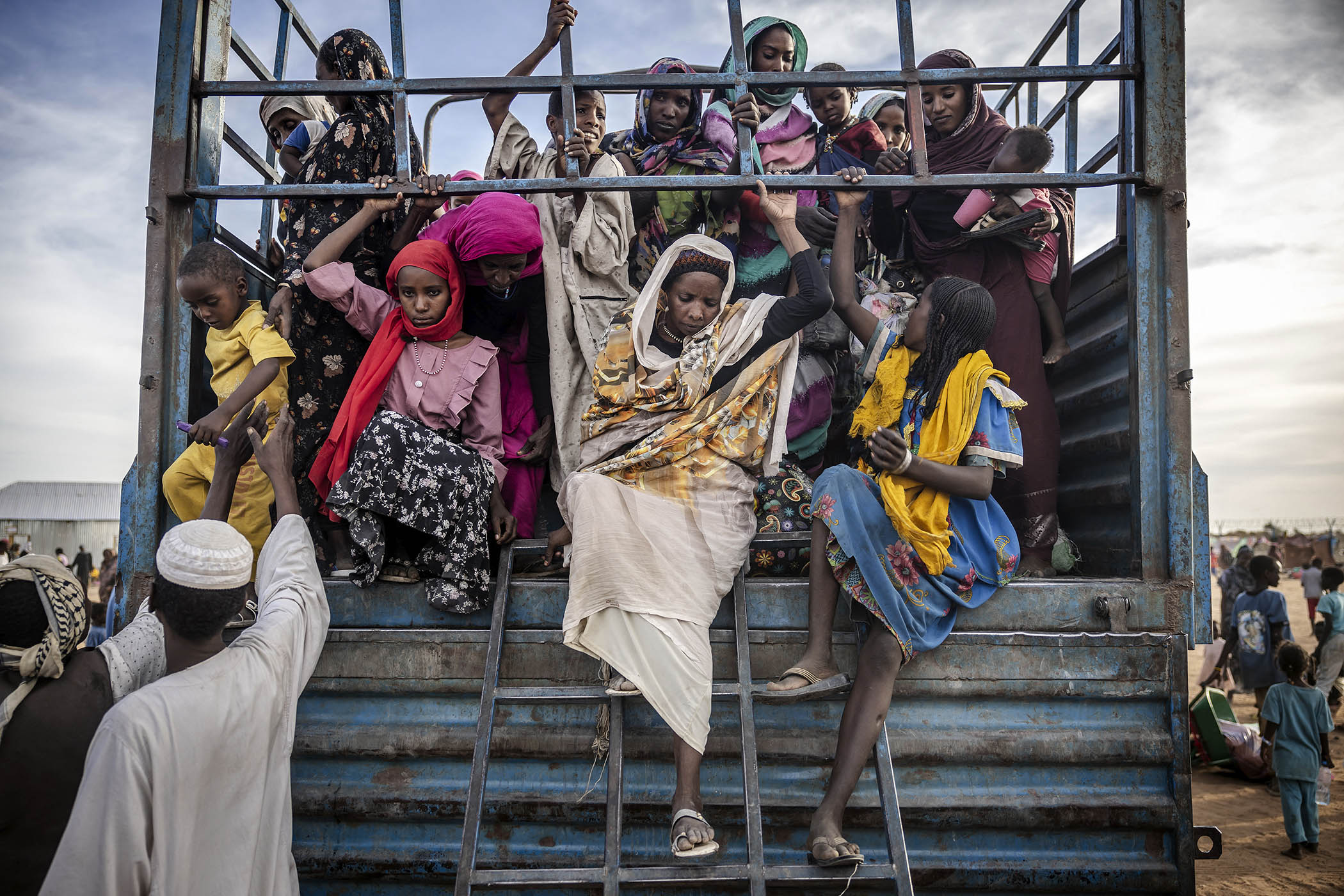
Evacuees at Port Sudan fleeing to neighbouring countries.
“The safest thing to be in Sudan today is a soldier,” said Kholood Khair, founder of Confluence Advisory, a research organisation. “And the unsafest thing to be in Sudan is a civilian.”
As a refugee, first in Kenya and then in Canada, Badien has watched the tragedy unfold from afar. With safety comes a sense of helplessness and consuming anxiety for family members back home. “Every phone call brings a knot in my stomach. I find myself expecting the worst, wondering if I’ll see them again,” he said. “When you realise that more than 33 million people in Sudan need humanitarian assistance – almost the entire population of Canada – your focus shifts. You stop thinking about peace or stability and concentrate on the basics: that they’re safe, that there’s electricity for a few hours, that there’s food to eat and clean water to drink.”
The war dominated the news agenda when it first began. Journalists, myself included, flocked to Sudan’s borders to collect the testimony of people fleeing the violence. From my flat in Ethiopia’s capital, Addis Ababa, where I was living as a freelance correspondent, I tracked the fighting as it unfolded in Khartoum, then a city of 9.4m people. Several British newspapers ran liveblogs with updates on the dramatic evacuation of UK citizens from a desert airstrip.
But international attention soon ebbed, distracted by the war in Ukraine. Then came the October 7 attacks and Israel’s assault on Gaza. That conflict mobilised progressives across the western world, not least in the UK, where Palestine Action launched the biggest British civil disobedience campaign in recent memory. Yet when it comes to Sudan, there has been nothing comparable to the activism that shone a light on the Darfur genocide in the 2000s, when George Clooney addressed the UN and the US Congress was lobbied to take action.
There are many reasons for this. A big one is that the conflict is so complex that outsiders find it difficult to grasp. Last year, when the Atlantic called it “the war about nothing”, characterised by nihilistic destruction, the Continent, a pan-African digital magazine, responded that it is, in fact, a “war about everything”.
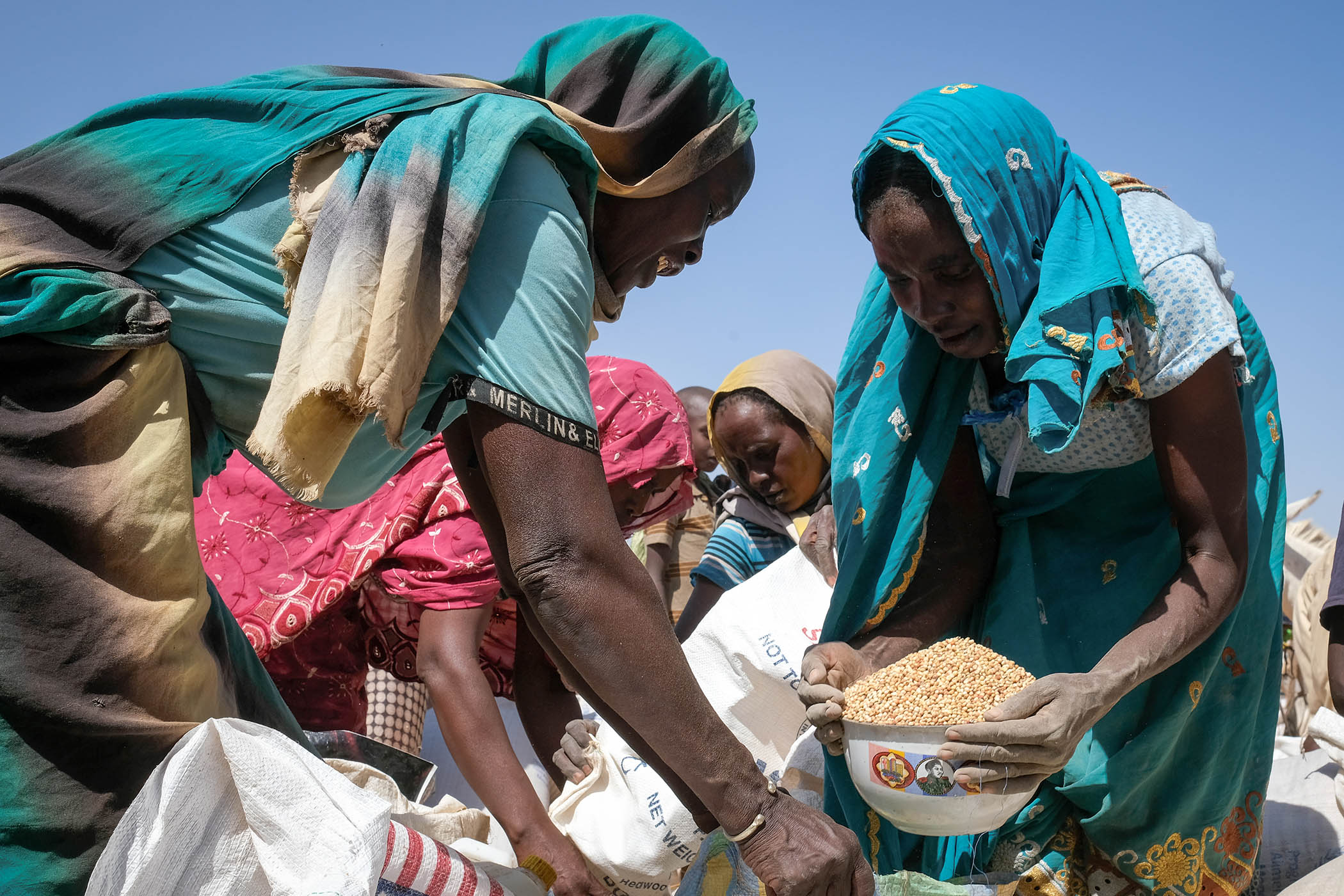
Roughly two-thirds of Sudan's population are in need humanitarian help.
Sudan’s suffering can be understood as the tale of two generals battling for dominance: the RSF’s Mohamed Hamdan Dagalo, known as Hemedti, and the Sudanese military’s Abdel Fattah al-Burhan. It is also the story of several overlapping conflicts subsumed into a larger power struggle. It is a regional war that has spilt across borders, fuelled by outside interests backing proxies. It involves gold and competition for land. It is a tale of a revolution, launched in 2019 by a society hungry for change, and a democratic transition that was hijacked by men with guns. And it is the product of decades of impunity for state-backed atrocities, including the Darfur genocide – committed by the Janjaweed militias that morphed into today’s RSF, a group that became an institution within the state it is now trying to take over.
Above all, it is a war on people, something that should be easy to grasp. “I get that it's hard to explain all the nuances,” said Dallia Mohamed Abdelmoniem, a Sudanese civil society activist who now lives in Egypt. “But at the end of the day, it is civilians who are paying the price. You’re talking about school children who haven’t had an education for three years, thousands of people killed, agricultural land that has been burned, and villages, cities scorched to the earth.”
Sometimes this registers. When the RSF captured El Fashir last year, there was a flurry of media attention. Again, the world’s focus then turned elsewhere. “They keep forgetting about Sudan,” said Jamal Abdullah, a lawyer who helps run Juzoor, a human rights NGO.
I met Abdullah in November 2023, six months after Badien, at a refugee camp on the Sudan-Chad border. Abdullah has been displaced twice by conflict. As a child, he fled the Janjaweed’s genocide into Chad. He returned there in 2023 after the RSF captured El Geneina, his home town.
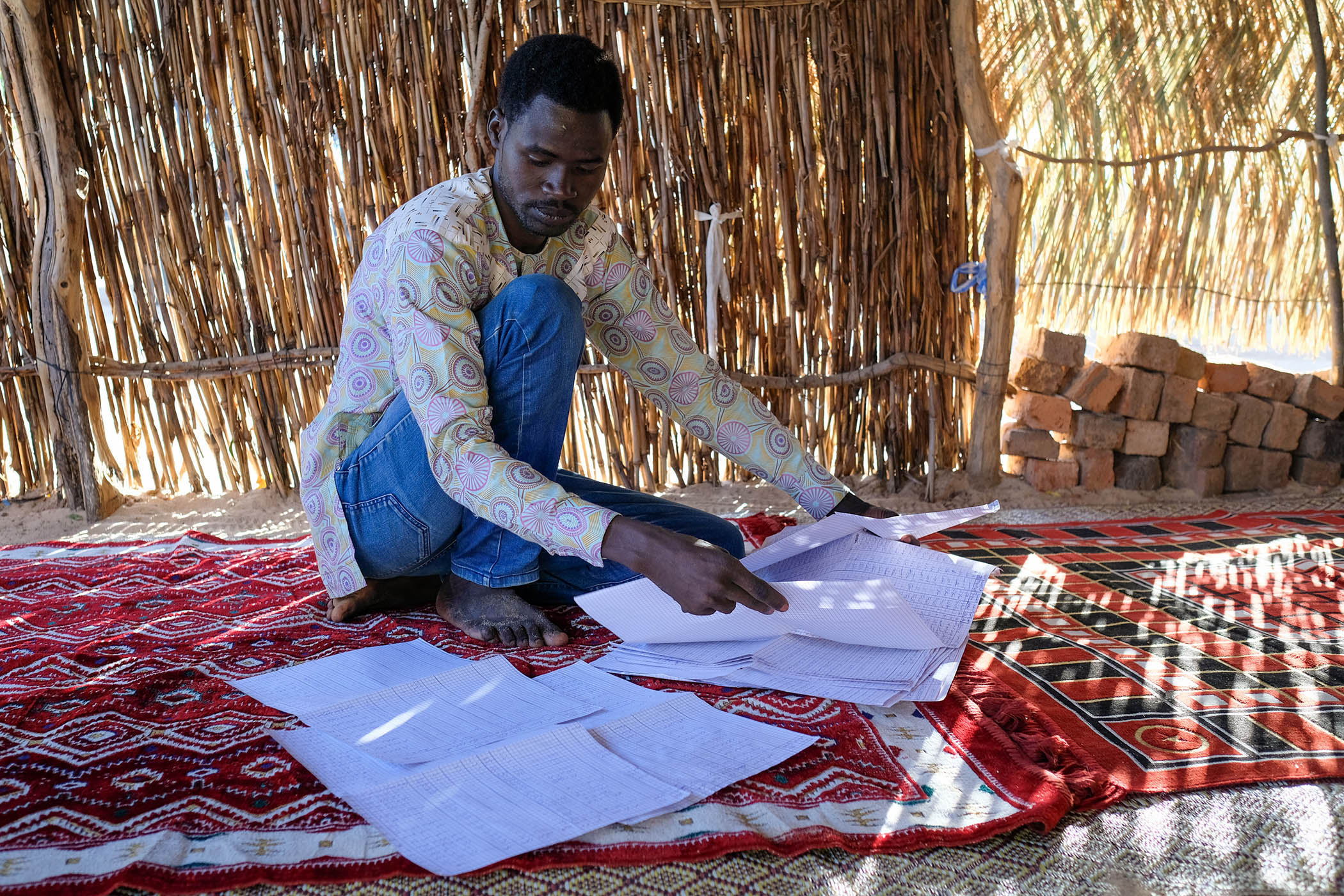
Jamal Abdulla of Jazoor and his colleagues have compiled handwritten lists with the names of people killed in El Geinina and Ardamatta for future generations.
As he escaped El Geneina, Abdullah was captured by a group of fighters. They shot and killed a man in front of him. Then a fighter asked Abdullah how he would like to die, “by knife or by gun”. Abdullah told me he chose the gun. But the man pulled out a knife before pinning him to the floor, his foot on Abdullah’s neck. He was saved only after another fighter intervened.
Abdullah still lives with the trauma of that memory, which haunts his sleep. He said: “When I remember Sudan, I remember crisis. I remember someone killed in front of me. I remember my friends who have been killed. I remember being tortured by the RSF.” His experience is far from unique. Abdullah and his colleagues are compiling lists with the names of people killed in El Geinina and Ardamatta, an adjoining city, hoping it will serve as a testament “for the next generation about what happened in the past”. They have counted about 8,000 so far.
A conference was convened in Berlin on Wednesday, calling for an end to the bloodshed. But as the conflict enters its fourth year, the mood among Sudanese is pessimistic. The war economy has become so entrenched that there is no appetite among its main protagonists to end it. Their backers in Cairo, Abu Dhabi and elsewhere also display little inclination to push for peace. Interventions from western countries amount to little more than talk, coupled with declining amounts of aid.
Based on the trajectory of Sudan’s past conflicts, Khair, of Confluence Advisory, believes the war could continue into the next decade, and even the one after that. Sudan, as a nation, may not survive, she said, noting that education and healthcare have collapsed, militias have proliferated and the country has been partitioned into several spheres of control. “The idea of a national project arising out of this war is being undermined all the time by this fragmentation,” Khair said. “We could see Sudan break up into several different countries.”
Badien’s greatest fear “is not only what has been destroyed, but what is being lost between people”. He stressed that rebuilding Sudan means more than simply ending the fighting, but he believes it can be done. “Despite everything,” he said, “I hold on to hope that my family can one day return, and that Sudan can move toward a future where people can live peacefully and feel safe again.”
Photographs by Luis Tato/ Getty Images, Fred Harter for The Observer
Newsletters
Choose the newsletters you want to receive
View more
For information about how The Observer protects your data, read our Privacy Policy