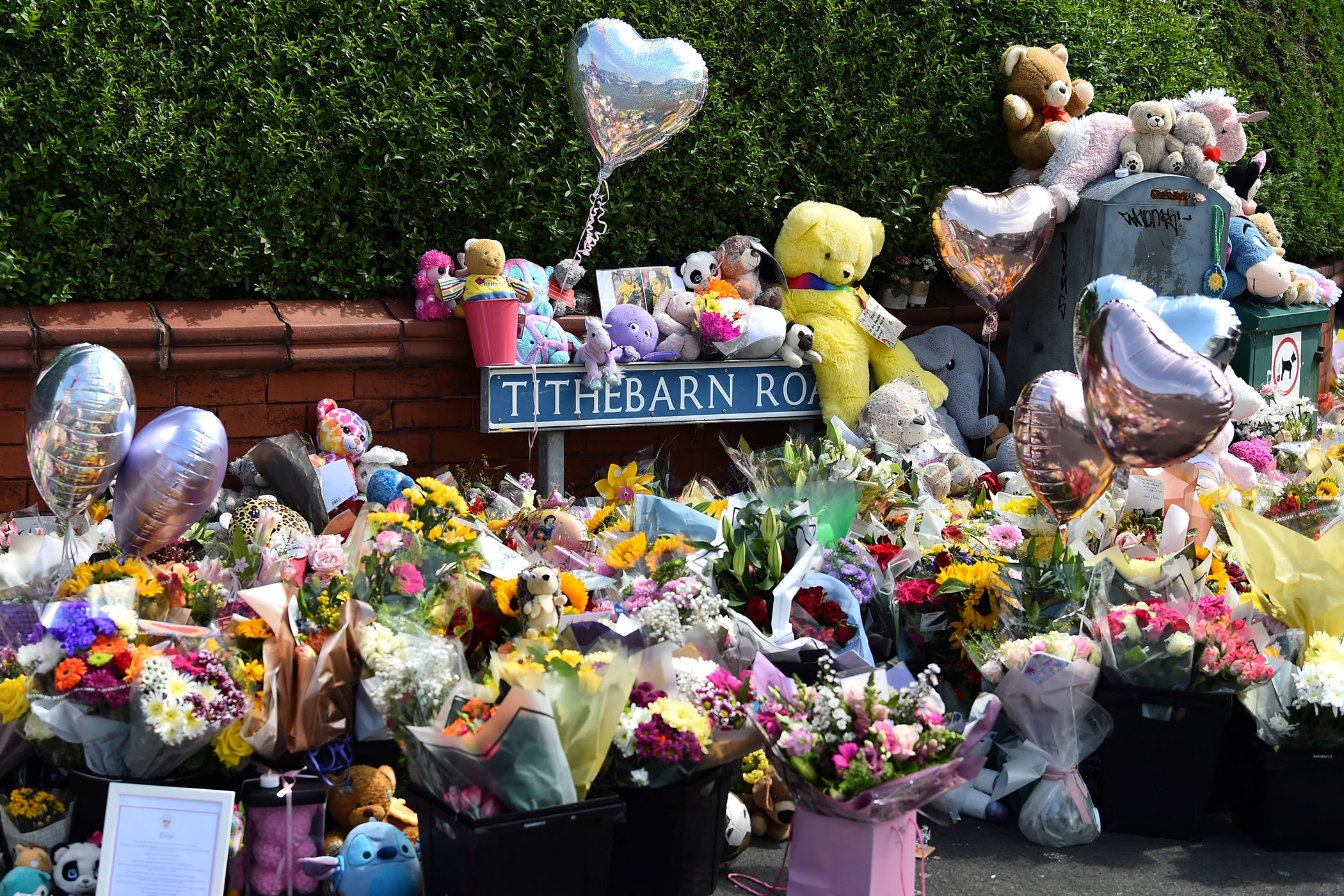
The head teacher at Axel Rudakubana’s school was accused of racial stereotyping when she expressed anxiety about the boy. What Kenan Malik rightly identifies as “official indifference” (“Southport, Grenfell, Windrush – all scandals defined by official indifference”, Forum, 19 April) evidently did not apply to this frontline worker. Her knowledge could have helped safeguarding professionals to intervene earlier, but only if they were together able to make some sense of his disturbed behaviour. Whatever the supposed diagnosis, there has to be a story to go with it, any speculation about which would likely be discouraged in the professional network, as the schoolteacher discovered.
Rudakubana’s parents were witnesses or survivors of the Rwandan genocide. We know from the intergenerational impact of other such crimes, especially the Nazi one (but there will be more from current atrocities in Africa and the Middle East) that even when parents have suppressed or never mention it, children (and grandchildren) can detect traces of terror and re-enact it, without knowing where it comes from. It might have been possible earlier on for the family to consult an experienced therapist to make these past and present connections between past and present.
Dr Sebastian Kraemer, consultant psychiatrist, London
Tech bros not all bad
As a tech enthusiast, I found the assumption that altruism was ever a genuine driving force for aspiring tech tycoons precisely what leaves little room for optimism (“Nothing cures tech billionaires of their benevolence like vast wealth”, 10 April). Here is Mark Zuckerberg around the time Facebook was launched: “People just submitted [their personal information] … i don’t know why … they ‘trust me’ ... dumb fucks.”
But there are those in tech who try to make the world a better place. People like Tim Berners-Lee, Linux Torvalds and Richard Stallman don’t tend to become ruthless tycoons; they are into – and after – a completely different thing. If we’re to reflect on tech and altruism, we could start by simply pointing at the line that separates voracious-businessman mindsets from those of bright computer scientists. It might prevent disappointment, explain a few things about conflict of interests and allow for some real optimism.
Juan Carlos Gómez, Granada, Spain
Lost education in Sudan
Fred Harter’s article on Sudan (“‘By knife or by gun’: why have we forgotten Sudan’s suffering?”, 16 April) rightly highlights the devastating effect of war on children and young people whose education has been interrupted for years.
Conflict does not only destroy buildings. It also destroys the less visible systems that allow a society to function: schooling, training, qualifications and the hope of a future shaped by something other than war. In Sudan, the loss of education now will be felt long after the fighting ends.
That is why it is so difficult to understand the UK government’s decision to deny study visas to Sudanese students. At a moment when Sudan will one day need educated professionals to rebuild its institutions, hospitals, schools and public services, preventing a small number of students from continuing their studies here is not only harsh but profoundly short-sighted.
In my work as chair of Windle Trust International, I have seen how determined many Sudanese students are not simply to secure a personal opportunity, but to gain the skills they hope one day to take home. If we are serious about Sudan’s future, we should not be closing that door.
Sam Bickersteth, Oxford
Dying by the sword
I was surprised to read the name of the Marquis de Morès (“France’s forgotten founder of the far right”, 17 April). To me he is the man who killed my third cousin removed, Capitaine Armand Mayer, in a duel.
The story goes that in June 1882 Crémieu-Foa, a Jew, challenged Édouard Drumont, the virulent antisemite publisher of La Libre Parole, to a duel. Both men were wounded but Foa survived. To save Drumont’s honour his supporters clamoured for another duel between the “seconds”: Mayer, who was teaching engineering at Paris’s prestigious Ecole Polytechnique, and Morès, who had studied at the best military schools in France and had a reputation of being a fine swordsman. Mayer had been previously wounded and was unable to hold his sword; he was killed within seconds. There was a public outcry and Morès was tried for murder and acquitted. This was the prelude to the Dreyfus affair in 1894.
Henriette Hardiman, Brighton
MoD is its own worst enemy
It was refreshing to read Steve Bloomfield’s analysis of the UK defence spending debate, as it didn’t conclude with yet another plea for cuts to the welfare budget. (“Cash-strapped Britain can’t afford to throw more money at defence”, 19 April). Such cuts have been advocated as a solution to the current £28bn shortfall in the MoD’s budget by Kemi Badenoch and, Wes Streeting, and Lord Robertson. But why should the UK’s poor and vulnerable pay up when, with regard to spending on defence, the MOD continues to have a “shocking track record”? To date it is well documented to have wasted billions of pounds on cancelled projects and procurement delays. This is where at least some of the blame lies for the shortfall, and where solutions should initially be sought.
Mick Beeby, Westbury on Trym, Bristol
A lesson in history
Max Hastings is, quite simply, the best historian/journalist around, particularly on world affairs (“The United States could soon be our enemy”, 19 April).
It was such a wise and well-considered account of our now clearly broken relationship.
Sir Max made some excellent points about Trump’s inability to see the difference between good and evil, and the breakdown of the US constitutional system. Let’s hope a Democrat-controlled House from the autumn can bring on possible impeachment.
Just one small point: Sir Max wrote twice about Trump becoming president again in January 2024. It was of course January 2025.
Richard Brooks, London N4
Know thy Self
I read, with an unexpected emotional response, the Seán O’Hagan interview with Will Self (“The true confessions of Will Self”, 18 April). Self’s intellect and extraordinary ability with words and logic have always intimidated me and evoked a wonderment and admiration underscored by resentment that he could articulate so prodigiously on seemingly any subject. I have never read any of his books, my fear of not being able to fully understand him was such that I loathed the effort I might have to employ to work through them. His interview has left me resolved to buy and read his work. Self came across so humanly flawed but warmer and more approachable.
May his mortality be more enduring than indicated because I need time to understand him more.
Christian Martin, North Tawton, Devon
Photograph by Peter Powell/AFP via Getty Images)
Newsletters
Choose the newsletters you want to receive
View more
For information about how The Observer protects your data, read our Privacy Policy