
Since Russia invaded Ukraine, the home of Valentina Vasilyevna has been damaged four times by explosions – one for every year of the war. The final time, last New Year’s Eve, it collapsed, burying her under the rubble.
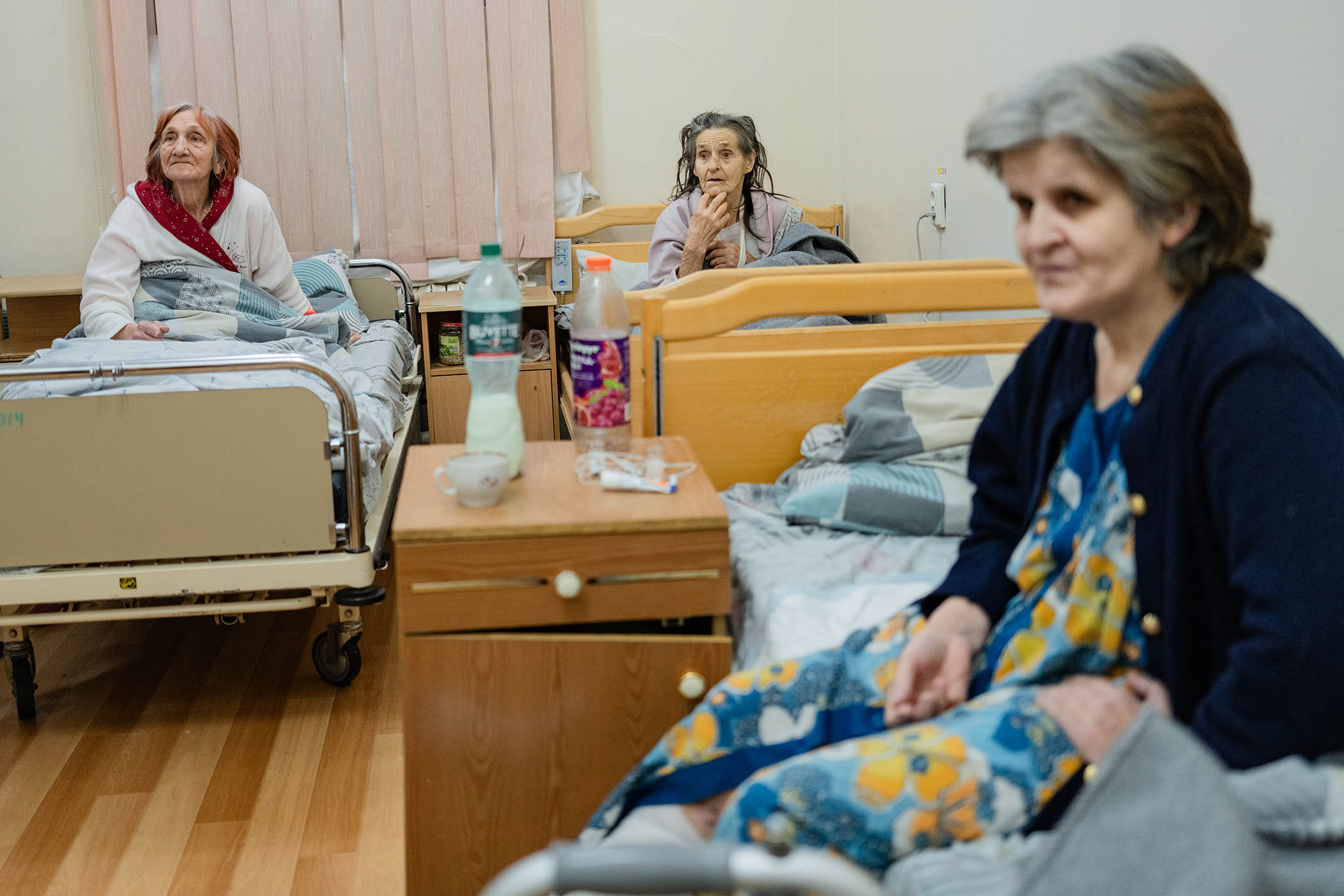
Rescued by neighbours and the military, she was taken to Kherson’s Luchansky city clinical hospital with wounds to her legs, back and face. Two weeks later, a blast shattered the hospital windows, spraying glass and hot shrapnel into her bed.
“Somehow, it missed me,” the 80-year-old said, holding out in her palm two jagged lumps of metal, almost the size of a thumb. No one was injured in the attack, but she has kept the fragments as a souvenir.
Vasilyevna shares her hospital room with three other women; two are also octogenarians and all are casualties of Russia’s continuing war. One was injured by a shell that skimmed her shoulder before crashing into the street.
Another has suffered severe stomach issues from chronic stress. A patient in her 50s has a shattered leg after explosives were dropped on her by an FPV (first person view) drone – a cat-and-mouse tactic that has been called the “human safari”.
‘They call the area where I live the red zone. But everything is burned. It feels more like the black zone’
‘They call the area where I live the red zone. But everything is burned. It feels more like the black zone’
Valentina Vasilyevna
“Our streets and houses are destroyed,” said Vasilyevna. “They call the area where I live the ‘red zone’, but everything is burned – it feels more like a black zone.”
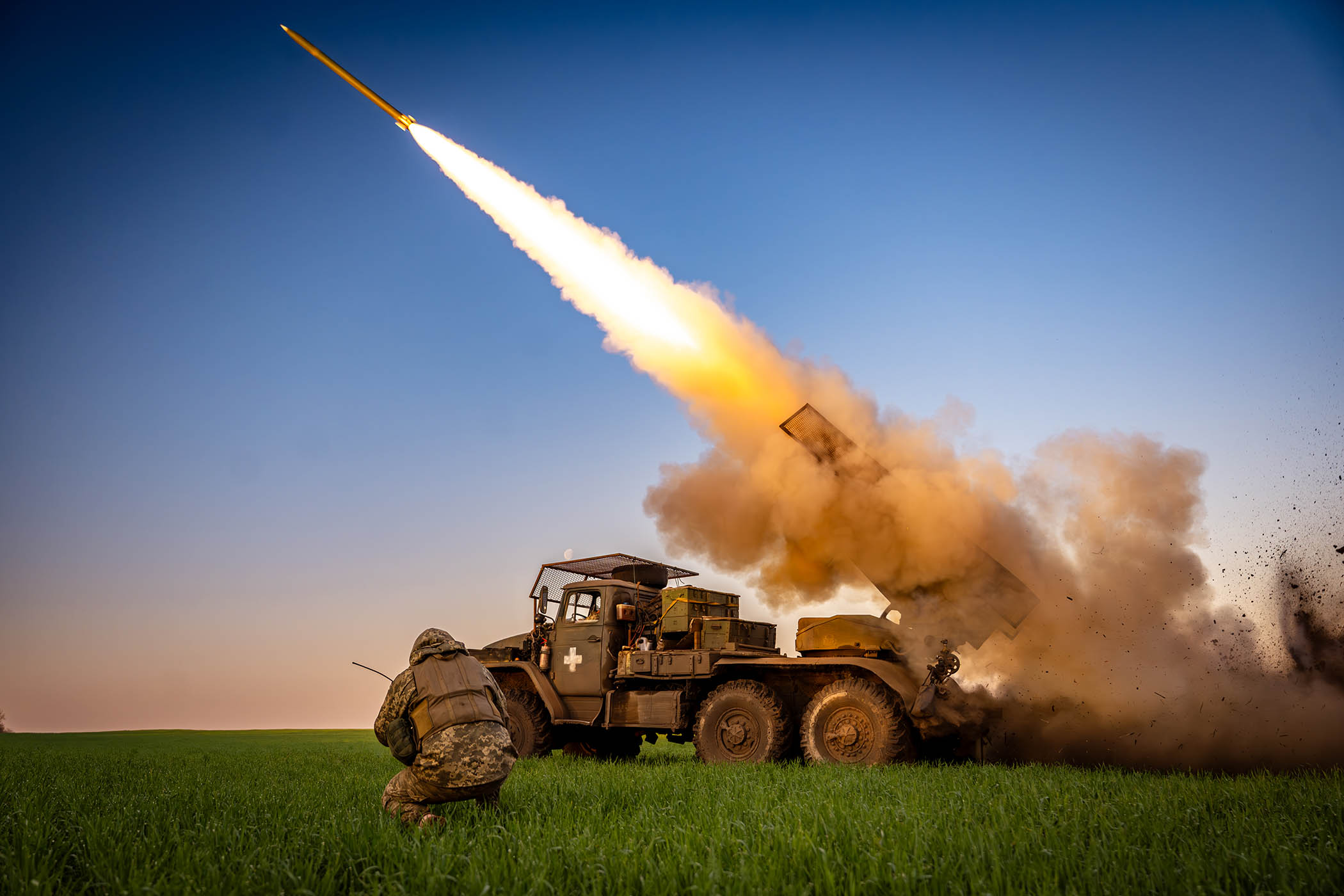
After four years of fighting, life in the southern city of Kherson has become a gruelling endurance test and a microcosm of the war. It is the country’s largest city within range of frontline weapons. Only the Dnipro River separates residents from the Russian forces occupying the east of the region. Homes and infrastructure are relentlessly pummelled with shells, drones and artillery – with increasing intensity.
Although hundreds of thousands of Kherson’s prewar population have now fled, civilian casualties are on the rise. Last year, 307 people were killed and more than 2,550 injured, according to the city’s administration.
That is up from 262 and just under 2,000 in 2024. It mirrors a broader trend: across Ukraine, casualties increased by more than 25% last year, according to an Action on Armed Violence report released last week. More than 2,200 civilians were killed and almost 12,500 injured by explosives.
Almost half of last year’s injuries were caused by drones. There are several types operating in the area, carrying differing payloads and with a variety of distance limits. FPV drones, which provide a closeup view of a target, sending livestreams back to the operator, have been used to hunt civilians and their vehicles with explosives and antipersonnel mines. It is a pattern that could amount to war crimes and crimes against humanity, according to Human Rights Watch.
Newsletters
Choose the newsletters you want to receive
View more
For information about how The Observer protects your data, read our Privacy Policy
All day and night, explosions boom around Kherson, separated by seconds and minutes rather than hours. Sirens wail, drones whirr. People say you learn to tune it out and that, eventually, the only thing you notice is the difference between far or near. Asked how they stay safe, though, one resident made the sign of the cross and pulled a golden crucifix from her bag. Those who can afford them carry drone detectors; ours went off many times over the three days and nights we spent in the city.
People who work or need to run errands try to be home by 3pm, when certain drones become more active. Buses and taxis stop by 4pm. Fishing nets have been repurposed and hung over key roads as a crude anti-drone system. They cover the Dniprovskyi market, where many customers have already braved possible attacks on the walk from the “red zone”, which is what local people call the heavily damaged districts on the left bank of the Dnipro. Many buildings have been reduced to rubble or scorched by fire, and no shops remain open.
“The only thing that protects us here is the nets,” said Pavlo, who runs a fruit and veg stall. The market was hit by shelling the day before. “One time, a drone dropped an explosive just above here, but it got stuck hanging in the net. We had to call the authorities to come and get it.”
Those who live in the red zone stay because they do not want to trade the independence of homeownership for life in shelter. Many are elderly or poverty-stricken. Few venture in – even police and emergency workers. Some sort of explosive crashes down nearby as Volodymyr Baidorov tells his story.
He trod on a “petal” mine – a PFM-1 antipersonnel device – dropped by a drone near Antonivka bridge in October. His foot gone and leg damaged, he improvised a tourniquet from nearby cables before crawling to a neighbour for help. No ambulance would travel to get him. He had to wait almost 24 hours for the military to take him to Luchansky hospital. The wait meant doctors could not save his leg and had to amputate at the thigh.
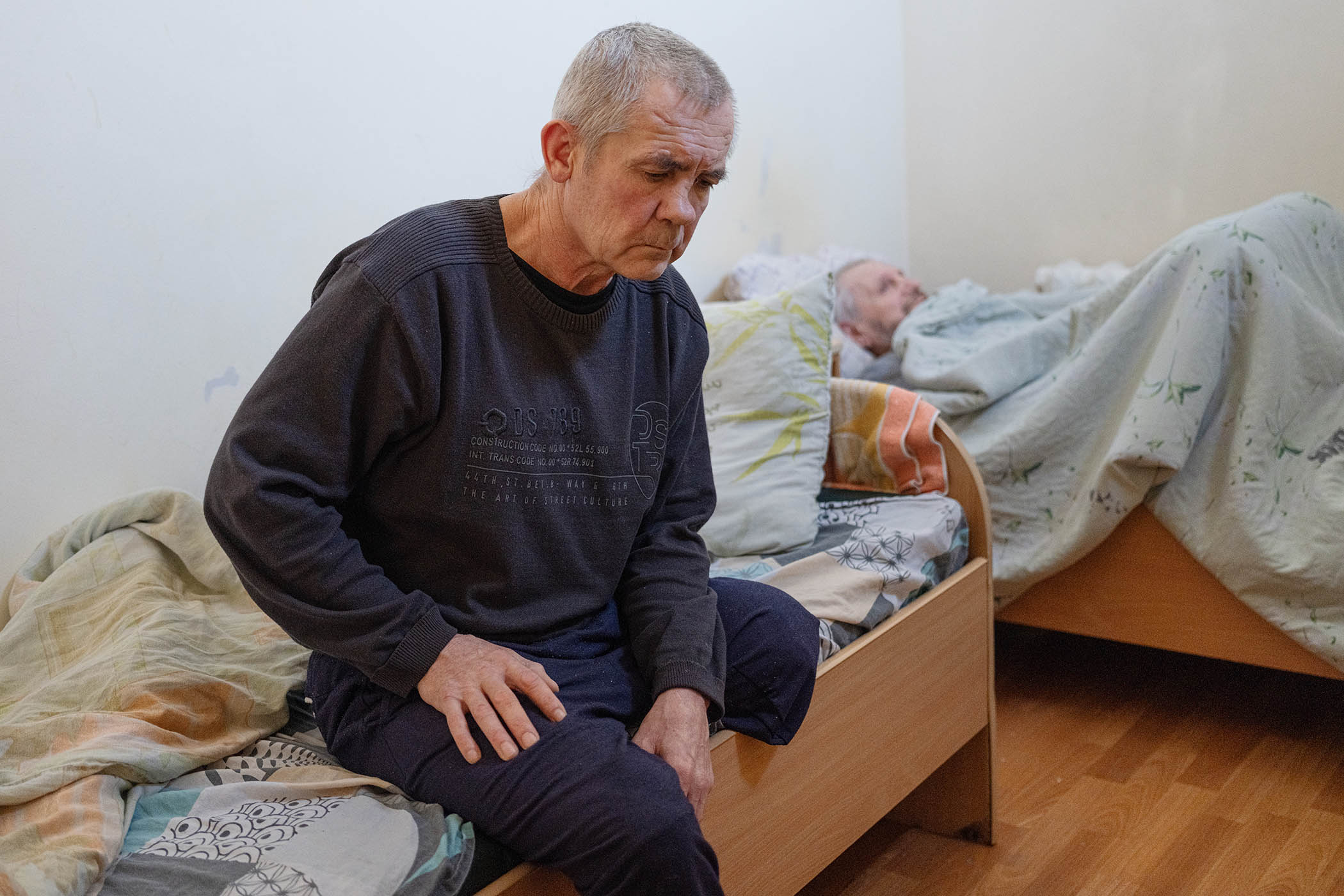
Volodymyr Baidarov, 53, had a leg amputated after stepping on a landmine. He now lives at Luchansky hospital awaiting displaced person status after his home was destroyed
The hospital is also in the red zone, and while other facilities in the city have moved operations into their basements, it does not have the infrastructure, so continues above ground. The building has been damaged “more than 10 times”, said Vitaliy Khomukha, chief of emergency surgery. A 2-metre (6.5ft) hole was blown out of the fifth floor in 2022 and artillery hit the operating theatre last month – the same attack that sprayed shrapnel at Vasilyevna.
“I think it’s deliberate because they often seem to hit the same spot,” said Khomukha. “Russians on social media say this is a Nato base.” The Observer saw no evidence of military activity at the hospital.
Its front entrance has become unusable because of the drones, and while the back is protected by nets, one of these has a hole burned through it from dropped explosives. Most of the windows are boarded up with chipboard, yet a nurse sweeps up shards of glass shattered by the force of another nearby strike overnight.
“In medicine, there is acute and chronic stress,” said Khomukha. “Kherson saw acute stress under occupation. Now the problem is chronic – stress has become a lifestyle here.”
Stress is causing a hidden domestic crisis in the city – one of violence, abuse and neglect. Before the war, children went to school and played outside, while parents worked; there were routines and the structure of daily life. Now the constant attacks mean few attend in-person school, there is little work and many are struggling with money. Families have disappeared behind closed doors, locked in small places together, scrolling Telegram channels full of bad news.
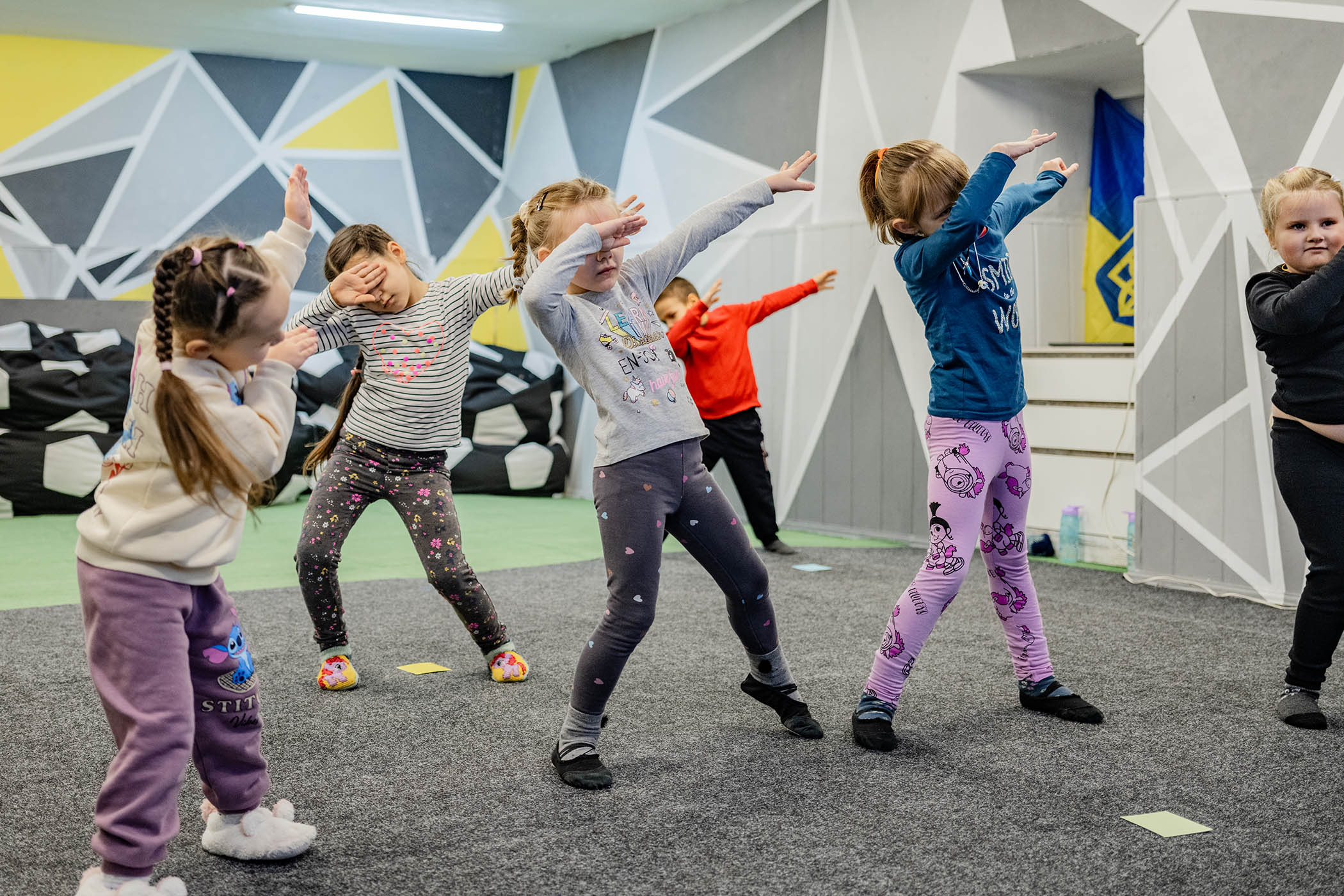
Children are bored and restless, while parents who were never angry before have begun shouting, hitting or drinking, said Iryna Kostiniuk, who runs Kherson volunteer group United by Love for Children. It organises classes and activities, such as art and dance, to get children and women out of their homes and give families an outlet.
One three-year-old boy was brought to its Christmas celebrations – the first time he had ever left his home. Unafraid of the music or lights, he was nevertheless terrified by people, because he only knew his immediate family. A teenage girl’s body was stuck in a hunched position after being confined to a flat for 10 months, playing computer games.
Outreach volunteers also discovered a 12-year-old girl whose mother had abandoned her to go and live with Russian forces; she had been staying for months with a male neighbour and the authorities suspected sexual abuse.
Two young teens from what Kostiniuk had thought was an ordinary family often attended art classes. On a particular day, their paintings were filled with red, and one of them said it looked like what Daddy did to Mummy.
She estimates that at least half of the families they see show clear signs of violence. “In truth, I suspect almost every family carries some form of it now,” she said. “It is the symptom of a sickness in our society caused by constant fear and pressure.”
There had been such high hopes for Kherson, the only regional capital seized and then liberated by Ukrainian forces. After being occupied by the Russian army for almost nine months, starting days after the February 2022 full-scale invasion, its liberation sparked celebrations across the city. While the east of the region has remained with Russia, the successful Ukrainian operation became totemic for the belief that, with the right backing, the country might win back more cities, or at least exert enough pressure to bring Moscow to a negotiated peace.
But in June 2023, the Kakhovka hydroelectric dam was blown up. It flooded the lowlands and drained the reservoir, reshaping terrain along the Dnipro and making a large-scale advance from Kherson more difficult. The frontline was effectively frozen in place. It left the city exposed, within easy range of enemy forces.
Many residents say that, no matter how bad it gets in Kherson, nothing can be worse than occupation. People think of the city’s frontline status as temporary, but as US-backed peace talks seek to find a negotiated settlement, it could become permanent. Moscow continues to link progress to territorial concessions, including land it occupies in the south and east. If the two sides agree to freeze the frontline, half the Kherson region could be lost and the city stuck with its new neighbour.
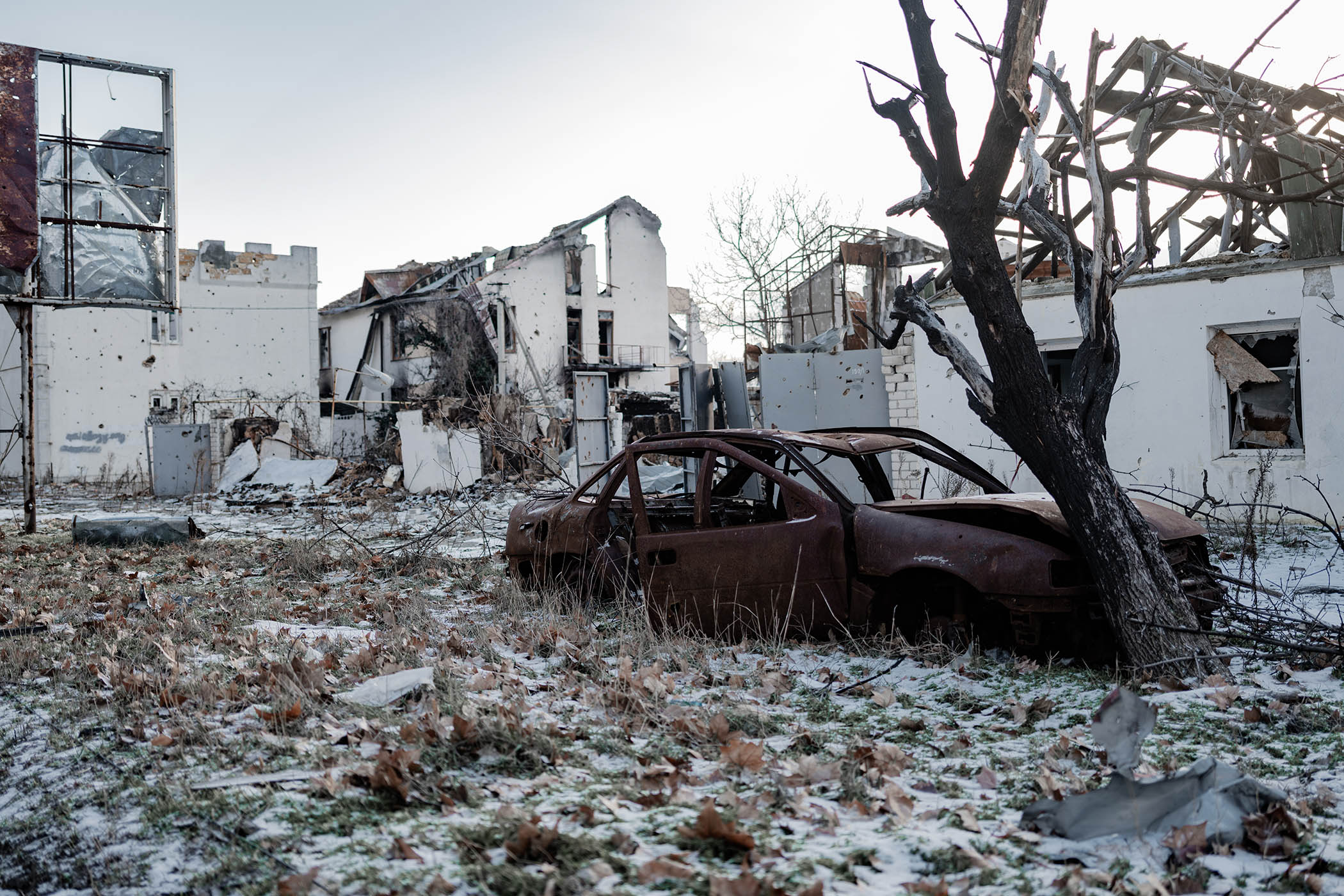
People find ways to hold on to hope in the darkness. Residents like to tell a story about the destroyed city administration building, which sustained a giant hole gouged in its middle when Russia dropped glide bombs last summer. In the centre of the ruins, a tall girder has remained upright. Local people say it represents Kherson’s citizens.
“Kherson is not just buildings – it is people,” Kostiniuk said. “We are not just trying to live… we are living.”
For Olga Chubikova, hope is about making sure the roses still bloom. She works for an organisation that looks after Kherson’s parks and cleans streets and apartments after attacks. As her team members prune trees ready for spring, she watches over them while holding a drone detector. It beeps, but she insists that the threat is not too close.
Her organisation stops streets and public spaces falling into neglect, but sometimes they need a military escort just to water the flowers. “What we do is about public psychology,” Chubikova said. “When the roses are in bloom, they are a symbol of Ukraine’s resistance.”
For others, hope comes from performing poetry or going to see a show. Twinned with other Soviet-era theatres, such as one in Mariupol that was bombed by Russia during the first months of the war (killing 600 sheltering civilians, by some estimates), Kherson’s theatre has also suffered repeated damage, yet as many as 100 people come to weekend events.
In the early hours of the morning that The Observer visited, the adjacent road was struck in an attack, engulfing it and nearby homes in flames. The tarmac is black and strewn with debris and the smell of burning synthetics hangs in the air. As a result, performances have been brought forward by an hour as shelling continues. Volunteers walk through, carrying smashed windows, returning with chipboard and hammers, and there are reports of a drone overhead.
Despite the drama outside, in a small underground room, a handful of people take to the stage to read their poetry and prose and perform songs. Most centre on patriotism and the trauma of occupation. “Kherson is so strong, it survives,” sings a man with an acoustic guitar.
The theatre also puts on productions on an underground stage, and holds classes for children and families. It held the last official production on its main stage the day before the war, but now it is unsafe to use.
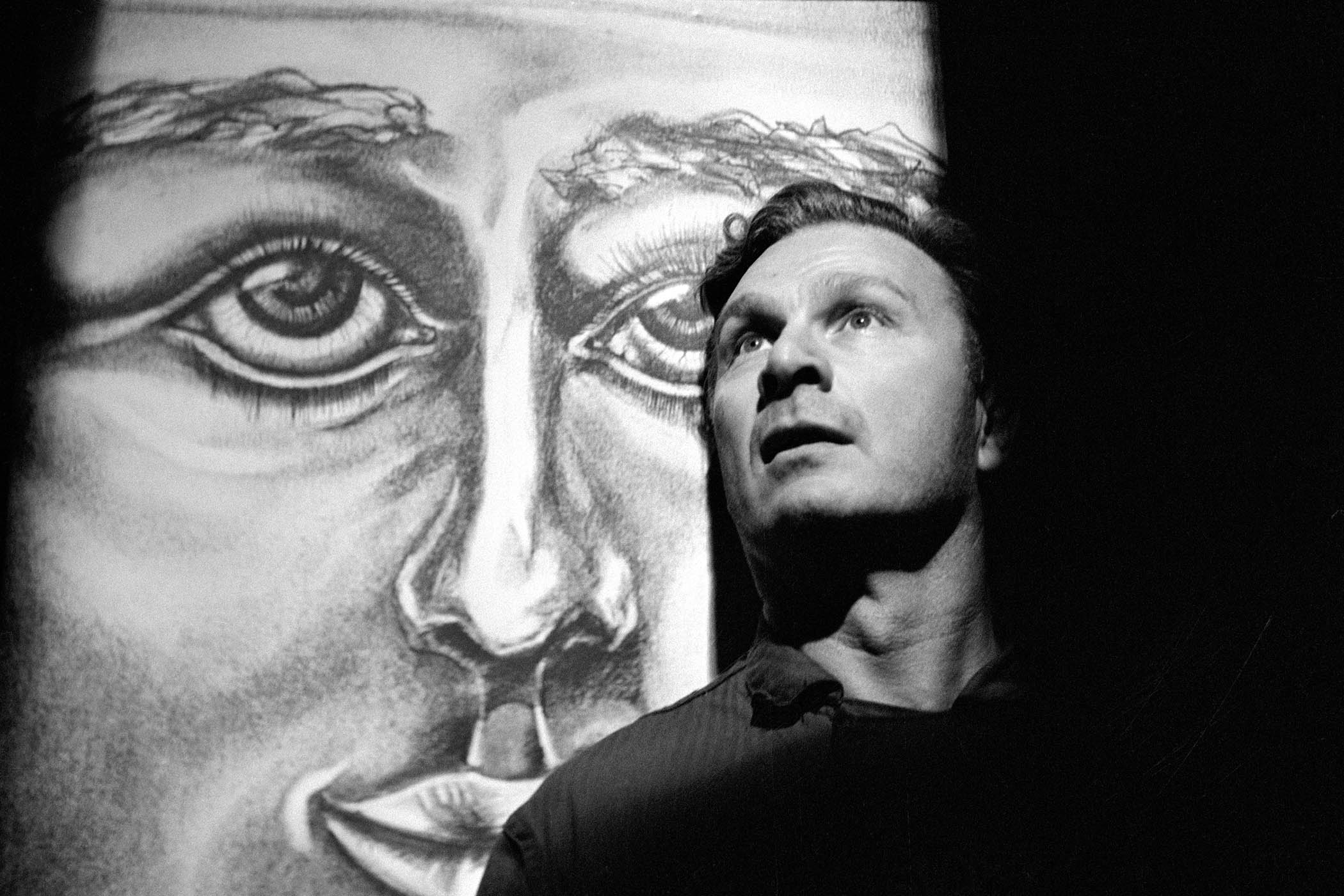
The theatre’s director, Oleksandr Knyha, has been in charge since the collapse of the Soviet Union in 1991. When the city was occupied, the theatre was taken over by Russian forces and run by a small number of Ukrainian staff. Knyha was briefly detained, and pressured to collaborate, but refused and escaped. Returning straight after liberation, the theatre put on its first new show a month later.
“The stage can help you solve your problems,” Knyha said. “For me, it’s not theoretical art – it’s humanitarian work. That’s why we have to stay.”
Few embody this defiant, unbreakable spirit – or Kherson’s story – more than Volodymyr Mykolaienko, the city’s former mayor. Abducted by Russians in April 2022, he was accused of spearheading protests and was pushed to help the occupation forces win over Kherson’s population. He said no, and spent more than 800 days in various prisons.
“They thought that if they paid me or others we would do what they wanted, but they misunderstood Kherson,” said Mykolaienko. “They said to our people: ‘Why aren’t you bringing flowers? Why aren’t you happy we arrived? We are here to save you.’ They didn’t understand Ukraine’s spirit of freedom.”
Taken to Sevastopol and then to prison camps in Russia, he said he was beaten and tortured with electric shocks every day. He had ribs broken and sometimes his hands would be so damaged he could not hold a fork to eat. Some inmates, he said, lost their minds; others took their own lives.
Although prison guards told him Ukraine was now under Russia’s control and resistance was hopeless, he said he did not break, knowing the stream of new Ukrainians meant the war was far from over. His guards would play their national anthem, Vladimir Putin’s speeches or TV shows that said the Russian nationality was chosen by God.It was very cold, people would get sick and sometimes food was just a spoonful of porridge, he said. He lost 25kg (almost 4st).
Despite everything, after his surprise release on Ukraine’s independence day last August, Mykolaienko came back to Kherson. “The situation is like East and West Germany. The country will one day be reunited,” he said. “Ukraine is not just a point in the map; it is a spirit in all of us who believe, fight and refuse to give up.”
Photographs by Iva Sidash for The Observer