There was a cautious optimism in Kyiv at the start of 2025 about the possibility that President-elect Donald Trump might bring peace. No one believed Trump’s timeline, but after three years of war with no serious initiatives at negotiation tried in years, the idea of shaking things up with a new leader in Washington looked appealing to many in Ukraine.
It has been a tough year for the optimists, however. After Sunday’s talks at Mar-a-Lago, Trump claimed a peace deal was 95% done. There was news of US security guarantees as well, but so far the Kremlin has refused to budge on its maximalist demands. Chief among these is its insistence that Ukraine withdraws from the Donbas in eastern Ukraine, in exchange for peace. Moscow also wants to cap the size of Ukraine’s army and keep European peacekeepers out of the country.
Trump deserves credit for devoting time to negotiations after taking office. He and his administration decided to talk directly with President Putin and his government—a channel that had remained largely closed during the latter years of the Joe Biden administration. He has met several times with Ukraine president, Volodymyr Zelensky, including again a few days ago, and once with Putin in Alaska. His special envoy, Steve Witkoff, has probably logged more hours with the Russian dictator than Biden and Barack Obama combined. Trump seems committed to ending the fighting in Ukraine. But on his watch, Putin has only escalated his attacks on Ukrainian soldiers and civilians. The Mar-a-Lago meeting hasn’t stopped them.
Throughout 2025, the fundamental flaw in Trump’s strategy has been his belief that appeasing Putin would convince him to stop fighting. Trump and his aides prioritised accommodating Putin’s demands and then tried to persuade Zelensky to accept them. Most audaciously, Putin asked the Americans to pressure Zelensky into surrendering territory in Donbas that Ukrainian soldiers still control. And according to reporting on the 28-point peace plan floated by the Russians and adopted by Witkoff, the Trump team tried to do just that.
According to press reports, Trump has offered Putin other concessions, too, including recognising Ukrainian territory occupied by Russian soldiers as part of Russia, agreeing to keep Ukraine out of Nato, helping to block European efforts to seize Russian Central Bank assets deposited in European banks, and pressuring Zelensky to hold new elections. In 2025, the US voted with Russia and a handful of other rogue countries, such as Belarus and North Korea, against UN resolutions condemning Russia’s invasion of Ukraine. (Even China abstained on these votes.) Trump also ended military and economic assistance to Ukraine, further weakening Zelensky’s negotiation position.
In return for these gifts, Trump has not secured a single significant concession from Putin – at least, not one the public is aware of. Following Sunday’s Mar-a-Largo summit, for example, the Kremlin repeated its demand that Ukraine must withdraw from the Donbas in exchange for peace and refused to comment on Kyiv’s proposal to create a free economic zone there.
Experts say it will take the Russian army another two years to conquer all of Donbas
Experts say it will take the Russian army another two years to conquer all of Donbas
Putin believes that time is on his side. He believes that Trump is eager for a deal, and is not concerned about the details. He senses that his soldiers have the upper hand on the battlefield, where they are slowly making gains, albeit at tremendous cost. Russian casualties in Ukraine are higher than in any Kremlin war since the second world war. Yet Ukraine’s ability to resist Putin endures. When he launched his full-scale invasion in 2022, Putin had four main objectives: conquering the whole country, “denazification” – AKA regime change in Kyiv – demilitarisation, and stopping Nato expansion. Four years on, he has failed to achieve any of them. Most of Ukraine remains independent. Experts say it will take the Russian army another two years to conquer all of Donbas. The democratically elected president and parliament of Ukraine remain in power, and Ukraine is more militarised than ever in its history and now boasts the strongest army in Europe. Ukrainians are suffering too much and losing too many soldiers, but they are not losing this war. And Sweden and Finland are now new Nato members as a result of Putin’s invasion of Ukraine.
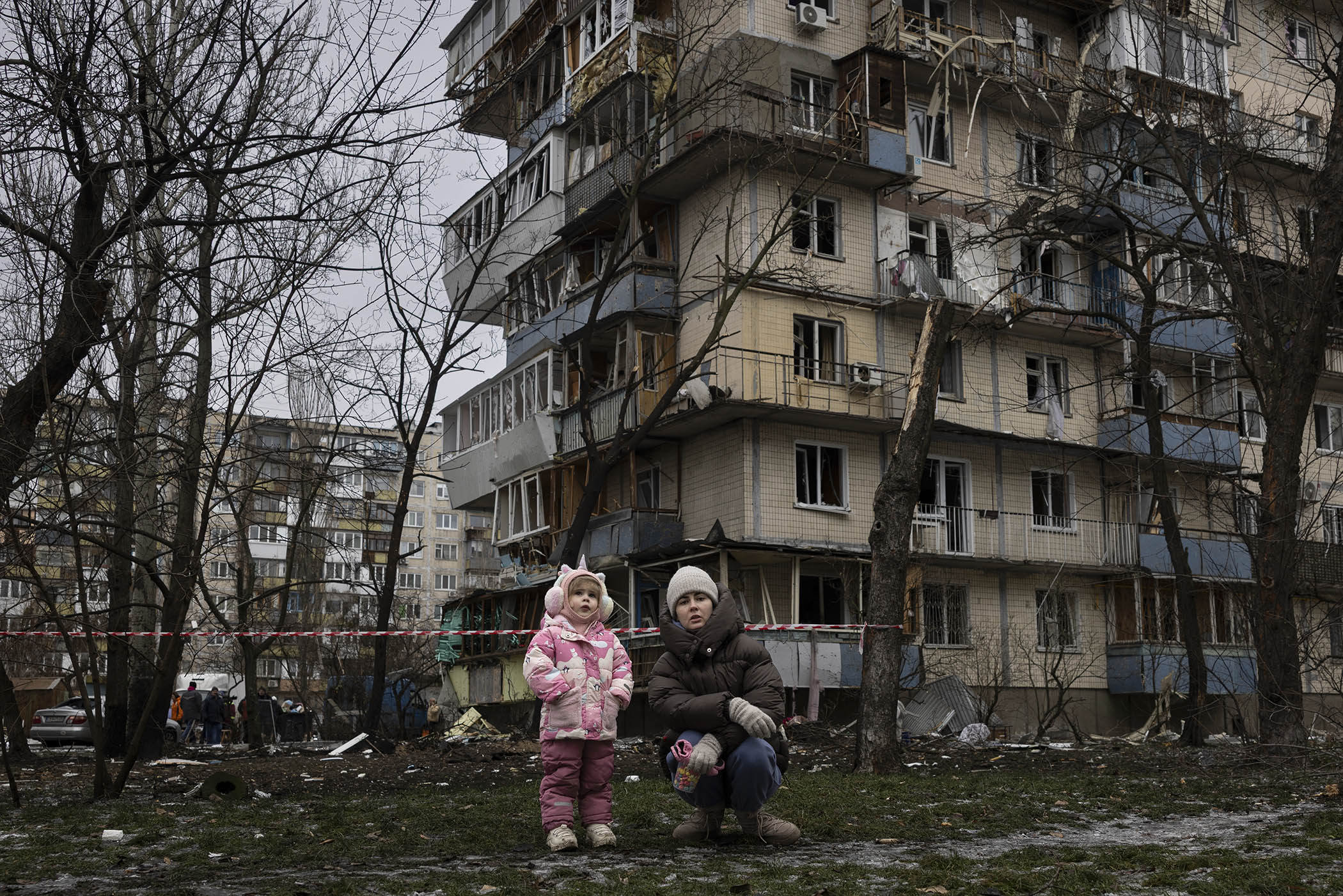
At the same time, Ukraine cannot fight forever. Its civilians cannot be terrorised indefinitely. The sooner the fighting ends, the better it is for Ukraine, Europe, and the free world. An immediate ceasefire should be a goal embraced by all. In 2026, therefore, it is time for a new approach to resolving this conflict. One that will not include new demands of Zelensky, but instead generate real pressure on Putin, who will only end his attacks on Ukraine when his capabilities to do so are exhausted. The formula is simple: more and better weapons for Ukraine and more and better sanctions against Russia.
Together with Nato allies, Trump and his team must provide the Ukrainian army with the weapons it needs to stop the advance of Russian soldiers on the battlefield. Most immediately, Ukraine’s F-16 fighters need to be rearmed with missiles. Stockpiles are running very low. It also needs more and longer-range missiles to attack military targets inside Russia, as well as more air defences to protect Ukrainian civilians and energy infrastructure. And while Trump has allowed European countries to buy American weapons, which are then given to Ukraine, the US must share the burden in this fight for freedom in Europe.
Next, the US and Europe must impose more sanctions and enforce them more effectively. All Russian oil exports should be sanctioned, with real penalties for countries that continue to buy it. Europe should accelerate the phaseout of Russian oil and gas imports. The US must follow the EU’s lead and sanction all ships involved in the shadow fleet used to deliver Russian energy exports. Russian Central Bank assets held in bank accounts in the West must once and for all be transferred to Ukraine or at least used as collateral for new loans to Ukraine. Finally, the US and the free world must move aggressively to stop the transfer of technologies from Europe and the US to Russia’s military enterprises.
Newsletters
Choose the newsletters you want to receive
View more
For information about how The Observer protects your data, read our Privacy Policy
In addition, Trump and his team need to stop dreaming about fantastic investment opportunities in Russia – or at least wait until the war is over. Above all, they should not link progress on the US-Russia trade and investment agenda to the peace talks. The fact that the last meeting between Putin and a US delegation in Moscow included two American businessmen (Witkoff and Trump's son-in-law, Jared Kushner) and one Russian businessman (Kirill Dmitriev) sends a terrible signal about the substance of these talks. No generals or diplomats were in the room.
2026 must end with the Ukrainians in a stronger negotiation position than they started the year
2026 must end with the Ukrainians in a stronger negotiation position than they started the year
Even if all these measures to weaken Russia’s army, military-industrial complex, and economy are adopted, Putin will likely still have the means to keep fighting throughout 2026. Trump says Putin “wants Ukraine to succeed”. The truth is, Putin wants Ukraine either to be swallowed by Russia or to fail as a democracy, since democracy in Ukraine is what threatens Putin’s dictatorship most directly. That is why 2026 must end with the Ukrainians in a stronger negotiation position than they started the year. That will require a change in Trump’s strategy. In 2025, Plan A did not work. In 2026, it's time for Plan B.
And if the Trump team does not change its strategy for trying to end the war in Ukraine, it's time for the Europeans to assume the lead in the negotiations. Ukrainians cannot afford another year of the current course.
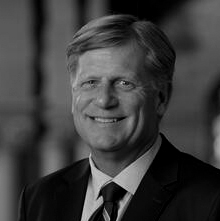
Michael McFaul is professor of political science, senior fellow at the Hoover Institution, and director of the Freeman Spogli Institute for International Studies, all at Stanford University. His new book is Autocrats vs Democrats: China, Russia, America, and the New Global Disorder, published by HarperCollins
Photograph by Danylo Dubchak/Frontliner/Getty