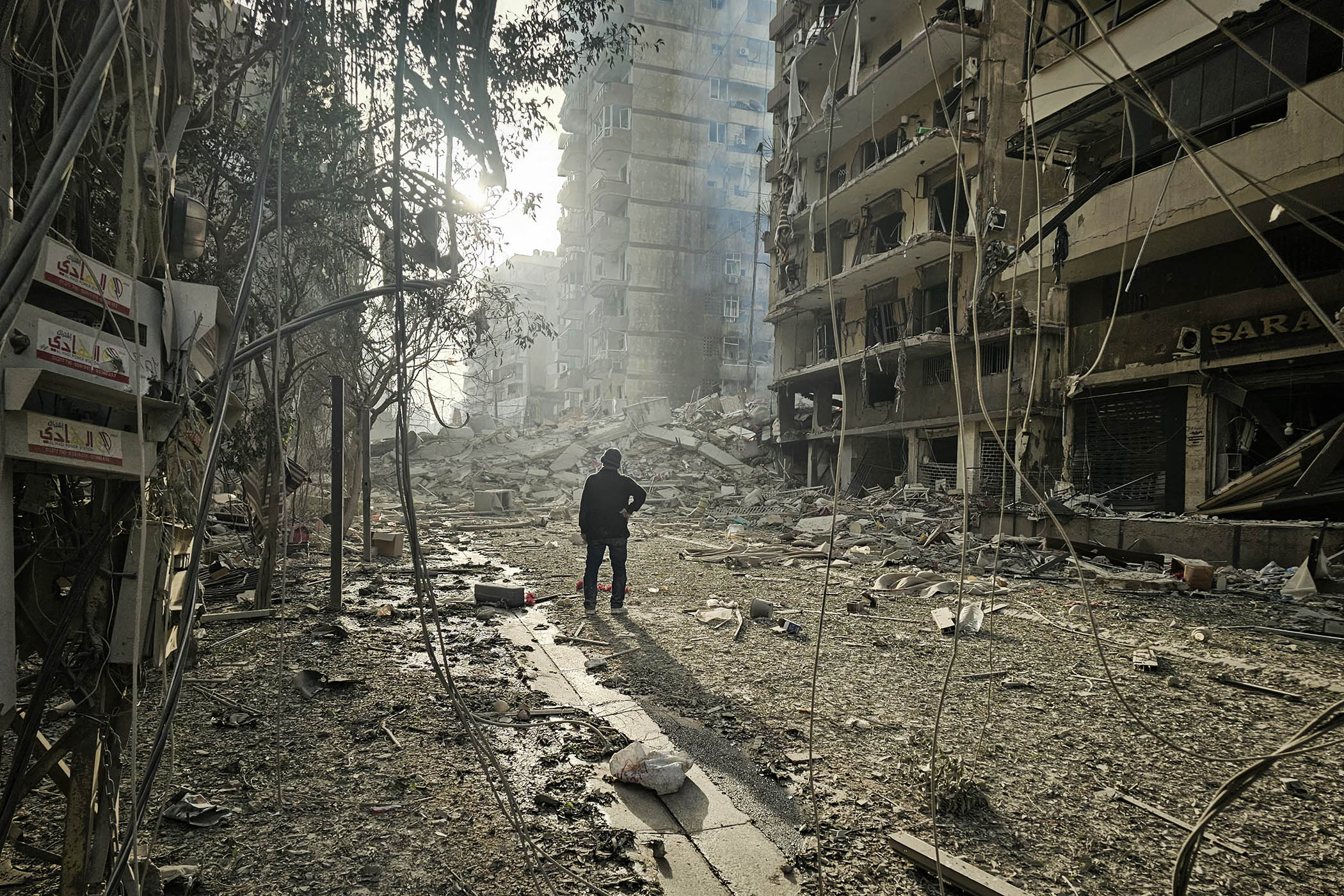
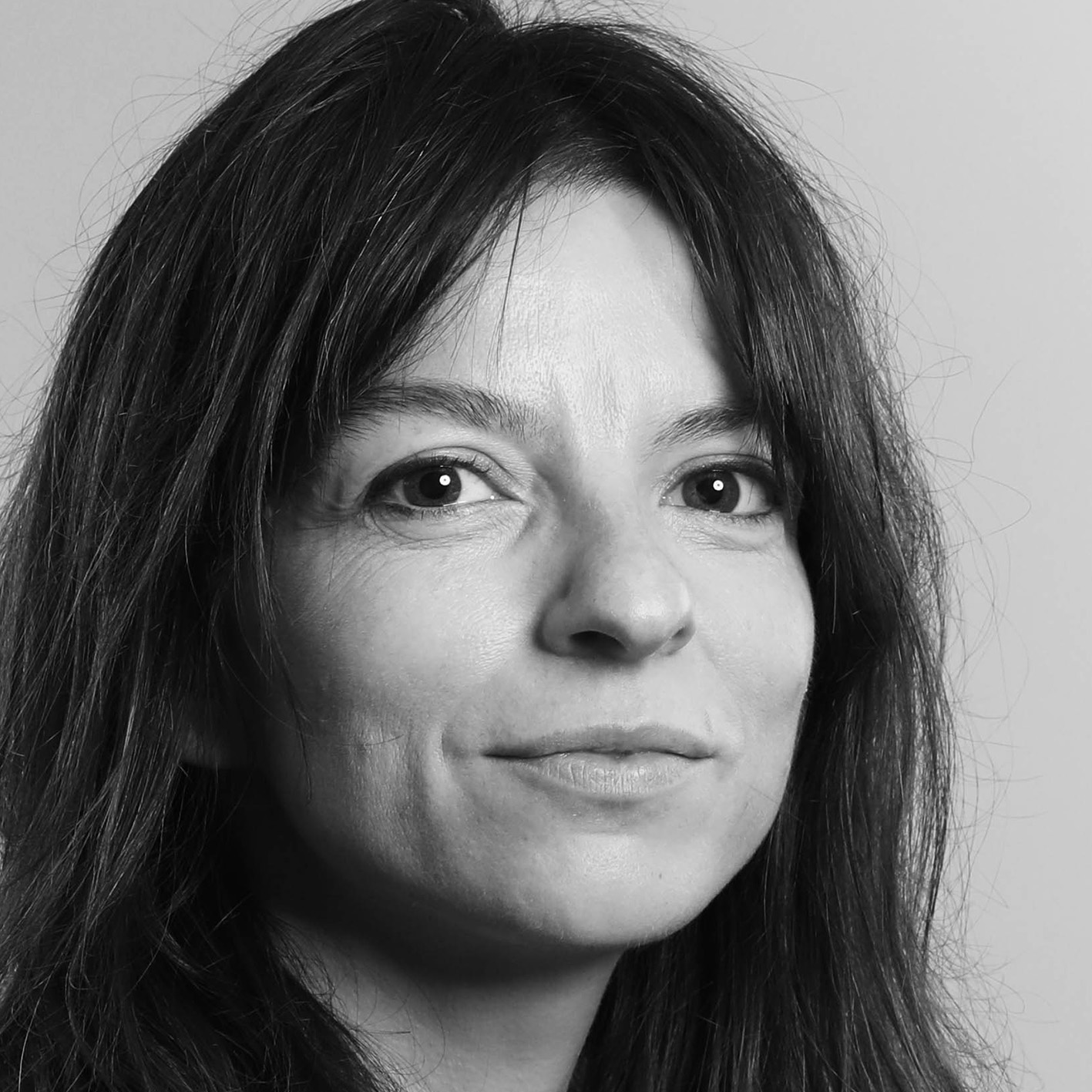


The flight to Vienna was boarding as French-Lebanese artist Ali Cherri called his parents back home in Beirut to check on them.
Israeli attacks on Lebanon were intensifying, and Cherri was worried. The couple, 88 and 78, were fearful, but resisted Cherri and his sisters’ offer to relocate them. The Israeli military hadn’t issued an evacuation order for their neighborhood, and they saw no reason it would be a target. A ceasefire was due to come into effect in just 12 hours.
“They told us, ‘no it’s fine, we’ll just wait; it’s only a few hours and it will stop,’” said Cherri, recounting the conversation with his parents on 26 November 2024.
After a year of war, Israel and Hezbollah had agreed to end hostilities that had dragged Lebanon into an expanding regional conflict. The talks had almost collapsed after France, which was involved in mediating, pledged to implement arrest warrants issued by the International Criminal Court against Israeli Prime Minister Benjamin Netanyahu and his former defence minister over alleged war crimes in Gaza. France agreed to tone it down, and the US put pressure on Israel to sign off on a deal, which was touted as a diplomatic coup for the Biden administration. At last, the end of the war was in sight.
Cherri landed in Vienna about two hours after speaking with his parents. He was there for the opening of his solo exhibition “How I am a monument” the following week. A sphinx constructed from mud, clay, and bronze would feature in the show, exploring “how we [can] talk about violence against bodies, objects or nature in regions of conflict”.
That was the last thing on Cherri’s mind as messages began flashing up on his phone: Israel had hit the Nuwairi neighborhood where he grew up. The strike was on Majdalani street, where the twelve-storey building his parents still lived in was located. A fire was raging on the ninth floor of their apartment block. It was a direct hit.
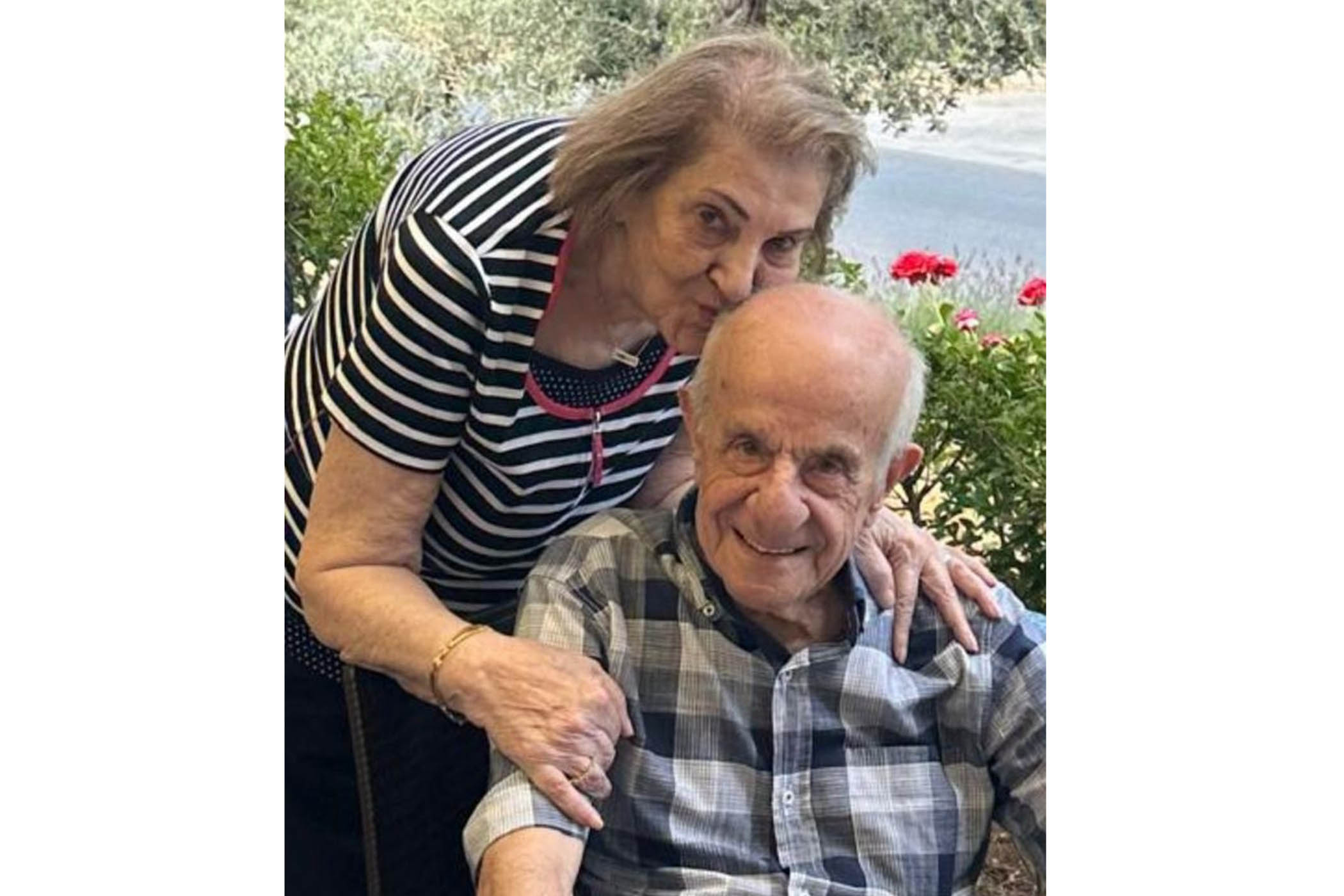
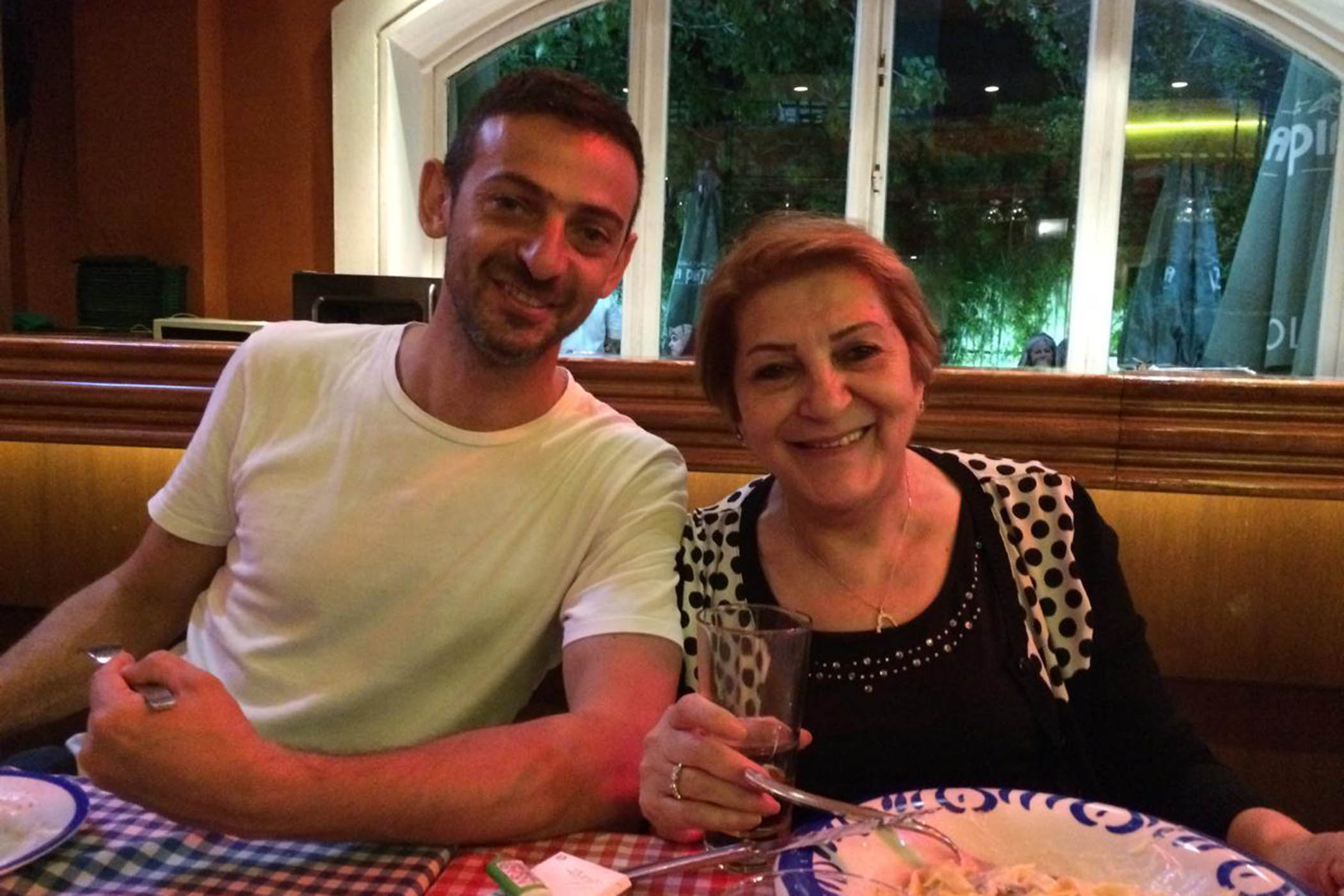
The body of Mahmoud Naim Cherri, Ali’s father, was found in one of the bedrooms. His mother, Nadira Hayek, was found dead in the TV room. Birki Negesa, an Ethiopian woman who had started working for the couple a month earlier was also killed. So were three other neighbours and a delivery driver who was in the lift at the time of the strike.
The attack was one of thousands that Israel has carried out across Lebanon since October 2023. But it would mark the first attempt to hold Israel accountable for alleged war crimes committed in Lebanon. Cherri wanted answers, and his French citizenship offered an opportunity to seek redress.
“Justice cannot bring back the dead, but I feel like it’s our duty to honour their memory and at least to feel like we tried to do something,” he said.
Two months after the strike, he met with Clémence Bectarte, a French lawyer. Friends had told him about her work on a case in which three Syrian officials were found guilty of war crimes and sentenced to life imprisonment in absentia for the killing of a Franco-Syrian father and son by the former regime.
Although French courts do not have jurisdiction over the killings of Cherri’s parents, his dual citizenship gave French authorities jurisdiction to investigate the bombing of the apartment he owned.
“There has been a lot of focus on Gaza, but Lebanon and the crimes committed there are not on the radar of any judicial system for the moment,” said Bectarte, coordinator of the Litigation Action Group for the International Federation for Human Rights. Lebanese judicial authorities lack the capacity, while Israel’s actions in Lebanon are not the focus of the ICC.
To investigate the strike, they enlisted Forensic Architecture, a research agency based at Goldsmiths, University of London, which uses 3D modeling and spatial analysis to uncover human rights violations. There was a personal connection with Cherri’s case: among the seven victims of the strike that killed his parents was the grandmother of a long-term contributor to Forensic Architecture.
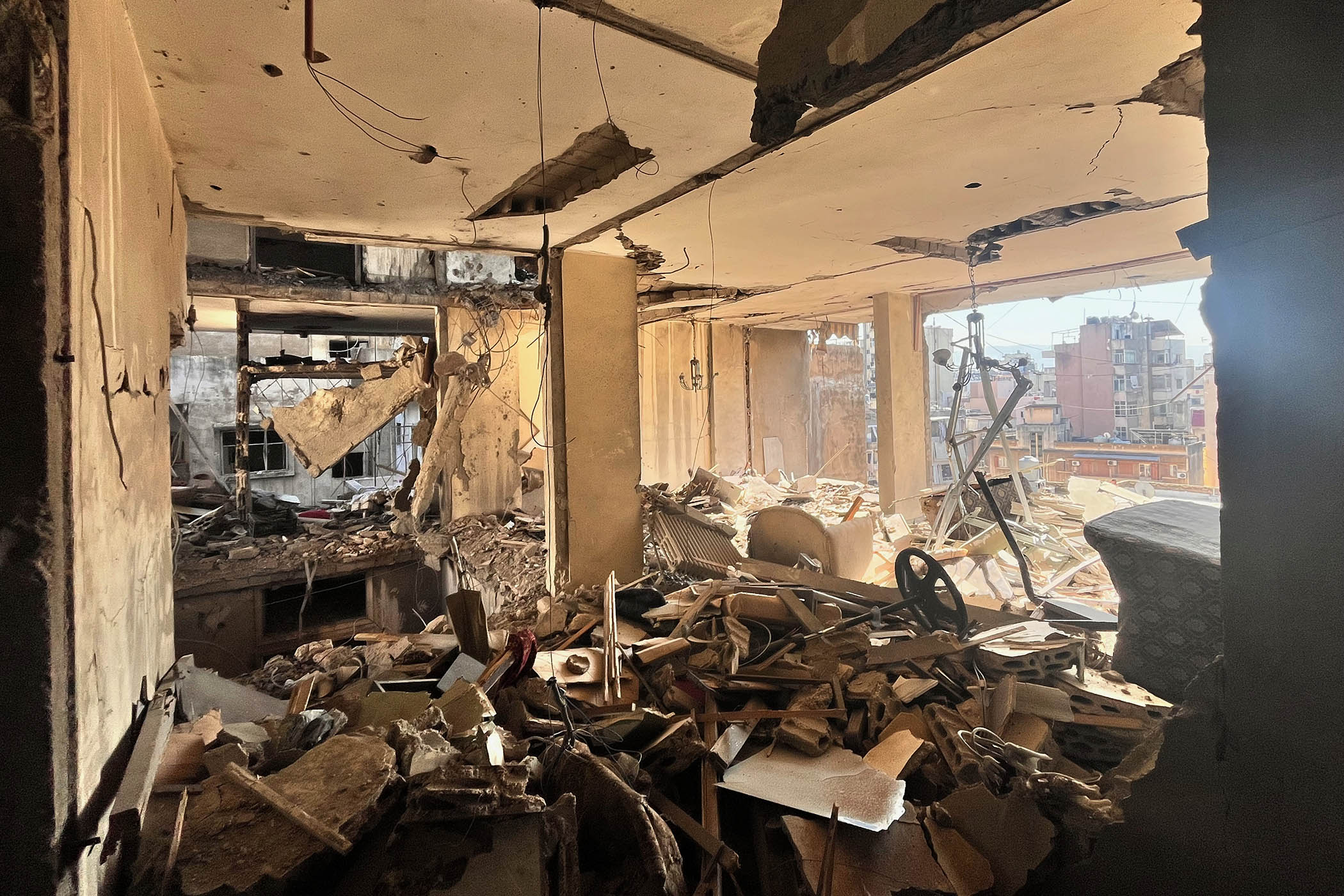
The agency began collecting and analysing footage and images from the scene of the strike. Reviewing a video that Cherri himself had recorded in the shattered apartment, researchers spotted an object in the rubble.
It was the tail actuation system of a GBU-39 Small Diameter Bomb, a precision-guided munition manufactured in the United States by Boeing Integrated Defence Systems and exported to Israel. In the sanitised language of the US military: “its small size allows increased aircraft loadout to achieve multiple kills per sortie and inherently reduces the probability of collateral damage”. Once released, typically from an aircraft, the munition relies on GPS/INS to self-navigate “to the desired impact point”.
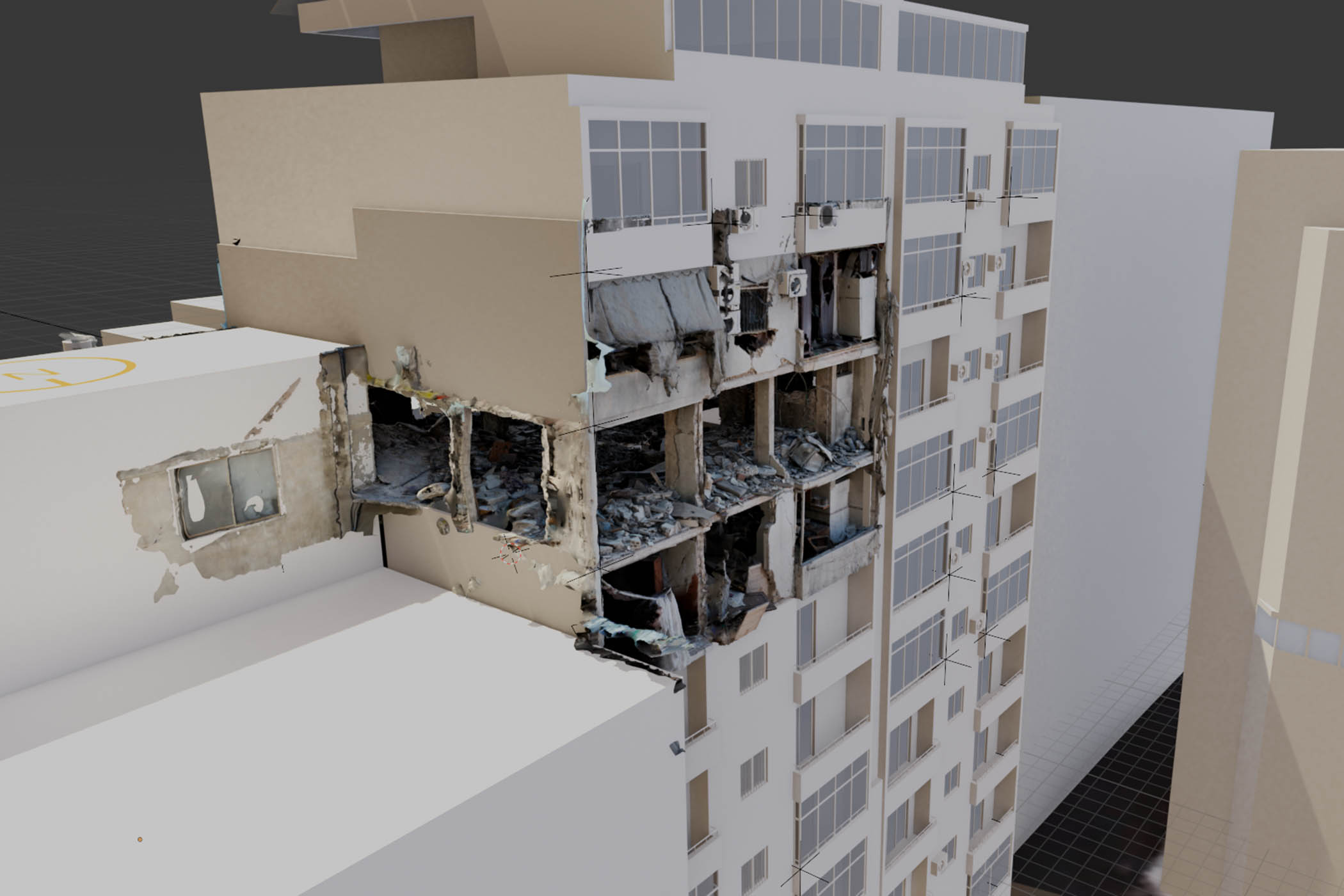
More missile remnants were found in a neighbouring building. In a photograph taken shortly after the attack, an unexploded warhead measuring about 1.8 meters leans against the wall of a bedroom in front of a plastic chair. Witnesses told Forensic Architecture they saw the munition enter through the window of the apartment before it got tangled up in a curtain. Scratch marks and deformation of the nose cone – designed to pass through 0.9m of steel-reinforced concrete before blowing up – indicated the munition had passed through multiple walls or floors before coming to rest there.
A weapons expert assessed it was highly unlikely that both the warhead and the tail actuation system came from the same munition, indicating that at least two bombs had been used in the strike on Cherri’s home.
Forensic Architecture commissioned Flyingcam Lebanon to document the damage using drone photography last July. Drone pilot Mohamed Shehab was concerned that flying a drone over the building would distress residents still reeling from the attack, Forensic Architecture’s Assistant Director of Research, Samaneh Moafi, recalled. In Beirut, a buzzing sound would instantly evoke the presence of an Israeli reconnaissance drone. The ceasefire was largely holding but Israel continued to conduct occasional strikes against targets it claimed were linked to Hezbollah.
The drone footage was used to create a 3D model of the apartment building using a technique called photogrammetry. Researchers traced the likely trajectory of the munitions as they tore through the building designed and built by the Cherri family in the 1960s.
The Israeli military did not respond to a request for comment on the strike by the time of publication.
Residents interviewed by Amnesty International speculated that brothers Mahmoud and Emad Cherri might have been targeted in the attack. Another brother of theirs, who did not live in the building, represented Hezbollah in the Lebanese parliament. Despite their brother’s political affiliation, residents told Amnesty they did not believe either Mahmoud, who owned a minimarket, or Emad, who owned a cafe, had played a military role in Hezbollah. Amnesty found no evidence to the contrary. One of the brothers was killed and the other wounded in the strike.
Even if Israel intended to target someone deemed a military objective, the means and method of the strike would likely make it an indiscriminate attack, Amnesty said. Under international humanitarian law, there is an obligation to distinguish between military objectives and the civilian population. Residents received no effective advance warnings, Amnesty said, and there were no military objectives in the vicinity at the time. Israel identified no military target before or after the strike.
As Cherri and the lawyers prepared to file their complaint, the US and Israel went to war with Iran, upending the tenuous truce in Lebanon. Hezbollah fired missiles at Israel in retaliation for the killing of Iran’s Supreme Leader Ayatollah Ali Khamenei. Israel responded with a widening campaign of strikes that soon engulfed Beirut in the worst mass-killings in Lebanon since the end of the civil war in the 1990s.
In March, Shehab, the drone pilot who had filmed Cherri’s apartment, was killed in an Israeli strike on his home south of Beirut, along with his 3 year-old daughter. His wife, a stylist, was wounded but survived.
“It’s kind of like an echo chamber of violence,” Moafi said.
French prosecutors must now decide whether to open an investigation in response to Cherri’s complaint. That should happen automatically, but French prosecutorial authorities have shown “strong reluctance” to open judicial investigations into alleged Israeli war crimes in Gaza, Bectarte said. “There’s a lot of politics when you talk about these crimes”.
If successful, Cherri hopes it will set a precedent for other victims of Israeli attacks to pursue justice.
On Majdalani street, the ruined apartment building stands gutted. The Lebanese government doesn’t have the means to renovate it. Some residents have moved back in anyway; they have nowhere else to go.
Photographs by Ali Cherri, Forensic Architecture 2026
Newsletters
Choose the newsletters you want to receive
View more
For information about how The Observer protects your data, read our Privacy Policy