
That we are living in dangerous times, which could prove yet more dangerous, is obvious. President Trump may have drawn back from threatening catastrophically last week that a “whole civilisation will die tonight”, but despite his extravagant claims of absolute victory, Iran remains obdurate. Oil is not flowing and spot prices are rising again. How the negotiations in Islamabad this weekend will get anywhere without compromise and some loss of face, by one or both sides, is hard to conceive.
The discourse of catastrophism is emerging as one of the principal blockers toward peace and our understanding of the likeliest course of events. Can Iran and the US ever do a deal? One obstacle is an unleashed Israel locked in its own absolutist catastrophic narrative. It insists last week’s ceasefire never applied to it, and will continue bombing Lebanon recklessly in its deadly campaign against Hezbollah, however Iran may claim it was part of the ceasefire. A no less catastrophist Anglo-American commentariat warn that the Strait of Hormuz will stay closed and a world economic downturn is nearly certain.
To complete the sense of Armageddon, oil and petrol rationing and recession are possibilities – to claim such is a passport to social media clicks and multiple media interviews. The west’s strategic coherence is said to be dead. Given that Trump wants a “reckoning” with Nato’s allies because they offered inadequate support during the war, even to pull the US out of the alliance altogether, the catastrophists insist that Nato is now shattered. As for Britain, its special relationship with the US is plainly stone-dead.
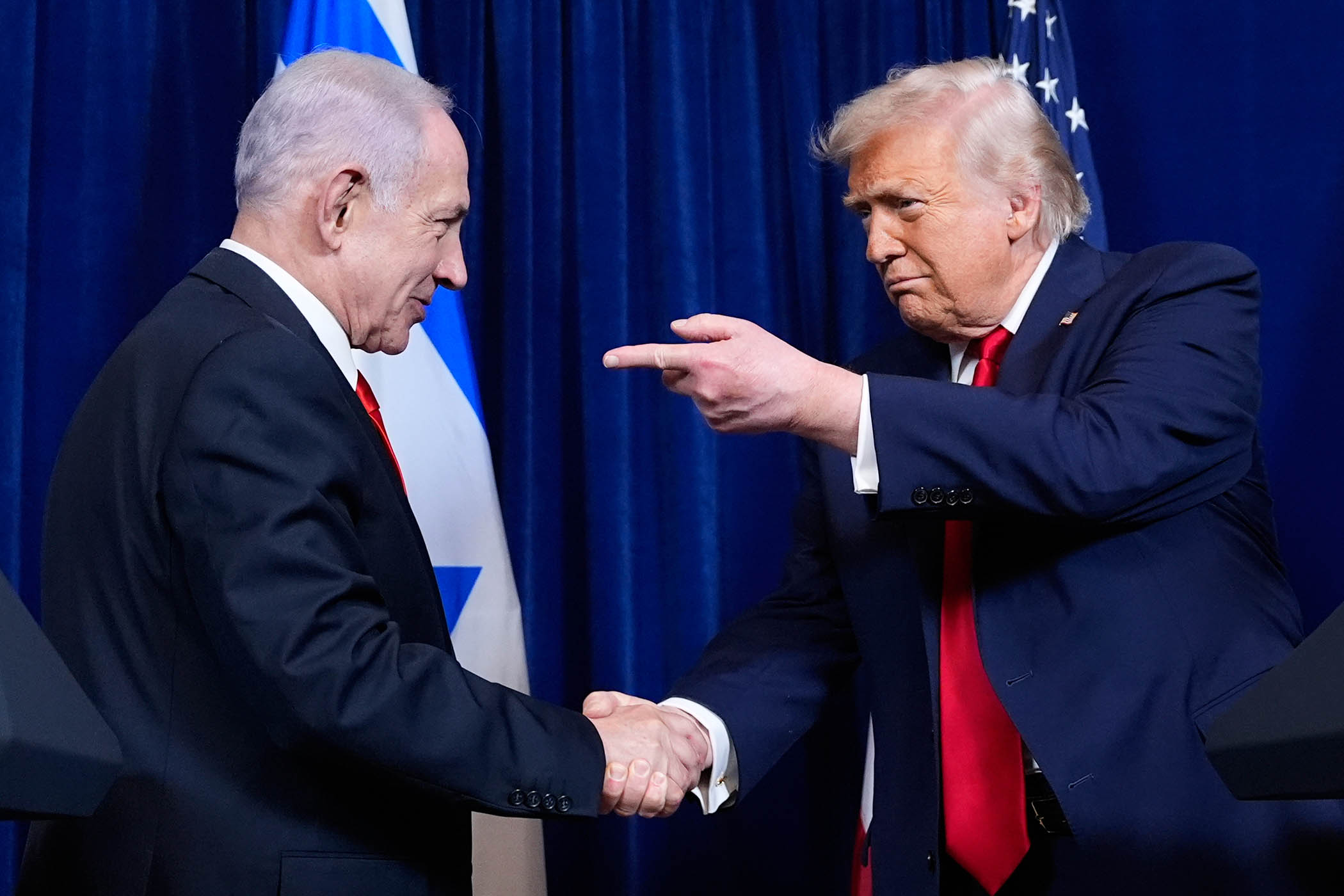
The opening of North Sea oil and gas fields, which can make no difference to supply for a decade and none ever to prices, is presented as of existential importance.The catastrophists, given the evident dangers, have plausibility on their side. But to enter their universe is to take the road to perdition. A report in the New York Times spells out how catastrophist-in-chief Benjamin Netanyahu persuaded fellow catastrophist Donald Trump in a private one-hour presentation at the White House on 11 February that now was the window of opportunity, militarily, to devastate Iran and its leadership, opening the way to regime change, revolt from below and permanent eradication of the regime’s ability to develop nuclear weapons.
To enter the catastrophists’ universe is to take the road to perdition
To enter the catastrophists’ universe is to take the road to perdition
In the days that followed, the head of the CIA described the Israeli arguments as “farcical” – which, secretary of state Marco Rubio said helpfully, translates as “bullshit”: even a badly wounded Iran would rejuvenate its leadership and still have the capacity to close the strait. The report claims that Gen Dan Caine, chair of the joint chiefs of staff, warned about the dramatic depletion of the stockpiles of American weaponry, while vice-president JD Vance declared the whole endeavour would split the Maga coalition. But for catastrophists, the greater risk was doing nothing.
The case now for (very guarded) optimism is that the catastrophists have been proved wrong. Trump is desperate for a way out. Six weeks of war has been fearfully expensive, gravely depleted US weapon stockpiles, especially of interceptors, seen petrol rise to $4 a gallon, caused a weakening in his poll ratings and fuelled growing dissension in his Maga base. He manufactured the thinnest of justifications for not launching his threatened civilisational attack – and Iran can read the political runes. Its stance in not beginning ceasefire talks if Israel’s attacks on Lebanon continue is because it knows Trump must respond.
So Trump has put pressure on Netanyahu to dial down Israel’s attacks: Israel is to meet Lebanon’s government in Washington to discuss a ceasefire. Doubtless Iran will place reciprocal pressure on Hezbollah. Meanwhile, Vance, the principal doubter of the war, is to lead the American negotiating team – Steve Witkoff and Jared Kushner, who helped trigger the calamity, have de facto been demoted.
If agreement can be reached that the ceasefire must include Lebanon and that necessarily any understanding on nuclear weapons will take months to reach resolution, the last sticking point will be on what terms the strait will be opened. Some formula can and must be devised, probably involving Nato’s “middle” powers to assume some policing and time-limited financial compensation: Iran needs the oil revenues – the rest of the world, the oil. Trump will have his off-ramp; so will Iran. Both will declare victory.
Is Nato irreparably damaged? Certainly it is in Trump’s eyes, but his capacity to take the US out of the Nato treaty is severely curtailed without decisive congressional majorities. The Democrats are confident that even with attempted ballot-rigging they will retake the House and perhaps even the Senate in November’s mid-term elections. Trump is suddenly in a downward political spiral; local election officers, sheriffs and judges will be cautious about flagrantly colluding in any illegal “coup” attempt, confiscating Democrat ballots. Equally, Nato will survive, not least because US bases in Europe – Ramstein in Germany, RAF Lakenheath, the Rota naval base in Spain – are so fundamental to the US’s own security and global interests. Congress will veto the president’s self-damaging petulance.
Britain’s relationship with the US will continue, if cooler under Trump; the information sharing is too precious to be surrendered. Information, as much as destroyers, is the current currency of security. As for the North Sea, it is a sideshow as cheap renewables and nuclear power increasingly dominate the electricity grid. Logic will out.
Newsletters
Choose the newsletters you want to receive
View more
For information about how The Observer protects your data, read our Privacy Policy
Scepticism about catastrophism will even impact British politics. The majority of British voters accept the necessity for Nato and the EU, along with being a member of both. It is a cap on the appeal of catastrophist Polanski’s Nato-exiting Greens and catastrophist Farage’s Europhobic, Brexit-embracing Reform. Nor is Britain as catastrophically broken as both extremes claim.
Forty-four presidents before Trump have all accepted the profundity of the responsibility of being US president. Another 44 will do the same after the country’s wild ride with him. Amid the mayhem and too many deaths of innocents, there is a growing chance a saner world is being born.
Photograph by Alex Brandon/AP Photo