Photographs by Oliver Marsden
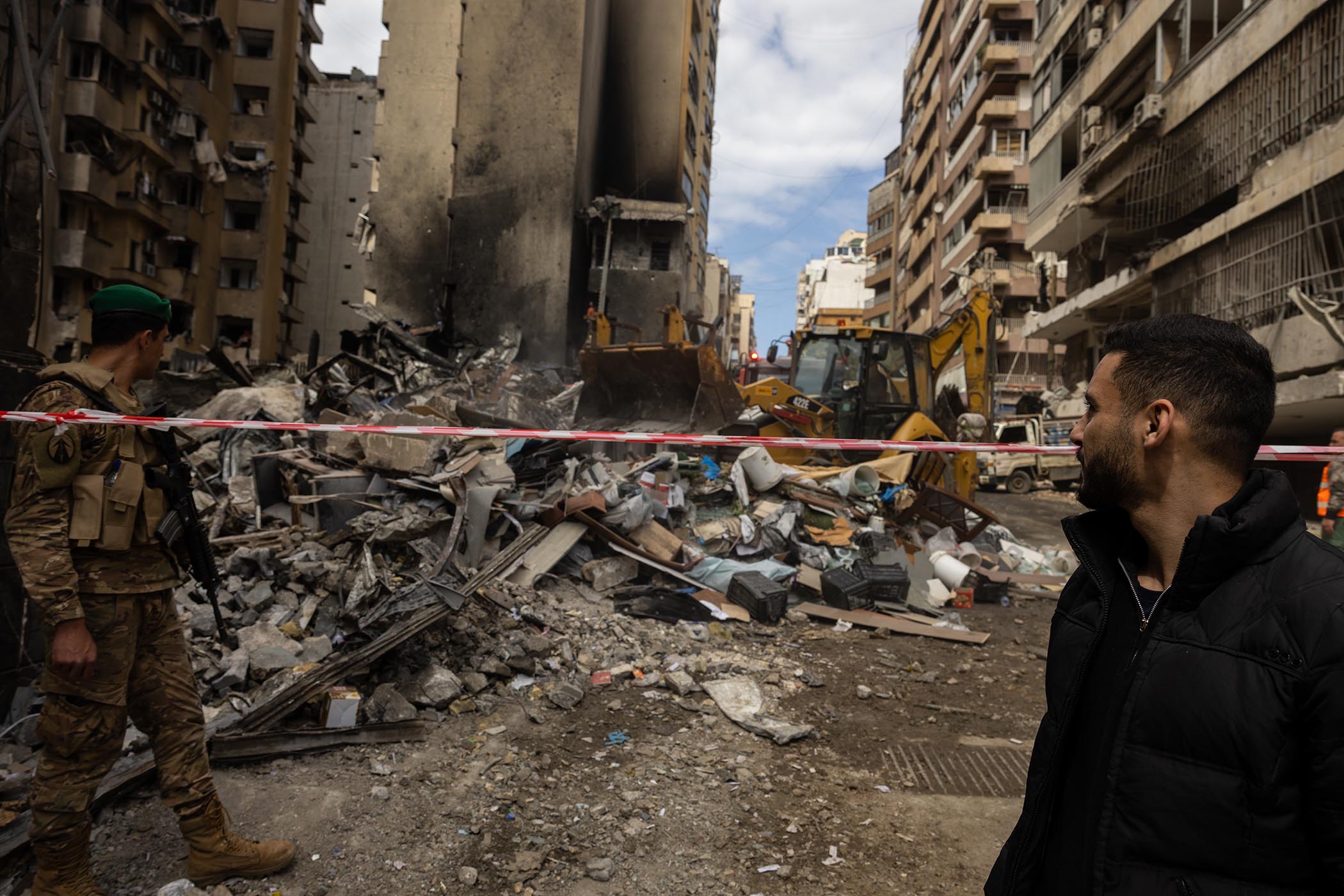
When the first Israeli airstrike hit the building next door, Suheil Hamad thought of his brother. When a second tore through his restaurant, choking it with dust, he broke from behind the counter, shouting into the street for his older sibling. He made it two steps.
A third strike levelled a storage block opposite. Windows imploded. Concrete and debris swallowed the light.
“I thought I was going to die,” the 22-year-old said. “The girl on the till fainted. I tried to wake her. As it grew dark, I told her: ‘I’m going to die with you.’”
At 2.15pm local time on Wednesday, Israel unleashed a wave of 100 synchronised airstrikes across Lebanon in just 10 minutes. Missiles rained down on Beirut, hitting Suheil’s neighbourhood of Barbour in the centre of the capital, a densely populated area previously untouched by the conflict between Hezbollah and Israel.
Calling the operation “Eternal Darkness”, Israel’s defence minister, Israel Katz, praised the strikes in a video address. He claimed Hezbollah, the Lebanese Shia militant and political group, had been “stunned and confused by the depth of the penetration and scale of the strikes”.
Israel claimed to have killed Ali Yusuf Harshi, the personal secretary and nephew of Hezbollah leader Naim Qassem, in the strikes. Hezbollah has yet to confirm his death, but among the dead were Lebanese poet Khatoun Salma alongside her husband Mohammed, two journalists named Ghada Dayekh and Suzanne Khalil and 110 women, children and elderly people. More than 300 people were reported to have been killed and at least 1,165 wounded. It was the bloodiest 10 minutes in Lebanon’s history since its 15-year civil war, which ended almost three decades ago.
“When I stepped outside it was complete destruction, apocalyptic,” Suheil said from the safety of another of his family’s chain of Snack Habibona restaurants in Beirut. “I stood outside in shock. The dust, the shouting, the smell. I saw people I know lying on the ground dead. Others walked past without hands. It was terrifying.”
Suheil jumped on a bike and rushed to his wife and 11-month-old daughter, dust trailing off him in the wind as he sped home.
“My wife broke down when she saw me,” he said, his voice cracking with the memory. “I hugged her and my child all night.”
Newsletters
Choose the newsletters you want to receive
View more
For information about how The Observer protects your data, read our Privacy Policy
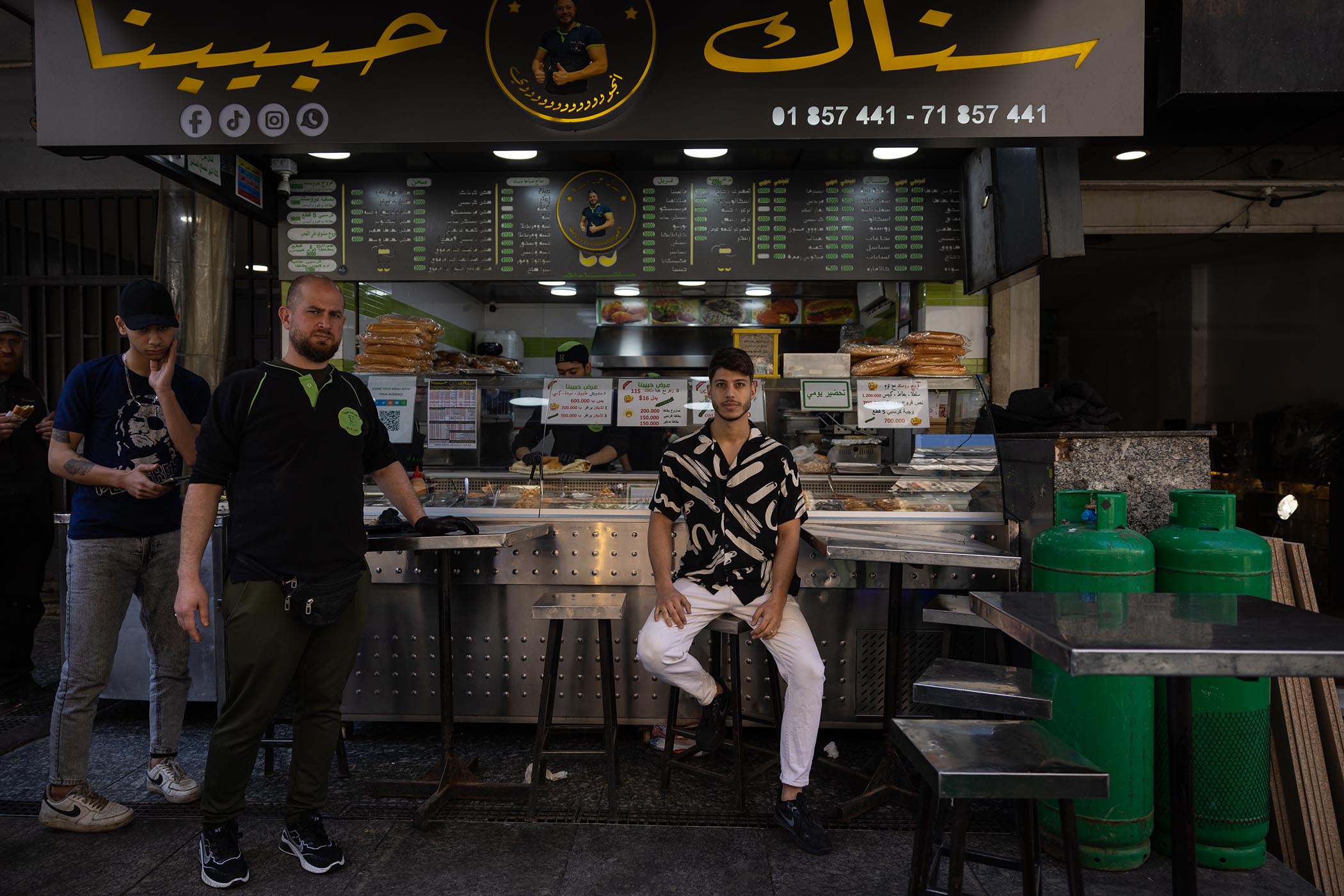
Suheil Hamad, 22, sits outside one of the branches of his family’s Snack Habibouna restaurants in central Beirut.
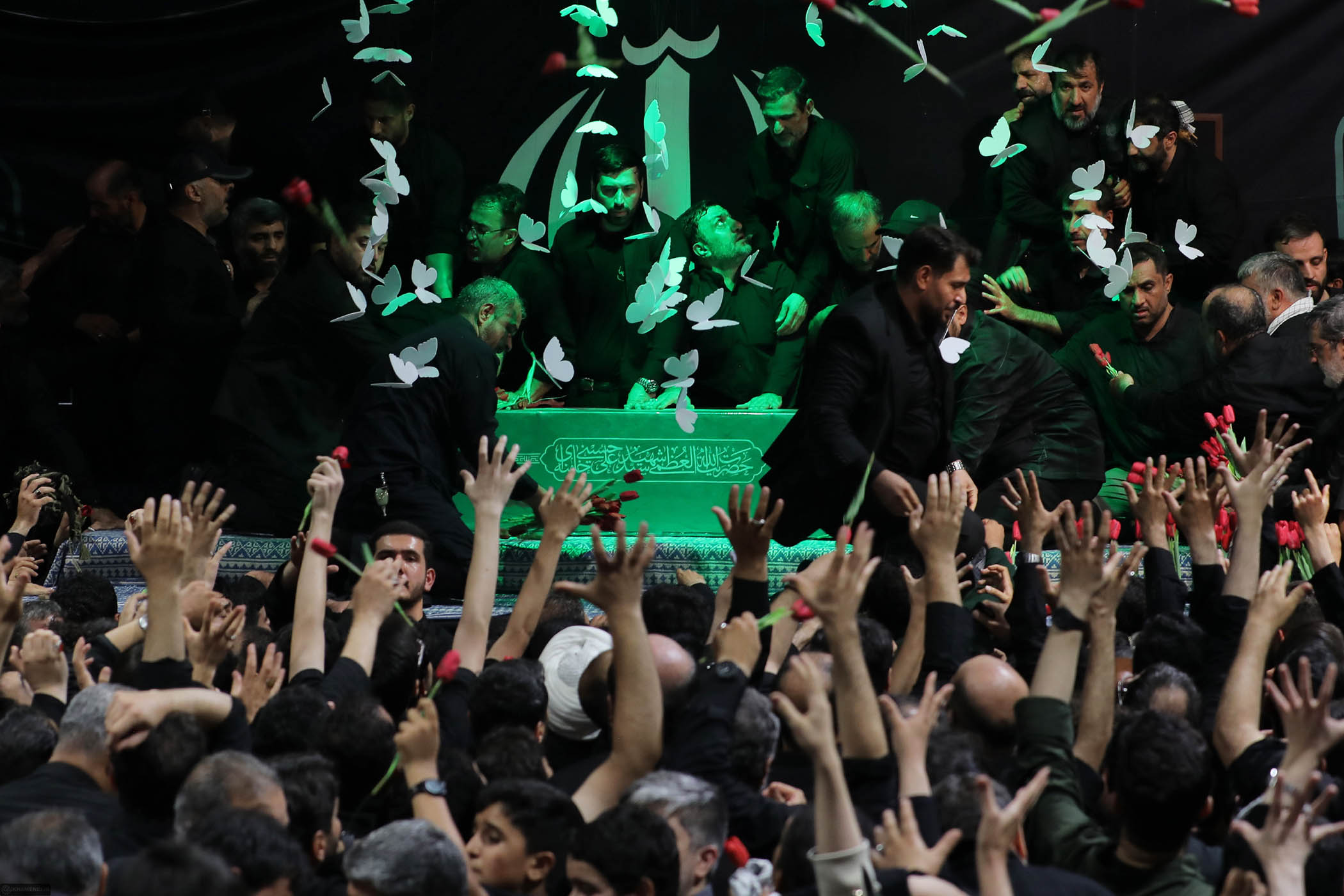
This latest chapter of war between Israel and Hezbollah reignited in the early hours of 2 March after the Lebanese Shia political and militant group fired rockets into northern Israel in retaliation for the killing of Iran’s supreme leader, Ayatollah Ali Khamenei, two days earlier. Israel fired back with a new wave of strikes.
Last month, Israel Katz said a buffer zone would be created in southern Lebanon and that all homes near the occupied villages would be destroyed “in accordance with the Rafah and Beit Hanoun model in Gaza”. The Israeli military razed most homes and public infrastructure in both neighbourhoods of Gaza. Israel’s far-right finance minister, Bezalel Smotrich, went a step further, warning that the southern suburbs of Beirut would “look like Khan Younis” in Gaza that has been almost completely destroyed.
Over the last week, the scope of Israel’s strikes has widened. Areas previously thought safe, such as the predominantly Sunni Muslim neighbourhoods of central Beirut or the predominantly Christian areas east of the capital, have come under attack. For many Lebanese the conflict has taken a dark, terrifying turn.
“It feels different to the war in 2024. It’s a harder war and it feels like they are targeting civilians,” Suheil said, looking across to his brother serving food to customers in his restaurant. “Nowhere feels safe and there is nowhere left to go.”
The Israeli military has stated that it wants to de-fang Hezbollah, push it away from Israel’s northern border and create a buffer zone in southern Lebanon so that Israelis can live free from Hezbollah rocket fire in their northern towns and cities.
Israeli strikes have killed more than 2,000 people in Lebanon in six weeks of war and injured more than 6,400, according to the country’s ministry of health. Rocket fire from Hezbollah has killed one Israeli civilian in the same period, according to the Magen David Adom ambulance service in Israel.
Michael Milshtein, a reservist colonel and senior analyst at the Moshe Dayan Center at Tel Aviv University, believes Israel’s war aims are unachievable. “I really think that it’s a poor moment for the Israeli strategy because, once again, we have dramatic achievements, but the government has no clear, realistic goals,” Milshtein said.
“Benjamin Netanyahu announced he will bring full disarmament of Hezbollah and all the army said in a very clear manner, we cannot implement this goal. We cannot make sure that south Lebanon will be clean of military challenges. We cannot occupy Beirut and Baalbek and other parts of Lebanon and make sure that Hezbollah will have no weapons. It’s impossible.”
On Wednesday, Israel’s prime minister said Lebanon lay outside the ceasefire deal with Iran, then swiftly pivoted a day later, authorising talks with Beirut on disarming Hezbollah and establishing “peace relations”. Lebanon’s president, Joseph Aoun, said “direct negotiations” were the “only solution”, praising security forces for holding the line. After years of brinkmanship, both sides appeared to be edging cautiously towards dialogue, but fear remains in Beirut.
Sitting in the faculty of Information Sciences at the Lebanese University, one of many schools and universities turned into makeshift shelters, Hawraa Akhdar described the stresses of being nine months pregnant and displaced by war.
“The baby could come any moment now,” the 30-year-old said as the noise of an Israeli drone buzzing above Beirut drifted in through the window. “I’m stressed and it’s very hard, but what can I do? I just want to deliver in my own home.”
Surrounded by displaced families sharing the classroom they now call home, she said it was the second time she had been displaced from her home near the southern city of Nabatieh. First during the 2024 conflict and now from the first day of violence that erupted six weeks ago.
Tracing circles over her stomach, Hawraa recounted how the airstrikes on Wednesday caused her and others to run out of their shelter in the centre of Beirut.
“I feel afraid and I get scared every time there is a bombing. I ran out of the building in case it collapsed.”
Like many of the more than 1 million Lebanese displaced by the war, Hawraa dreams of returning home but is accustomed to her new existence.
“I want the war to end but we are forced to adapt. This is our reality now,” she said watching young children play in the corner on a foam mattress.
“I want my first child to be born safely and, when she is, I’ll name her Salam,” the Arabic word for peace.