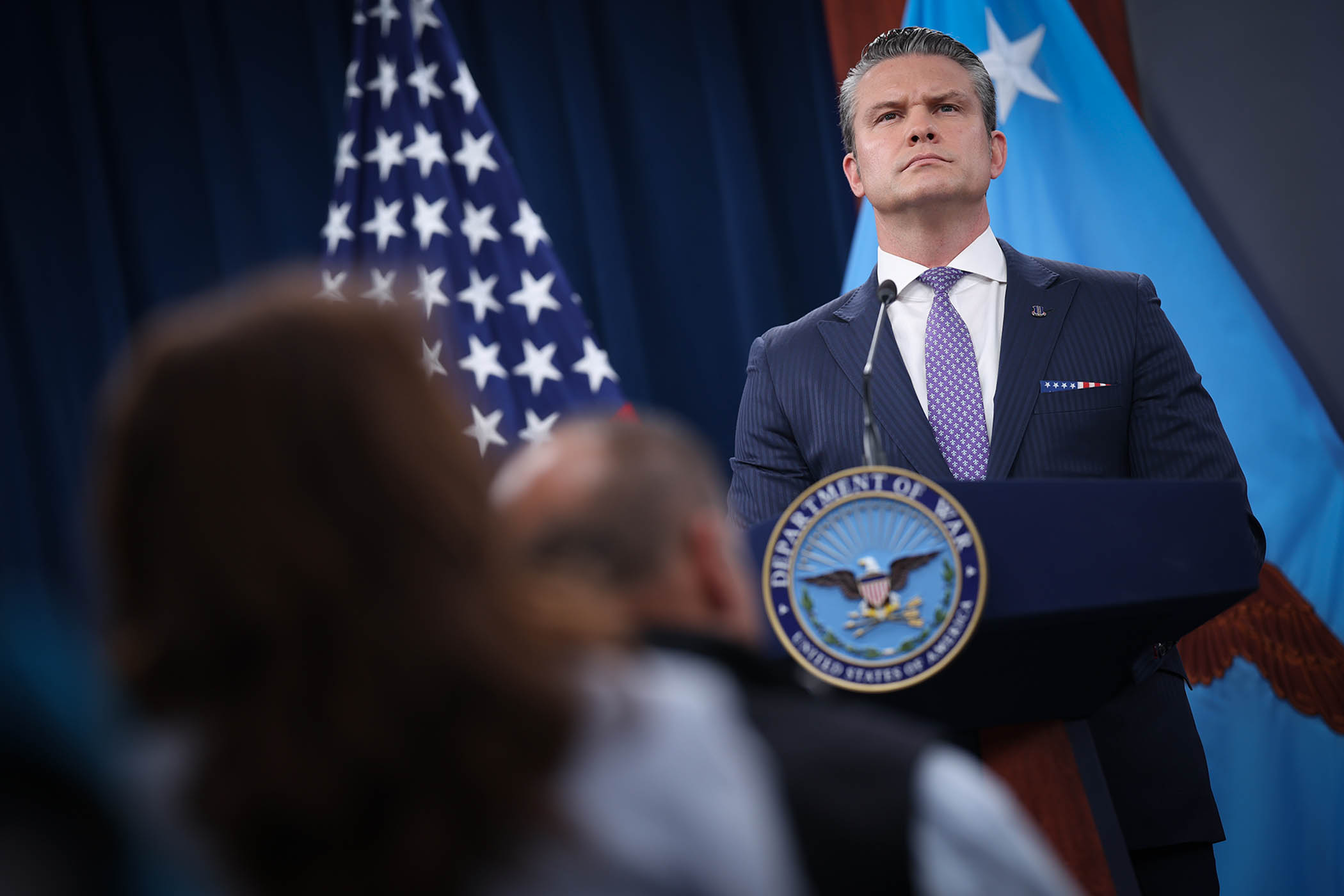


Firing generals during war is nothing new, despite the flurry of horrified commentary this week as Pete Hegseth forcibly “retired” the head of the US Army, Randy George. Churchill famously fired Auchinleck and Wavell in North Africa in the 1940s for being insufficiently aggressive in the fight against Rommel. In the same campaign Friedendall was demoted by Roosevelt for a dramatic defeat at the Kasserine Pass, to be replaced by Patton, who himself was sidelined for striking two soldiers after the fall of Sicily.
Stanley McChrystal was fired from the Afghan campaign by President Obama in 2009 and, perhaps most famously of all, Douglas MacArthur was removed from command of the Korean War by President Truman in 1951. In the run up to the second world war, Stalin didn’t so much fire as shoot about 80 per cent of the Red Army’s leadership.
Removing ineffective commanders in time of war is, if anything, sensible. People with a plausible manner who are good administrators in peacetime may be found wanting in the crucible of battle, where the price of failure is death and potentially national defeat. Yet this is not what Hegseth has done. His actions have more in common with the firing of McChrystal and MacArthur for insubordination, or even of Stalin’s which was aimed at total control of the military by fear.
Since he came to office 15 months ago, Hegseth has removed the overall head of the armed forces, the head of the US navy, the head of the army, the deputy head of the air force, the head of the Coast Guard, the head of the Defense Intelligence Agency and the most senior military lawyers. In all, around 20 senior leaders are reported to have gone. Not a bad body count for a former reservist who mostly served in non-combat roles.
Hegseth’s declared intent is to re-establish a lethal mindset in the Pentagon. It is a cultural counter-revolution. He has derided diversity and inclusivity initiatives, mocked the restrictions imposed by rules of engagement and stressed the importance of winning at all costs. Yet winning is not defined by unquestioning loyalty to any instruction issued by the commander in chief. All leaders, civilian and military, need to listen to professional advice and a range of opinions if they are to make consistently good decisions. Churchill, Britain’s most celebrated wartime leader, made frequent mistakes that cost lives through a refusal to listen, perhaps most notably at Gallipoli during the first world war.
The chilling effect of demands for absolute obedience under the threat of dismissal can be seen in the lack of reaction from defence insiders. Normally talkative Pentagon officials refuse to talk about Hegseth’s purge and even retired former officials and officers decline to get involved. They know the capability of US surveillance and are mindful of the example of Mark Milley, who was investigated under threat of demotion in rank, even though he had already retired.
Stalin came to regret his wholesale purge of the Red Army’s leadership after Hitler invaded in June 1941. Not only did he lack the professional cadre capable of running all aspects of a huge and complex war machine, but he had trained the army not to think or question but to obey blindly through fear.
The biggest problem with yes men is that they say yes, when sometimes the answer should be no.
Photograph by Win McNamee/Getty Images
Newsletters
Choose the newsletters you want to receive
View more
For information about how The Observer protects your data, read our Privacy Policy