

To find out more about The Observer's investigation, listen to the three-part Slow Newscast series, China’s Shadow War
Finn Lau was walking down a quiet street in west London in June 2020 when three masked men attacked him. “I thought I was blinded,” the Hong Kong dissident remembered. “They punched my head, kicked me to the floor. I asked myself: ‘Is this the end of my life?’”
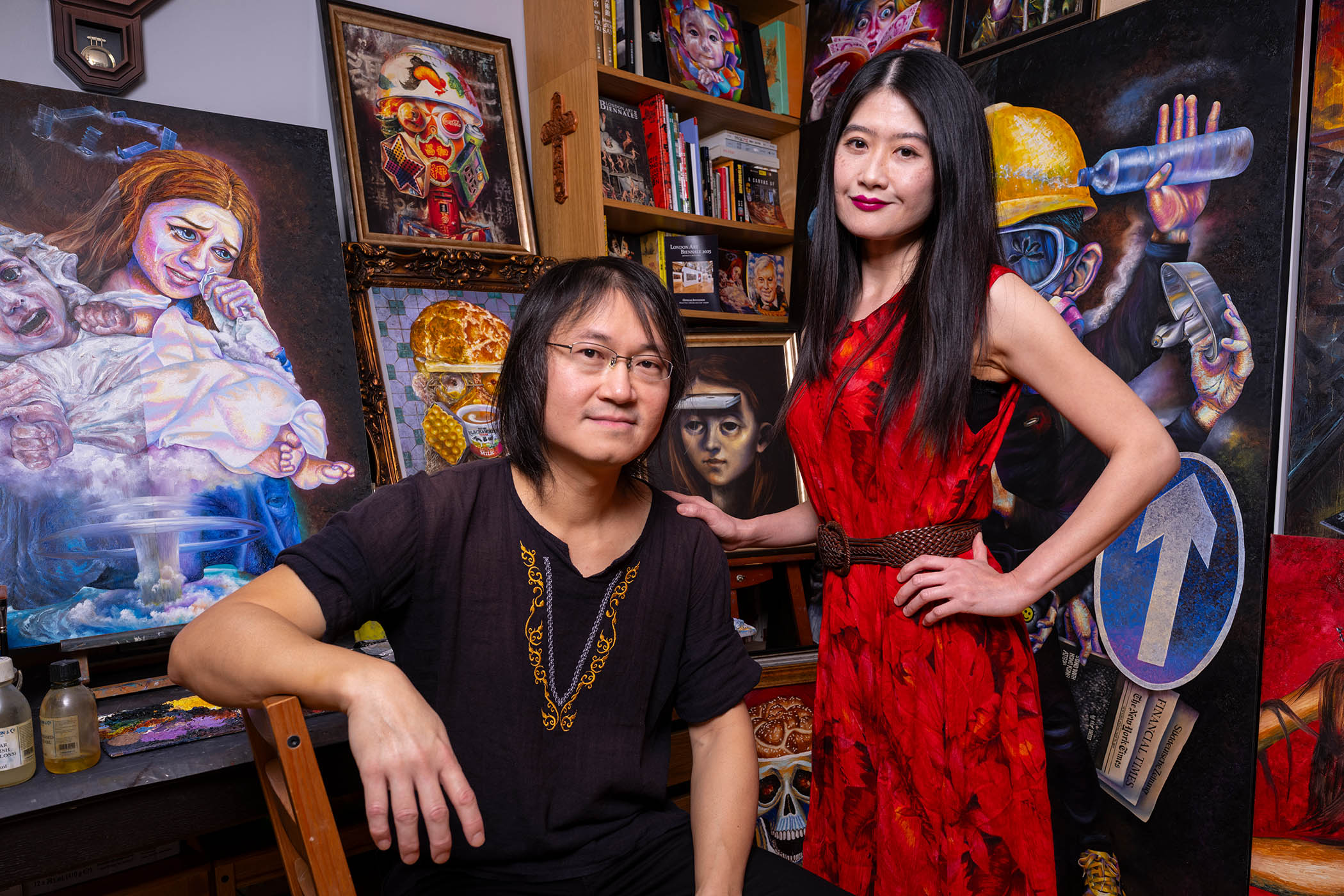
Three years later Lumli and Lumlong, two married Hong Kong artists, were tailed after a pro-democracy protest in London. “We received an alert that an AirTag [an Apple tracking device] was following us,” Lumli said. “It showed the route [we had gone].”
In 2023, Lyndon Li, an activist with political connections, was followed by a Chinese man to his London church. The man had previously befriended Hong Kong activists and collected personal information on some of them. In a pub in the capital, Li says the man, who was called Harrison Chan, offered him money to infiltrate the Conservative party.
“He said China will be the future,” Li recalled. “Britain will fall.”
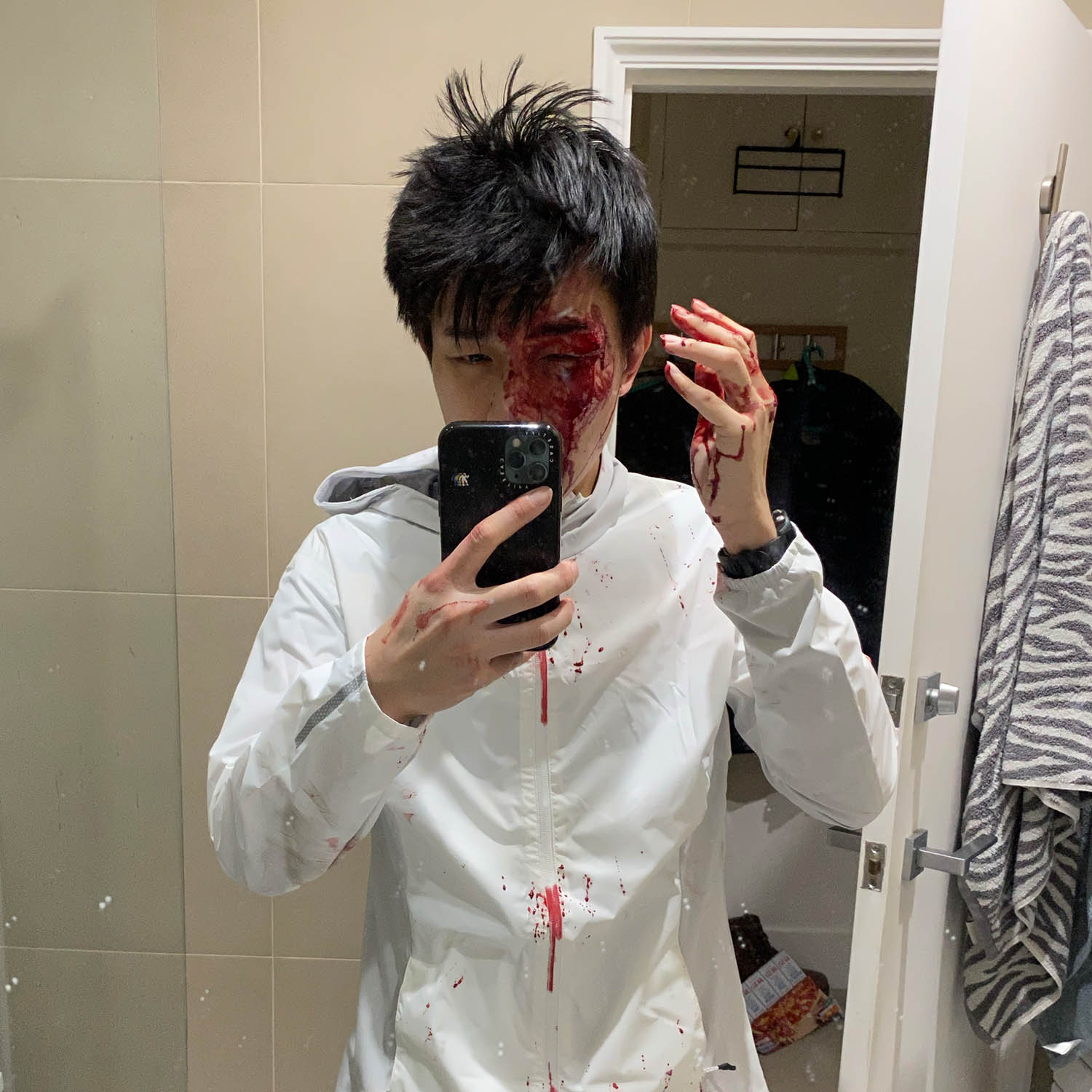
Finn Lau after being attacked in 2020
Since 2020, China has ramped up a campaign of intimidation, infiltration, harassment and violence against free speech activists operating in the UK. China experts warned that the programme is a part of a global project to stamp out dissent. “It’s widespread,” Laura Harth, the China director at human rights NGO Safeguard Defenders, said. “The aim is to try and control the entire overseas Chinese community.”
Far from finding a safe haven in this country, dissidents from Hong Kong say they have found little protection from Beijing.
The Observer has interviewed more than a dozen UK-based dissidents who say they have been the victims of so-called transnational repression. They include a former elected politician, an exiled lawmaker, several student activists and journalists, a trade union organiser, a policy researcher, two artists, a musician and a young asylum seeker rebuilding his life.
Almost all the dissidents said they believed that repression in the UK has increased sharply in the last few years.
“If you said to the Hong Kong community 10 years ago: ‘Are you being repressed?’, the answer would have been no,” said Labour MP Alex Sobel, the joint author of a cross-party report on transnational repression. “That is completely different now.”
Newsletters
Choose the newsletters you want to receive
View more
For information about how The Observer protects your data, read our Privacy Policy
‘They made me feel I need to give up my rights and my freedom of speech in order to keep myself safe’
‘They made me feel I need to give up my rights and my freedom of speech in order to keep myself safe’
Carmen Lau
In many cases, pressure applied to activists is more psychological than physical. Unlike with Russia or Iran – which carry out occasional assassinations of dissidents – Chinese repression operates more in a grey zone, experts said. The dissidents we spoke to reported a spectrum of abuses including stalking, sophisticated digital repression, hacking, harassment by bots and AI-generated disinformation.
“They don’t murder you with poisons,” said Chloe Cheung, a young activist in Leeds who now works at the Committee for Freedom in Hong Kong Foundation. “They try to torture you psychologically.”
However, there are indications that Beijing is stepping up a campaign of violence. This month, two men went on trial at the Old Bailey suspected of spying on well-known Hong Kong dissidents.
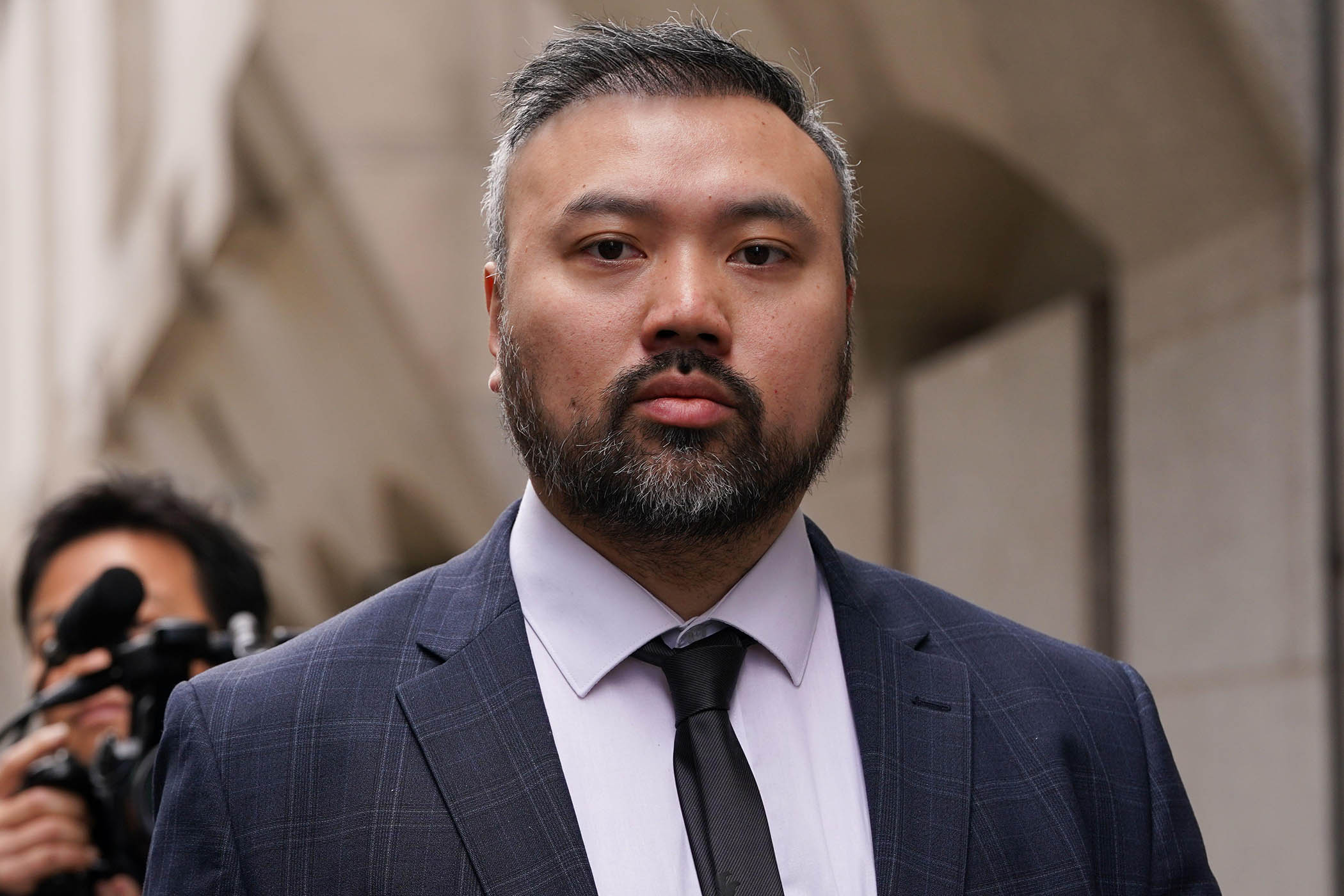
It is the first prosecution of suspected Chinese agents under the National Security Act 2023. Chung Biu “Bill” Yuen, 65, and Chi Leung “Peter” Wai, 38, both dual Chinese and British nationals, deny charges of assisting a foreign intelligence service between December 2023 and May 2024.
Phone messages in the case allegedly showed that Wai was in a group chat called Eagle Point Human Resources Company. He is said to have received instructions from people, including one named “Master”. In one Eagle Point group chat in November 2021, participants discussed an alleged plan to ask Hong Kong criminal triad members living in Britain to attack Simon Cheng, an exiled Hong Kong pro-democracy activist, Nikkei Asia reported.
Yuen, a retired police officer, directed Wai and Matthew Trickett, a British immigration officer, to carry out “hostile reconnaissance” against Monica Kwong, a woman accused of fraud and theft by her former employer in Hong Kong, the court heard. Kwong denies the accusations.
Prosecutors say Trickett posed as a maintenance worker as he and others sought to gain access to Kwong’s home. Video footage appears to show Trickett pouring water on the floor outside her door and claiming he needed access because of a leak. Trickett was found dead in May 2024, days after he was charged. Police said they were not treating it as suspicious.
‘We received an alert that an AirTag was following us. It showed the route we had gone’
‘We received an alert that an AirTag was following us. It showed the route we had gone’
Lumli, artist
The case has thrown a spotlight on the Hong Kong Economic and Trade Office (HKETO) in London, where Yuen, said to hold the third most senior role in the organisation, worked as an office manager.
Hong Kong claims its economic and trade offices promote commerce but dissidents believe the Communist party also uses them as a base to track dissidents. In addition to its outpost in London, Hong Kong maintains HKETOs in New York City, San Francisco and Washington DC.
Anna Kwok, of the Washington-based Hong Kong Democracy Council, warned that Beijing can use these diplomatic outposts to carry out transnational repression in the US. In 2024 a bipartisan bill passed giving the president authority to shut the HKETOs down. In a statement, the London HKETO said that its duties included organising visits by officials and that it made “appropriate security arrangements” to conduct such events. It rejected any “unfounded allegations” against the London branch and said the ongoing legal proceedings were “absolutely not related to the work of the London ETO”.
Hong Kong had been a British colony until 1997, when it was handed to China on the condition that it retain its democratic autonomy for the next 50 years. But in 2020 a national security law criminalised a wide range of dissenting acts and led to hundreds of arrests. More than 140,000 Hong Kongers have arrived in Britain since 2021, when Boris Johnson’s government implemented the British national (overseas) visa scheme. In total, about 300,000 Hong Kongers live in the UK.
Many activists who fled to the UK have continued to criticise China’s communist leadership, leaving them open to ongoing targeting. A recent parliamentary report, co-written by Sobel, concluded that China runs “the most comprehensive transnational repression campaign of any foreign state operating in the UK”.
Hong Kong Watch, a UK NGO, shared a survey of 1,000 Hong Kongers exclusively with The Observer. The survey found that almost one-fifth had experienced some form of transnational repression, such as being photographed at protests or seeing sensitive information about them published online.
“China doesn’t need to [assassinate people],” Laura Harth said. “That activity creates international backlash, and the cost is much higher. You can achieve your objectives by grey-zone tactics that evade the scrutiny of local authorities.”
Despite evidence of a pervasive campaign, the British government has refused to place China in the “enhanced” tier of the foreign influence registration scheme (Firs), which is designed to allow greater monitoring of hostile states in this country.
Last year the cross-party joint committee on human rights criticised China’s exclusion and suggested that Britain had prioritised economic ties with Beijing. In January, Keir Starmer concluded a three-day visit to China focused on boosting trade, the first such visit in eight years. The prime minister has also approved China’s plans to build a huge new embassy in central London, despite security concerns.
“China is a big market,” said Chloe Lo, a former Bloomberg reporter in Hong Kong turned UK-based activist. “No one wants to upset the regime.”
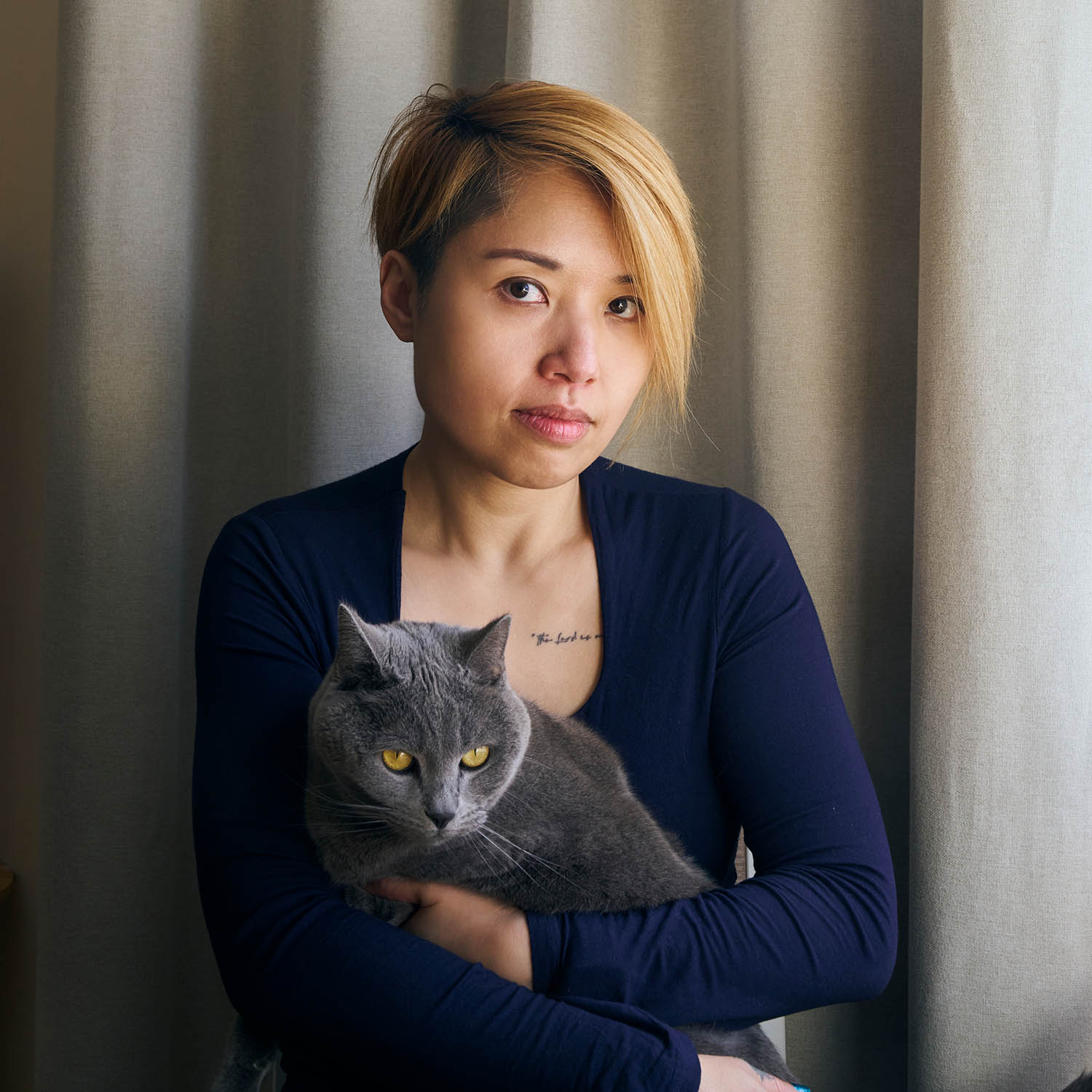
Chloe Lo
Finn Lau, the activist who was beaten up, said there were “more and more concerns that the Hong Kong community could be sacrificed in exchange for economic benefits”.
The government has said that its policy on China is to “cooperate where we can, compete where we need to and challenge where we must”. It has said intelligence agencies had concluded that threats stemming from the planned embassy were being “appropriately managed”.
Many activists told us the British police had ignored or downplayed their concerns. In 2020 Lau told the Met police that he had been the subject of a state-organised attack. The police closed the case within weeks and the perpetrators have never been identified. A case report suggested that the men had stolen Lau’s earphones but Lau insists that nothing was stolen, suggesting that the attack was targeted.
Chloe Cheung, the young Hong Kong activist, was followed by two men who appeared to be of Chinese origin as she left a 2024 event in London. She reported the incident to the Met but received no response. On Christmas Eve 2024, Cheung, who had just finished her A-levels, had a bounty placed on her head by Chinese authorities: a £94,000 reward for anyone who could assist in her arrest and capture.
At this point the Met finally got in contact. “They said: ‘If anything happens, call 999 and here’s a self-protection booklet’,” she told us. “I didn’t find it very useful.”
In December, Carmen Lau’s former neighbours received letters containing fake sexually explicit images of her. The letters, which were sent from China, made it look as if the 30-year-old activist was either naked or in underwear and offering sexual services. The police advised Lau to keep a low profile. “They … made me feel I need to give up my rights and my freedom of speech in order to keep myself safe,” Lau said.
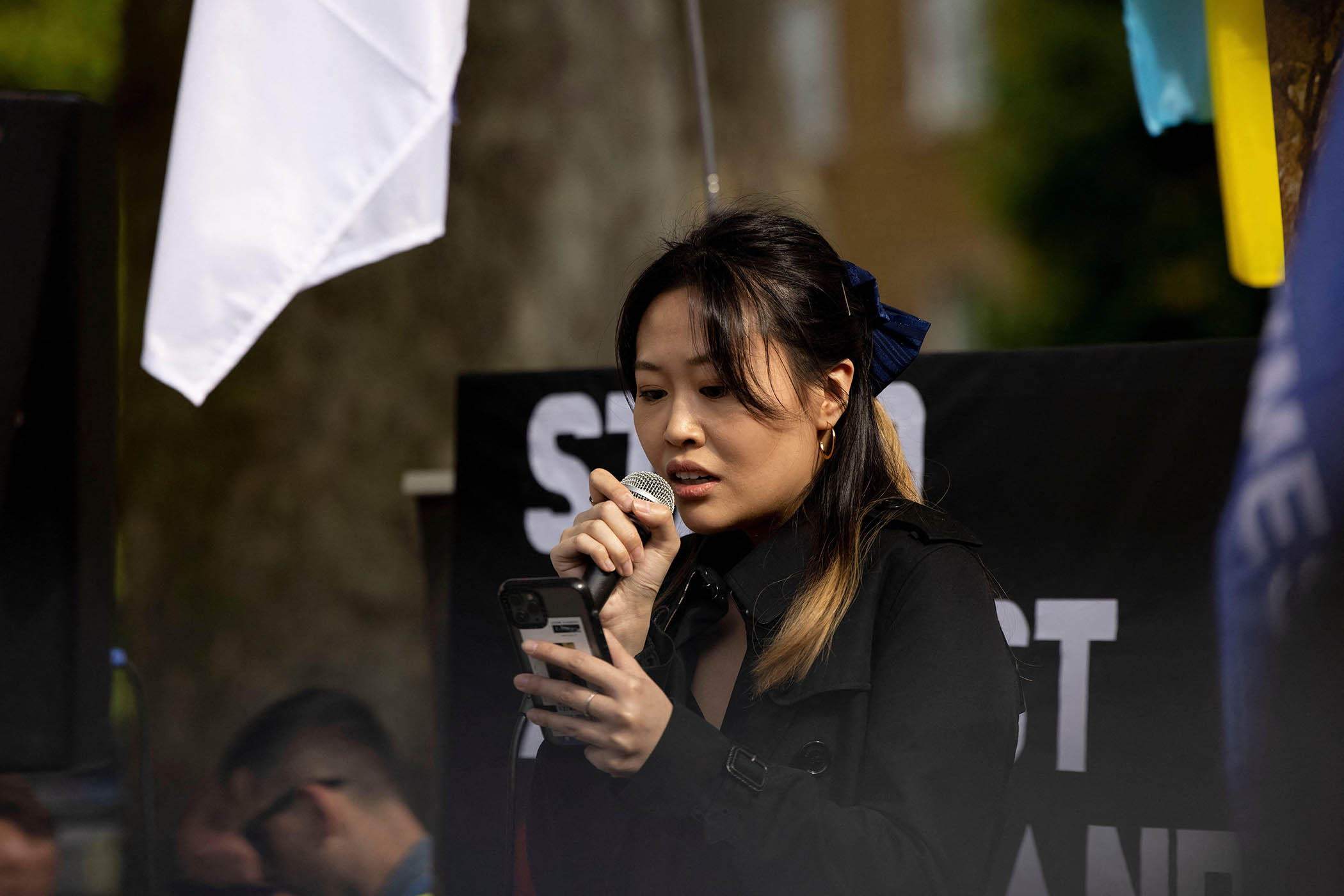
Carmen Lau
Another female dissident was offered a fake doorbell camera after her family was sent letters threatening that she would be raped if she didn’t stop her advocacy work.
According to the Hong Kong Watch survey, many Hong Kongers in the UK are particularly worried about infiltration of dissident groups by Chinese agents.
The Observer spoke to Lyndon Li, the dissident who said he was followed to his church by Harrison Chan and was later allegedly offered money to infiltrate the Conservative party. Having arrived in the UK in 2021, Li had established links with political parties, including the Tories.
Harrison Chan worked alongside an organisation called Friends of Hong Kong, which was set up by Nicholas Chan, a former parliamentary candidate for the Liberal Democrats. It is no longer in operation. Nicholas Chan now runs a separate organisation, called Liberal Democrat Friends of Hong Kong.
In 2022, Chinese-state media reported that Friends of Hong Kong had raised money to support four dissidents hiding out in Hong Kong but instead kept the money. They also reported that Friends of Hong Kong members had disclosed the activists’ information to the police.
‘China is a big market. No one wants to upset the regime’
‘China is a big market. No one wants to upset the regime’
Chloe Lo, former Bloomberg reporter in Hong Kong
In an interview, Nicholas Chan denied taking any money and instead said that he had given money to Harrison Chan, who had not passed it on. He claims Chan had collected information on other dissidents which made him suspicious about “who he was”.
In July 2022 Nicholas Chan reported Harrison Chan to the police and to the Home Office, according to files he disclosed to The Observer. He received no response.
“It is my personal belief that he may be a security threat,” Nicholas Chan said. “That’s why I escalated it to the Home Office.” He said Chan could just be a scammer – rather than a spy – but it was “frustrating” that he received no response. “I would have hoped that they have done their investigation. I would love to believe that.” Lyndon Li, the other activist, has also discussed Harrison Chan with SO15, the Met police’s counter-terrorism branch, he said.
The Home Office and the Met declined to comment on whether they had investigated Chan. Harrison Chan could not be reached for comment. It is understood he denies any wrongdoing.
The Home Office said that “any attempts by a foreign state to coerce, intimidate, harass, or harm individuals on UK soil are considered a threat to our national security and will never be tolerated”.
It said that it continued to raise concerns about repression “directly with the Chinese and Hong Kong authorities” and has rolled out police training.
A counter-terrorism policing spokesman said the Met was working alongside the government and the intelligence community to “ensure anyone who reports suspected transnational repression is supported and where appropriate, investigations are launched”.
You can listen to the full interview with Lyndon Li and other dissidents on The Observer’s new podcast, China’s Shadow War. All episodes are available to members here
Photographs by Antonio Olmos / The Observer; Hesther Ng/SOPA Images via Zuma Press Wire