
In the early hours of 1 May 2010, a 23-year-old woman placed a frantic call to 911. “There’s somebody after me,” Shannan Gilbert screamed as she ran along a road in Oak Beach on Long Island, New York. She was never seen again.
In the months that followed, Gilbert’s disappearance drew little urgency from police. Her mother repeatedly pressed authorities to search for her daughter, but it was not until December, seven months after Gilbert went missing, that officers began combing the area. In thick brush along Ocean Parkway near Gilgo Beach, they found a body – but it wasn’t Gilbert’s.
Two days later, three more bodies were found nearby. All were petite young women, all bound in hessian fabric; it was clear they had been murdered. Further searches in the area revealed the remains of another six victims, including a mother and toddler, and an Asian male. Some of these remains had been dismembered. Shannan Gilbert’s body was finally found in December 2011.
Law enforcement declared the murders were the work of at least one serial killer, dubbed by the press the “Long Island serial killer,” or “Lisk.”
In the days after some of the women went missing, friends and families had received phone calls from their loved ones’ phones. An unidentified man was on the other end of the line, tormenting them. “I’m watching your sister’s body rot,” he told the sister of Melissa Barthelemy, who went missing in July 2009.
Police geolocated the calls in both the Massapequa Park area of Long Island and Manhattan, leading them to theorise the murderer likely lived in the suburbs and commuted into the city. Other clues included a sighting of the suspect. In late summer 2010, before Amber Costello disappeared, her roommate Dave Schaller said he confronted a tall, intimidating man at their home whom he believed was threatening her, and forced him to leave. Schaller later told police the man was over 6ft 4in, had an intense, empty gaze, and drove a green Chevrolet Avalanche. But the identity of the Long Island serial killer remained a mystery for years.
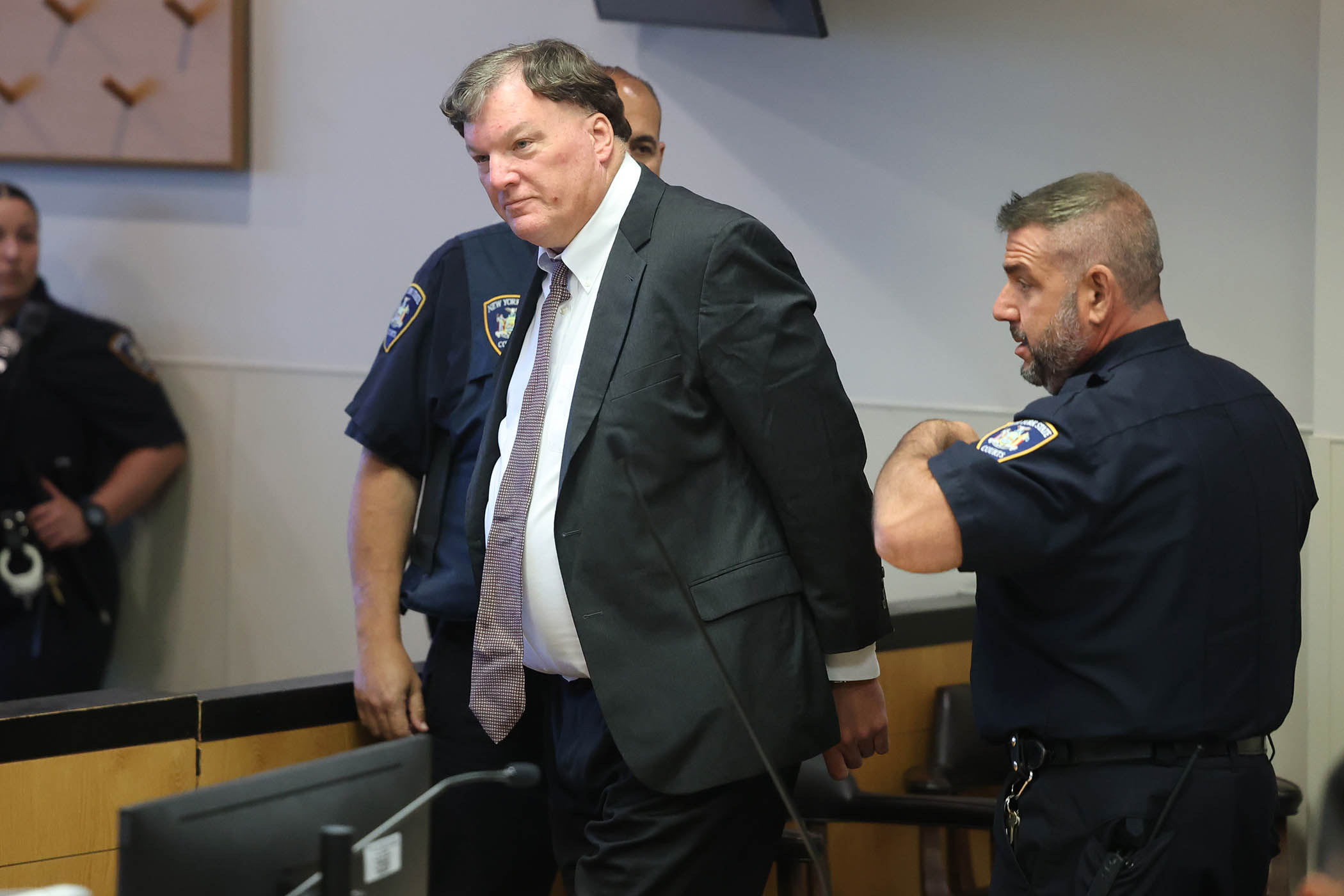
That all changed on a humid July evening in 2023. On a busy Midtown Manhattan street, a team of plainclothes police officers circled around an unsuspecting 58-year-old architect as he left his office. The strikingly tall man, Rex Heuermann, was arrested and charged with the murders of three of the young women.
In the years since, he has been charged with four additional killings tied to remains found along Gilgo Beach and Ocean Parkway on Long Island. All seven of his suspected victims were petite sex workers.
Searches of Heuermann’s run-down home later revealed evidence suggesting he may have converted his basement into a torture space, potentially holding victims for days before discarding their bodies. Prosecutors say he led a double life, committing these acts while his wife and children were away on vacation.
Neighbours on his well-to-do suburban street said they had no idea. Yet some described Heuermann as “odd” and “quiet” in television interviews, and pointed out that his dilapidated house, which he had lived in since childhood, stood out on an otherwise manicured block.
Newsletters
Choose the newsletters you want to receive
View more
For information about how The Observer protects your data, read our Privacy Policy
'We have the big interstate highway system, so killers can travel widely and anonymously'
'We have the big interstate highway system, so killers can travel widely and anonymously'
Lincoln Sloas, professor of criminology
Law enforcement is now reportedly reviewing cold cases in New Jersey, Nevada, and South Carolina for possible ties to Heuermann, all states he has links to.
The Heuermann case is far from unique. The US has far more known serial killers than any other country, with more than 3,600 documented cases historically. The government estimates suggest that between 25 and 50 serial killers may be active at any given time, and that more than 2,000 have evaded arrest and prosecution.
In the past 18 months, several suspected serial murderers have faced charges across the US. In Oregon, Jesse Calhoun has been charged in multiple killings in the Portland area that prosecutors allege are connected. In California, Wesley Brownlee is facing murder charges tied to a series of shootings in Stockton that authorities say amount to a serial spree. And in Arizona, Cleophus Cooksey Jr. was recently sentenced to death for a string of murders committed in 2017.
Compared with many other industrialised nations, the US has a lower rate of solving murders. There is an inverse correlation between high murder rates and low clearance rates, said Thomas Hargrove, founder of the Murder Accountability Project, a non-profit that tracks unsolved homicides nationwide. For instance, the lowest clearance rate on record occurred in 2022, when only 52% of murders were solved, a year that also saw one of the highest homicide totals in US history.
This contrasts with the 1960s, when murder clearance rates were about 90% nationally and homicide rates were comparatively low, according to data from the Murder Accountability Project.
“If you allow killers to walk the street, nothing good happens,” said Hargrove. “Someone who has already killed and gotten away with it is more likely to kill again.”
The vast land area of the country and the fragmented nature of its jurisdictions, where police departments may fail to communicate across state or county lines, also allow serial killers to evade detection. The ease of long-distance travel compounds this problem.
“We have the big interstate highway system in our country. We have a lot of suburban sprawl and car dependence,” said Lincoln Sloas, an associate professor in the School of Criminology and Criminal Justice at Florida Atlantic University. “This allows killers to travel widely and more anonymously at times.”
'I’ve been telling New York police for at least eight years that they’ve only scratched the surface … This series is far bigger than what was discovered at Gilgo Beach'
'I’ve been telling New York police for at least eight years that they’ve only scratched the surface … This series is far bigger than what was discovered at Gilgo Beach'
Thomas Hargrove, The Murder Accountability Project
Experts say cultural factors can also allow serial killers to slip under the radar. The US’s strong sense of individualism, weaker community ties, and social isolation may limit neighbour oversight and delay intervention, giving offenders more time to act.
“Serial killers can go unnoticed because social isolation and a focus on personal autonomy slow detection and containment,” Sloas said.
The US also has a massive true crime media ecosystem, with high-profile news coverage, podcasts, films, and long-standing documentary series, such as Dateline, turning serial homicide into a cultural obsession, as well as a multibillion dollar industry. Experts note that while media coverage does not create serial killers, it can shape how offenders act, inspiring copycat behaviour or reinforcing desire for recognition and control.
For instance, Israel Keyes, who is thought to have committed at least 11 murders across the US between 2001 and 2012, studied other criminals extensively, including Ted Bundy, for methods and strategies. In the 1980s, the so-called “Night Stalker” Richard Ramirez, who murdered at least 13 people in Southern California, was said to be inspired by the “Zodiac Killer”, who was active in the 1960s. Heriberto Seda, who murdered at least three people in New York City in the 1990s, also modelled his crimes on the Zodiac Killer, emulating the taunting style and coded messaging of the infamous and unidentified California murderer.
Experts say early childhood socialisation is crucial, and many serial killers come from unstable or traumatic backgrounds that may set patterns for later violence. Heuermann, for instance, is reported to have grown up in a violent home. Unlike those with severe mental illness, serial killers are often able to function normally and plan their crimes deliberately, following rituals that persist over time. Their behaviour is shaped less by psychosis than by sociopathy, and they are commonly deemed mentally competent to stand trial if apprehended.
“They may have pent-up aggression from childhood against their parents,” Sloas said, “but they don’t act it out on them. Instead, they develop what’s called an ideal victim type, someone who carries significance for them.”
These offenders often move through cycles, entering a depressed or dormant period after a murder, a cooling-off phase that can last weeks, months, or even years, before something triggers the next attack.
The vast majority of serial killers are male, experts say, and their crimes often involve sexual gratification paired with a desire for control, stalking, and meticulous planning.
Richard Cottingham, known as the “Torso Killer”, murdered at least 18 women and girls in New York and New Jersey during the 1970s. He was notorious for dismembering victims and leaving their bodies in public places. Cottingham was arrested in May 1980 after police linked him to multiple murders through evidence including personal items belonging to victims.
Author and historian Peter Vronsky has been interviewing Cottingham extensively since 2017. When their conversations began, Cottingham had confessed to six murders; he has since admitted to 14 more.
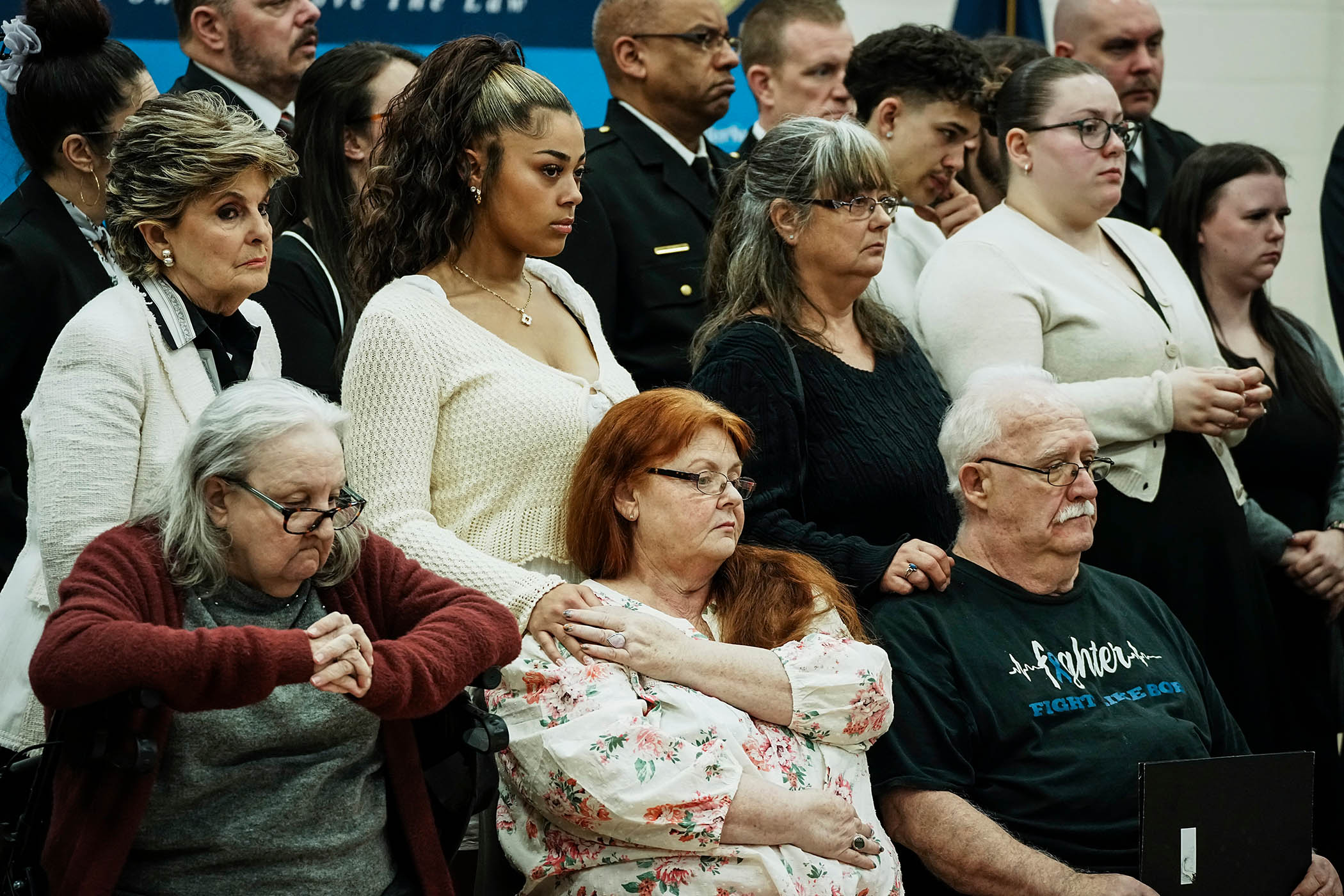
Relatives of Rex Heuermann’s victims attend a press conference held by the Suffolk County District Attorney after the killer’s guilty plea on 8 April
“Cottingham once told me, ‘Killing people doesn’t make you God. Knowing who lives or dies makes you that,’” Vronsky said. “That meant he had to let some victims live.”
Cottingham has told Vronsky he feels no remorse. Instead, his motivation for confessing appears rooted in control, Vronsky said.
“Now he has the power to set victims’ families free,” he said. “That gives him control over people’s lives.”
Control also appears central to the allegations against Heuermann. Investigators found a Microsoft Word “planning document” on a hard drive in his basement that prosecutors describe as a blueprint for torture and murder. Created around 2000 and updated over several years, it outlined how to select, subdue, and kill victims, including ways to keep them alive for days and avoid fatigue. The document also listed potential dump sites, cleaning methods, and supplies, such as foam drain cleaner, along with a “body prep” section that included removing heads and hands, steps prosecutors say match how some victims were found.
Evidence suggests some of the murders may have taken place in Heuermann’s basement, which may have been converted into a holding space. Police found a walk-in vault secured by a heavy metal door in the basement of his Massapequa Park home.
Yet these crimes went undiscovered for more than a decade, potentially giving Heuermann the opportunity to commit additional murders.
According to John Ray, a New York-based attorney who represents several families of Heuermann’s victims, several missteps by law enforcement caused delays in identifying the Long Island serial killer, potentially giving him further opportunities to target more victims.
“Many women from different states have given me sworn statements saying they encountered him, that he tried to seduce or kill them, and they escaped,” he said.
In the years since his arrest, Heuermann had defended his innocence. All that changed on 8 April, when he changed his plea to guilty to the seven murders he was charged with: Melissa Barthelemy, 24, Megan Waterman, 22, Amber Costello, 27, Maureen Brainard-Barnes, 25, Jessica Taylor, 20, Valerie Mack, 24, and Sandra Costilla, 28.
He also admitted to the murder of an eighth victim, a woman named Karen Vergata, whose remains were found in 1996 and in 2011 on separate parts of Long Island. In the packed Long Island court room, Heuermann said he strangled all eight of the victims, and dismembered several of them.
Shannan Gilbert – whose 911 call and the subsequent hunt for her remains led investigators to discover the other bodies near Gilgo Beach – has not been named as a victim of Heuermann.
The official conclusion from law enforcement was that Gilbert may have become disoriented, ran into the marsh near the beach, and died from a combination of exhaustion, hypothermia, and drowning. This has been disputed by her family and some independent experts, who argue that the circumstances were suspicious and have pushed for her death to be treated as a possible homicide.
Heuermann may have additional victims in New York, Hargrove said. Now that he is a convicted murderer, his DNA can be uploaded to the national DNA database, which experts believe may lead to potential victims in other states being linked to him.
The Murder Accountability Project has identified a cluster of unsolved murders in Suffolk County that share similarities with the Gilgo Beach cases.
“I’ve been telling New York police for at least eight years that they’ve only scratched the surface,” said Hargrove. “Ten is not the right number. Privately, they agree. This series is far bigger than what was discovered at Gilgo Beach.”
Photograph by James Carbone-Pool/Getty Images, Eduardo Munoz Alvarez/AP