
Listen to this story on the Slow Newscast here
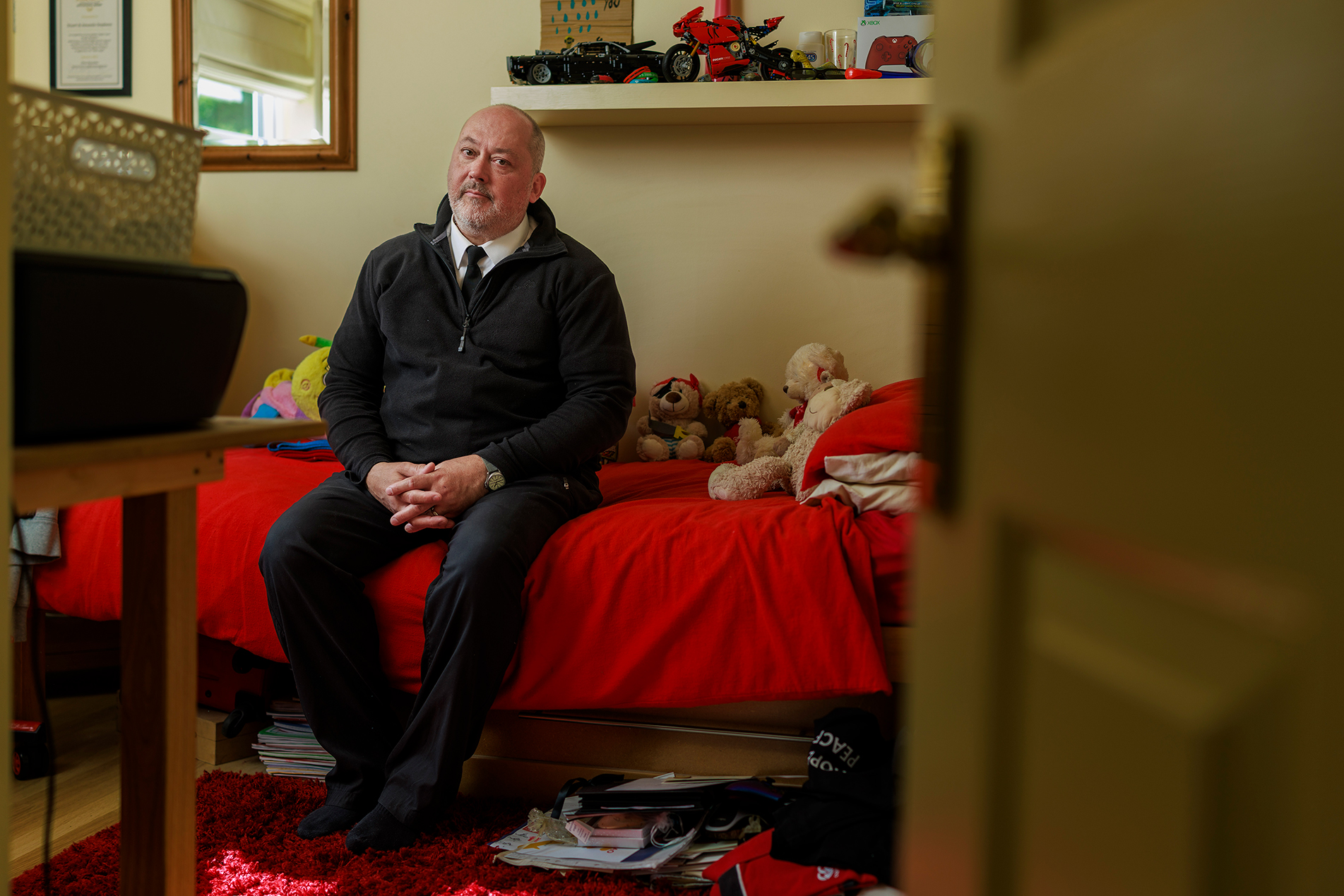
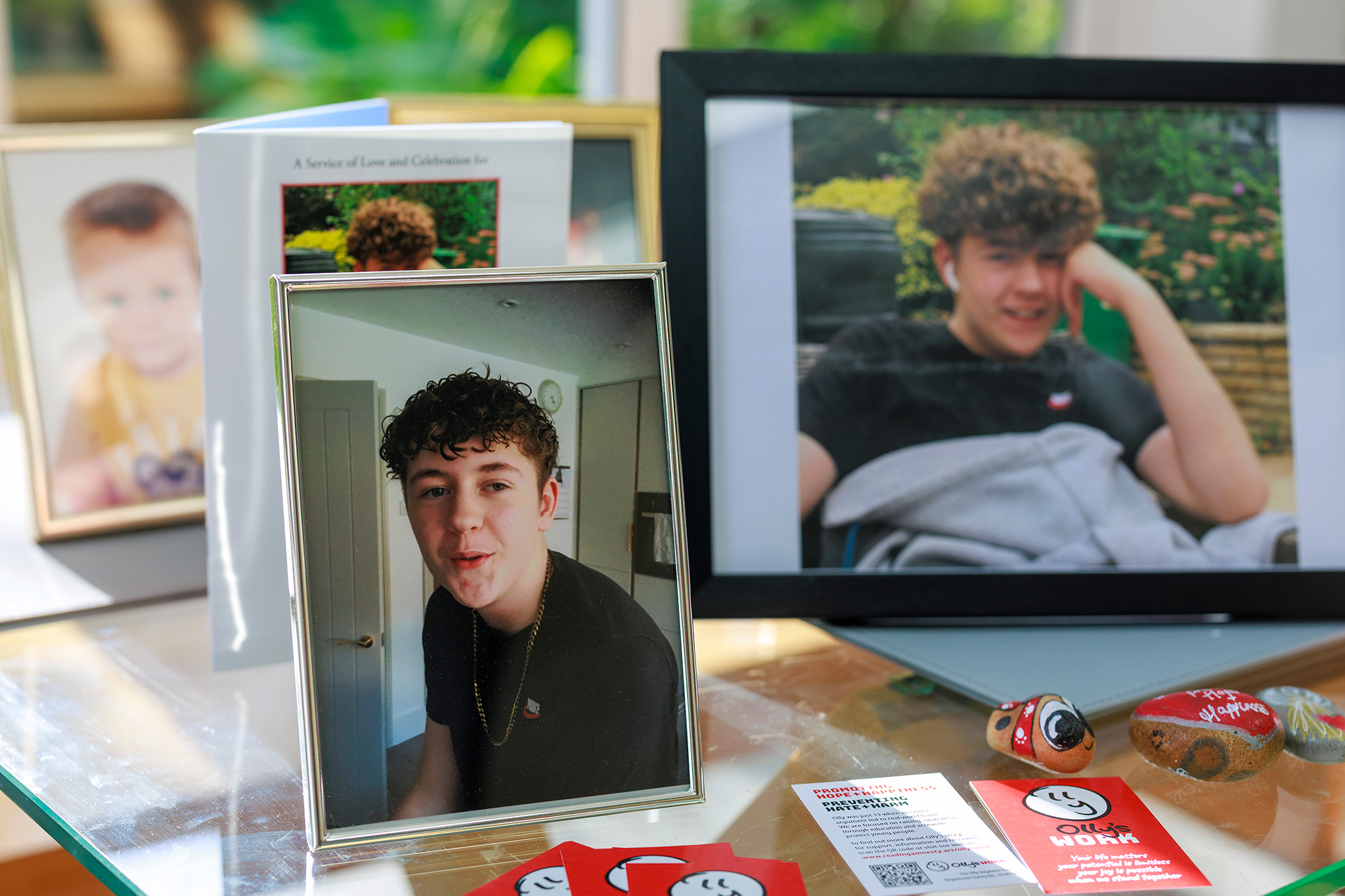
Stuart Stephens will never forget the moment his 13-year-old son, Olly, walked out of the front door and never came home. “I can see him leaving the house,” he says. “He’s quite nonchalant. He’s got his sliders on. He’s looking at his phone. He hasn’t got a care in the world.” Olly strolled over to the field next to their house in Reading to meet a friend. Then, almost immediately, he started shouting. “A few minutes later, there was a knock on the front door and I heard my wife Amanda scream: ‘Olly’s been stabbed.’”
Stephens ran to the park and saw Olly lying on the ground. A passerby, a cardiac nurse, was giving him chest compressions. There were people crowded all round. “I looked at Olly and he was white as a ghost. They wouldn’t let me near him, so I just pushed my way till I could get to him. I held his hand because I helped to deliver him, so if I was going to lose him, I wanted to be with him. His hand was ice-cold and I knew he was gone.”
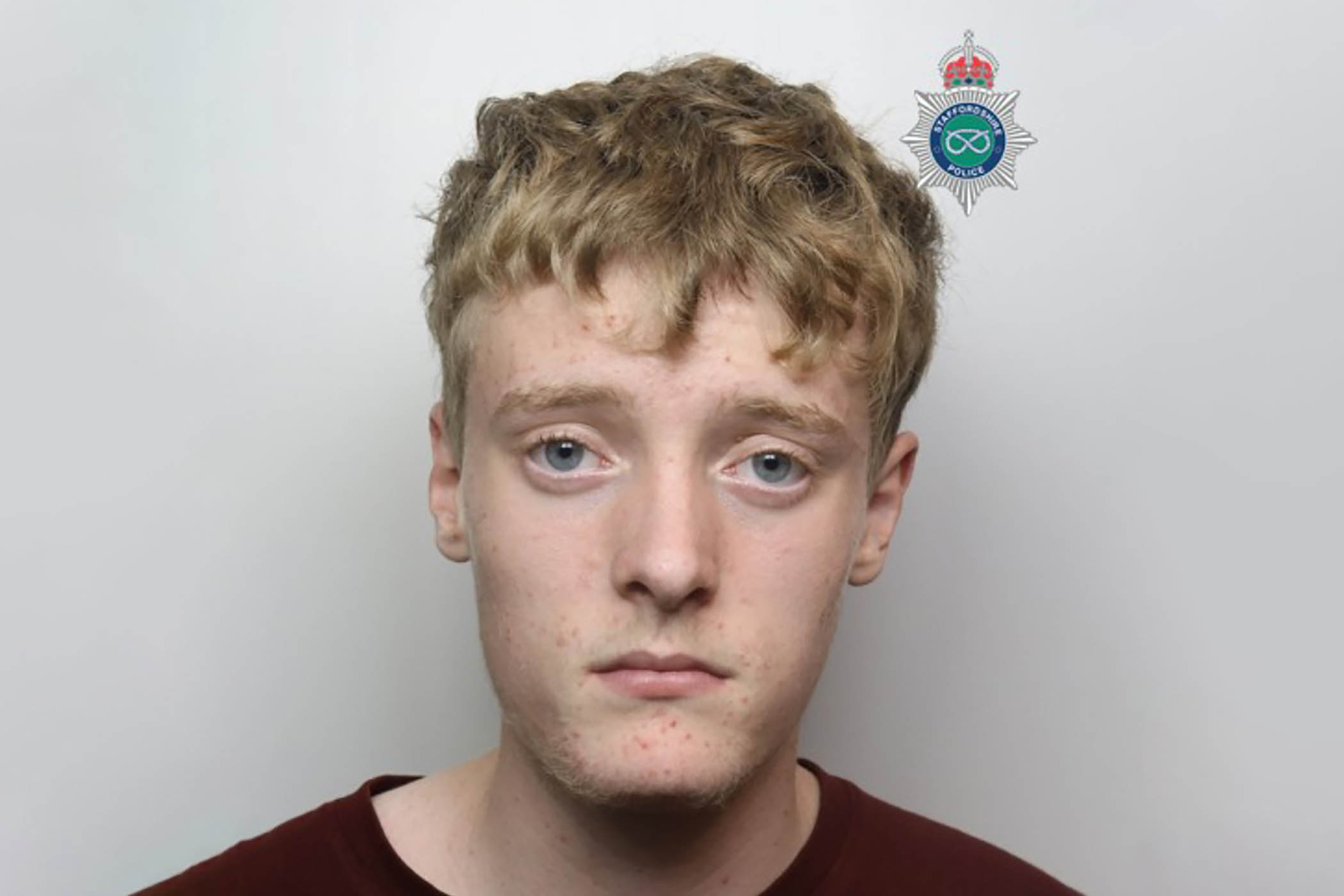
The murder, on 3 January 2021, was a brutal reminder of the continuity between the online and offline worlds. A few days earlier, Olly had seen a video posted to Snapchat of a younger boy being humiliated and had forwarded it to the boy’s brother to alert him. This had infuriated the bullies, who decided to take their revenge. Olly was lured to the field by a girl he knew and ambushed by two teenage boys. One of them “pulled out a knife and stabbed him in the back. He must have turned round in shock, and he stabbed him in the front,” his father says.
The killers, who were aged 13 and 14 at the time, were convicted of murder, but Stephens is convinced there is another culprit. The stabbing was prompted, planned and coordinated across several social media platforms. He believes companies, including Meta, Google and Snap, the owner of Snapchat, share responsibility for Olly’s death. “If social media wasn’t here, we’d still have him,” he says. “It’s absolutely lawless. Social media is killing our children.”
Tim De Meyer, the chief constable of Surrey police, who oversaw the investigation into Olly’s death when he was with the Thames Valley force, says the officers involved in the case “were astonished by the casual exposure of young people to absolutely vile imagery and some extremely disturbing violence”. He believes there is a direct connection between the material children are seeing on social media and crimes committed by teenagers in the real world.
“It normalises violence and it primes boys for violent action,” he says. “Social media triggers and intensifies disputes in a way that means children are fired up and ready to fight. It makes conflict escalate extremely quickly.” De Meyer insists tougher controls are needed. “We are allowing too much freedom for young people in the online world, and it’s exposing them to things which not that long ago we would never have dreamed of allowing them to see.”
On Tuesday, the government’s consultation on banning social media for under-16s ends. Much of the debate has focused on the harm caused to children’s mental health and the impact on attention spans, but there is growing evidence that platforms such as Facebook, TikTok, Snapchat and Instagram are also encouraging criminality, particularly among the young.
A survey by the Youth Endowment Fund found that 70% of children aged 13 to 17 had encountered some form of violence on social media and 39% reported that seeing weapons-related content had made them more likely to carry a knife. This month, the National Crime Agency said it was investigating about 200 cases involving online gangs targeting young girls.
There are also national security implications. Last year, almost a fifth of those arrested for terrorist offences were children. Matt Jukes, deputy commissioner of the Metropolitan police, says there has been an “extraordinary” increase in the radicalisation of young people online, with real-world consequences. “We’ve seen over the last five or six years the growth of children involved in violent extremism,” he says. “Twenty-five years ago, you had to travel to meet somebody directly to learn about terrorist ideology or methodology. All of that is now in reach from your bedroom, and not just to adults but to children as well.”
Newsletters
Choose the newsletters you want to receive
View more
For information about how The Observer protects your data, read our Privacy Policy
Young people will often flick between massacres, school shootings and beheadings, he adds. “It’s the fixation with violence that is at the core of their interest,” Jukes says. “When I started working in counterterrorism, people were starting with ideology and moving through radicalisation to extremism and violence. Now they’re starting with an interest in violence and finding an ideology which frames and justifies that.”
A growing threat comes from international online communities, or “comm groups”, which spread what the FBI describes as nihilistic violent extremism. One of the most notorious networks, 764, combines a toxic mix of satanism, paedophilia and rightwing ideology. At least four British teenagers have been arrested in connection with the group.
Last January, Cameron Finnigan, from Horsham in West Sussex, then 19, was jailed for six years after pleading guilty to encouraging suicide and possessing a terrorism manual and indecent images of a child.
Jukes says there has been a sixfold increase in comm group investigations around the world over the past five years. He believes “thousands” of young people in the UK have been exposed to the harmful material the groups promote. These networks are not just sharing existing extreme content but encouraging each other “to generate new content through the abuse of siblings, through animal cruelty, through encouraging suicide and self-harm”, the deputy commissioner warns.
“These are not just conversations; these are young people validating each other and in some twisted way rewarding each other for creating new images.” He says it is usually not about money. “The motivation is a very dark version of what you see in wider social media. The notoriety, the appreciation or adoration of others, is a big driver.”
Jukes is horrified by “the casual application of the chasing-clicks mentality” to real violence. “When you think about a boy on one side of the Atlantic inciting a girl on the other to carve a swastika on her arm, what shocks me is the exposure of young people to that kind of exploitation and harm,” he says. “One of the startling things is the age of those who are the conveners of some of these online spaces. You imagine an older figure exploiting young people. In fact it is 15-year-olds who are the administrators of some of these groups.”
Jonathan Hall, the government’s independent reviewer of terrorism legislation, says the nature of terrorism has been transformed by social media. “We’ve gone from a world in which this threat 20 years ago was group-based. If you think about al-Qaeda, [it was] men with beards in the mountains, emirs sending messages to people to carry out mass-casualty attacks, through to Islamic State with territorial control inspiring people to join the caliphate. Now it’s lone actors. It’s people who have gone online; they have found their meaning, they’ve researched something, and they have decided the time has come that they need to act… There are no terrorism cases that aren’t effectively caused by the internet.”
Hall thinks there is a growing danger of “chatbot radicalisation”. As an experiment, he created a chatbot called Osama Bin Laden with the key features “love violence, hate Jews”. It suggested he should travel to Syria, urged him to follow the example of al-Qaeda and spouted antisemitic hate. “We wouldn’t let a stranger into our children’s bedroom, and yet we let many strangers who wish the worst, and do the worst, into our children’s bedrooms and our lives,” the terrorism reviewer says.
Simon Bailey, the former chief constable of Norfolk, who was the National Police Chiefs’ Council lead on child protection for eight years, says technology has driven a “global pandemic of child sexual abuse and exploitation”. In the late 1990s, there were fewer than 10,000 images in circulation. Now there are more than 100m. “If you can’t find what you are looking for, you can now use artificial intelligence tools that have no guardrails at all to create the content you want,” Bailey says. “One of the most appalling and extreme forms that I’ve been made aware of is a picture of an eight-year-old girl who has been sexually abused and is now abusing her four-year-old self in that artificially generated image.”
Bailey describes an “arms race” by the tech companies to generate profits from algorithms that fuel demand for outrage. “People with a sexual interest in children, serious organised crime, people with extremist views are all now operating in what can only be described as a cesspit,” he says. “And the fact is the mainstream social media companies and platforms are hosting this content. Young girls are going online and they’re producing sexual content for TikTok rewards. You go on Instagram – girls are monetising their bodies.”
Teenagers are coerced into committing atrocities and celebrated for tolerating pain. “Imagine putting a monkey into a food blender, or cutting yourself so deeply that you are scarred for life,” Bailey says. “It’s the use of extreme power and influence where children are controlled.” Some young people have watched 15 live suicides. Bailey describes one case where a teenager, used to playing video games in which characters die then jump back up, alive again, expressed their surprise that the person had actually taken their own life.
Rebecca Foljambe, a GP and founder of Health Professionals for Safer Screens, says the medical profession is increasingly picking up the pieces of the damage caused by online violence. “We’ve had instances being reported of a litter of puppies being killed, pigeons being dissected, family pets being strangled or suffocated,” she says. “We’ve had an instance of a young man turning a weapon on his family after watching violent content online. We had a 14-year-old girl who, after talking to an AI chatbot, planned a mass-casualty event.”
Psychiatrists too are seeing more and more young women who regret sharing intimate images and feel that suicide is the only way to escape. “The emotional and psychiatric trauma [of online exploitation] is actually worse than in-person abuse, because they don’t know when those images are going to be reshared, how they are going to possibly reappear in their lives,” Foljambe says.
Most social media sites have a minimum age for users of 13, but it is rarely enforced. Last week, the regulator Ofcom warned that all the large platforms were failing to keep younger teenagers off their services, and said children were still being exposed to the same level of harmful content as they were before new online safety rules were introduced last year. In March, a landmark ruling in the US found that Meta and Google were liable for the harm caused to a young woman who became addicted to their products.
Around the world, governments are grappling with the regulation of new technologies. Australia has led the way with a ban on social media for under-16s. The UK home secretary, Shabana Mahmood, and the prime minister’s new adviser on women and girls, Harriet Harman, are among a growing number of senior Labour figures pushing for a similar measure in this country. Last month, the government announced that new restrictions on younger teenagers would be introduced, after the Lords voted four times in favour of a social media ban for under-16s.
The public is strongly in favour of further protections. A survey by the parenting website Mumsnet found that 95% of parents are concerned about the impact of social media on children’s wellbeing and 87% believe the risks of social media outweighs the benefits for young people. Mumsnet co-founder Justine Roberts says: “Tech companies should have to prove that their products are safe for children before children are allowed anywhere near them.”
All the police officers, doctors, parents and other experts interviewed for this article supported a ban on social media for under-16s.
Jukes warns that the government cannot afford to delay its introduction to see the long-term impact of the damage being caused to children and society. “In the 1950s, after the identification of the harms caused by tobacco smoking, it took decades before that was gripped, and it has devastated millions of lives. We know there is harm emerging [from social media]. I don’t think we’ve got time, given the universal exposure of the children in our communities, to wait.
“You can’t walk into a shop and buy whatever you like, regardless of your age. You can’t buy cigarettes and alcohol, because they harm you. You can’t walk into a cinema and just view any film content. If we think it’s right to limit the harm done to young people offline, then surely the same must be true online.”
Samaritans can be contacted on freephone 116 123, or email jo@samaritans.org or jo@samaritans.ie. Youth suicide charity Papyrus can be contacted on 0800 068 4141 or email pat@papyrus-uk.org.
Photographs by Jason Alden for the Observer