In a cafe in Istanbul, Samad slid his phone across the table, a death threat visible on its screen. In an unfortunate coincidence, the song Killing Me Softly played over a nearby speaker. The social media post from someone claiming to act in defence of the Iranian regime listed his name alongside other personal details, such as his university, above a pledge to hunt him down.
It would seem outlandish, Samad said gently, if he had not received threats tailored to scare him before. A few years ago, he was sent pictures showing him walking in the street during a visit to Istanbul; on another occasion, his would-be attackers sent photos of his child at school in Canada.
Samad, whose name has been changed, had come to anticipate such threats every time protests surged inside Iran in recent years. But now he fears those issuing them may be empowered to act, with the Iranian regime openly threatening revenge on its critics overseas. As counter-terrorism forces in Britain and worldwide warn that Tehran could use sleeper cells or paid proxies to carry out attacks, exiles such as Samad fear they are prime targets.
His parents, who still live in Iran, were last month dragged in for hours of questioning by security forces, including about their son's social media. “Everyone I speak with in Iran is scared,” said Samad. “They know the regime staying means the situation will get much worse.”
Donald Trump has claimed otherwise, suggesting that the American and Israeli assault on Iran means the regime has softened. “They’re smarter, I think they’re sharper and far less radical,” he told reporters.
Experts on Iran disagree. “The regime is emerging from this war weaker but nastier,” said Thomas Juneau, a Middle East specialist at Chatham House. “It is weaker because of the decapitation of its leadership, the degradation of its military capabilities and the strikes on infrastructure. But it will be nastier: a regime that tolerates absolutely no dissent, not only domestically but abroad as well.”
Iran’s judiciary has pledged to strip members of the diaspora seen at anti-regime protests, or otherwise voicing criticism, of any assets they hold inside the country. Others have threatened worse punishment: Reza Molaei, a presenter on Iranian state television, warned the regime’s critics abroad that “once the dust from all this sedition settles, we’ll grab you by the collar, one by one”.
Samad pulled out his phone again, this time to display an official-looking X account calling itself “the punishment committee”. It invited Iranians to inform on their fellow citizens deemed insufficiently loyal, no matter their location.
“This regime is feeling more vulnerable than ever before and there is more mobilisation among the diaspora – normally the perfect combination for increased targeting of anti-regime activists abroad,” said Juneau.
Canadian officials have long warned that Tehran could mobilise sleeper cells overseas to target critics in one of the largest Iranian diaspora communities.
Newsletters
Choose the newsletters you want to receive
View more
For information about how The Observer protects your data, read our Privacy Policy
These fears spiked after two people were charged with first-degree murder after the discovery of the remains of Iranian activist and mathematician Masood Masjoody in British Columbia last month. Masjoody was an outspoken critic of the regime, but also of the exiled crown prince, Reza Pahlavi. His killing sent a ripple of fear through the Iranian community in Canada as rumours swirled about what motivated his attackers.
Iran’s intelligence and security ministry, the Islamic Republican Guard Corps (IRGC) and the latter’s Quds Force – responsible for foreign operations and proxies – have extended the regime’s reach overseas since the 1979 revolution that brought it to power.
This includes hunting down dissidents, as well as more conventional military targets. Qatar’s national news agency said authorities there arrested 10 accused members of IRGC sleeper cells during the war: seven were assigned to target “vital and military facilities,” while others had the task of sabotage operations.
The United Arab Emirates also claimed last week that its security services arrested 27 members of a cell with ties to the Iranian regime, accused of holding meetings with “terrorist elements and suspicious organisations”.
In recent years, the regime has grown adept at finding proxies stationed within easy reach of its perceived enemies: the Swedish security services warned last month that Iran has sometimes employed criminal networks there and across Europe to attack critics, as well as Israeli government and Jewish targets.
British authorities have warned this threat has reached the UK. Recent parliamentary research cites threats to Iranian opposition news outlets BBC Persian and Iran International, both based in London.
Last October, MI5’s director general, Ken McCallum, described how his agency tracked more than 20 potentially lethal plots backed by Iran within a single year.
A recent spate of arson attacks on synagogues and Jewish organisations across London claimed by the group Harakat Ashab al-Yamin al-Islamia have sparked fears that it could have ties to Iran.
Antonio Giustozzi, a senior research fellow at the Royal United Services Institute in London, told The Observer that his contacts in the Quds Force denied a link with the group, but the Metropolitan police said they were investigating Iran’s potential role in the attacks.
“I have spoken at length of the Iranian regime’s routine uses of criminal proxies. We are considering whether this tactic is being used here in London, recruiting violence as a service,” said deputy assistant commissioner Vicki Evans, the senior national coordinator for counter-terrorism, standing outside one of the synagogues targeted.
A 17-year-old boy last week pleaded guilty to arson after hurling a bottle filled with flammable liquid through the window of a synagogue in Harrow, north-west London, amid escalating concerns about the group’s online recruiting tactics targeting teenagers.
Some Iranian exiles said they had no choice but to face the growing threat. As he fiddled with a set of prayer beads during a video call, Ali Ghasemi described how he had fled to Canada after being arrested and tortured for taking part in Iran’s 2022 protest; at times, describing his exile appeared to cause him almost physical pain.
He attempted to draw comfort from seeing supporters of the Iranian regime cover their faces when they showed up to oppose demonstrations he attended in Canada.
“Of course, if the regime stays in power, then the threatening actions are going to increase,” he said. “I haven’t been threatened yet because I don’t have much of a public profile, but I think as soon as they are done with the ones who have more of an audience, they will come for people like me too.”
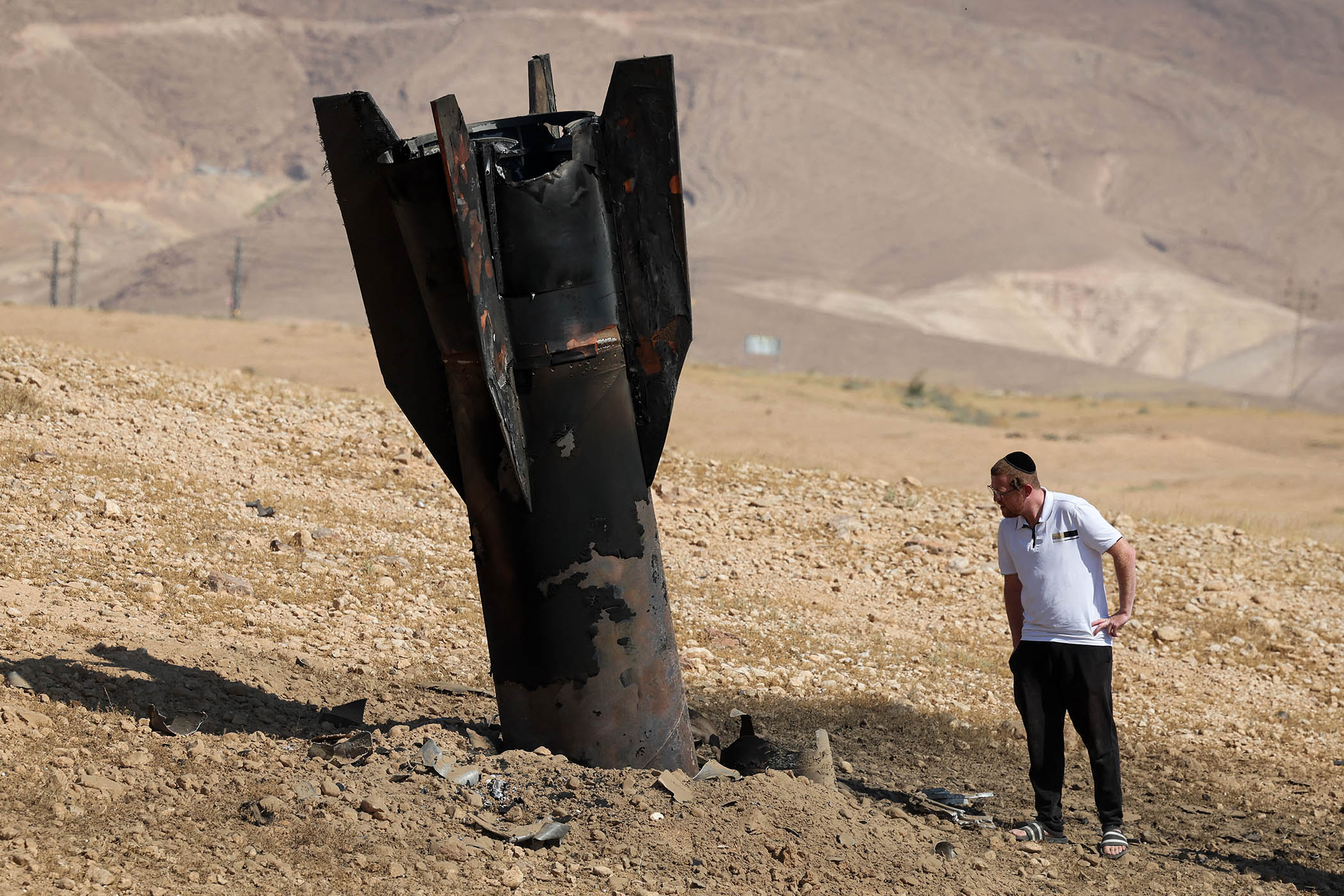
Photograph by AFP/Getty Images