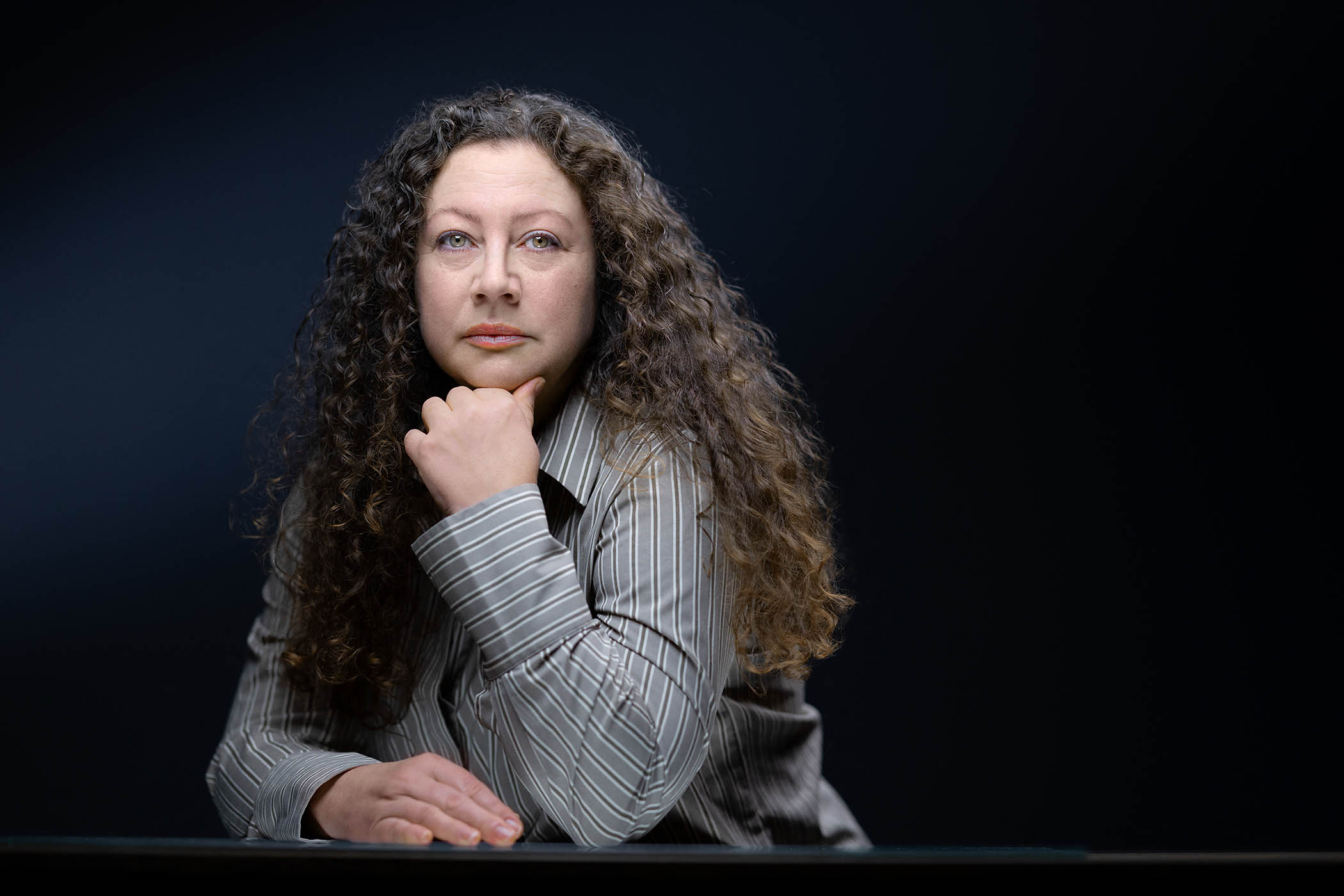
When 23-year-old Rachael Louw went for a medical examination for a new role at Harrods in the summer of 1994, she wasn’t concerned that the doctor performed a smear test.
“I remember thinking, ‘OK, this is a little bit weird’, but I was grateful because my mother had passed away from cervical cancer when I was 19,” Louw said.
But the examination was the first indication that Louw was being recruited into what she now understands to have been a vast trafficking network designed to facilitate the sexual abuse of scores of women. It is one that advocates for survivors say rivalled that of Jeffrey Epstein in scope and impact, and went far beyond what took place at a single London department store.
After decades of silence enforced by non-disclosure agreements (NDAs) and legal threats against journalists, evidence of Mohamed Al Fayed’s mass sex crimes burst into the public eye in 2024 with the screening of the BBC documentary Al Fayed: Predator at Harrods, in which survivors were finally able to come forward with their stories of being raped, assaulted and drugged while working for the Harrods owner. Since then, hundreds more have emerged, including Louw with allegations about his brother, Salah.
Frustrated by their treatment by the Metropolitan police, Louw and a small number of survivors are pinning their hopes on a new French investigation carried out by a specialist anti-trafficking force.
The Observer is aware of four women who have so far testified to the Central Office for the Suppression of Human Trafficking in France (OCRTEH).
Louw and another survivor, Kristina Svensson, told The Observer in exclusive interviews that they felt their allegations of being recruited, transported and isolated for the purposes of sexual assault had been taken more seriously by French authorities than by the Met. On their account, they were taken between London, France and Monaco by their employers, who repeatedly assaulted them, enabled by employees of Fayed-owned businesses. It is these enablers – not the perpetrators, who are now dead – whom the women want to be held accountable.
Survivors from the UK and France are calling on the Met and the Home Office to formally investigate the crimes of Fayed and his networks as human trafficking, rather than as sexual assault and harassment. They say their repeated requests to be considered trafficking victims have gone largely unheeded by the authorities.
Natalie Fleet, Labour MP for Bolsover, has been vocal in her support for survivors. “They tell me they have tried to come forward and tell their stories again and again, only for doors to be shut in their faces and little progress in official investigations made,” Fleet told The Observer. “The Epstein scandal has rightfully made people sit up and take notice of the trafficking of young women and girls by powerful men. The Al Fayed case is no different.”
Women in the employ of organisations that made up the Fayed empire allege they were recruited then exploited and assaulted at locations including Harrods, the brothers’ Park Lane apartments and the Ritz and Villa Windsor in Paris, as well as properties in Monaco and the French Riviera. Like Epstein’s victims, some were flown between locations in private jets.
Newsletters
Choose the newsletters you want to receive
View more
For information about how The Observer protects your data, read our Privacy Policy
As part of the recruitment process, women were subjected to invasive medical exams, including gynaecological tests.
To put Louw at ease during her examination, the Harley Street doctor chatted with her about her life in London, asking about her friends, her family and boyfriend. Louw was required to provide fecal and urine samples and her throat and nose were swabbed. These tests were apparently required for Louw to enter the “executive management training scheme” for which she had been selected by Fayed during one of his regular sweeps of the shop floor.
When the results were returned to her, Louw noticed that the report to the chairman had been included mistakenly alongside the summary intended for her. The report written for Louw’s eyes was short and designed to reassure her that all was well. The report destined for Fayed was exhaustive, and contained personal details from the conversation between Louw and the doctor that she had assumed would be confidential.
In this much longer document, seen by The Observer, the doctor wrote that Louw had a “stable normal personality”, informing Fayed she was taking the contraceptive pill and had a “regular boyfriend”. The report states that Louw had “an excellent standard of personal hygiene” and was “slender and in excellent physical health”. The doctor writes that Louw had been subject to a “careful breast check”. Louw was then assigned to be a personal assistant to Fayed’s brother, Salah.
Louw’s lawyers in France believe this document is key evidence that she was exploited by a trafficking operation.
Svensson, the second survivor who spoke to The Observer, worked at the Ritz in Paris from 1998 to 2000 as a personal assistant to Mohamed Al Fayed, after being placed at the hotel by a recruitment agency. She also believes she was subject to an inappropriate, possibly criminal medical exam to facilitate her abuse.
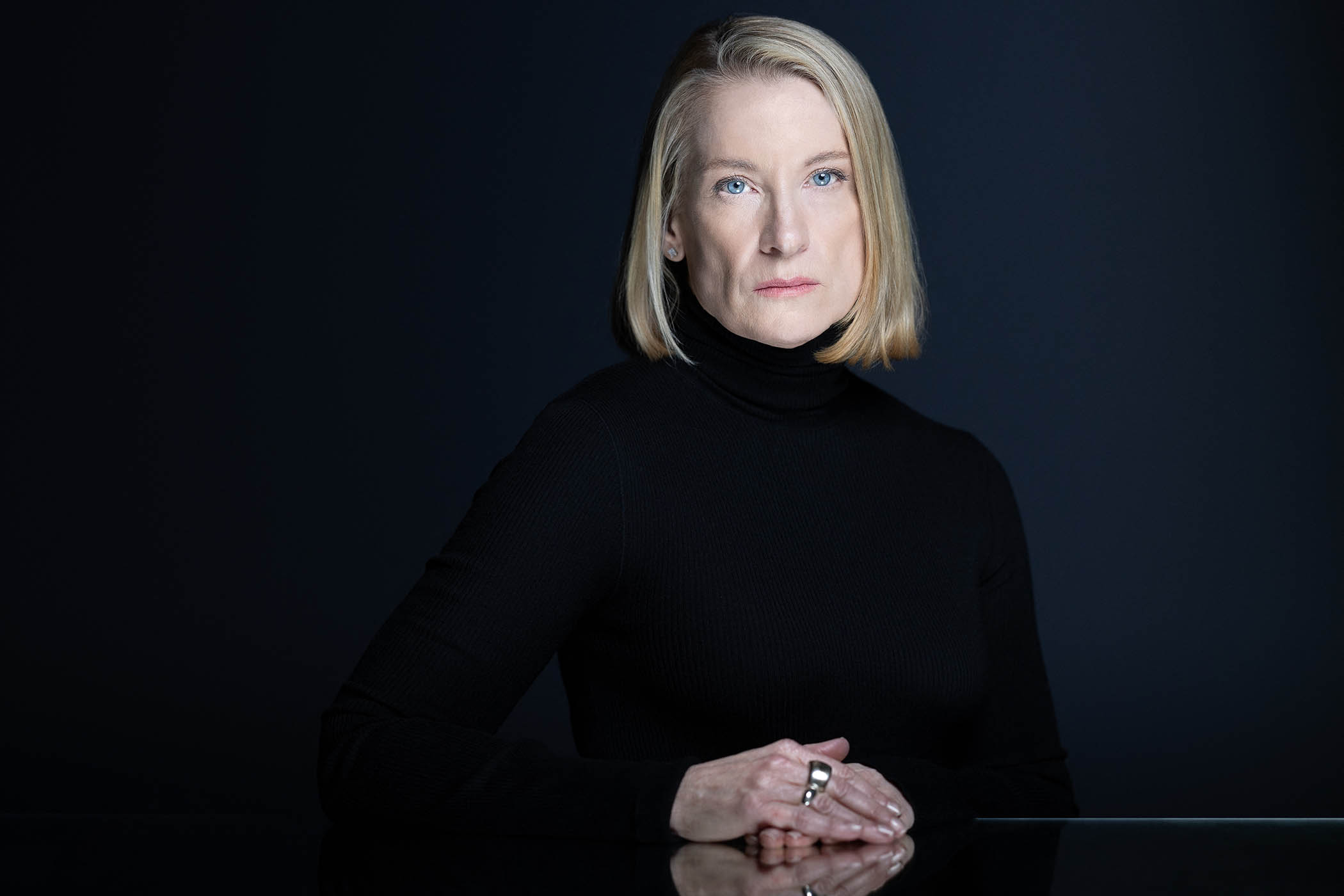
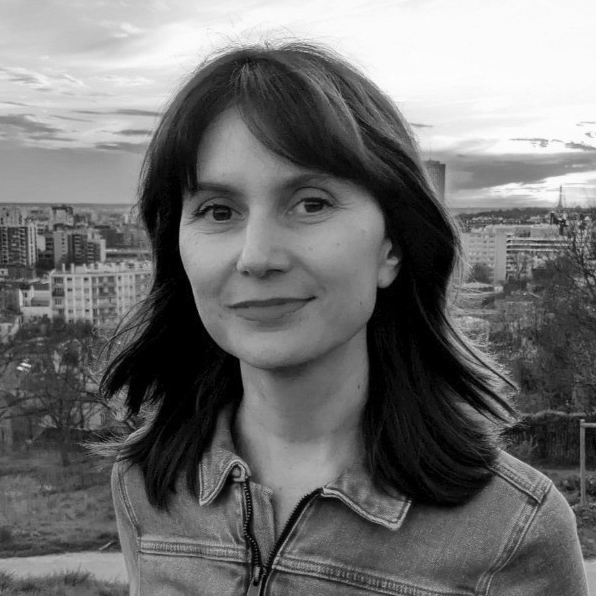
Kristina Svensson was a personal assistant to Mohamed Al Fayed from 1998 to 2000.
Shortly after being hired, Svensson was sent to Harrods from the Ritz, perhaps the world’s most famous luxury hotel and part of the Fayed empire, to undergo a medical exam.
Workplace medical examinations are standard practice in France, so Svensson did not think anything of it. Yet despite having a clear memory of the various workplace doctors she saw while working in different roles in France, she cannot recall anything about what took place at Harrods.
“I remember going down to the basement, walking down a hallway, and then I remember the door, and I remember opening the door, and I don't remember anything else,” she said.
It was only when Svensson discovered through contributing to the BBC documentary that some victims had been drugged during their gynaecological examinations that she began to suspect the same thing might have happened to her.
“That is really weird – to get a medical examination in a famous department store in the basement,” she said. “Why would you not remember that?”
Catherine Joly of the Baro Alto law firm, which is representing Louw and Svensson in France, describes these medical exams as “pre-consumption tests”, which certified victims as being cleared for sex trafficking by Mohamed and Salah Al Fayed.
“It's as if the women were cattle,” she said.
Svensson says the tests catered to Fayed's paranoia. “Many people know that Fayed had a phobia of bacteria and germs,” she said. “He was obsessed with really thorough examinations.” He began assaulting her in his office at the Ritz after her medical test in London.
She had been told in her job interview to adhere to a strict dress code and always to wear a skirt. Svensson describes having to crawl away from Fayed on her hands and knees on many occasions after he had trapped her in a chair and pushed his hands under her skirt.
Both Louw and Svensson claim they were transported across international borders for the purpose of sexual assault: Svensson from Paris to London for the medical test, and Louw from London to the French Riviera and back. Louw was hired by Mohamed, reassigned to his brother and then passed back to Mohamed.
Louw describes feeling honoured and excited to be recruited for such an important role, but the jobs she was being told she would be given did not exist. This too, experts say, is a sign of trafficking.
Svensson says she had no real work duties to perform at the Ritz, and would sit in a room alone with a pad and pen, trying to come up with something useful to do.
“Every single time I was assaulted, I would go into a side office where I was supposed to sit and wait to be summoned. I rarely had a computer… I was supposed to sit there for six, eight, 10 hours. That was psychological punishment.”
“They were using the fact that these women were serious, professional and wanted to work,” said Agathe Barril, another member of the Baro Alto legal team. “That was really the purpose of the trafficking.”
Svensson says that with all the focus on Harrods in the UK, the role of other organisations in the Fayed network have not been properly examined, including her former employer: “The Ritz so far has not been held accountable for things that they are clearly responsible for.”
In a statement, a spokesperson for the Ritz said: “Ritz Paris is deeply alarmed by the testimonies and allegations of abuse that have been reported, takes them with the utmost seriousness, and stands ready to cooperate fully with the judicial authorities… We would like to express our deepest sympathy to the women who have come forward.”
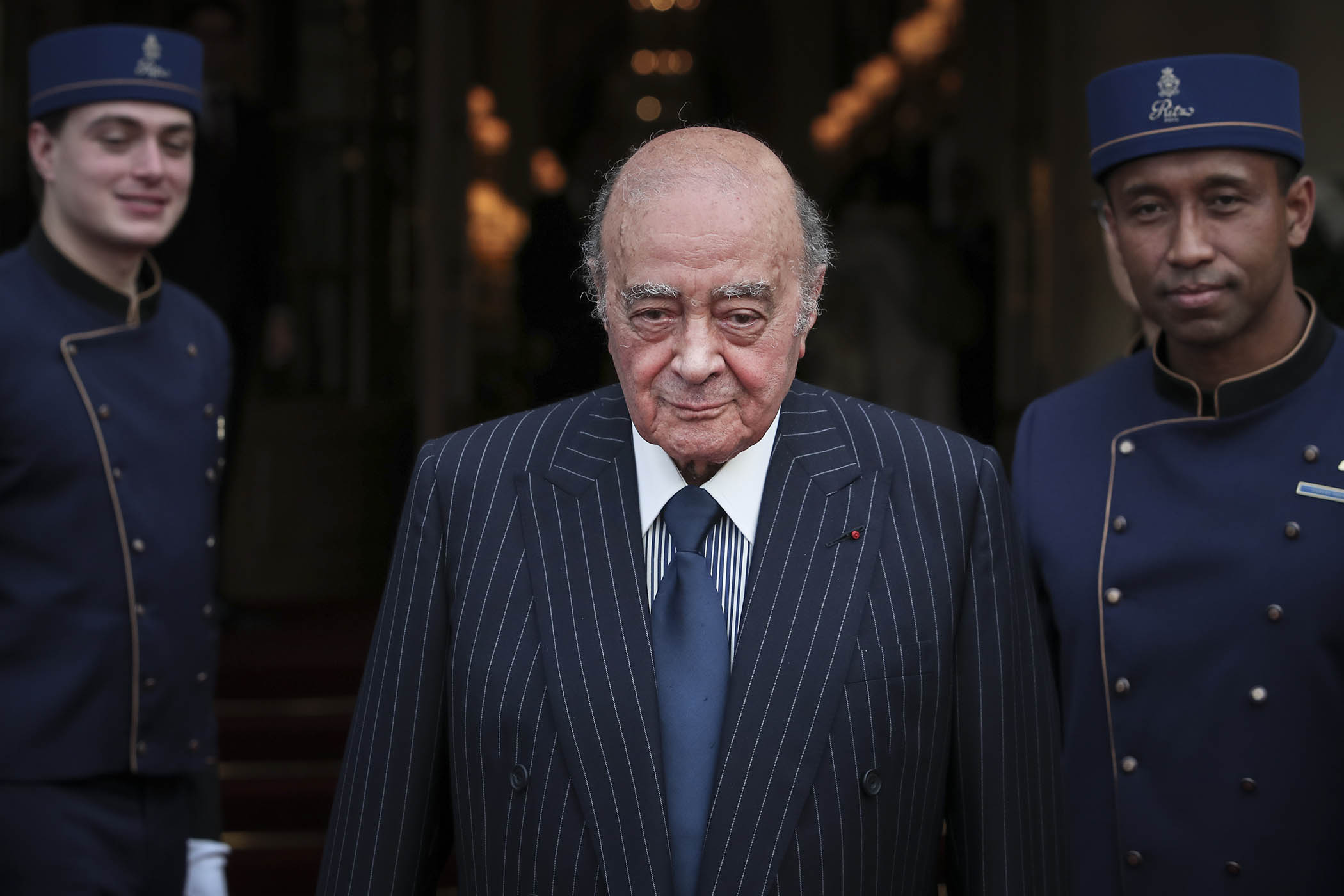
After Louw had gone through her medical exam and been reassigned to the executive programme, Salah Al Fayed took to calling her at home and inviting her to his apartment in Park Lane for dinners. She went expecting to work but found him simply looking for company.
On one occasion, she says, he offered her something he called “hubbly bubbly”, which appeared to be like a hookah pipe or a bong. She later realised it was crack cocaine. Louw claims that Fayed assaulted her after drugging her at the apartment.
“Because of the effects of what I was smoking, I did not have any inhibitions,” Louw said. “That is a memory that I blocked out for the longest time.”
After the assault at Park Lane, Fayed took Louw with him on a trip to Monaco on a Harrods private jet. Her passport was taken when she boarded the aircraft and was not given back to her when they landed.
In and around Monaco, Louw says, Fayed appeared to offer her to other wealthy businessmen, and encouraged her to take part in an orgy. She was able to refuse the requests, but one night, while she sleeping on the Ramses yacht, Fayed climbed into bed with her, claiming he was “lonely”. Louw spent the night awake in terror, fearing that if she moved, he would use it as an excuse to assault her.
Desperate to get home to safety, Louw eventually demanded her passport back from Fayed. He left it on a table on the yacht and she booked the first flight she could find, at her own expense.
She was moved to another section of Harrods and worked in various roles in the department store until she requested a sabbatical to spend time in Australia.
Louw says the HR department withheld the necessary paperwork from her until the very last minute. She was then told the documents were at Mohamed Al Fayed’s apartment in Park Lane, in the same building where she had been drugged and assaulted by his brother.
When she arrived at the apartment, Fayed invited her to sit next to him to discuss her future. When she sat down, he began to grope her, pushing his hand up her skirt and telling her he could help her career if she slept with him. “His hand reached a certain point and I managed to just stand up really fast and break his grip. I left, I didn't say a word. I ran out of there,” she said. “It was horrifying.”
Under UK law, transferring a victim from one location to another can constitute part of a trafficking case. “The movement doesn't have to be far at all. It could be from, say, a flat to the flat downstairs,” says Lauren Sanders, deputy director of frontline services at the anti-trafficking charity Unseen.
After her sabbatical, Louw did not return to Harrods.
The OCRTEH opened its investigation last year and it is not known how long it will take. It is also unclear whether it will eventually recommend action against any living perpetrators.
“The goal is uncovering who is responsible, securing convictions for the accomplices who are still alive and the seizure of ill-gotten gains,” said Eva Joly, who is also part of the legal team representing Svensson and Louw in Paris.
Louw says she feels let down by the Met police’s handling of her case. The force has been under fire since the 2024 documentary was released. It was revealed that 21 women came forward with allegations against Fayed before his death, including accusations of trafficking, but he was never convicted of any offence.
Since then, survivors complain of a lack of communication from the force and a reluctance to look into trafficking offences. The survivor group No One Above is also calling for the Met to take the trafficking allegations seriously, and advocates for a public inquiry into Fayed’s crimes.
Louw says Met officers were looking at the clock during her interview and did not want her to stray from the assault narrative.
“There are key pieces of information and events that happened to me in my experience that I felt they needed to be aware of that were indicative of trafficking, grooming and coercive control,” she said. She said their questions about the drugs Salah Al Fayed made her take left her feeling blamed as the victim.
“I felt that I was having to defend myself and my actions through the rest of the process, instead of having somebody that really wanted to hear what happened.”
Her last email to the force raising the issue of trafficking did not receive a response. She describes the regular updates sent out by Operation Cornpoppy, the taskforce looking into the Fayed allegations, as “less than satisfactory”.
Joanna Brittan, another woman who has spoken to the OCRTEH about allegations of trafficking involving Fayed and his network, told The Observer she first reported her case in 2017 to Devon and Cornwall police, long before the BBC documentary aired. She was referred to the Met, but her case was closed. Brittan has filed a complaint against the Met. She is still trying to find out how her case was handled by the Home Office.
Svensson has yet to be formally interviewed by the Met.
Survivors have said they have struggled to have their cases recognised because they do not fit the stereotypical profile of a trafficking victim. Sanders says such misconceptions are rife. “I've supported many people over the years who've come from all different backgrounds: from highly educated individuals with really high levels of qualification to people who've come from really low-income families,” Sanders said. “There is no specific example of what a victim should be.”
The mischaracterisation of the Fayeds’ mass abuse as sexual assault rather than trafficking can let their facilitators and enablers off the hook, people who may have also engaged in criminal behaviour by recruiting, intimidating or silencing victims.
“You may have one main perpetrator at the centre who may be orchestrating things, but they wouldn't be able to do it without the cooperation of organisations and other people,” said Richard Meeran, a partner at Leigh Day, a law firm representing 41 Fayed victims, including Louw and Svensson.
Meeran said any inquiry should “include the failures on the part of the Metropolitan Police to properly take the reports that they received seriously”.
A Met spokesperson said the way the force investigates rape and sexual offences has “moved on immeasurably”.
The “investigation into those who could have facilitated or enabled Mohamed Al Fayed’s offending continues,” the spokesperson said, calling for anyone with information to come forward.
Louw describes the difference between the reception she has received from the Met and her experience with the OCRTEH as “night and day”.
Svensson said the French officer who interviewed her began by telling her to take all the time she needed and that he believed her, which she found “empowering”.
Anyone investigating human trafficking should start by saying “I believe you” to survivors, Sanders said. Not least because it encourages better evidence. “If that conversation is not trauma-informed and supportive of the individual, there's not going to be enough evidence for prosecution.”
For Svensson, the experience has been transformative, whatever the outcome of the investigation.
“It is having an effect on my day-to-day life. I walk a little bit straighter in the street.”
For more on this story, read former Crown Prosecution Service chief prosecutor Nazir Afzal’s commentary here
Portraits by Joel Saget / AFP via Getty. Other image by Kamil Zihnioglu / AP