
This article first appeared as part of the Daily Sensemaker newsletter – one story a day to make sense of the world. To receive it in your inbox, featuring content exclusive to the newsletter, sign up for free here.
Labour plans to appeal a judgment made by the high court, which ruled last week that the decision to ban Palestine Action as a terror group was unlawful.
So what? Its chance of success is slim. Senior judges decided that the proscription was inconsistent with government policy and violated rights to free speech and freedom of assembly, although they did not overturn the ban which remains in place. This
•
bolsters the right to protest more broadly;
•
represents a humiliating defeat for the government; and
•
creates legal uncertainty for hundreds of people charged with supporting the group.
Backstory. Yvette Cooper, then home secretary, took action against Palestine Action after its activists broke into RAF Brize Norton last June and sprayed two planes with red paint. The group has also broken into and vandalised the factories of defence firms linked to Israel.
New precedent. It was the first time a direct action group has been banned under terror legislation, putting Palestine Action alongside neo-Nazi groups and the Islamic State. Cooper used a section of UK law that defines “serious damage to property” as a terror offence.
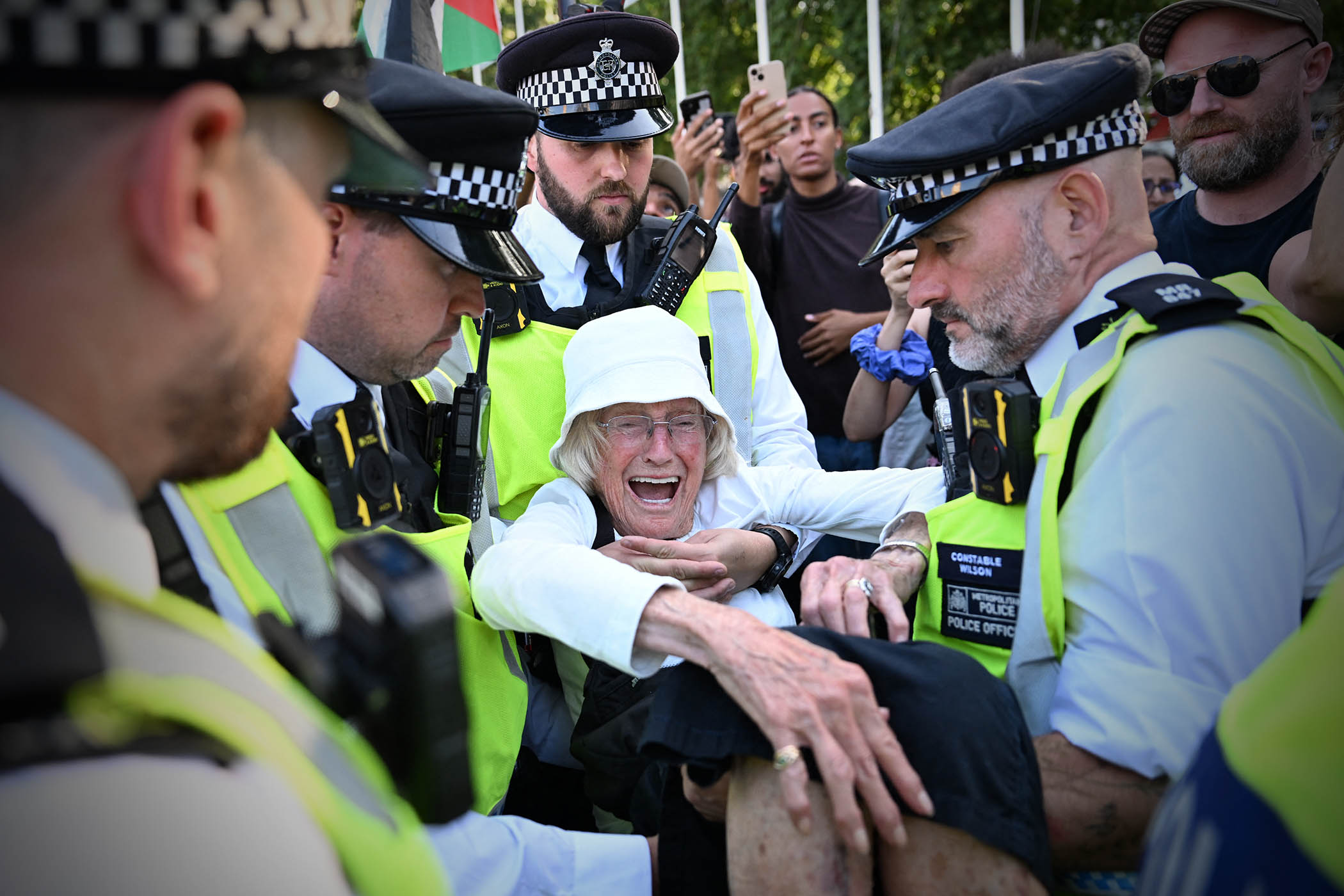
Whose streets? Nearly 2,800 people have been arrested, mostly for waving placards or wearing T-shirts, including veterans, retirees and a priest in her 80s. About 500 were charged. Others were wrongly detained for protesting the war in Gaza without supporting the group.
Decision made. The high court said that Palestine Action had carried out “various types of criminality” and rejected claims it is a “non-violent” organisation. But its 46-page judgment ruled that the proscription was “disproportionate” since “a very small number of its actions” amounted to terrorism. Offences committed by members, it said, can be prosecuted under criminal law.
No outlier. This is in line with a report produced in May 2025 by MI5’s Joint Terrorism Analysis Centre. The judges said the ban violated Home Office policy that groups can be proscribed only if it is proportionate to the activities and the scale of the threat they pose. They argued that the proscription comprised “a very significant interference with the right to free speech”.
Mixed reactions. Huda Ammori, the co-founder of Palestine Action who brought the legal challenge, described the ruling as a “monumental victory” against “one of the most extreme attacks on free speech” in British history. The current home secretary, Shabana Mahmood, suggested it could undermine her ability to “protect national security and keep the public safe”.
Confusion now. The judges did not overturn the ban, meaning that membership of Palestine Action remains a criminal offence. With the government planning to appeal, this puts those who are already facing prosecution into legal limbo.
Newsletters
Choose the newsletters you want to receive
View more
For information about how The Observer protects your data, read our Privacy Policy
Confusion ahead. Scotland Yard has stopped making arrests. But the Crown Prosecution Service says it is up to individual courts to decide whether to continue or adjourn specific cases. If they do proceed, the chances are high that they will collapse.
Any regrets? Proscribing Palestine Action was an extreme option that was roundly condemned, including by the UN high commissioner for human rights. Juries had already acquitted several activists who were accused of criminal offences related to break-ins.
What’s more… Six activists this month became the latest group to succeed in court, cleared of aggravated burglary and violent disorder. Jurors failed to reach a verdict on the charges of criminal damage. The alleged demonstration happened before Palestine Action was proscribed.
Photograph by Chris J Ratcliffe/AFP via Getty Images