Europe needs a surge in troop numbers along its eastern flank to establish a proper deterrent against Russia, Latvia’s prime minister has said, calling for a joint fund to defend its most vulnerable frontline states.
Tensions are mounting in the Baltic states of Latvia, Lithuania and Estonia as the war in Ukraine rages on and Russia wages a shadow war along the treaty’s eastern frontier.
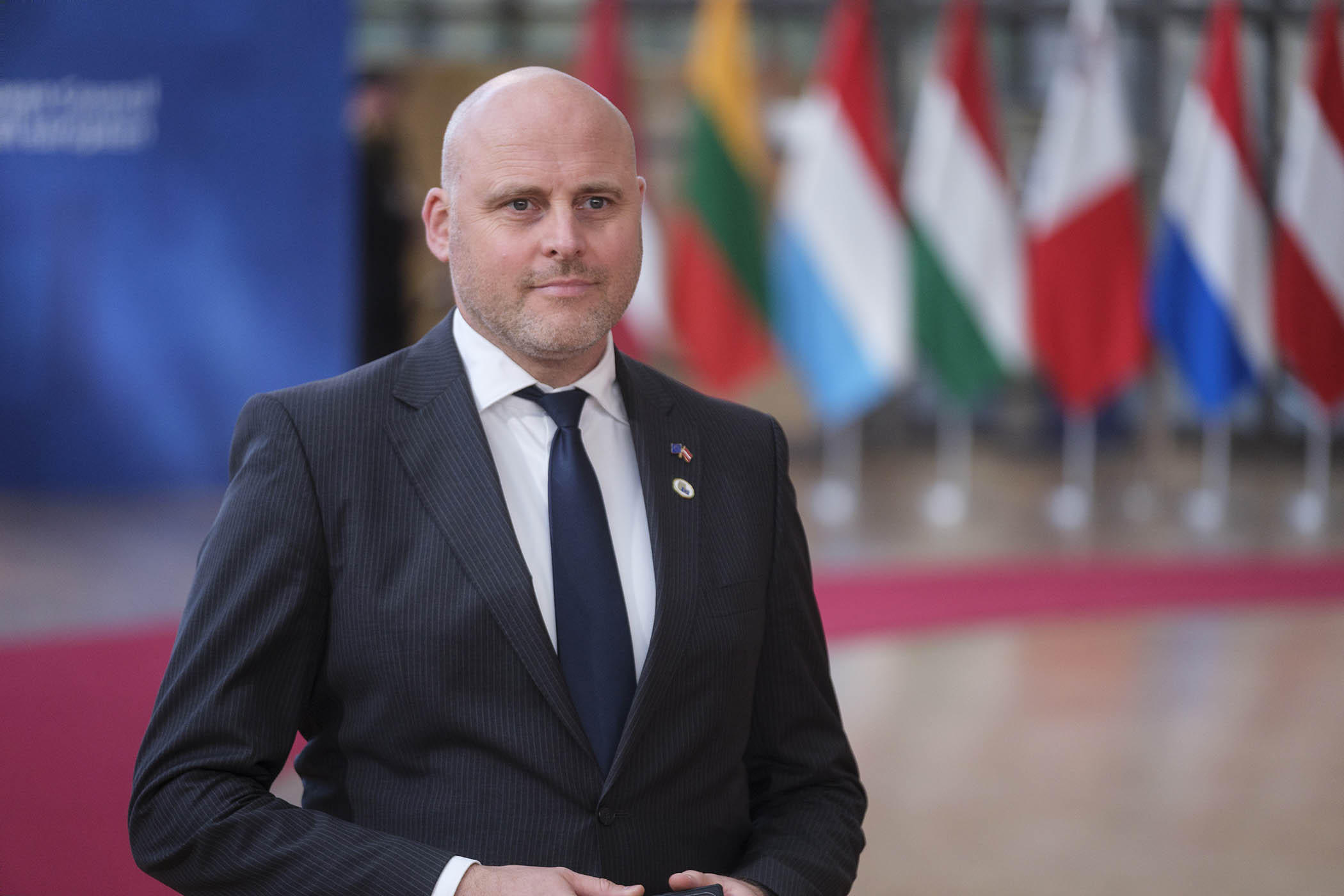
Latvia’s ruling coalition unravelled in May after a spate of cross-border drone incursions, propelling Andris Kulbergs, a former businessman and chairman of a Latvian car dealers’ association, to the premiership.
The drones turned out to be Ukrainian — thrown off course on their way to strike targets in Russia. But the crisis coincided with an escalation of rhetoric from Russian officials and ongoing “hybrid” attacks, including cyberattacks and sabotage, that have put Latvia and its neighbours in a state somewhere between war and peace.
“We need to have additional allied forces, troops on the ground here. That’s the only way to give the right strength signal to the bully,” Kulbergs told The Observer after returning from Paris, where he conveyed the same message to Nato secretary general Mark Rutte while sitting next to him at the Bastille Day parade. “We have to increase the troops we have here.”
Also among the visiting dignitaries in Paris was Volodymyr Zelensky. As thousands of French troops and tanks processed down the Champs-Élysées, Kulbergs saw in the eyes of the Ukrainian president “the wish that those units just continue towards Ukraine”.
“Half of it would be enough just to take the upper hand in the war,” Kulbergs added.
‘The greater danger will come after the Ukraine war is over. What do you do with 1.5 million Russian soldiers? It’s a big question for Putin himself, and for us
‘The greater danger will come after the Ukraine war is over. What do you do with 1.5 million Russian soldiers? It’s a big question for Putin himself, and for us
Andris Kulbergs, Latvia’s prime minister
Warnings by American and European intelligence services of a Russian threat have grown louder and more insistent in recent weeks as Ukrainian drone strikes bring the conflict to the Kremlin’s doorstep. Western agencies are convinced that Vladimir Putin will seek a pretext for some kind of provocation beyond Ukraine to divert Nato’s attention and test its resolve.
Alarm bells rang in Latvia after Russia’s ambassador to the UN claimed that Ukraine was using the country as a staging ground for attacks. “Nato will not protect you from retaliation,” Vasily Nebenzya said at a UN Security Council meeting in May.
As long as Russia’s army is bogged down in Ukraine, there is no imminent threat of a conventional attack here. The greater danger will come after the war is over, Kulbergs said, adding: “What do you do with 1.5 million Russian soldiers? It’s a big question for Putin himself and for us.”
Newsletters
Choose the newsletters you want to receive
View more
For information about how The Observer protects your data, read our Privacy Policy
Latvia is already facing a barrage of cyberattacks, disinformation campaigns and threats of sabotage. “Things have escalated. So any type of hybrid threat is definitely on the menu,” said Kulbergs. “It could be anywhere, not just Latvia or the eastern flank. And we have to be ready for that.”
Europe had been “sleeping” for too long, he said. Now, it is paying the price for failing to respond decisively to Russia’s invasion of Ukraine. How Europe deals with the looming threat to the Baltics will test if it has learned the lesson.
One of Ukraine’s staunchest allies, Latvia spent 5% of GDP on defence last year – among the highest in Europe. While neighbouring Estonia, Lithuania and Poland have all matched that increase, Europe’s biggest economies still lag behind.
“Five per cent is not enough,” said Kulbergs. “We would need 25%. We are keeping Europe safe here. But that cannot be left on the shoulders of the nation of Latvia.”
The solution, he said, was a joint fund for Europe to pool resources for defence and security so they can be allocated to member states that are most exposed.
Asked how far Europe should go to arm itself independently of the US, Kulbergs said “fully”. At the heart of that drive are questions over Donald Trump’s commitment to Europe’s defence. Ahead of the Nato summit in Ankara this month, the president once again warned he could pull US troops out of Europe.
Latvia is counting on Nato, nonetheless. Mandatory conscription was reintroduced in 2023, but the country’s population of 1.8 million is not much bigger than the number of active duty personnel in the Russian army.
“I’m very convinced that the US is still the best ally we have and there is no shift in our long-term relationship,” Kulbergs said.
Along the Latvian border, a network of trenches, dragon’s teeth and other anti-tank obstacles is under construction as part of the Baltic Defence Line spanning Estonia and Lithuania.
“The mines and concertina wire: they will come when the evil appears,” said Col Pēteris Suveizda, commander of the National Guard’s third brigade in the eastern Latgale region, on Latvia’s 450km border with Russia and its ally Belarus.
Like Ukraine’s eastern Donbas region that Putin is bent on conquering, Latgale has a large Russian-speaking minority that Moscow claims is being oppressed by Latvia. About one third of Suveizda’s brigade is from the Russian-speaking minority, he said.
After taking command of the brigade this year, he travelled to Ukraine: where else to find answers to how to fend off a Russian onslaught? For now the border with Russia is quiet, but on the frontier with Belarus, Latvia is wrestling with a surge in irregular migrants, many of whom have flown to Minsk from the Middle East.
“These illegal migration flows are organised by the Russian regime,” said Vladimirs Šersts, the acting chief of border control service in Daugavpils. “They use those migrants to destabilise the situation in Latvia”.
Cyber threats towards Latvia were at an all-time high last year and efforts to divide society with disinformation are constant. “Although invisible, this influence is very strong,” the national security agency said in its annual report.
At a deserted train station about 10km from the Russian border, Aldis Kozirkovs emerged from the station master’s office. The 45-year-old doesn’t have much to do these days: the last train passed through Kārsava station on 16 May. Russia suspended the last remaining traffic on the nearest crossing and two others with Estonia and Finland without explanation this month.
‘Illegal migration flows are organised by the Russian regime. They use those migrants to destabilise the situation in Latvia’
‘Illegal migration flows are organised by the Russian regime. They use those migrants to destabilise the situation in Latvia’
Vladimirs Šersts, border control chief
Would the Latvian army be able to hold Russia off here? “We have too few units,” said Kozirkovs, who passes the time watching videos on YouTube. “Those dragon’s teeth that are lying around somewhere in the field: they won’t protect us.”
He also suspects some in the region would welcome a Russian incursion. As for Latvia’s western allies, he questioned how quickly they would be able to respond. “They will come at some point, but where will the frontline be by then?” he asked. “In Rēzekne in the east, or near Riga?”
Three words are written at the top of the whiteboard in Col David Brassard’s office: Assure, Deter, Defend. That is the mission of the Nato multinational brigade in Latvia where the Canadian officer recently took command – and he is serious about it.
“We’re here to show that we do mean business,” he said at the Camp Ādaži military base near Riga. After Russia invaded Ukraine, the Nato contingent here grew to a full brigade of some 3,000 troops from 14 countries including Denmark, Italy, Spain and Sweden. Investment in military infrastructure, such as new helicopter aprons, has grown to enable rapid troop deployment.
Nato allies across the Baltic states are stockpiling everything from missiles and ammunition to water and rations. “It’s not just about being ready to fight for 24 hours,” said Brassard. “It’s building resilience in terms of sustainment, spare parts, communication infrastructure, bunkers, stockpiling. All that is happening right now.”
The brigade is also moving personnel and materiel eastward to establish a foothold near the border. Brassard recently travelled there for a second time to familiarise himself with the terrain and inspect progress on the Baltic Defence Line. “I’m confident that if something happens tonight at the border we can mount a credible defence,” he said.
On Latvia’s home front, some civilians are preparing to mobilise – in a disused plywood factory just outside the centre of Riga. Near the entrance to Drone House, the largest indoor drone training centre in the Baltics, trophies from the battlefield in Ukraine are displayed including two Russian downed drones and donated by Ukrainian units.
Anete Kiseleva had come to drop her 12-year-old son off for class. Drone House offers free 10-hour courses for children aged eight and above, covering the basics of FPV (first-person-view) drones, how to fly them legally, and battery safety. “In this age it’s important to predict what kind of skills we will need,” Kiseleva said.
For her son, it’s just a bit fun, but it could also be useful in a worst case scenario, she said, adding: “Of course, I hope that’s not going to happen”.
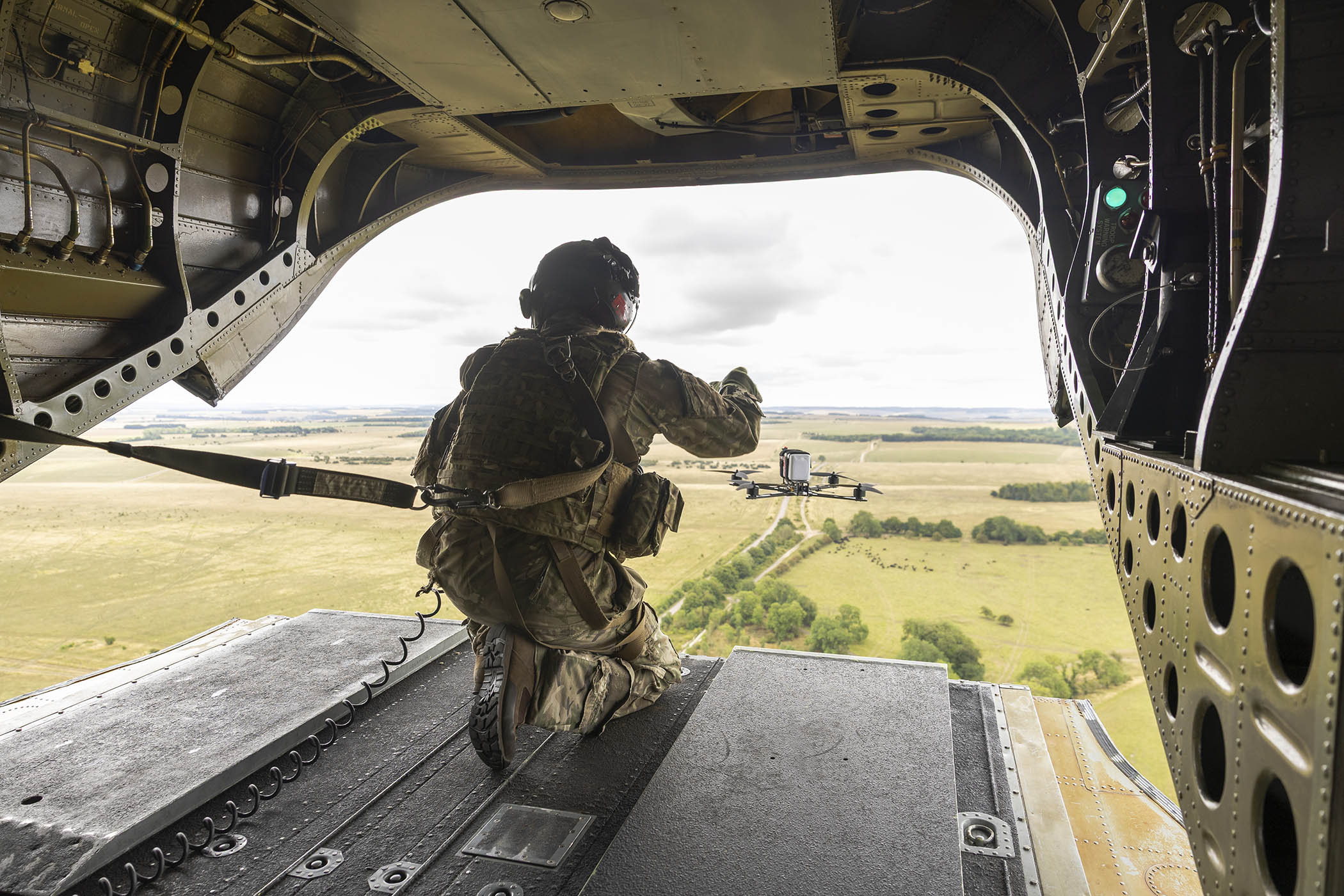
The course has enrolled around 300 children since the centre opened last November. After practicing on simulators, the students fly drones – small enough to fit in the palm of an adult’s hand – around a hangar with hoops dangling from the ceiling and other obstacles.
The centre aims to train 10,000 drone operators a year, said Māris Bruža, a Latvian military veteran and board member of Drone Force Europe. Two thirds of the students are civilians, including members of the National Guard.
“Everything in Ukraine also started with the civilians,” said Bruža. Unlike Ukraine, however, Latvia has Nato. “It will be completely different here if the Russians decide to come. All the Nato forces will be involved,” said Bruža. “That will not be the same war. The Russians know it.”
There are also lessons from Latvia’s own history, Bruža said. His relatives were among the 60,000 people deported to Siberia and other remote regions of Russia during the Soviet occupation in the 1940s. They died there. “It’s our existential question,” he said “We must be ready”.
Photograph by Thierry Monasse/Getty Images