
When evening falls on Tehran now, Maryam no longer knows how to reassure her daughter. Instead, like millions across the Iranian capital, the family gather together, fearful of what the night will bring, listening to the distant blasts of American bombs.
“The fear has shifted now,” she said. “At first, we worried about military targets, but now people fear the bombs hitting anywhere.
“My six-year-old daughter asks every night whether we will sleep peacefully or wake up with the sounds of explosions. I don’t have an answer to her question.”
With the collapse of the fragile ceasefire between the US and Iran, the two sides exchanging days of strikes and Donald Trump threatening to “decimate and destroy” the Islamic Republic, gloom has descended again on ordinary Iranians.
Fears of a prolonged war have returned as Trump ramps up US attacks in an attempt to break Iran’s grip on the Strait of Hormuz, the vital waterway at the mouth of the Gulf. After a tentative deal was struck a month ago, hopes of peace have been crushed.
“The ceasefire brought happiness, but nobody in Iran believed it would last,” Maryam said. “Deep in our minds, we thought the war would restart. Now we are back where we started.”
Inflation is soaring, despite the regime’s insistence that it can survive on a wartime footing. Families are stockpiling food and medicine as prices soar.
“People are asking which medicines they should keep at home if hospitals become harder to reach,” said Sara, 27, at a pharmacy in Shiraz. “The uncertainty is overwhelming.”
Reza, 46, a taxi driver in the ancient city of Isfahan, said he was struggling to make a living.
“Business has almost disappeared. People have left the city centre. They only travel if they have no choice or if there is urgent work,” he said.
Newsletters
Choose the newsletters you want to receive
View more
For information about how The Observer protects your data, read our Privacy Policy
Among his few passengers, he added, there was only one topic of conversation: “When will this war come to an end and when can we return to our normal lives?”
Many cities are now enduring rolling power cuts. Families have adapted wearily to the dull rituals of life in wartime.
“We charge every phone and power bank we own whenever the electricity is working,” said Omid, a 22-year-old university student in Tehran. “Every member of the family reminds each other to charge their devices every hour we have a power supply. We don’t know if tomorrow we will still have power, the internet, or a way to contact our families.”
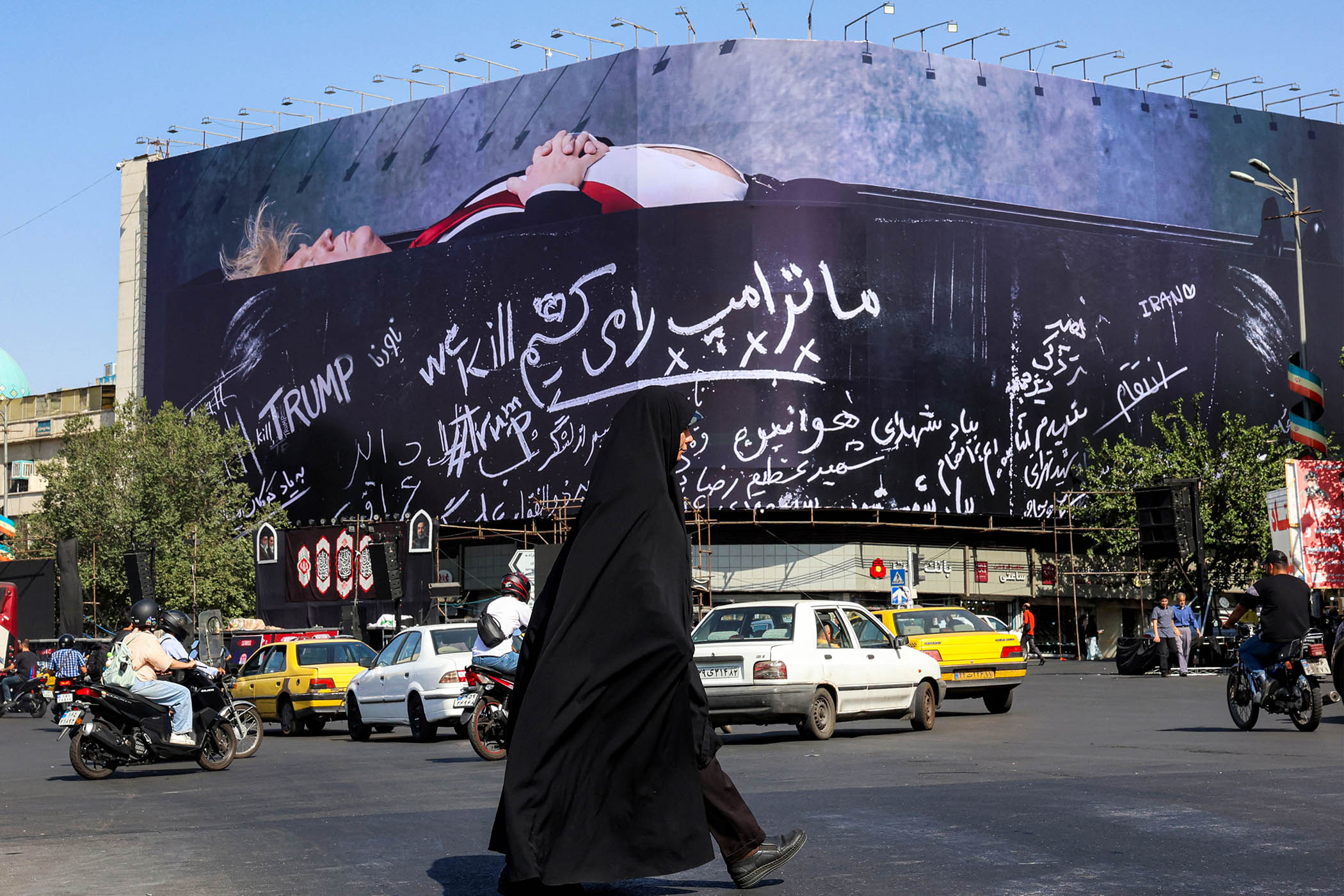
At a square in Tehran last week, a huge billboard went up showing Trump dead in a coffin, his hair dishevelled, his belly protruding above the height of the casket. Scrawled beneath, in English and Persian, was the slogan: “We kill Trump.”
But many Iranians view the regime’s propaganda with a jaundiced eye as the fighting resumes and hardship deepens.
“Attacking ships has not helped Iran. It only made the situation worse and gave others an excuse to attack Iran,” said Shirin, a 31-year-old businesswoman whose name has been changed. “The people ultimately end up paying the price.”
Even among those who despise the regime, however, the war has forged a renewed unity. Iranians have not forgotten Trump’s promise in January that “help is on the way”, when they rose up against the government and were massacred in their thousands. Weeks later, Trump began bombing and the regime that has survived is even more hardline, more ruthless.
“When a country comes under attack by foreign forces, many people unite and put their political differences aside,” said Shirin. “That doesn’t mean they stopped criticising the regime, but this is our land and we cannot see our homeland bombed.”
Reza added bitterly: “Trump wants to end our civilisation. He is pretending to be a peacemaker, but he is the real troublemaker. He is trying to force Iran into submission. Politicians make decisions and start wars, but ordinary people suffer.”
Most fear that worse is to come, as the US intensifies attacks and expands its range of targets. Trump has threatened to target Iran’s critical energy infrastructure in coming days if Tehran refuses to give up control of the strait.
The regime in Tehran claims the offensive has already caused civilian casualties, accusing the US of a “barbaric attack” near a children’s cancer hospital in the south-western city of Ahvaz on Friday.
Caught in the crossfire and powerless, most Iranians have little interest in the propaganda war once again being waged between Tehran and Washington.
“War is now at our doorsteps; it is entering our homes,” said Hamed, 55, a shopkeeper in the southern port city of Bushehr.
Meanwhile, the routines of normal life keep shrinking. Niloofar, a restaurant owner in Mashhad, said business had slumped.
“The restaurant is open, but people don’t stay inside for long,” she said. “Customers are not coming in numbers. Those who do come eat quickly and rush home before dark.”
What are your thoughts on this? Send us a letter to letters@observer.co.uk
Photograph by AFP/Getty Images