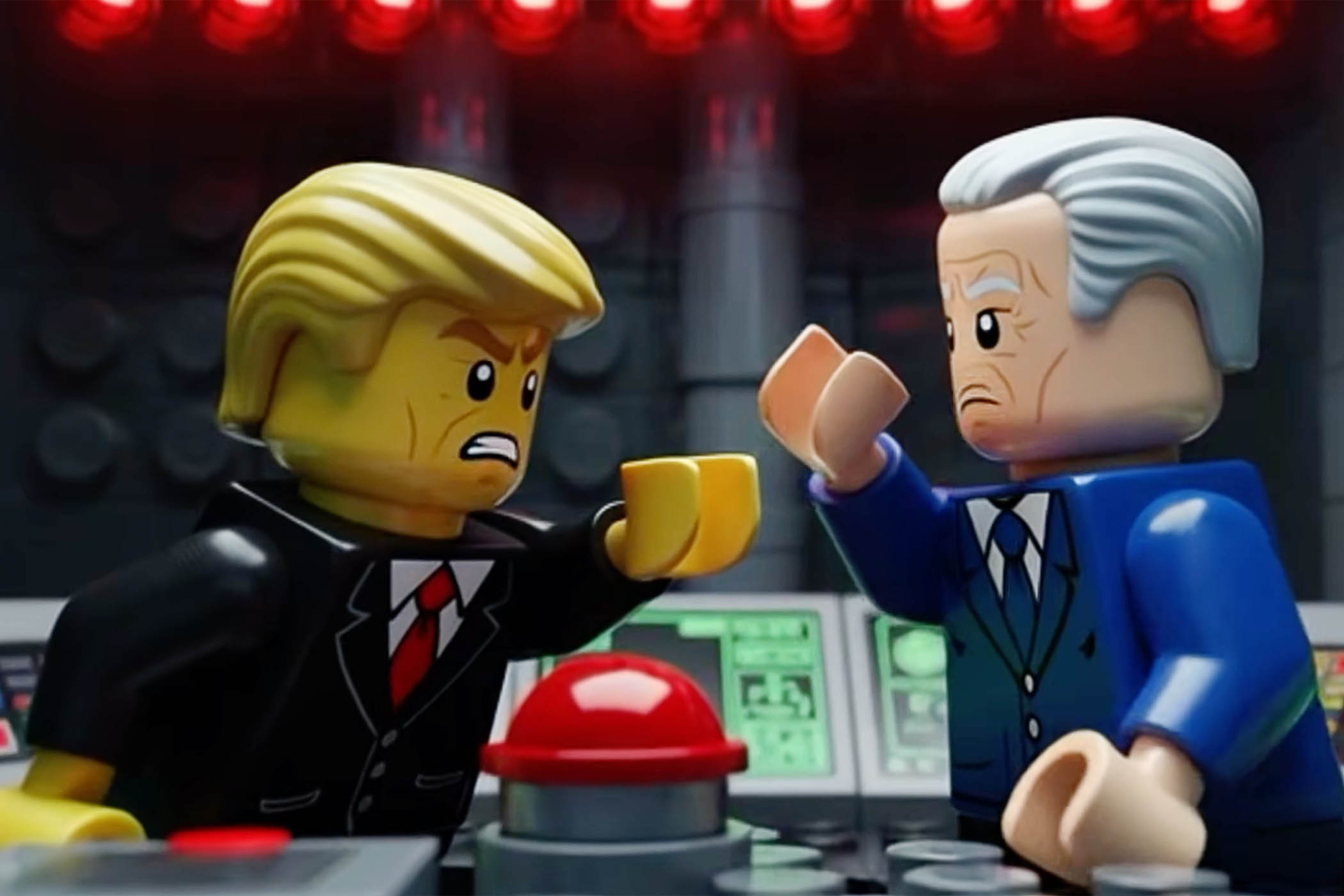

A Lego satan looms cackling over Donald Trump and Benjamin Netanyahu as they pore over a binder labelled “Epstein files”. Furious, Trump slams a button, shooting a missile towards Iran, where Lego girls are studying in a classroom. In the next scene, their backpacks are strewn amid the rubble of a school. Tears stream from the eyes of a Lego Iranian soldier before he fires a salvo of rockets across the region, slamming into a British military base in Cyprus, the American embassy in Saudi Arabia, an iconic hotel in Dubai and Netanyahu’s office in Israel. Lego speed boats zip into the Strait of Hormuz. American soldiers carry lego coffins wrapped in the stars and stripes back to the US. Trump, his Lego hand mottled and shaking, pens a request for a ceasefire that an Iranian official rips in half.
The video is one of a series at the heart of a propaganda war that has been turbocharged by AI. While shutting off the internet at home, Iran is harnessing the increasing sophistication and availability of AI tools to churn out videos promoting its narrative of the war: that it is fighting the US and Israel on behalf of the world’s oppressed – and winning.
“It's hard to understate the impact that AI is having here,” said Joseph Bodnar, a senior manager at the Institute for Strategic Dialogue, which is monitoring Iran’s propaganda output. “This is the first conflict that began where AI tools were incredibly good and efficient at creating realistic content.”
The output includes a mixture of realistic content and highly stylised animations often using cartoon imagery. Apart from being less likely than real war footage to be flagged or removed by social media platforms, cartoons convey innocence. The sheer absurdity of it drives engagement. And the familiarity of figures such as Lego disarm the viewer to deliver a political message.
With no dialogue and no need for subtitles, the stylised content is geared towards a western and extremely online audience, particularly young cohorts such as gen Z that might be receptive to Iran’s anti-imperialist narratives, said Mahsa Alimardini, associate director of technology threats and opportunities program at WITNESS.
By contrast, videos disseminated by the White House, featuring Top Gun and Grand Theft Auto, may appeal more to a domestic audience.
The Epstein scandal features prominently in Iran’s propaganda output. The overarching narrative is that Trump started the war to distract from the Epstein files, and Iran is now avenging the convicted sex offender’s victims. In one of the Lego videos, an Iranian writes on a missile: “In memory of the victims of Epstein Island.” Iranian officials have dubbed the war “Operation Epstein Fury” while referring to the US and Israel as the “Axis of Epstein” or the “Epstein coalition”.
Other AI-generated videos depict – some more convincingly than others – successful Iranian attacks on regional powers, seeking to create the perception that Tehran is winning. AI-generated images of US soldiers taken captive by Iran have swirled on social media. Meanwhile, Iranian opposition accounts have circulated AI-generated videos of members of the regime’s security forces announcing their defection.
The content is produced and promoted through a constellation of state-aligned influencers and coordinated bot networks across social media platforms, operating in tandem with official government channels. The videos are reposted by social media users with large followings – often including state-controlled international news television network Russia Today.
“Russia was the precursor in deploying this approach,” said Dr Lukasz Olejnik, a visiting senior research fellow at the department of war studies, King's College London and author of the book Propaganda. “What we are seeing now is the proliferation of that model to other actors.”
The prevalence of AI is increasingly contaminating the truth. When Iranians took to the streets in protest earlier this year, the regime dismissed evidence of its brutal crackdown as being generated by AI. Now Tehran’s opponents are using the same tactic to discredit evidence of civilian casualties caused by US and Israeli attacks. After a missile struck a school in southern Iran, killing more than 100 children, images of parents weeping over their graves were branded fake.
“The regime did make a spectacle of that tragedy for its own propaganda purposes, but most of it was authentic content that people were dismissing as AI,” said Alimardini.
A whole subgenre has emerged of fake forensic analysis debunking what is in fact real imagery as AI-generated. The sheer volume of content makes it almost impossible for fact checkers to sift through it all. And separating fact from fiction may be futile in an online environment where videos of Netanyahu as a puppeteer manipulating Trump or Saudi Arabia’s crown prince, Mohammed bin Salman, cavorting in a US flag are just as popular as real war footage.
“We’ve just moved to a vibes-based online information ecosystem where it doesn't matter if it's true or not,” said Bodnar. “If it resonates with you, you're going to like it – and share it”.
Photograph by YouTube
Newsletters
Choose the newsletters you want to receive
View more
For information about how The Observer protects your data, read our Privacy Policy