
He came. He fawned. He knuckled under on Taiwan.
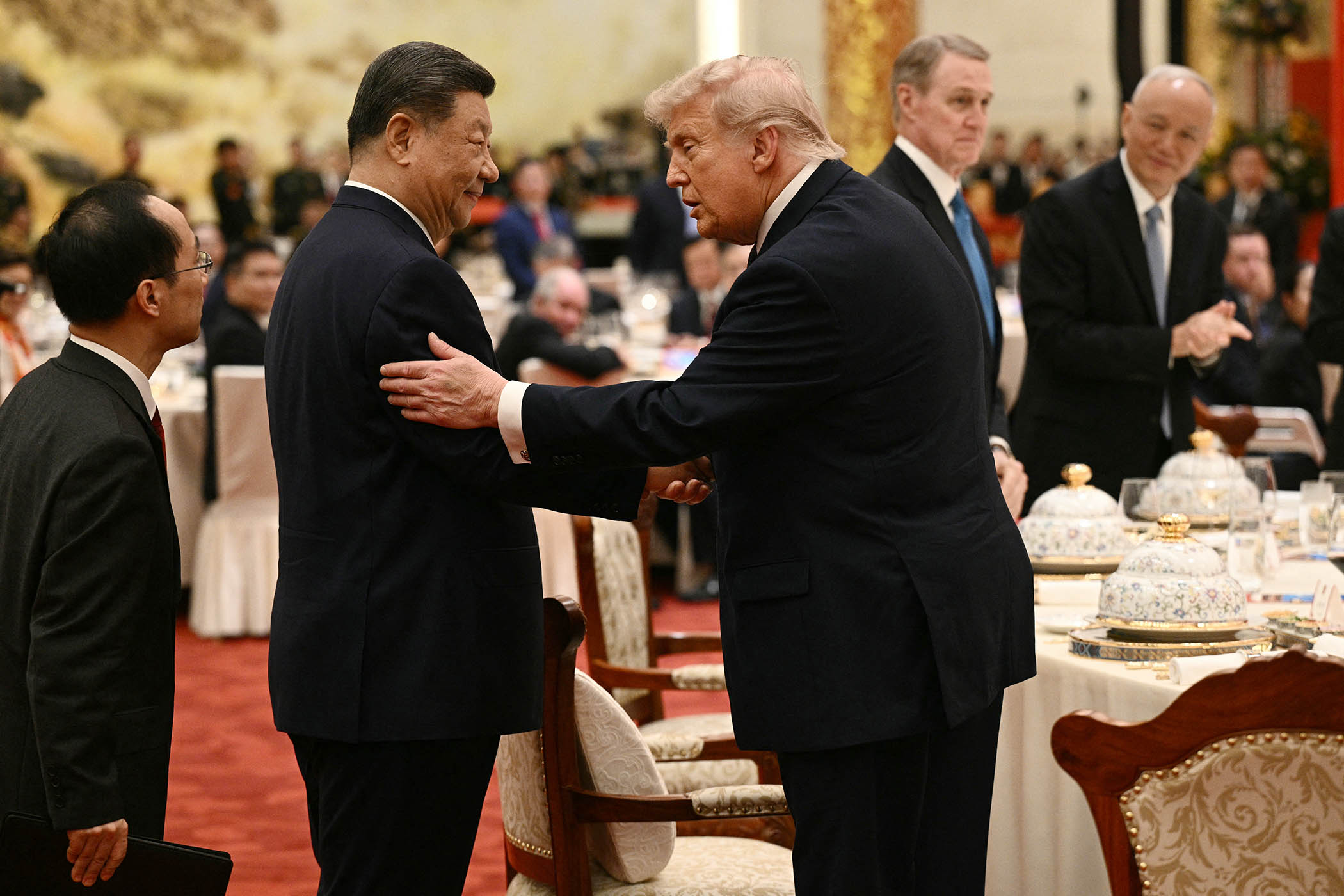
Two years ago, Donald Trump was a China hawk, promising high tariffs and low tolerance for economic espionage if re-elected president. Last week in Beijing, he was the supplicant, seeking investment and hoping for help reopening the Strait of Hormuz. But historians may decide the most striking fact about this rare meeting of the world’s two most powerful people was Trump’s deference on the issue closest to Xi Jinping’s heart.
On Thursday, the Chinese president warned that, if mishandled, the Taiwan problem could put the US-China relationship in “an extremely dangerous situation”. Flying home on Friday, Trump declined to confirm he would approve a $14bn weapons package for Taiwan, or that the US would come to Taiwan’s aid if it was attacked.
These were both chances for Trump to push the envelope in the way the US talks about support for Taiwan’s endangered democracy. He did not take them, which raises questions about how it has come to this.
What does China say about Taiwan?
That it was historically part of imperial China and that it is now an errant province of communist China. Since winning the civil war in 1949, the Chinese Communist party (CCP) has claimed there is only one China, that Taiwan is part of it and that Taiwanese independence is a violation of Chinese sovereignty. Xi has made it a personal and national mission to “reunify” China by taking control of Taiwan, by force if necessary, as early as next year.
Does this claim have any legal basis?
Not really. When Dutch merchant explorers reached Taiwan in 1624, it was populated by Malay-Austronesians, not Chinese. Since then, it has been a Chinese province for all of eight years from 1887. Between 1683 and 1887, it was administered by the Qing dynasty as part of Fujian province but was, in reality, “a wild and open frontier”, according to the Dutch historian Gerrit van der Wees. For half a century, until the the end of the second world war, it was a Japanese colony. From the end of China’s civil war in 1949 until the dawn of Taiwanese democracy in the late 1970s it was the refuge of Chinese nationalists; the Kuomintang. It has never been part of communist China, but it does meet the four main requirements for an independent nation state under the 1933 Montevideo convention; namely, having a permanent population, a defined territory, a government and a capacity to enter into relations with other states.
Why does no one say this publicly?
To avoid antagonising the world’s biggest lender and second biggest economy, which also has the world’s biggest army and navy. When Lithuania tried it – formally recognising Taiwan and opening a representative office in Taipei in 2022, after letting Taiwan open a de facto embassy in Vilnius the previous year – Beijing reacted with a furious campaign of diplomatic and economic pressure to dissuade others from following suit.
Newsletters
Choose the newsletters you want to receive
View more
For information about how The Observer protects your data, read our Privacy Policy
What do other countries say instead?
The US maintains a strategy of “strategic ambiguity”, recognising Beijing’s “One China” policy. When the words “we do not support Taiwan independence” were removed from the state department’s website last year, China demanded they be reinstated. They were. The UK walks a similar semantic tightrope.
What about Trump?
The US president too. Asked on Air Force One how he would responded when Xi voiced concerns about US arms sales to Taiwan, he said he made no comment. And on whether he would order US forces to defend Taiwan: “I don’t talk about that.”
Is strategic ambiguity sustainable?
For now, yes, said Kerry Brown of King’s College London, author of The Taiwan Story. “But five or 10 years from now, who knows? China knows the US is distracted in the Middle East, Cuba and Ukraine, diluting its geopolitical reach. It sees the US looking weaker by the year, so the impetus to wait is good.” But what if the world’s other democracies decided to take a stand and establish full diplomatic relations with Taiwan? “Beijing would immediately go to war.”
Photograph by Brendan Smialowski/ AFP via Getty Images