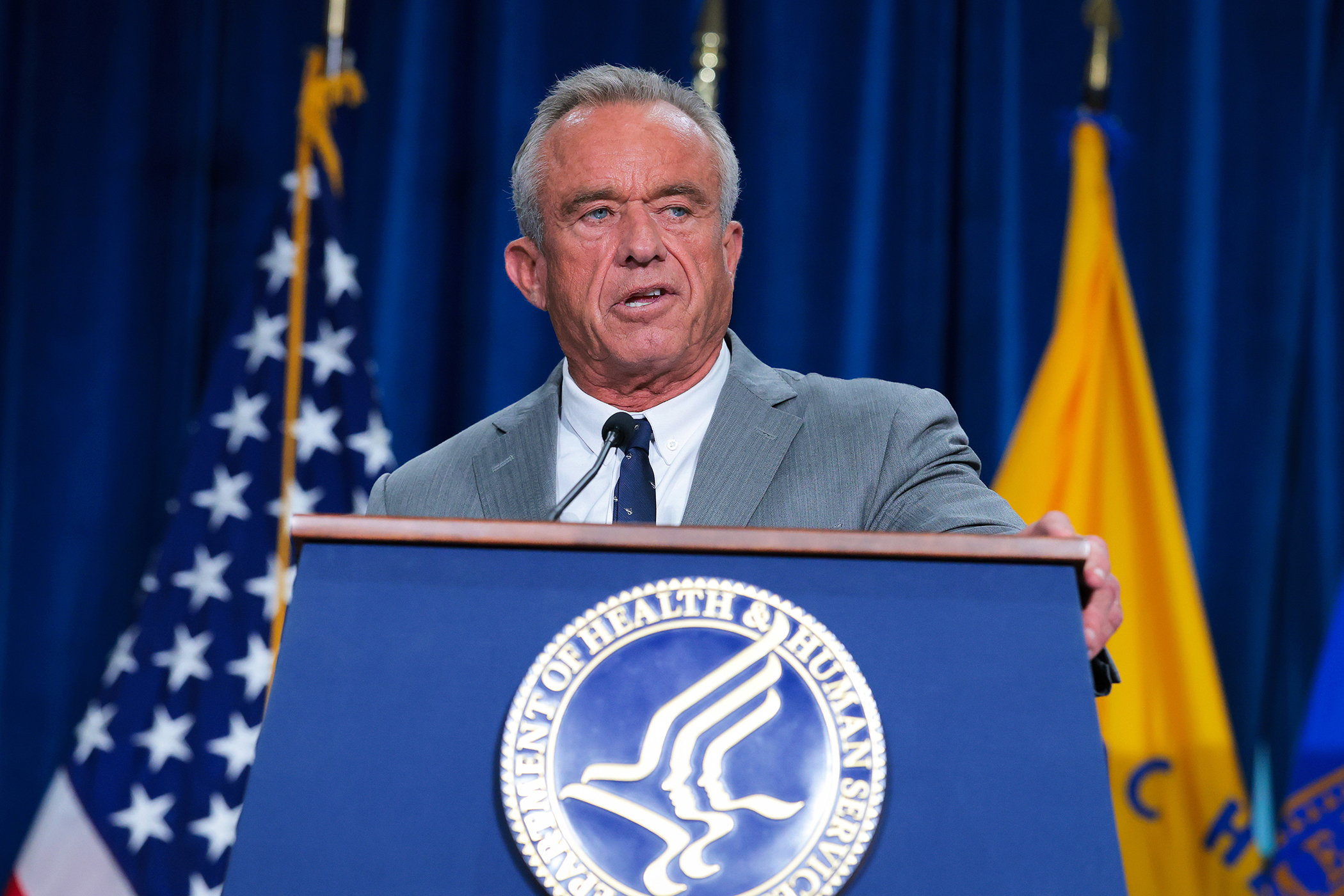



Robert F Kennedy Jr’s department has rejected the findings of a “gold-standard” study showing there is no link between autism and taking paracetamol during pregnancy.
An international team of researchers examined 43 studies to assess claims from Kennedy, the US health secretary, and Donald Trump that paracetamol was a potential cause of autism. Trump said last September that pregnant women “should tough it out”.
In a review published in the Lancet Obstetrics, Gynaecology & Women’s Health on Friday, researchers found no meaningful association between paracetamol, known in the US as acetaminophen and sold under the brand name Tylenol, and autistic spectrum disorder (ASD), attention-deficit hyperactivity disorder (ADHD) or intellectual disability.
Scientists said the Lancet review was “strong and reliable” (Dr Monique Botha, associate professor in social and developmental psychology at Durham University), “timely and well conducted” (Prof Ian Douglas, professor of pharmacoepidemiology at the London School of Hygiene & Tropical Medicine, and “should effectively put this question to rest” (Prof Jan Haavik, molecular neuroscientist and clinical psychiatrist at the University of Bergen).
But Andrew Nixon, a spokesperson for Kennedy’s Health and Human Services Department, said the issue remained unresolved: “According to HHS, many experts have expressed concern over the use of acetaminophen during pregnancy,” he said.
He pointed to a separate review in August by Dr Andrea Baccarelli, dean of faculty at the Harvard TH Chan School of Public Health, which claimed a link.
Kennedy’s attack on the most widely used painkiller comes after years of bogus claims that vaccines cause autism, his decision to replace the Centers for Disease Control and Prevention vaccine advisory committee with members who include anti-vaccine activists, and his statement that not all babies should be vaccinated against hepatitis B.
The health secretary, America’s most senior health official, has also claimed, without evidence, that Covid-19 was a bioweapon engineered to spare Ashkenazi Jews and Chinese people, that HIV did not cause Aids and that antidepressants are linked to an increase in school shootings.
The Lancet study, led by Prof Asma Khalil, a consultant obstetrician and foetal medicine specialist at St George’s Hospital in London, focused on studies which compared siblings. Brothers and sisters share genetics and are raised in a similar home environment. If paracetamol did cause autism, its effect would be apparent in mothers whose use of painkillers differed during their pregnancies.
Of the 43 studies in the initial review, 26 were excluded – a standard feature of meta-analyses – due to risks of bias as they had not gathered enough data on paracetamol use. The meta-analysis of the remaining 17 studies found no evidence of links between paracetamol and autism.
Newsletters
Choose the newsletters you want to receive
View more
For information about how The Observer protects your data, read our Privacy Policy
Khalil said women should know that paracetamol was “safe to use in pregnancy” and remains “the first-line treatment” for pain or fever during pregnancy.
Although NSAID painkillers such as ibuprofen can be used during early stages of pregnancy, the NHS recommends that they should be avoided after 30 weeks.
Online searches for Tylenol and autism peaked in the US after Trump’s press conference in September, and his advice to “tough it out” could cause harm to mothers and babies, according to Dr Hannah Blencowe, a maternal health researcher at LSHTM and five colleagues.
They wrote a Lancet commentary, published alongside the study, which said: “When clinically indicated, paracetamol remains an important and evidence-supported option for the management of fever and pain during pregnancy, particularly in settings where untreated maternal infection and fever pose well-established risks to foetal survival and neuro-development.”
Photograph by Anna Moneymaker/Getty Images