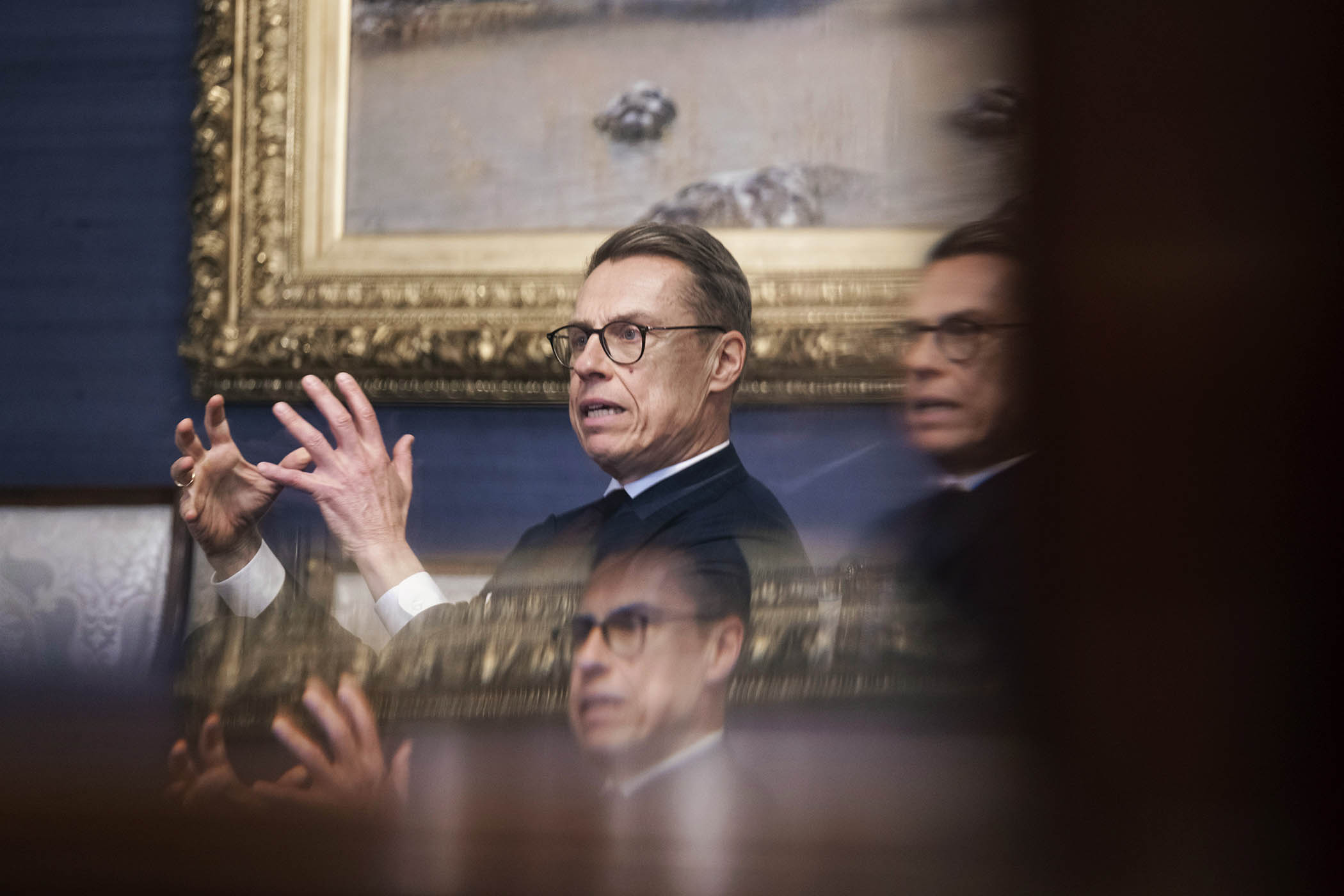
Nobody needs to explain the threat of an “imperialist Russia” to a man who lives in a palace built for a Russian tsar. Since becoming president of Finland 21 months ago, Alexander Stubb has spent most of his time thinking, talking and writing about Vladimir Putin, his war in Ukraine and what it means for the rest of Europe.
But over the course of an hour in an ornate drawing room overlooking Helsinki harbour, Stubb sketches out a far more nuanced view, criticising the “alarmism” that some of his fellow European leaders have engaged in, while also talking up the chances of a peace deal that Ukraine may find acceptable.
It also becomes clear that a man who describes himself as “the most pro-American president in Europe” and plays golf with Donald Trump has been shaken by the White House’s shifting view of the rest of the world. Set out in the recent National Security Strategy (NSS), it ranged from a refusal to criticise Russia to incendiary words on European democracy.
He is fresh off the plane from Berlin, where European leaders and their security officials spent two days in negotiations with the US delegation led by Steve Witkoff and Jared Kushner. They were trying to change the original US-Russia authored 28-point peace plan (“a bad document,” says Stubb) into something that Ukraine might be able to accept.
Stubb feels relatively happy. “There was a common understanding and unity between the US, Ukraine and Europe” that hadn’t previously existed, he says, citing a positive agreement on security guarantees.
If anyone understands what Ukraine is going through, it’s the Finns. They fought two wars with the Soviet Union during the second world war, which ended with an unequal peace treaty that handed 9% of Finland to the USSR, the payment of reparations and long-lasting limits on the size and scope of its military.
Finland was also cut out of the Marshall Plan and unable to join Nato or any other international bodies (including, initially, the UN), and did not join any European institutions until the 1980s.
“Yes, we retained our independence,” says Stubb, “but we lost our sovereignty.” No European leaders want to say this publicly, but there is an acknowledgement that returning land occupied by Russian forces to Ukraine is impossible. He makes clear it is a question for President Zelensky and the Ukrainian people alone.
‘I have to say that I am not very impressed with some of the “out of my Stetson” type of alarmism that we see’
‘I have to say that I am not very impressed with some of the “out of my Stetson” type of alarmism that we see’
Alexander Stubb, president of Finland
But Finland’s hard-earned lesson is that even if some territory is lost, that does not have to mean sovereignty goes with it. “What we then need to do is the reverse of what happened to Finland,” he says. That means security guarantees, financial stability and EU membership.
“Peace agreements are always compromises, and reality dictates that there will be compromises on this. But I want to make sure that after this horrific war of aggression by Russia [that] Ukraine becomes a truly European state which is safe.”
Newsletters
Choose the newsletters you want to receive
View more
For information about how The Observer protects your data, read our Privacy Policy
There is a school of thought, increasingly shared by European leaders, that Ukraine is just the start of Putin’s imperial ambitions. The Baltic states are under threat, Poland too, and it won’t be long before war reaches western Europe.
“We must be prepared for the scale of war our grandparents or great-grandparents endured,” said Mark Rutte, the secretary general of Nato, earlier this month. It would not be a surprise to find Stubb in agreement. After all, Finland is arguably the European nation best prepared for any future war with Russia. It has 280,000 conscripts who can be mobilised, many squadrons of American-built fighter jets, long-range missiles, one of the largest artilleries in Europe and, as a direct result of Putin’s full-scale invasion of Ukraine, it is now a member of Nato.
But Stubb believes the deterrent his nation has built is exactly that: “I have to say that I am not very impressed with some of the ‘out of my Stetson’ type of alarmism that we see. The reality is that Vladimir Putin and Russia set out to conquer Ukraine as a whole, to change its regime and prevent the existence of a nation state called Ukraine, and they have totally failed.”
Instead, he says, Ukraine has become European, Nato has enlarged, Europe’s defence spending has increased: “All the strategic aims of Putin have failed.” If the war in Ukraine ends, Stubb expects many of Russia’s troops to return to their former positions along the border with Finland. “But do we get all het up about it? No, we don’t.”
Instead, he argues, Russia will continue fighting a hybrid war – cutting cables in the Baltic sea, violating airspace with drones. “Russia will always keep testing us. But, stay calm.”
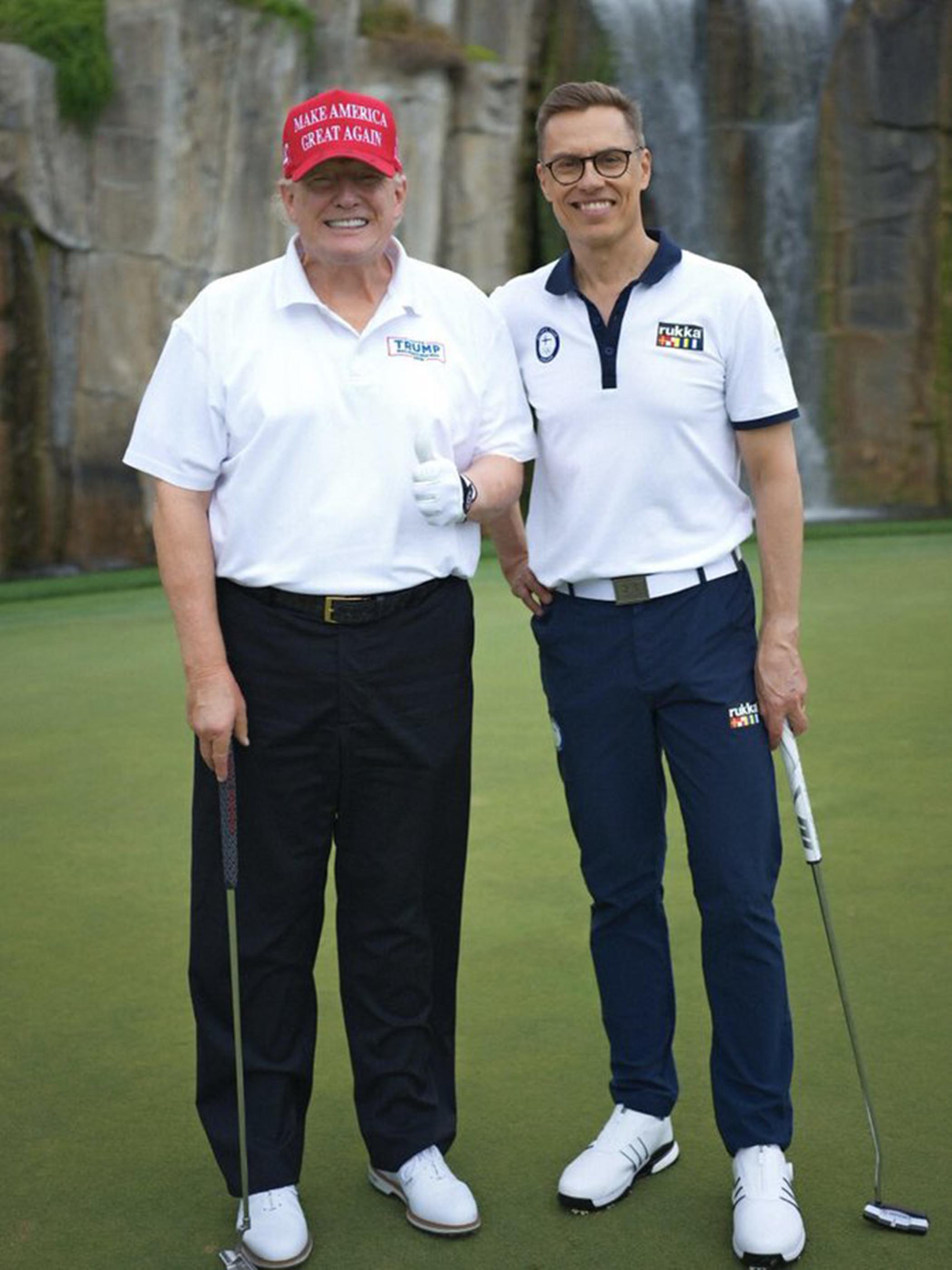
More than any other European leader, Stubb has understood how to navigate Washington’s new world of transactional foreign policy based on personal relationships. Finland has sold 11 icebreakers to the US, seven of which will be built in the US, and bought 64 F35s, the first of which was unveiled in Texas earlier this week (Stubb was due to be there, but cancelled his visit for the Berlin talks). He has also developed a relationship with Trump, based on a shared love of golf. Stubb went to Furman University in South Carolina on a golf scholarship, hoping to become a professional golfer. The two presidents have played a round together.
That pro-Americanism allows him, he hopes, to publicly disagree with Trump on a number of issues, first and foremost Russia. “In my mind the biggest threat to Europe is Russia. Then everything else comes far, far behind.” The White House, as the NSS makes clear, sees things differently. “Nothing bad is said about Russia in the national security strategy,” says Stubb, “which from my perspective is rather odd.”
The NSS, it becomes clear as we talk, has jolted him. He raises it within minutes, then returns to it unprompted later. He fears the move away from multilateralism will damage smaller countries such as Finland and make the world less safe. “I’m an avid believer in multilateral institutions and international cooperation and rules and norms,” he says.
He worries that there has been a “shift” in everything from values to interests. That has been most evident over Ukraine, where America has moved from supporting Ukraine to being a “mediator”, Stubb admits. Some would suggest America has moved further and is now backing Putin, but Stubb would not go that far.
“I try to make the best out of a difficult situation. And of course, in my mind, I want to bring the US as close to Europe as possible,” he says. But, he adds, “it’s not going to be the love affair that it has been since world war two”.
Photographs by Jussi Eskola for The Observer, @alexstubb/X