

Brankele Frank was 28 when she had her first burnout. It started with tiredness so extreme that she couldn’t sit upright on a chair. “Then came headaches, concentration problems, forgetfulness, dizziness – I just couldn’t think straight any more,” said Frank, a neurobiologist and author of Over de Kop (Over the Head), a bestselling book about burnout.
“It was almost as if I’d pulled an all-nighter for two nights in a row, without the party.”
This period, a decade ago, was one of two periods of burnout Frank has experienced – states of physical and emotional exhaustion, caused when the stress hormone cortisol floods the body and mind.
The Netherlands has recognised burnout since 2006, and it stands out for granting people with burnout two years of employer-funded sick pay.
Now the country is having second thoughts, especially after Sweden announced last year that it would drop its recognition of “exhaustion syndrome” in 2028.
Although the Netherlands reports low stress levels compared with other European countries, one in five Dutch workers has experienced burnout symptoms. Figures from ArboNed and HumanCapital Care occupational health organisations suggest sick leave from stress has grown by 35% in five years, and most people experiencing burnout are off for 10 months, at an economic cost of hundreds of millions.
Questions also hang over the usefulness of the term. Is burnout a scientifically solid medical condition or a broad umbrella phrase for various types of stress and anxiety?
For Christiaan Vinkers, a professor at Amsterdam University and author of a recent study on the topic, burnout is a “social construct” that can prevent people from getting the right help. He told The Observer that treating it as its own medical condition “is quite problematic because you cannot reliably diagnose a burnout”. Meanwhile Jacqueline Keuning, a professional coach, believes some perimenopausal women are “erroneously diagnosed” with burnout while suffering from depression, anxiety disorder or other conditions.
“In hindsight, what was diagnosed by my GP as burnout was actually an MCAS flare,” said Keuning, referring to mast cell activation syndrome that can be triggered by stress and cause swelling, brain fog and shortness of breath. “That is why psychotherapy did nothing for me.”
Then there is the cost to businesses that must keep paying employees throughout lengthy periods of absence. “Nowhere else in the world is that period so long. In our neighbour, Belgium, it is 30 days,” said Mieke Ripken, spokesperson for the Confederation of Netherlands Industry and Employers. Its members say the costs mean small businesses employ fewer people. They also worry about a “grey area” where workplace incapacity is related to private circumstances or when someone calls in sick “after a poor performance review or a workplace conflict”, said Ripken.
Newsletters
Choose the newsletters you want to receive
View more
For information about how The Observer protects your data, read our Privacy Policy
The Netherlands’ largest union, the FNV, argues otherwise. José van Lieshout, a policy adviser, said occupational doctors have clear diagnostic guidelines. “That is simply how our system works, regardless of whether you have a broken toe or a burnout,” she said. “And there are indeed employers who do not take it seriously, which does not help because if you already have a burnout and your employer says, ‘Don’t make such a fuss,’ it is not conducive to recovery.”
Myron von Gerhardt, a councillor in Amsterdam for the centre-right VVD party, who has suffered from depression, believes it is necessary to recognise burnout in an era of social media connectivity. “That causes extra pressure and stress, and we need to make people more resilient from a young age,” he said. “Burnout is a signal from your body that it is too much.”
Dienke Bos, managing director of Mind, a mental health charity based in Utrecht, said recognition encourages people to seek help. “It doesn't have the stigma or the heavier weight of a diagnostic classification,” she said. “Many people feel like, ‘If I were labelled as having depression or an anxiety disorder, those would be labels that I might have to deal with for the rest of my life.”
Frank points out that periods of rapid change have often been reflected in individual overload. “There have been periods in history where you have similar diseases – you can trace them back to ancient Greece and Shakespeare,” she said. “In the 18th century it was called the English malady, or brain fog; later it hopped over to American society and they called it Americanitis and blamed modern civilisation, as we do now.
“At the peak moments when some of these diseases occur, all of a sudden there are a lot of changes in society that make life accelerate.”
Frank recognises the term is imperfect, but still sees it as useful. “I do think that having a label that remotely describes what they have is beneficial for the patient but also for the surroundings, because then they know it’s not cancer, it’s not some kind of weird infectious disease – it’s related to psychosocial stuff.”
Whatever the future of the term, experts believe the focus should be on how to stop people reaching breaking point. Vinkers is leading an eight-year study, Destress, to develop scientifically sound methods to boost workplace resilience more reliably than what he calls a wellbeing industry “with pretty, glossy folders”.
Levi van Dam, professor of childhood resilience at Amsterdam University, was relieved at 16 when his father was diagnosed with burnout rather than depression. Now he has created a mental health “car wash” to offer tools to businesses and young people – breath work, ice baths, opening up and listening without judgment.
“This is not a religious society, so we need other packages,” he said. “The principles are quite simple: sharing with each other, having a collective experience … seeing that you’re not alone.”
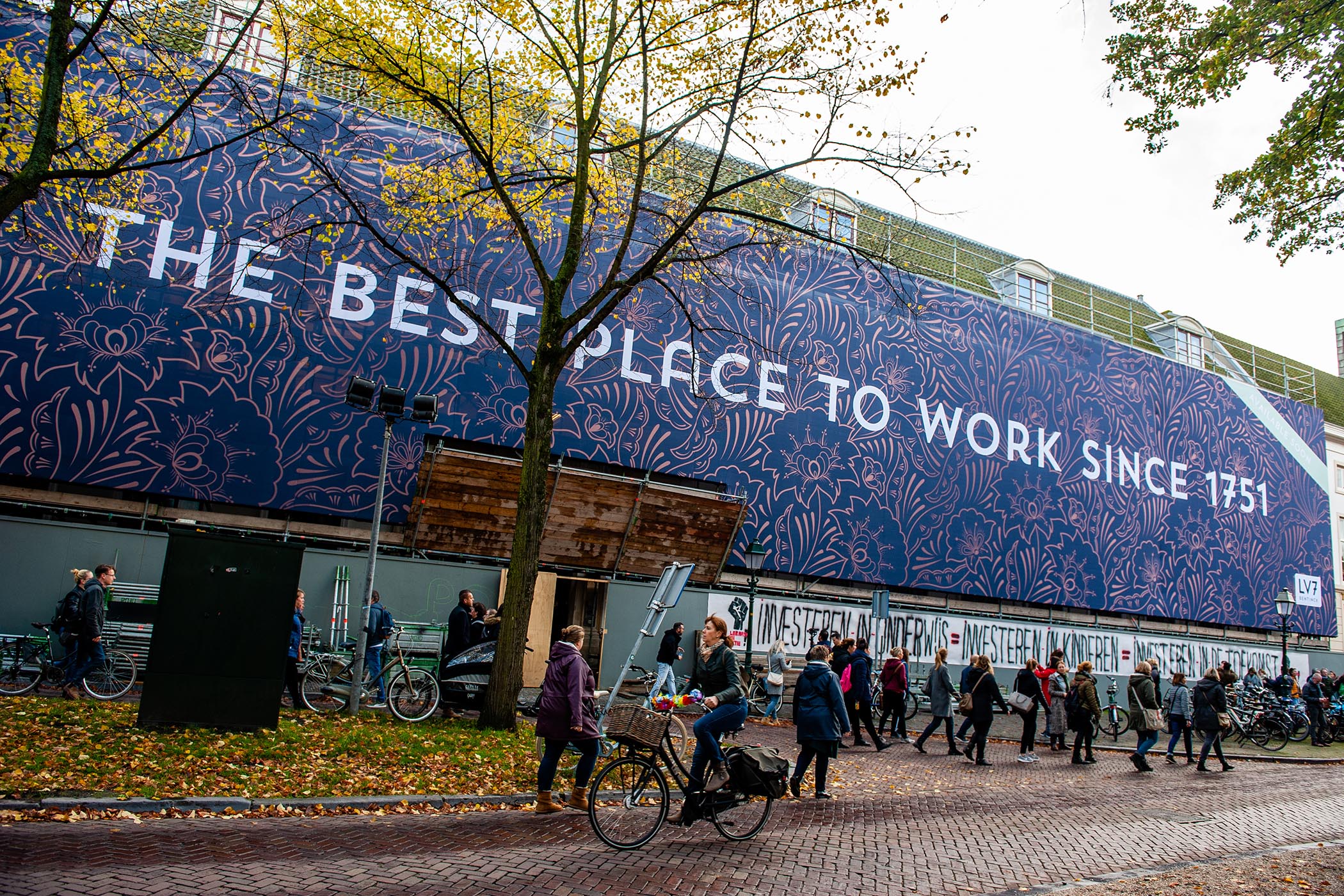
Photograph by Romy Arroyo Fernandez/NurPhoto via Getty Images