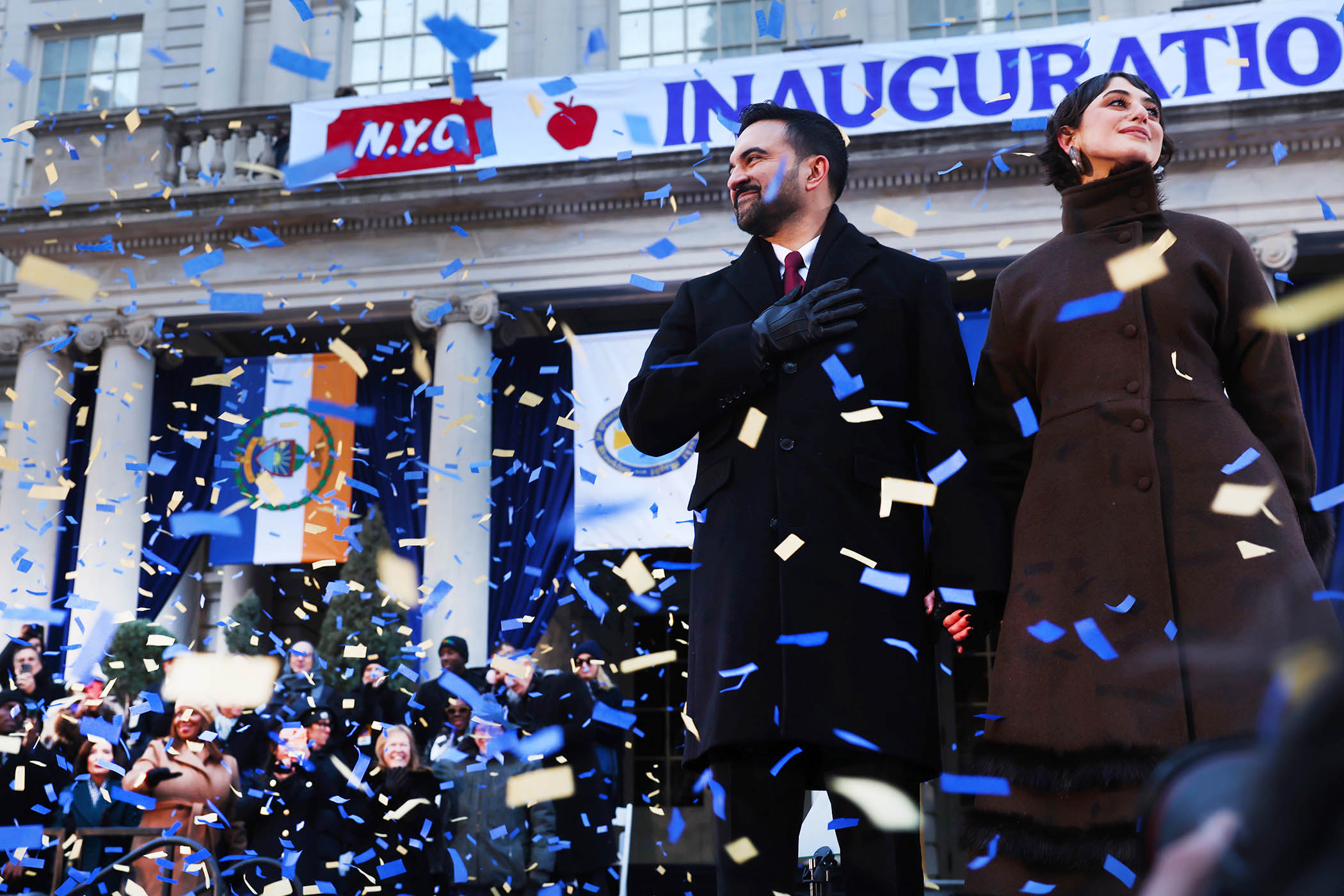

Zohran Mamdani’s inauguration on New Year's Day as mayor of New York featured rapturous crowds, a sprawling block party and chants of “tax the rich”. Despite the freezing cold, tens of thousands came to see him sworn in as the city’s first Muslim leader.
“Beginning today, we will govern expansively and audaciously,” Mamdani told a rapturous crowd on Thursday. “We may not always succeed, but never we will be accused of lacking the courage to try.”
He also repeated the core promises of his campaign: free buses, free childcare and a rent freeze, funded by increasing taxes on the wealthy and businesses. Now the celebrations are over, attention will turn to whether he can deliver. Can this self-described socialist lower the cost of living in America’s most expensive city?
Mamdani will have to navigate a dense web of institutional and economic interests. In New York, power does not reside only in City Hall. It is exercised by landlords who can derail progressive housing policy; by business interests that threaten capital flight; by a political establishment adept at procedural obstruction; and by a state structure that limits mayoral authority.
Although New York's Democratic governor, Kathy Hochul, endorsed Mamdani’s campaign, the pair are not aligned on several issues. Hochul, a business-friendly centrist, is gearing up for her own re-election campaign in 2026. As a result, she could block Mamdani’s plan to put a 2% tax on New Yorkers who earn more than $1m a year, which risks alienating some of her supporters.
“That absolutely requires Albany [the state capital], and I don’t think the governor is going to be inclined to want to do that, given that she’s facing a re-election,” said Grant Reeher, a professor of political science at Syracuse University in New York.
Hochul is supportive of Mamdani’s policy of free care for children aged six weeks to five years, despite its steep cost. Many New Yorkers spend as much as $4,000 a month on childcare, and the programme, which could eventually enrol 660,000 children, is popular. It would cost about $15bn a year to implement across the state, however, which will be difficult without raising taxes on businesses and the wealthy. There are also questions about how it will be rolled out.
New York’s current free universal pre-school programme for three and four-year-olds, launched in 2014, has been credited with easing the cost of living and improving readiness for school. But its funding, accessibility and uneven quality have come in for criticism. Aides to Mamdani and Hochul have talked about fixing the scheme before offering free care for younger children.
Freezing rent for the roughly 2 million tenants in New York who live in rent-stabilised apartments will be easier. Since the board that sets rents is appointed by the mayor, this is within Mamdani’s administrative authority, though it will still be subject to scrutiny.
The third plank of his affordability plan, free buses, is based on a pilot scheme championed by Mamdani as a state assembly member, which temporarily made five bus routes fare-free. He has demonstrated he can get such programmes off the ground. But again, question marks hang over its funding. The idea is also less popular than the man himself: half of New Yorkers support it, while 41% are opposed.
Newsletters
Choose the newsletters you want to receive
View more
For information about how The Observer protects your data, read our Privacy Policy
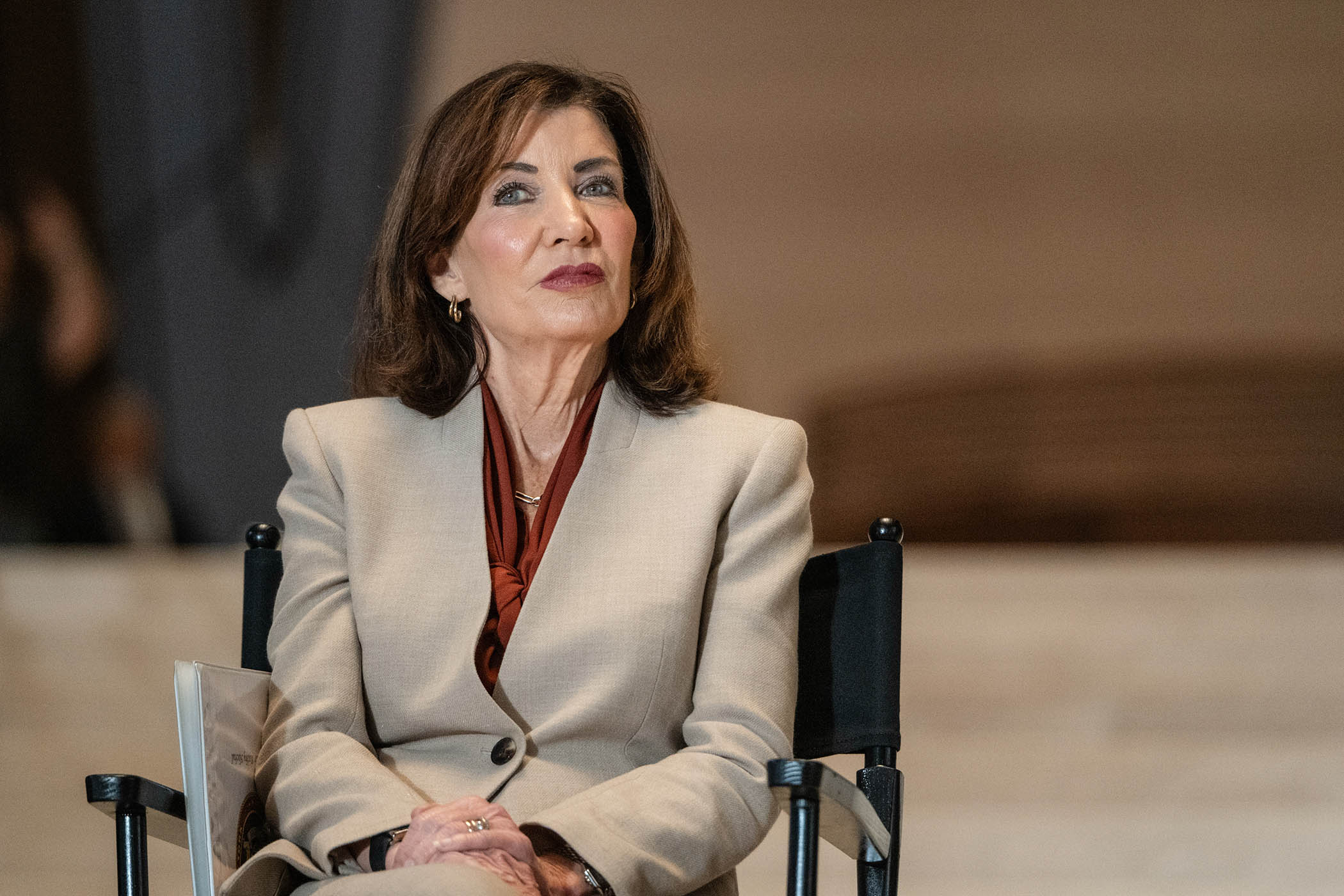
Kathy Hochul, the Democratic governor of New York, is campaigning for re-election in 2026.
Another key part of Mamdani’s agenda is the creation of the Department of Community Safety, a new agency designed to prevent violence and improve public safety through non-policing approaches. It would focus on violence interruption, mental health crisis response and community-based outreach, shifting some responsibilities away from the New York police department (NYPD).
The wheels for this have already been set in motion. In mid-December, the city council introduced a bill to create the department, sponsored by 26 council members, which will likely be voted in early in Mamdani’s time in office.
“The Department of Community Safety does take power away from the NYPD, and that’s something they don’t concede willingly. So the NYPD will likely try to undermine it,” said Theodore Hamm, a professor at New York’s St Joseph’s University, and the author of Run, Zohran, Run!, a chronicle of Mamdani’s mayoral race.
Mamdani himself remains characteristically upbeat. “We may not always succeed, but never will we be accused of lacking the courage to try,” he said at his inauguration. Quoting the New York rapper Jadakiss, he also pledged to “be outside”, adding: “Because this is a government of New York, by New York and for New York.”
‘If he shows that he’s putting [policies] in motion and committed to making them happen, people will understand that he can’t do these things single-handedly or overnight’
‘If he shows that he’s putting [policies] in motion and committed to making them happen, people will understand that he can’t do these things single-handedly or overnight’
Theodore Hamm, professor of journalism, St Joseph’s University
Mamdani has also given himself time, pledging to implement his three signature policies over the course of two four-year terms. Keeping the Trump administration onside will be key, since about 10% of New York City’s $116bn budget comes from the federal government. The president threatened to cut these funds if Mamdani were elected, but was unexpectedly charmed during an Oval Office in November, when he told reporters he was “very confident [Mamdani] can do a very good job”.
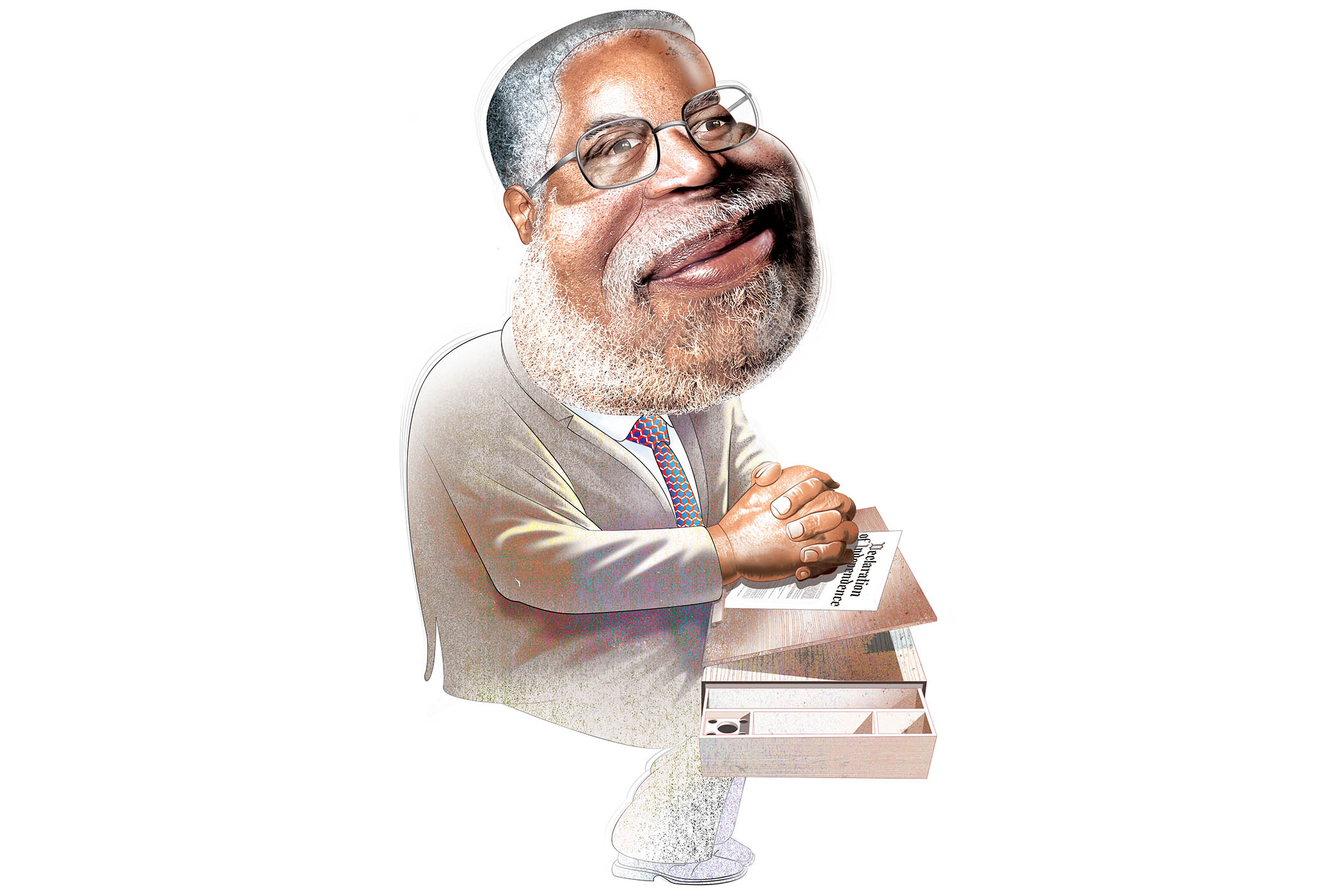
In office, Mamdani will be supported by a mix of experienced officials and campaign allies. Lina Khan, a former head of the federal trade commission, is co-chairing his team alongside non-profit leader Grace Bonilla, former first deputy mayor Maria Torres-Springer and former health deputy and budget director Melanie Hartzog. Mamdani’s campaign manager, Elle Bisgaard-Church, will serve as chief of staff, while Dean Fuleihan, who was first deputy mayor under Bill Blasio, is returning to his old job in Mamdani’s administration.
Yet some pragmatic decisions have already riled Mamdani’s progressive supporters, highlighting the balancing act of seeking to maintain broad support while pushing his agenda through established power structures. This includes his pick for police commissioner, Jessica Tisch, who expanded the authority of the NYPD during a previous stint in the role. Choosing her was widely seen as a move calculated to maintain the favour of Hochul. Mamdani also declined to endorse the primary challenge of Chi Ossé, a fellow Democratic Socialist Alliance (DSA) member, against Hakeem Jeffries, the powerful house minority leader.
“There’s going to be some grumbling,” said Hamm. “But I wouldn’t say there’s a mutiny of any kind among the DSA, or that they’ve lost his influence.”
Mamdani’s executive budget, set to be released by the end of January, will provide the first tangible signal of how he plans to advance his agenda and translate promises into policies. This early blueprint will indicate both the priorities he intends to pursue and the compromises he may need to make to navigate City Hall and Albany’s complex political landscape.
“Mamdani is deeply knowledgeable about a lot of nitty-gritty stuff that people wouldn’t expect to hear from him,” said Hamm. “If he shows that he’s putting them in motion and committed to making them happen, many people will understand that he can’t do these things single-handedly or overnight.”
Photographs by Spencer Platt/Getty Images, Victor J Blue/Bloomberg via Getty