A packed hall erupted in applause after US secretary of state Marco Rubio delivered a speech to European leaders, saying the destinies of Europe and the US would always be intertwined.
America, Rubio said, was “the child of Europe”. The two would always be together. His words were a salve for Europeans after a year of turmoil in transatlantic relations – and of anti-European contempt from the Trump administration that, at times, has looked in danger of becoming mutual.
But beneath the conciliatory tone, Rubio spoke for a government that wants less entanglement with Europe, not more. His speech at the Munich security conference revealed again two fundamentally different visions of “the west” that the US and Europe seek to defend. He spoke repeatedly of the dangers of mass migration and the threat of “civilisational erasure” that were spelled out in the US’s national security strategy last year.
Faced with the reality of a less like-minded ally, European leaders are rearming in a bid to reduce their dependence on the US, while recognising that they can’t go it alone. Keir Starmer spoke of hard power as the “currency of the age”. His French counterpart talked up the idea of Europe as a geopolitical power, and the Pentagon encouraged it: as Nato reshuffled some of its senior commanders last week to give Europe a stronger role, one senior US defence official looked ahead to a “Nato 3.0” with some strategic American involvement but much less than now.
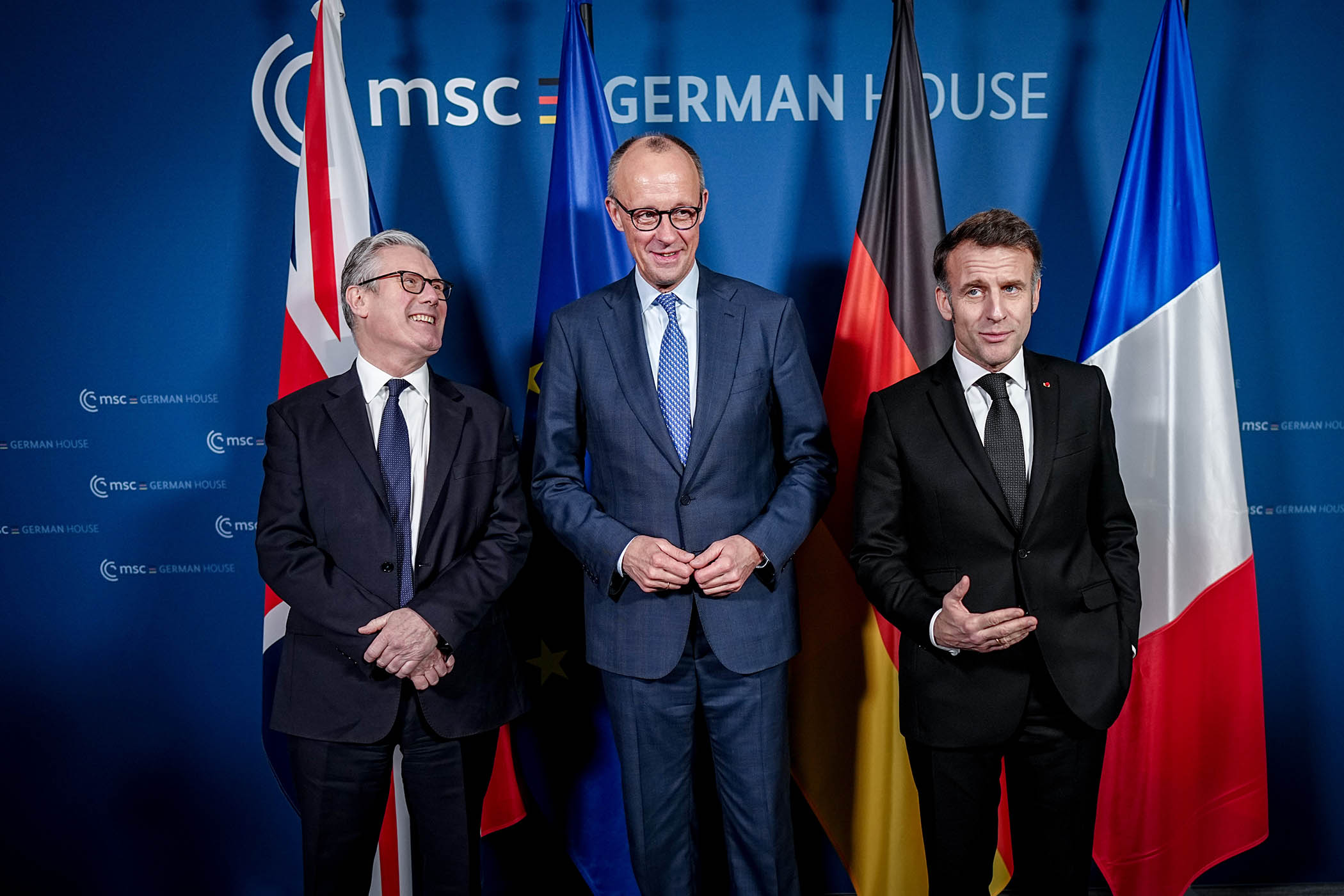
The host nation sought to have it both ways. After opening the conference with an unusually blunt assertion that America’s claim to global leadership was “perhaps already lost”, German chancellor Friedrich Merz said that didn’t mean Europe could afford to jettison the alliance.
“Sometimes people automatically demand Europe to just write off the US as a partner,” he said. “They underestimate the potential that our partnership with the US continues to have, despite all the difficulties that exist.”
‘It has taken some shock therapy and lines have been crossed that can’t be uncrossed any more’
‘It has taken some shock therapy and lines have been crossed that can’t be uncrossed any more’
Ursula von der Leyen
Vice-president JD Vance stunned delegates at the conference last year with an incendiary speech in which he said the greatest threat to Europe came not from Russia, China, or other foreign adversaries – but from within. It was a wake-up call that started a slump in US-Nato relations, culminating in President Trump’s threats last month to seize Greenland.
There was little mention of Greenland in yesterday’s key speeches, less than a month after the dispute over the Arctic territory brought relations with Europe to the brink.
Starmer called the US an “indispensable ally”, but European leaders have accepted that the postwar order, and the US role in it, have changed irrevocably. After decades of relying on the US for security, they are now scrambling to come up with a strategy to protect themselves in an increasingly hostile world.
For the UK, that means closer cooperation with Europe. “We are not the Britain of Brexit years any more,” Starmer said to applause. That assessment was echoed by French president Emmanuel Macron, who said Europe had to reorganise its security.
Newsletters
Choose the newsletters you want to receive
View more
For information about how The Observer protects your data, read our Privacy Policy
Spurred by the Trump administration, the UK and other European countries have moved to boost military spending and taken greater responsibility for supporting Ukraine’s war effort. Defence spending across Europe was up 80% in 2025, compared with the year before Russia’s invasion, said European Commission president Ursula von der Leyen. “Admittedly, it has taken some shock therapy and some lines have been crossed that cannot be uncrossed any more,” she said.
In a sign of lingering doubts over the US’s commitment, Merz said on Friday he had held talks about nuclear deterrence with Macron. Germany, which cannot acquire its own atomic weapons because of treaty obligations, has traditionally relied on the US nuclear umbrella through its membership of Nato.
Addressing Nato defence ministers in Brussels last week, deputy Pentagon chief Elbridge Colby said Washington would continue to provide the extended nuclear deterrent but reiterated that the US sought “partnership, not dependency” from its allies.
Colby, who is seen as a hardliner on Europe and is the architect of the latest Pentagon defence strategy, said Nato must change as the US prioritises defence of the homeland and its interests in the western hemisphere, as well as reinforcing deterrence in the western Pacific.
The US will supply key capabilities that European allies lack, but “in a more limited and focused fashion”, Colby said, calling for a “Nato 3.0”.
Nato secretary general Mark Rutte, who helped defuse the standoff over Greenland last month, has dismissed the idea that Europe could defend itself without the US. “Over the coming years, we will more and more see a Nato that is more European-led, but at the same time with the US absolutely anchored in the organisation,” he told Reuters on the sidelines of the conference.
A reshuffle of the Nato command last week gave Europeans more senior positions in the alliance, while signalling the US is not leaving. Though the US will transfer command of Nato’s Joint Force Commands in Naples and Norfolk to Italian and British officers respectively, an American commander is set to assume leadership of Allied Maritime Command in Northwood, north London – a position currently held by the UK.
Still, Von der Leyen said that the EU should get serious about its own mutual defence clause, reflecting a lack of confidence in a US administration that has proved highly unpredictable. Article 42.7 of the EU treaty – like Nato’s article 5 – obliges member states to use all the means in their power to aid and assist others in case of armed aggression on their territory. Europe should also become more independent in energy, economy, trade, raw materials and technology, Von der Leyen added.
To boost the continent’s security, European governments will have to go beyond more spending, Starmer said. A fragmented defence industrial base has created gaps and duplication that are inefficient.
“The US security umbrella has allowed these bad habits to develop, but now we must break them,” he said. Rather than “pretending” that all US capabilities can be replaced, however, Europe should seek to diversify and decrease some dependencies, he added.
“We’ve gone through a whole series of phases: shock, outrage, anger, a bit of bravado on the European side,” said Neil Melvin, director of international security studies at the Royal United Services Institute. “I think we’ve kind of reached a realisation of the limits of what Europe can do without the US.”
Photograph by Kay Nietfeld/Pool Photo via AP