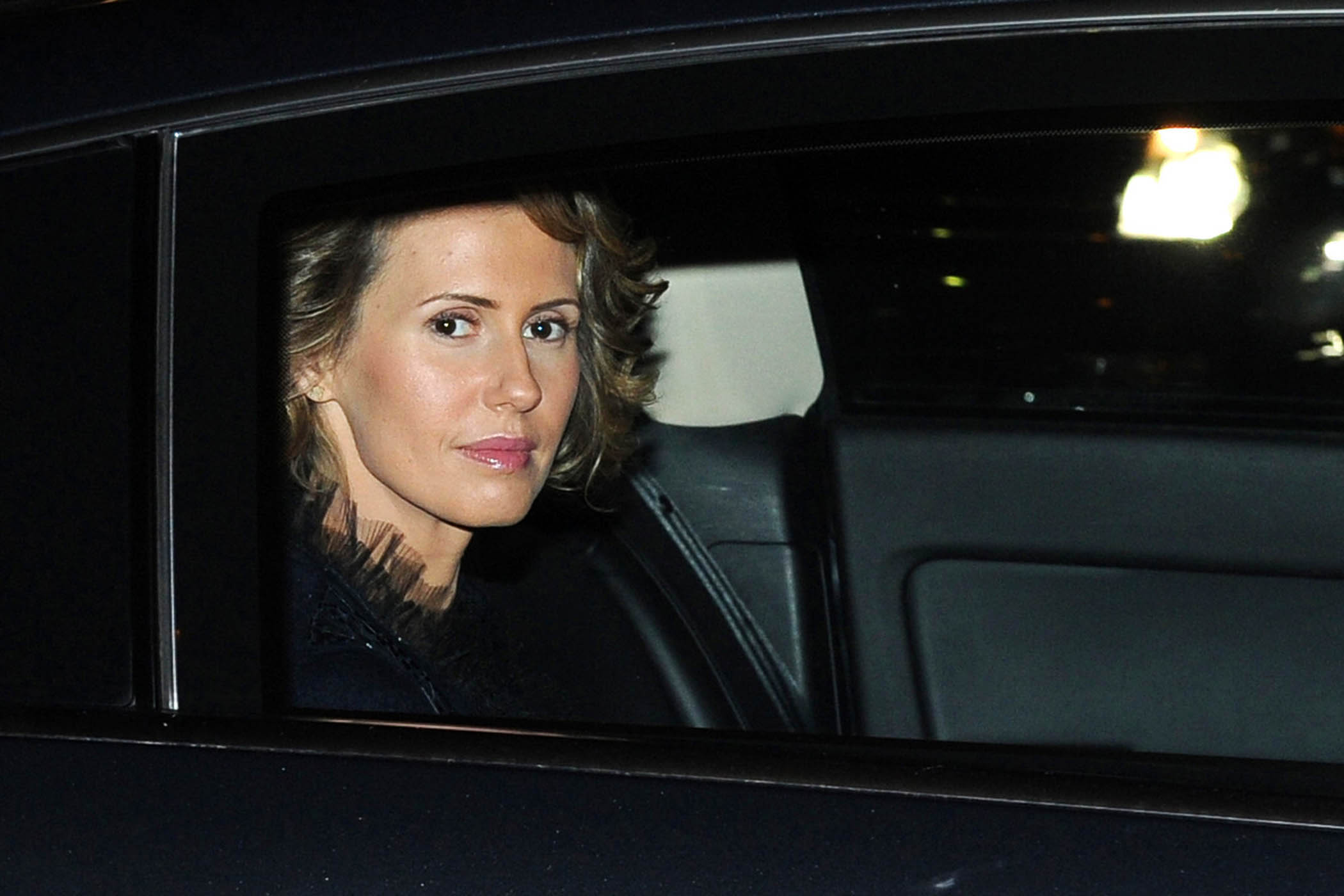




The fall of the Assad regime in December 2024 shocked Syrians at home and around the world. For 13 years, the military and intelligence apparatus of the country’s president, Bashar al-Assad, had waged war on its own civilians, killing at least 500,000 people, displacing more than half the population and reducing whole cities to rubble. As regime figures fled to the Gulf and Moscow, or went into hiding to avoid retribution, mass graves were discovered, alongside a nightmarish prison industrial complex that had swallowed tens of thousands of people into torture rooms and secret detention facilities.
At the heart of it all was a British citizen.
The first lady of Syria, the president’s wife, Asma al-Assad, was born and raised in London before moving to Damascus and, during years of war, consolidated her power over Syria’s economy. But an investigation by The Observer has established that, beyond her financial strength, Asma became a central figure in the operation of the regime and its decision-making.
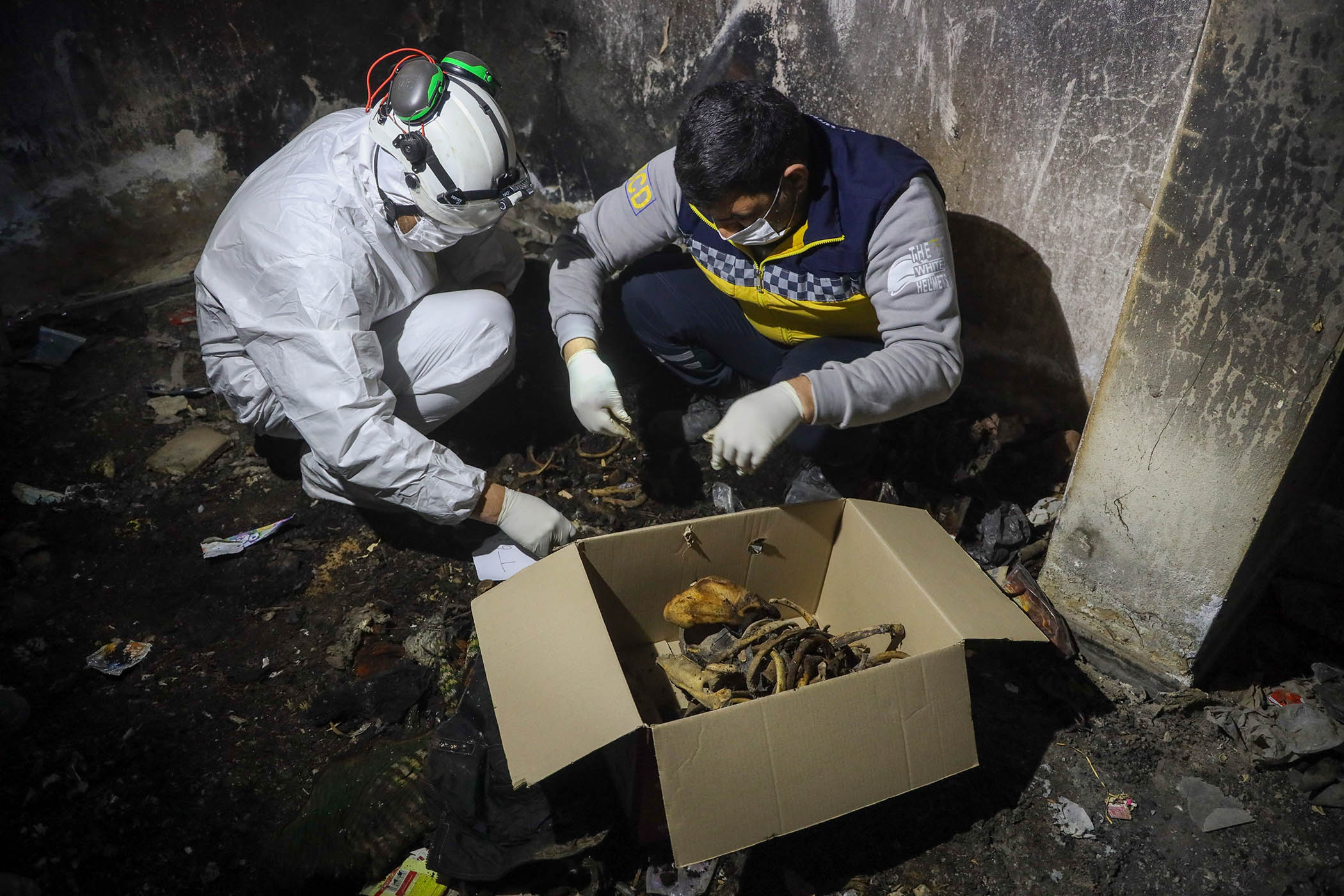
Syrian civil defence workers collect human remains found in two basements on the outskirts of Damascus in January 2025.
Speaking to numerous sources once close to the ruling family, many of whom remain anonymous because they fear retaliation from the presidential couple as much as from the regime’s detractors, the investigation has learned that she:
•
was being considered by the Russians as a possible replacement for her husband to lead Syria;
•
exercised significant control over key areas of the economy, including international aid, which the UN knew was being embezzled;
•
stood by as the intelligence services used children as political bargaining chips, via orphanages run by her charity;
•
headed an “economic council” that pressured, harassed and used threats of arrest to influence business.
While The Observer understands from two well-placed sources that Asma’s two brothers have been denied entry to the UK, and the former foreign secretary David Lammy has said she is not welcome in the UK, Asma herself has had no indication that her citizenship has been revoked. Neither the Home Office nor the Foreign Office would comment.
The Observer has also learned that Asma and her husband have residency in the United Arab Emirates (UAE), and the couple have been travelling to and from Dubai. Her last visit there is thought to have been as recent as last month, staying at the Waldorf Astoria hotel.
Assad remains one of the world’s most wanted men and the subject of multiple international arrest warrants relating to alleged war crimes committed during the conflict. The most significant warrants, issued by French authorities, relate to the 2013 Ghouta chemical attacks, in which hundreds of civilians were killed by sarin gas, and the 2012 deaths of the journalists Marie Colvin and Rémi Ochlik during the shelling of the city of Homs.
The international criminal court (ICC) does not have jurisdiction over alleged crimes committed in Syria because the country is not a signatory to the Rome statute, the treaty that established the court. As a result, accountability efforts have largely relied on national courts, particularly those using universal jurisdiction laws.

Asma al-Assad grew up in Acton and attended Queen’s College, London.
However, as a British citizen, Asma remains under the ICC’s jurisdiction and could be indicted. A warrant could also be issued in the UK for her arrest. Luis Moreno-Ocampo, the former ICC chief prosecutor, said: “She’s British – it’s an opportunity, because she’s from a member country that’s signed the treaty.”
In 2021, the Metropolitan police’s war crimes unit examined allegations that Asma had committed offences through her support for the Syrian government and her role in promoting the regime’s narrative during the conflict. The Met compiled a dossier on her and passed it to the Crown Prosecution Service (CPS). However, practical obstacles to pursuing the case – given that Asma is unlikely to return to the UK – are understood to have contributed to the decision by the CPS not to proceed with it.
Newsletters
Choose the newsletters you want to receive
View more
For information about how The Observer protects your data, read our Privacy Policy
Other British nationals have been stripped of their citizenship after leaving to fight in foreign wars or join extremist groups, as was the case with Shamima Begum, an east London teenager who travelled to Syria to join Islamic State.
But Asma’s case appears to be unique. No other British citizen in the modern era has been such a central figure in a government widely accused of mass atrocities.
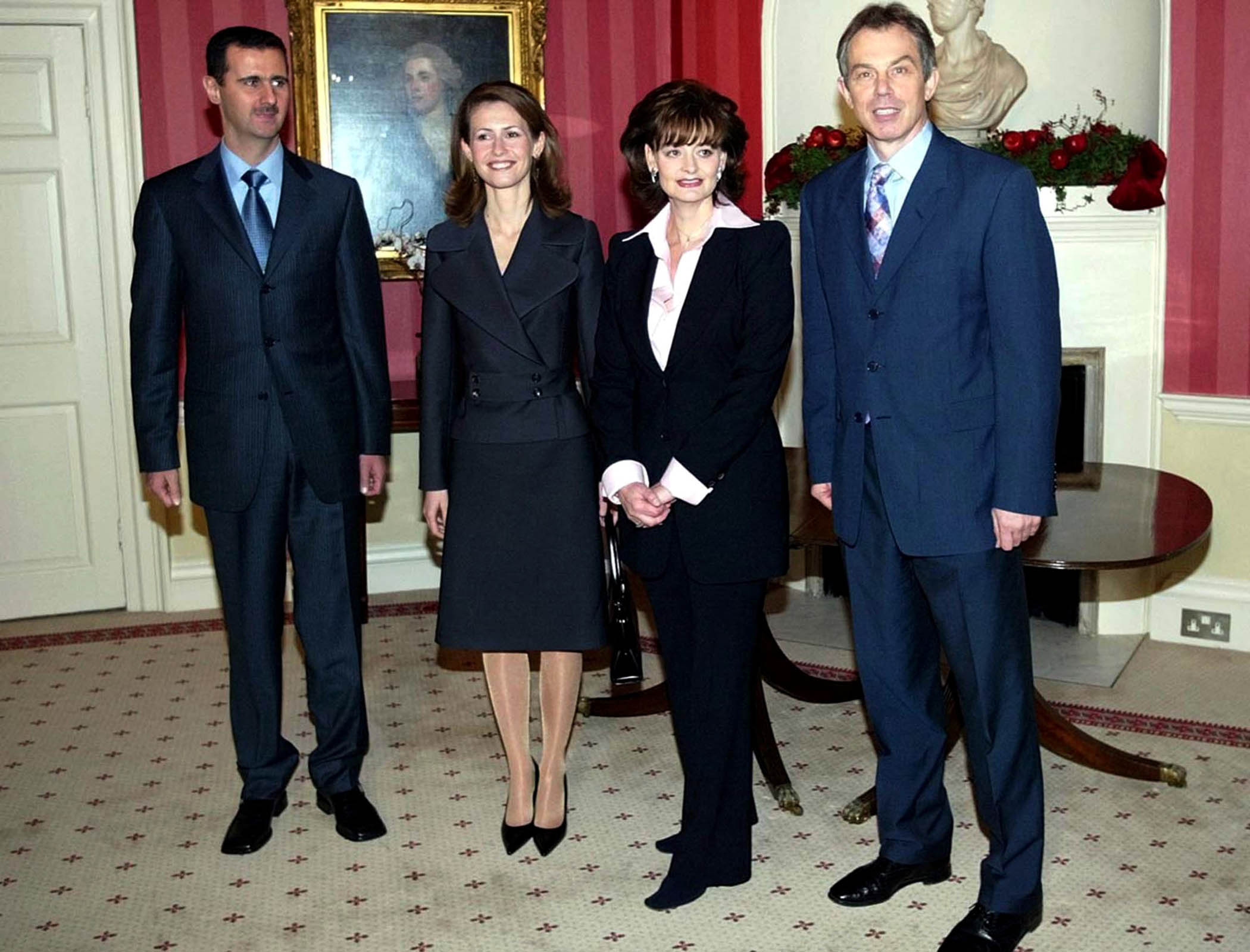
Bashar al-Assad and Asma pose with Cherie and Tony Blair inside No 10 in December 2002.
Sources connected to the Assads say their children, as well as Asma’s mother and one brother, Firas Akhras, now live in Dubai. Relatives say the couple have residency permits for the Gulf state but have been told, while they are welcome to visit, they should not yet move there permanently – although this is their ultimate goal.
Offering permanent residency or citizenship to the Assads would be an extraordinary step, with serious diplomatic ramifications. The UAE is an ally of the UK, and the two countries have a bilateral extradition treaty that has been in force since April 2008. The Observer has asked the UAE government about the residency status of the Assads, but received no response.
Asma’s cousin Abdo al-Dabbagh, speaking from his home in the Lebanese capital, Beirut, said of the former first lady: “She’s living better than you and me. She’s comfortable. Her kids are now living better than before.” He believes Asma – who before her marriage was an investment banker in London – has been keeping herself busy helping her youngest son, Karim, a fluent Mandarin speaker, cultivate business interests in China.
Another source said the former presidential couple still have investments around the world, including in Bulgaria, Russia, the UAE and Lebanon.
Toby Cadman, an international human rights barrister, said the options for the Assads appear to be shrinking. “Bashar can deliver nothing to the UAE of any strategic interest in Syria, so what value are they?” Cadman believes a shift is under way on the international stage, and the UAE is moving closer to the west. “I don’t think that they will be that safe [from extradition or prosecution] if they were to go there.”
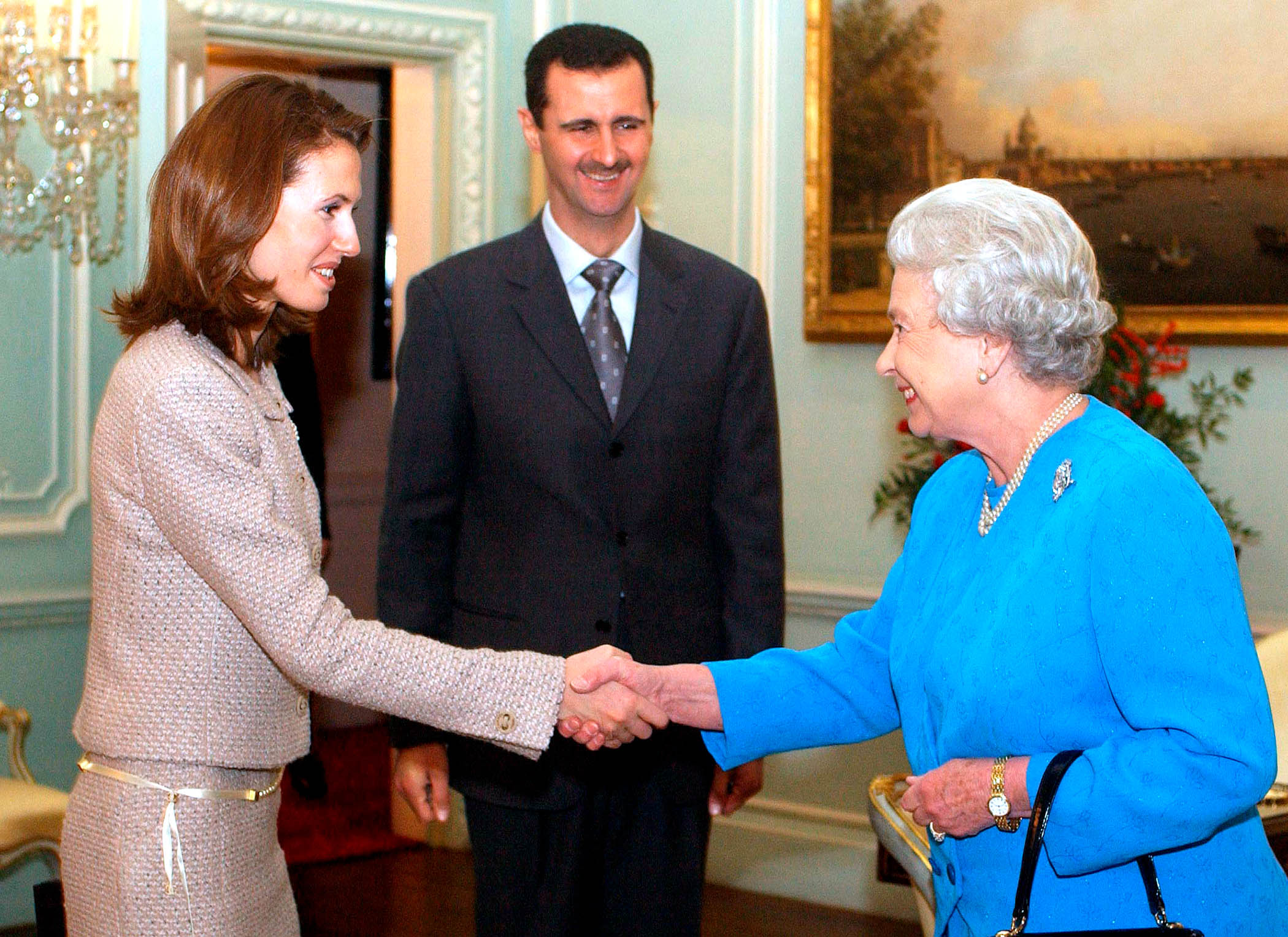
Asma and Assad meet the Queen at Buckingham Palace in 2002.
As pressure mounts on international and domestic organisations to push for an indictment of the former first lady, investigators, journalists, and the families of the dead and disappeared have been sifting through the rubble of the regime, gathering evidence that could be used in future prosecutions.
The match between a teenage Asma – who in those days called herself Emma – and 26-year-old Assad was engineered by her mother, who worked at the Syrian embassy in London, according to an old schoolfriend of hers who did not want to be named.
The friend believes it was in their final year of A-levels, in the early 1990s, while studying at Queen’s College – a prestigious private girls’ school in central London – that the union between Asma and Assad, who was studying ophthalmology in London, was arranged. “She said she was going to meet somebody and she was so excited. It was like she was being told: ‘This may be your future.’”
Initially, the pair were pulled in different directions. Assad was forced to drop his ophthalmology studies in London and return to Syria after his older brother was killed in a car crash in 1994. When his father, then president Hafez al-Assad, was forced to rethink his succession plan, Assad emerged as the only other credible option.
Asma Akhras – as she was before her marriage – had meanwhile forged a career in London, first at Deutsche Bank and then at JP Morgan. But when Assad got back in contact, it seemed she was prepared to drop everything.
Paul Gibbs, a senior trader at JP Morgan who crossed paths with her, recalled the ambitious young analyst failing to turn up at work one day. Her colleagues were concerned and tried calling her. They were shocked to learn that she was on holiday with a new fiancee, staying in the Libyan desert as a guest of the country’s dictator, Muammar Gaddafi.
Her direct manager at JP Morgan said her career there ended after she was discovered trying to cover up her failure to deliver work on time, because she had been spending time with Syria’s president-in-waiting, rather than at the bank.
“Everyone was shocked about what she did – throwing everything away to go live in Damascus,” Gibbs recalled.
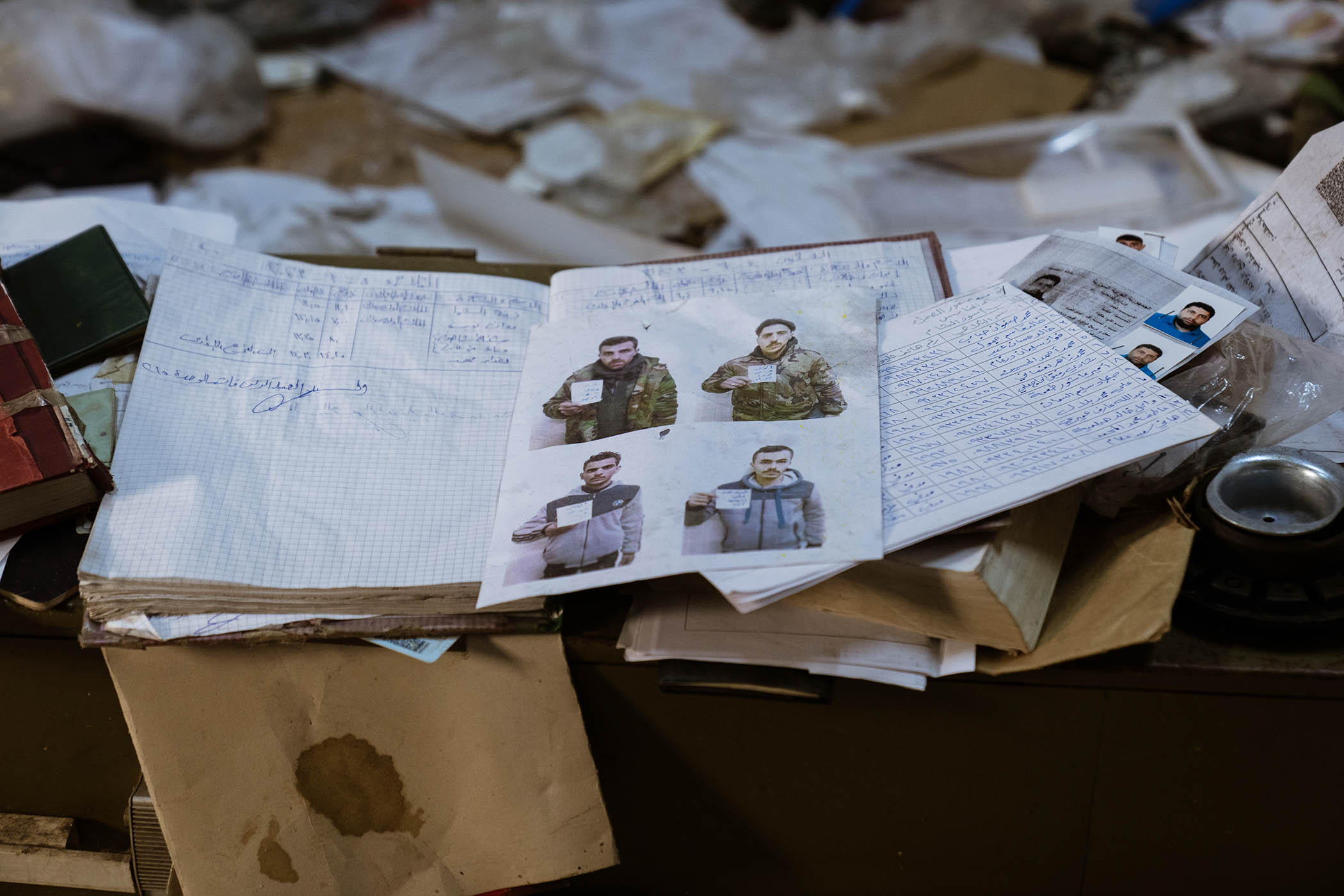
IDs and other items found in a torture and intelligence centre used by Syrian regime officers in Damascus.
Reports of torture, arbitrary detention and people disappearing into Syria’s prison system under Assad’s father were being documented by human rights organisations throughout the 1990s and early 2000s. From a family steeped in Syrian history and culture, Asma would have been familiar with the accusations levelled at the state.
In 1982, Hafez al-Assad’s regime had responded to an armed insurgency by the Muslim Brotherhood by rounding up civilians and slaughtering them. Up to 40,000 people were killed.
When the 69-year-old authoritarian ruler died in June 2000, Assad was sworn in as the new president of Syria. Six months later, he married Asma in a private ceremony.
Almost as soon as she arrived in Damascus, the new first lady began setting up a series of non-governmental organisations (NGOs), ostensibly offering to help empower and enrich Syrians through small business loans and educational schemes. Eventually, all her projects would come under the umbrella of the Syria Trust for Development. The NGO attracted a series of bright energetic people from around the world.
The Observer spoke to several of her former employees, who said she seemed sincere in her ambition to change Syria for the better. When Zaki Mehchy began working with her as a senior research analyst in 2006, he believed “she was trying to do something positive, within an authoritarian context”.
It was not to be.
When the Arab spring reached Syria in 2011, the regime’s response dispelled any hope that Assad’s instincts under pressure might prove different from his father’s. Within weeks, peaceful protesters were being shot in the streets or being rounded up in their thousands and disappeared into the country’s notorious detention centres.
A group of teenagers who had spray-painted anti-Assad graffiti had been arrested earlier that year, badly beaten and had their fingernails pulled out. Weeks later, the body of 14-year-old Hamza al-Khateeb, who had been arrested at a protest, was returned to his family, bearing what appeared to be clear signs of torture.
In a macabre final act of brutality, his family alleged his penis had been cut off, and that doctors who examined his body told them he had been kept alive and forced to drink water and urinate before his death.
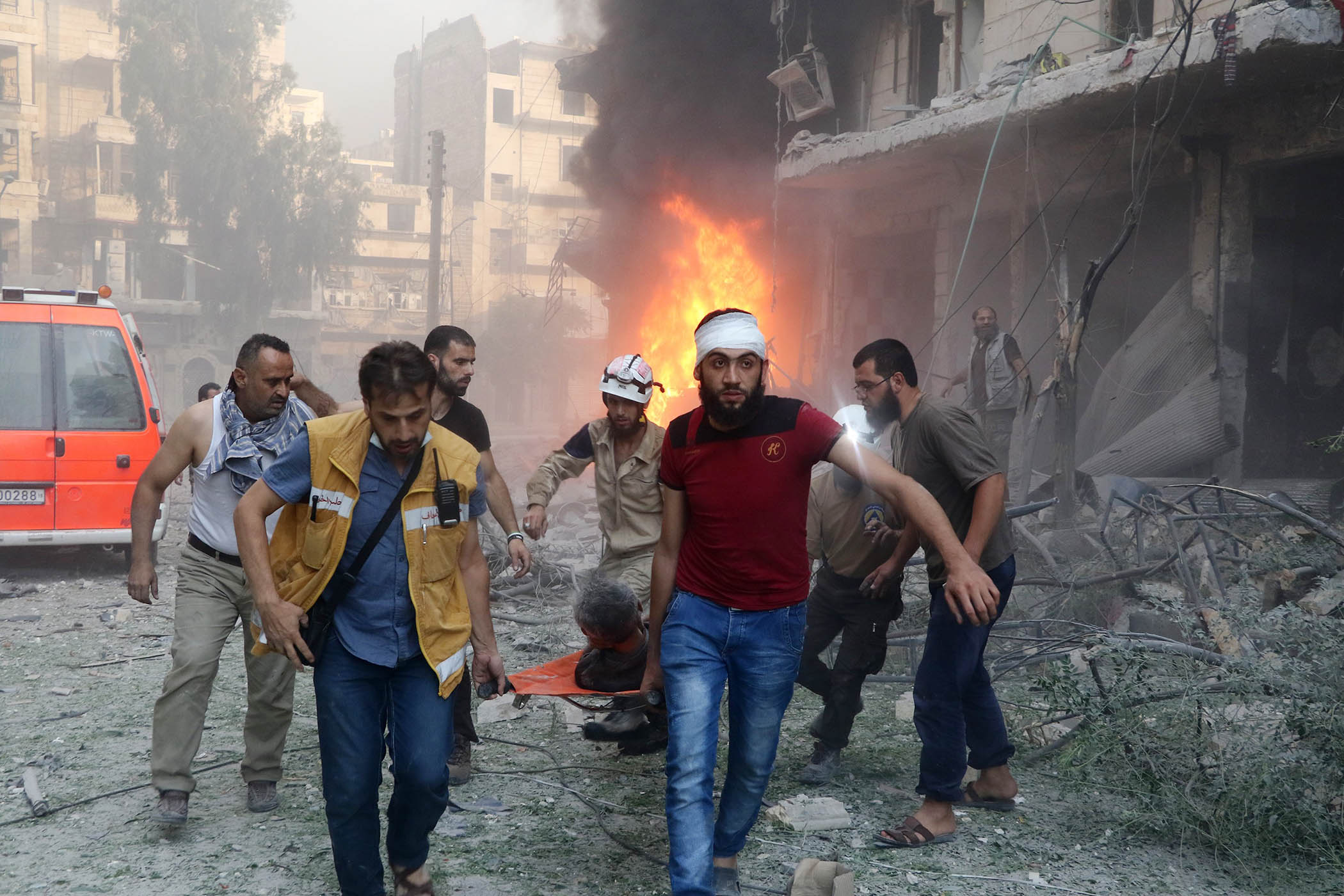
Civilians carry an injured victim after Assad’s forces hit residential areas in Aleppo in 2016.
Colleagues and acquaintances hoped that the first lady might help moderate the regime. A group of four Syrian women, all associates of Asma, requested an audience with her months after the protests began. Sitting on sofas in her personal office below the presidential palace, they appealed to her as a mother, and reminded her that the state’s brutality had extended to children.
Asma seemed to be listening to the women in her office, but was then suddenly called away to take a phone call. When she returned, she “was different”, said Huda Mujarkeeh, a neighbour and one of the women present. Mujarkeeh was convinced that the phone call was from the intelligence services. “I think there was [a listening device] inside the couch hearing what we were talking about and somebody maybe called her saying: ‘You have to be tough, and change the way you talk,’” she said.
Similar entreaties were made at the Syria Trust for Development, and when former employees began being arrested, Mehchy and others hoped the first lady might use her position to intervene. “At that time, we believed that she would have supported us. I mean, these were her employees, at the end of the day,” he said.
But when Rima Dali, a former trust worker, was arrested in 2012 for carrying a placard that read: “Stop the killing. We want to build a Syria for all people,” Asma remained silent.
The first lady maintained her silence for much of the war. In 2016, however, she gave an interview to the Russian state-backed TV channel Russia 24. Looking as immaculate and composed as ever, she claimed she had never considered leaving Syria – or her husband. “I stood by him because my conviction didn’t tell me otherwise,” she said.
The remark glossed over a fraying marriage – with allegations of infidelity – that an old friend of Assad’s believes was repaired by Asma’s father, with a deal to give her more power and freedom to pursue her own business and economic interests. Her father, Dr Fawaz Akhras, told The Observer that stories of the president’s infidelities had absolutely no foundation and the idea that he brokered a rapprochement between the couple was pure fantasy.
Asma had already worked out how to bypass sanctions, enlisting a team of assistants outside Syria to buy thousands of pounds of furniture, a Ming vase and handmade jewellery from a Paris workshop. By 2020, she was operating at a national level.
“You would see her presence gradually gain size, without us understanding exactly what role she had,” said Jihad Yazigi, the founder and editor of the Syria Report, an online bulletin covering Syrian economic affairs. That role became clear when Asma took over the role of de facto banker to the regime.
For two decades, Assad’s billionaire cousin, Rami Makhlouf, had been considered untouchable. Widely regarded as the wealthiest and one of the most powerful men in Syria, his business empire ranged from property to construction and oil trading, and he had effective control over the country’s mobile phone networks and duty-free sector.
But the regime needed money. The war had devastated the economy and Russia was pressing the Assad government to repay debts linked to Moscow’s support for the conflict. When Assad went to Makhlouf to ask for money, he seemed reluctant to oblige. Sources believe Asma seized this opportunity to hasten his cousin’s demise.
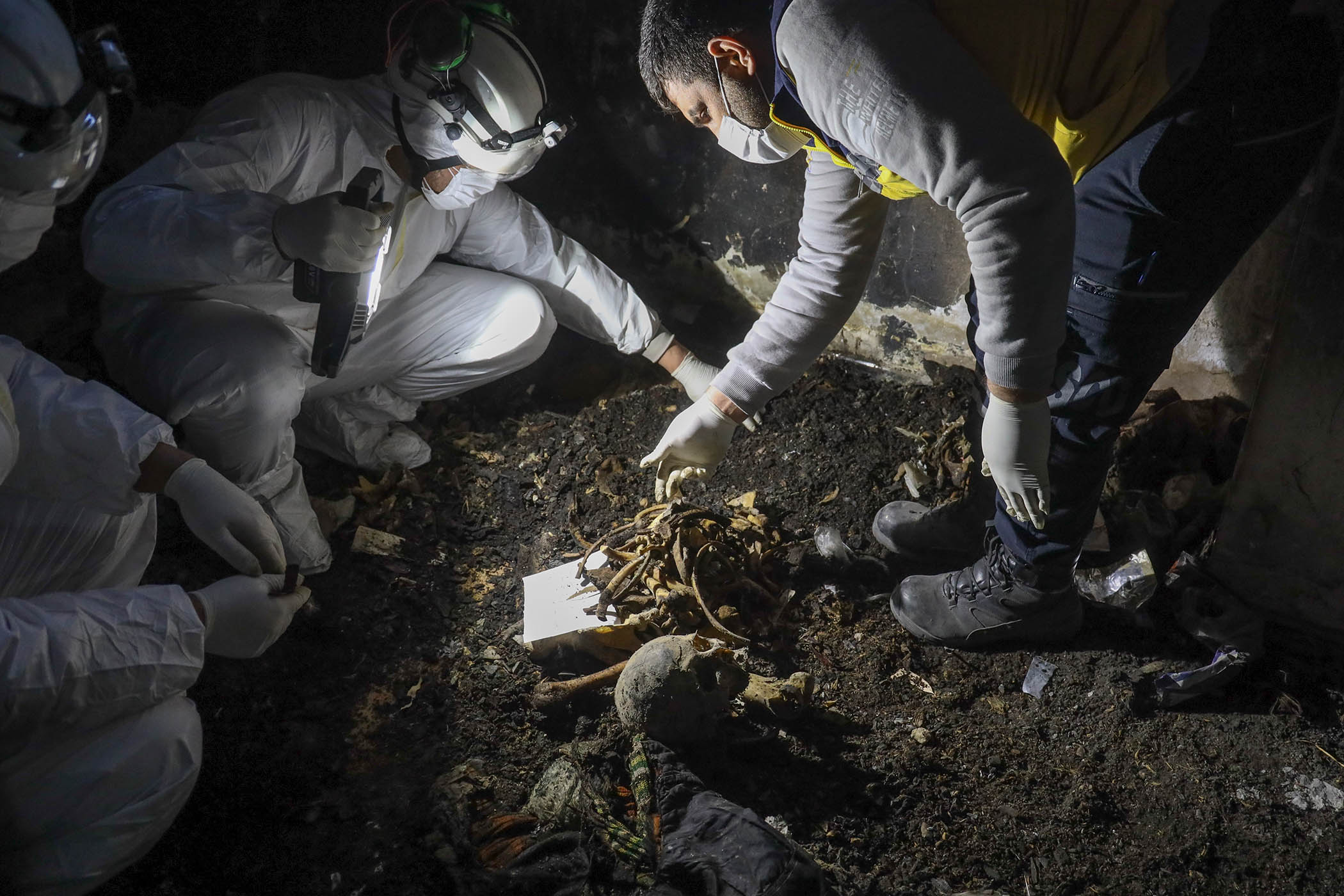
Syrian civil defence workers collect human remains found in basements on the outskirts of Damascus in 2025
The regime accused Makhlouf of owing millions of dollars in taxes. He was put under house arrest and his companies were either closed down or taken over by people connected to Asma’s NGO network. Much of his power, it seemed, was transferred to the first lady and her aides.
“No big transactions or major real estate deals could take place without her men knowing of them,” Yazigi said.” “In every city, she had people, and the men who ran Asma’s office became known as ‘Rjal Al Sitt’ or the ‘lady’s men’ – the lady being Asma al-Assad.”
Sanctions documents describe these men as sitting on an “economic council” headed by Asma; an informal network of businessmen, advisers and regime-linked figures who helped manage economic affairs around the presidential family.
The most prominent of these were Yassar Ibrahim and Ali Najib Ibrahim, Asma’s most senior economic policy lieutenants. According to regime insiders, they played a central role in bringing Syrian companies to heel and helping reshape ownership of large assets after Makhlouf’s fall. If Assad’s cousin represented the old economic order, the Ibrahims represented the new, Asma-controlled economy.
Sources closely connected to the regime have told The Observer that the first lady was power-hungry and promoted corrupt men who were loyal to her for personal gain. “[She] was a thug. Men were arrested and even tortured. She would pressure businessmen to hand over their businesses,” Yazigi said. “Those who didn’t comply with her office were allegedly pressured, their factories closed and accounts blocked, or were accused of tax evasion.”
Asma’s father told The Observer that “the accusations made against my daughter regarding business and economic interests in Syria have never been substantiated with evidence”.
The main limitation on Asma’s power was the state of Syria’s economy and infrastructure, ruined by almost a decade of war. More than half the population was struggling to put food on the table, but even this played to the first lady’s advantage. The country’s main source of funding was aid from UN agencies and international charities, much of which was funnelled through her Syria Trust for Development.
Someone closely involved with aid in Syria, who asked to remain anonymous, alleged Asma created a network to capture as much of the humanitarian and development assistance entering the country as possible. The UN was aware that the regime was profiting – it was a moral dilemma discussed internally, they said – but, ultimately, it was decided that this was a price worth paying, even if only a few needy people received help.
The first lady also stood by while the Syrian intelligence services held hundreds of children hostage to be used as bargaining chips in the war – either in prisoner swaps or to exert pressure on their parents, who might be detainees or part of the opposition.
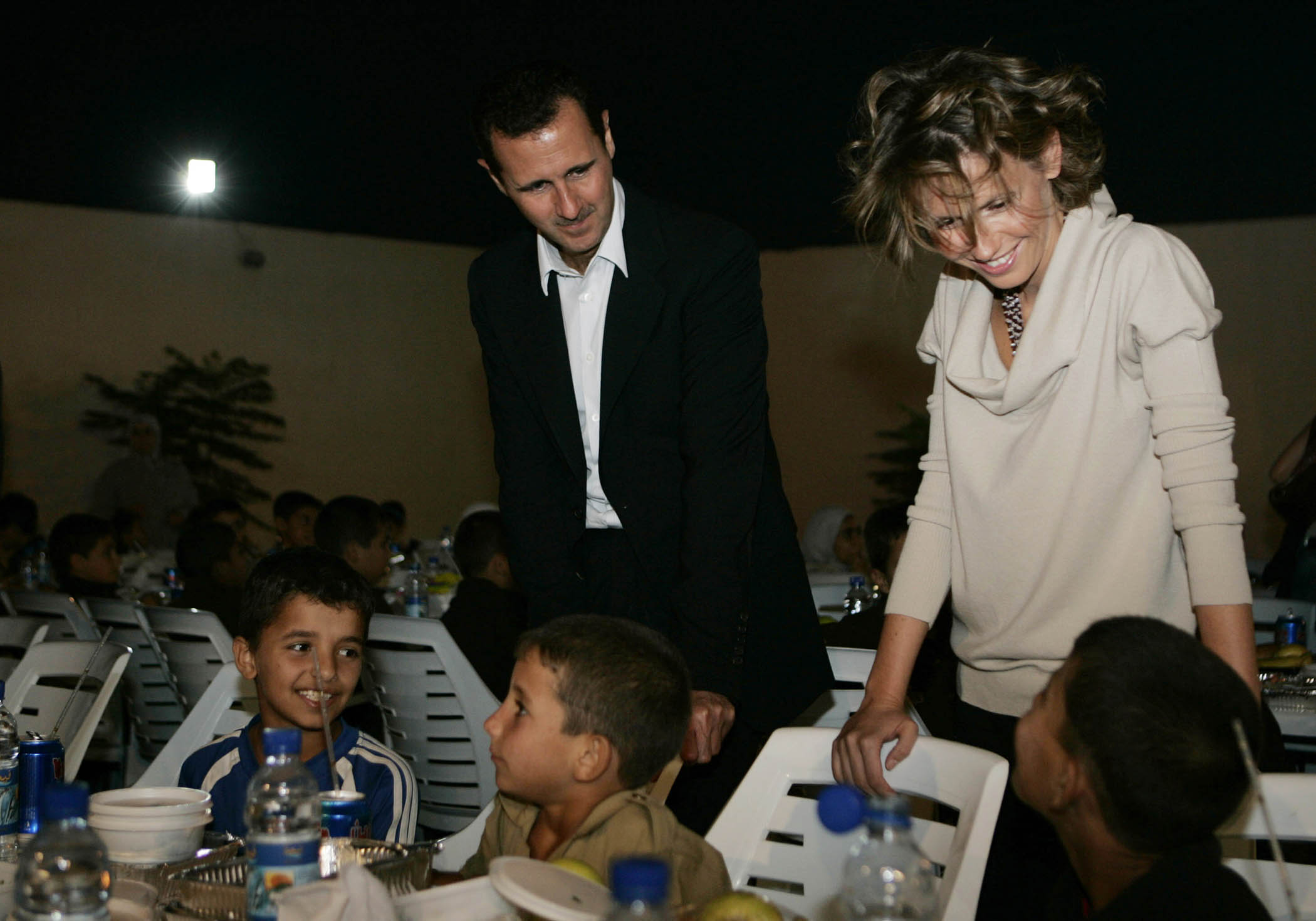
Assad and Asma meet orphans in a town south of Damascus in 2008.
The Observer viewed documents instructing orphanages, funded and supported by Asma’s NGOs, not to release the children to relatives. Orphanage employees who had worked under the first lady’s patronage said they informed her of the practice directly, either in reports or in direct conversations. “She knew everything, about all the crimes. I mean 100%,” one orphanage worker said. Another employee said Asma told her to mind her own business because these were the children of terrorists.
Those at the top of the regime rarely got their own hands dirty and it is unlikely that a document will emerge with Asma’s signature on it, proving, on paper, what she was responsible for. What The Observer has found is the testimony of multiple people who were close to the regime and to the first lady, speaking independently and all telling a similar story.
Fawaz Akhras said any suggestion that his daughter “knew of, authorised, facilitated or tolerated the use of children for political purposes, or as a means of pressure against families or detainees, is wholly and categorically rejected”. The allegation that she “created a network to capture humanitarian or development assistance entering Syria” is also false, he said.
He added that the allegations “present my daughter through a narrow lens of power, ambition and wrongdoing that does not reflect the person I know, nor the work she has undertaken over two decades”.
The first lady’s power inside the presidential palace was growing, too. “You couldn’t get anything through with the president unless she agreed with it, because he spoke to her about everything,” a regime source said. “Whatever you agreed with him during the day, pillow talk might change it. Whether it was politics, business or personal, from the smallest detail to the biggest, he always discussed it with her.”
An influential Syrian businessman said government officials cited the first lady often. “[They] used to tell us: ‘This is what the lady wants.’ Or: ‘This decision is from the lady’.” He said business people were under constant observation. “She had a team monitoring people from the security and military agencies and even the ministry of interior, where she had two ministers who were loyal to her.”
Another source said that, as a result, Asma was despised by many senior regime figures. “Businessmen hated her because it was clear how much she’s interfering in their world,” the source said. “Security people and intelligence people hated her because they would see her effect on the president. And ministers hated her because she would interfere in their work and in the governance of the country. Everyone thought it’s not her place and it is not constitutional. She’s a first lady – not a second president.”
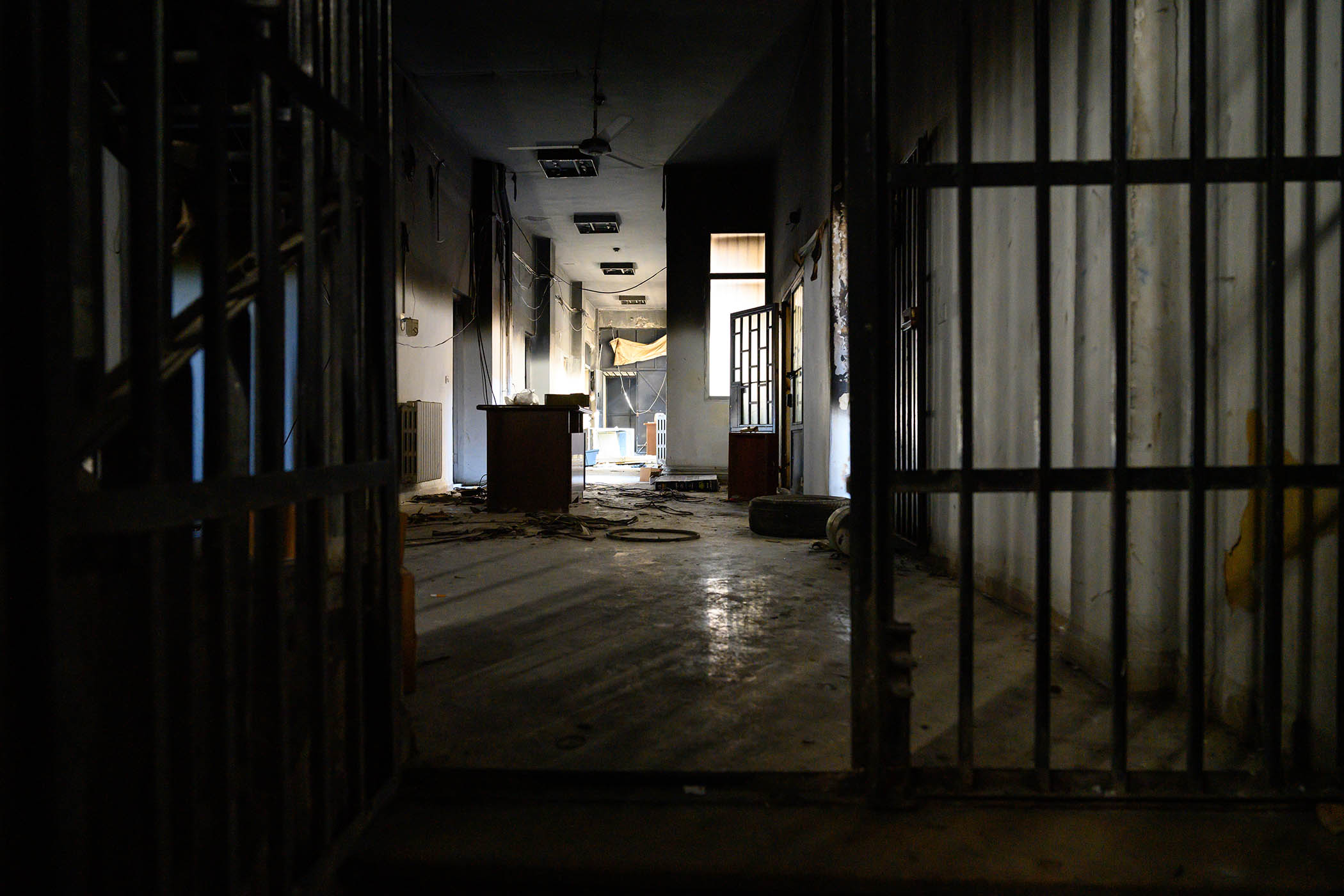
Syria's Palestine Branch prison in Damascus
A former employee at the Syria Trust for Development, who did not want to be named, maintained that the image of Asma as a manipulative political mover is completely at odds with the person they knew before the war. “She absolutely was nothing like that,” they said. “That is why I’m more minded to believe that she wanted to get out[…] and was told the children would get it if she didn’t stay.”
By 2023, stories about chemical weapons and mass killing had fallen from the headlines. Syria was readmitted into the Arab League and senior UN figures began appearing in photographs with Asma.
But the Russians were tired of Assad. Vladimir Putin had long despised the man he reportedly saw as weak and in need of saving. Having won his war for him, the Russian president became increasingly frustrated by Assad’s refusal to consolidate peace with the rebels in the north-west, the Kurds in the north-east, and with neighbouring Turkey.
According to several sources, the Russians had begun drawing up a list of possible replacements for the president. Near the top of the list? Asma.
A source close to the regime said the idea the first lady might replace her husband as president was floated by the Russians, and that Assad was aware of it, but not concerned. “There was such talk, and it was mentioned to the president, but he just laughed at it,” the source said.
In the capital, as the rebel offensive advanced, Syria’s president plotted his next move. His Russian allies, who had forcefully defended the regime since 2015, were now distracted and depleted by their own war in Ukraine. They were not coming to the rescue. The Syrian national army, worn down by years of corruption and poor morale, downed its weapons and allowed the advance to continue. Fighting it out no longer seemed like an option.
The first lady had been in Moscow since August 2024 undergoing treatment for leukemia, including a bone marrow transplant. It was her second cancer diagnosis. In 2018, the palace had announced Asma had breast cancer and, the following year, that she had successfully reached full remission.
The week of Monday 2 December 2024, Asma sent word to senior government aides and colleagues, summoning them to Damascus. Staff were called back to base and told to cancel trips. They were told that the first lady would be arriving at the weekend, sources said, for an important meeting.
What they did not know was the meeting was being used as a cover. In the early hours of Sunday 8 December, the president, with his eldest son, Hafez, and youngest son, Karim, departed the capital from a military airport near Damascus, flying first to a Russian military base and then on to Moscow, where the rest of the Assad family was waiting and where they had been granted asylum.
The Observer has heard from a witness and several other sources who place Asma and her father in Syria on the night the regime fell. But her father denied this, saying he was with his daughter in hospital in Moscow as she received treatment for leukemia.
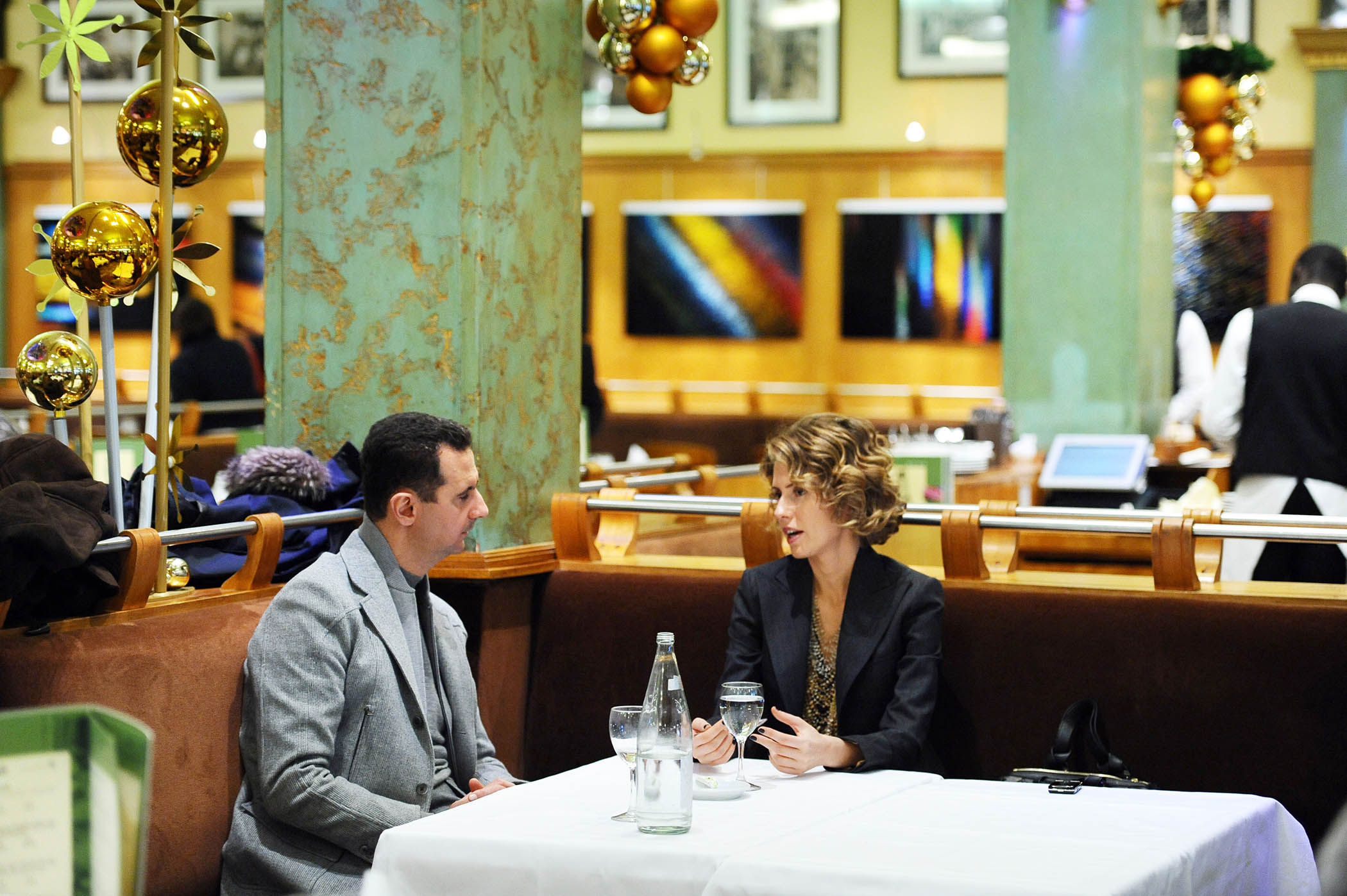
Assad and Asma in a Paris restaurant in December 2010.
The rest of the regime awoke on Sunday to learn their leader had fled and the rebels had taken over the capital. As loyal friends and insiders scrambled for hiding places, footage on TV showed lower-ranking officials being lynched in the streets.
In those final days, the Assads “wanted to maintain the image that: ‘Everything’s OK – we have a plan,’ so people remained in the country”, a well-connected regime source said. “In reality, they were giving themselves the luxury to leave.”
The anger among once-loyal insiders who were left behind runs deep. “The world has never seen such disloyalty,” said the source. “Not even Saddam Hussein or Muammar Gaddafi had so little humanity.”
In Syria, some big names behind the regime’s feared security services have been arrested, including Atef Najib, one of the men accused of torturing teenagers in Daraa at the start of the revolution, and Amjad Youssef – nicknamed the “butcher of Tadamon” – who was accused of ordering a massacre of dozens of people in a suburb in the south of Damascus and, separately, of sanctioning the murder of six children. Last month, a video surfaced appearing to show the “execution” of the siblings – aged between two and 12 – on the grounds that they were “terrorists”.
But beyond a few high-profile cases, the new Syrian government’s Commission for Transitional Justice has yet to demonstrate a systematic approach to accountability. Efforts to secure support and funding from the European Union have met with reluctance; in part due to the EU’s longstanding opposition to the death penalty, which remains in force in Syria, as it does in most Arab states.
As international and domestic efforts to bring the regime to justice move slowly, victims of the regime must wait. One of them is Bissan Jouma.
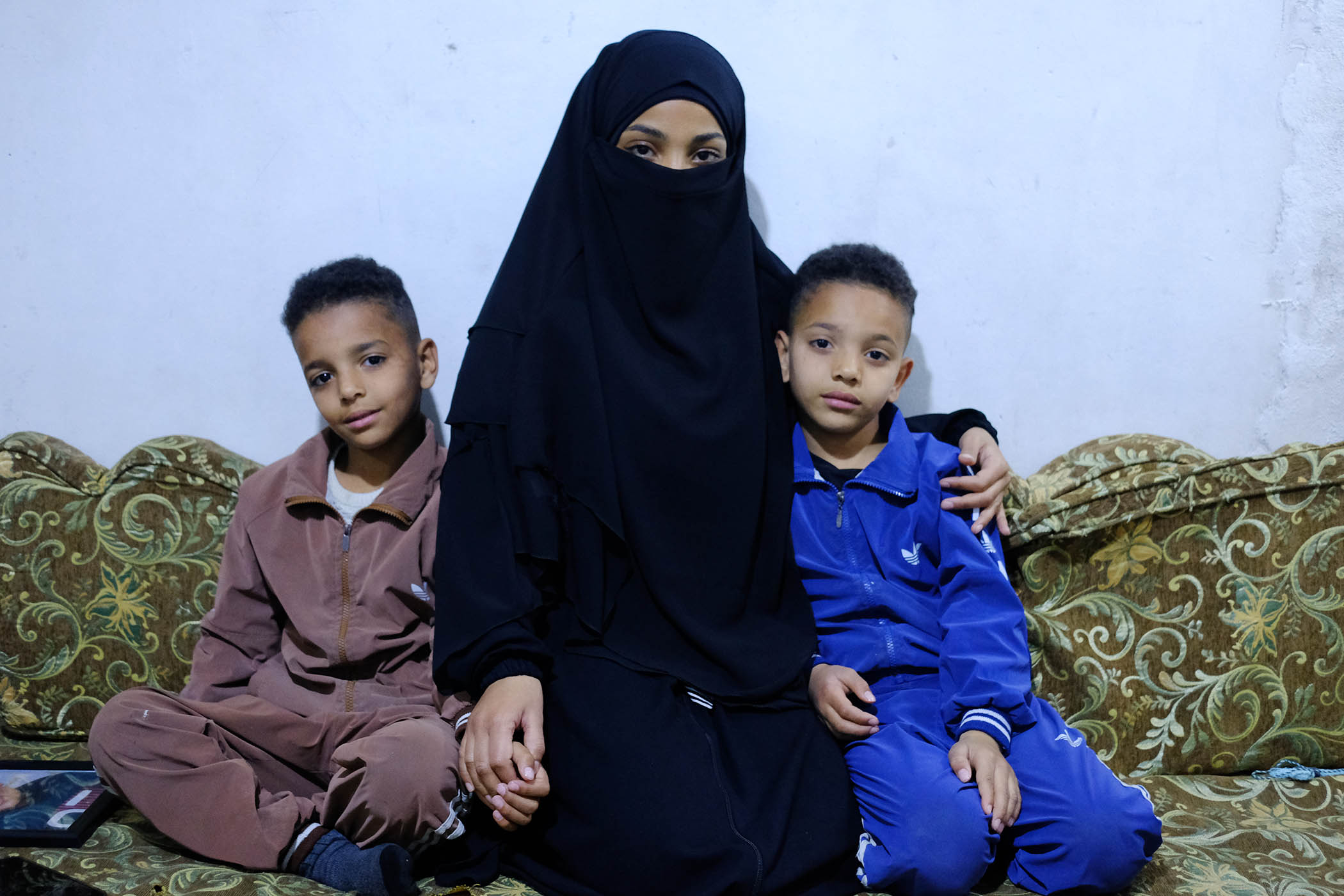
At 15, Jouma was arrested at a government checkpoint as she attempted to make her way to her mother’s home in Damascus. She was with her 18-month-old son, and was pregnant with her second child. Jouma’s only crime was that she was married to an opposition fighter, and yet she was subsequently imprisoned for more than seven years.
After she was forced to give birth in handcuffs, the teenager’s two children were taken from her and kept in orphanages overseen by Asma’s organisations. The orphanages refused multiple requests by Jouma’s mother and sister, imploring for the children to be released into the family’s care.
The first lady even visited Jouma’s children during their incarceration. “She imprisoned their parents and then orphaned their children, and then she would visit the orphanage as if she were so compassionate,” she said.
Two former ministers for social affairs, who ran the orphanages and who regime insiders say were largely directed by the first lady, are now under arrest for their role in the use of detainee children as political collateral.
Jouma, who was reunited with her young boys after years of separation, is still waiting for justice to reach the top rung of the ladder. “They took my children,” she said. “No one deserves to live through what I did, no matter who they are. May God never forgive them.”
Photographs by Miguel Medina/AFP/Getty Images, Emin Sansar/Anadolu via Getty Images, Dave Caulkin/AFP/Getty Images, Tim Graham/Corbis via Getty Images, AFP/Getty Images, Omar Albam/AP, Gary Marshall for The Observer
Anadolu, Omar Albam, -, and Scott Peterson