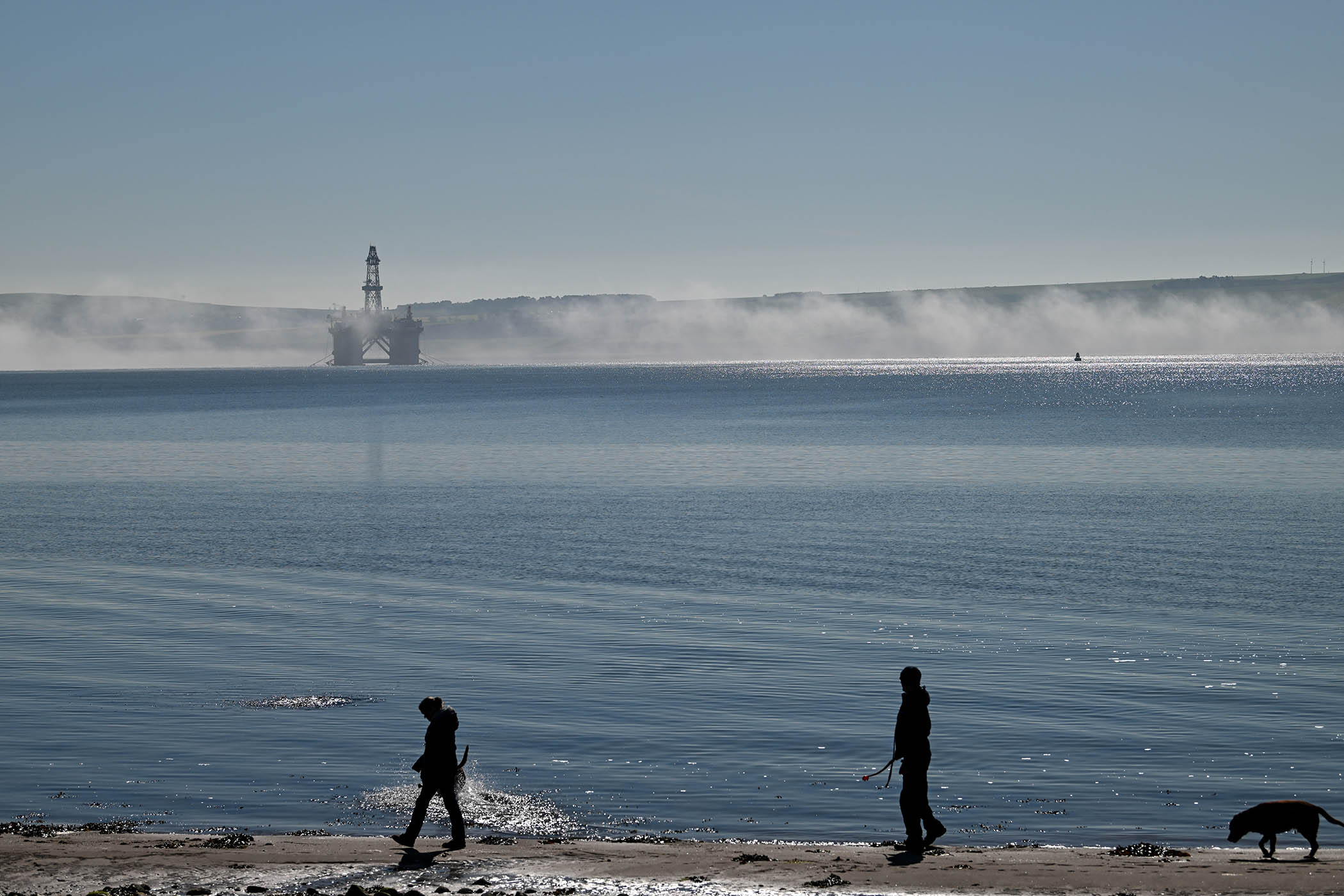



The country is boiling. Stuck in an office with no air conditioning at 32C, I finally finished that important draft. “I was unwell last week due to the heat,” a colleague mentioned over the phone. It’s no surprise – the heat is getting to everyone. Kent is already under a water temporary user ban. On 5 July, the Met Office warned of a severe marine heatwave sweeping across UK waters. The sea-surface temperatures are spiking up to five degrees above average in the English Channel and the North Sea. This extraordinary warmth could escalate to a rare and “extreme” category 4 event this week, threatening marine wildlife and damaging coastal habitats.
This should not come as a surprise. Global warming and its deleterious effects on the environment have been written on the wall. In a landmark ruling on 21 May 2024, a panel of 21 judges from the International Tribunal for the Law of the Sea stated that greenhouse gas emissions constitute pollution of the marine environment under the Convention on the Law of the Sea (UNCLOS) – a 1982 treaty commonly known as the “constitution for the oceans”. This was also the position of the United Kingdom during the proceedings.
In the midst of all the above, Policy Exchange, a thinktank set up in 2002 by Conservative MPs has issued a paper entitled “Litigating climate change: why the ICJ’s climate change advisory opinion matters and how the UK should respond”, that frames international courts as a fundamental problem. Surprisingly, not climate change. The paper criticises the International Court of Justice for having gone “too far” in its 2025 advisory opinion, “Obligations of states in respect of climate change”, namely, for stipulating state obligations which Policy Exchange does not like. It then incites a moral panic by suggesting the UK withdraw from the compulsory jurisdiction of the ICJ to avoid “costly climate litigation”. “You can be sued” is the scaremongering tactic.
The climate emergency can present a false binary: the economy versus the planet. Caught in this false binary, Policy Exchange firmly demands we “choose the economy”. Yet, with extreme weather and heatwaves, isn’t our actual economy under siege by these very effects of climate change? Widespread train cancellations, a disrupted hospitality sector, people struggling to go to work. In what way is this good for the economy?
As a concept, “the economy” is not equivalent to a fossil-fuel-dependent system. The real question, actually, is: how are we going to protect the planet? How to ensure that life on Earth continues to be viable? Without those strategies, there will be no “economy” to discuss.
Under new leadership, the UK indeed needs to seek legal advice. Not to evade accountability, but to proactively apply the obligations pronounced by both the ICJ and the International Tribunal for the Law of the Sea. In a critical passage of its advisory opinion the ICJ held that a state’s failure to take appropriate action to protect the climate system from GHG emissions – including through fossil fuel production, fossil fuel consumption, the granting of fossil fuel exploration licences or the provision of fossil fuel subsidies – may constitute a violation of international law which is attributable to that state. From that perspective, any new fossil fuel exploration/exploitation (including in the North Sea) would be unlawful.
The IPCC reports could not be clearer: if we want to hold global warming to 1.5C, launching new fossil fuel projects is completely off the table. It is all about damage control at this point. Legally speaking, the UK has a massive responsibility here. Governments are obliged to use every tool in their shed to stop major environmental harm. To actually do that, the UK needs to completely overhaul how it regulates big business. We are talking about new laws and rules that put a hard cap on the emissions private companies can pump into the atmosphere.
It is not just about the land, either. Under the UNCLOS maritime treaty, the UK is legally required to clean up its act at sea, too. That means setting up tight domestic laws and enforcement to tackle emissions coming from both land and ocean sources. And if the science on a specific marine risk is still a bit fuzzy? The rules say you don’t just wait and see – you apply the precautionary principle and protect the oceans anyway.
The UK also has to figure out how to actually guarantee people under their jurisdiction the right to a clean, healthy, and sustainable environment. The International Court of Justice has already ruled that you can’t even enjoy basic human rights, such as life, health, and a decent standard of living, without a healthy planet as a baseline. Yet, right now, we are watching greedy private companies compromise people’s access to clean water.
Shifting to this kind of system is a brave new world. But honestly? It is the only way we ensure life on Earth actually continues.
Newsletters
Choose the newsletters you want to receive
View more
For information about how The Observer protects your data, read our Privacy Policy
Monica Feria-Tinta is a specialist public international law barrister at Twenty Essex; her book A Barrister for the Earth: Ten Cases of Hope for Our Future, is published by Faber.
What are your thoughts on this? Send us a letter to letters@observer.co.uk
Photograph by Andy Buchanan/AFP/Getty Images