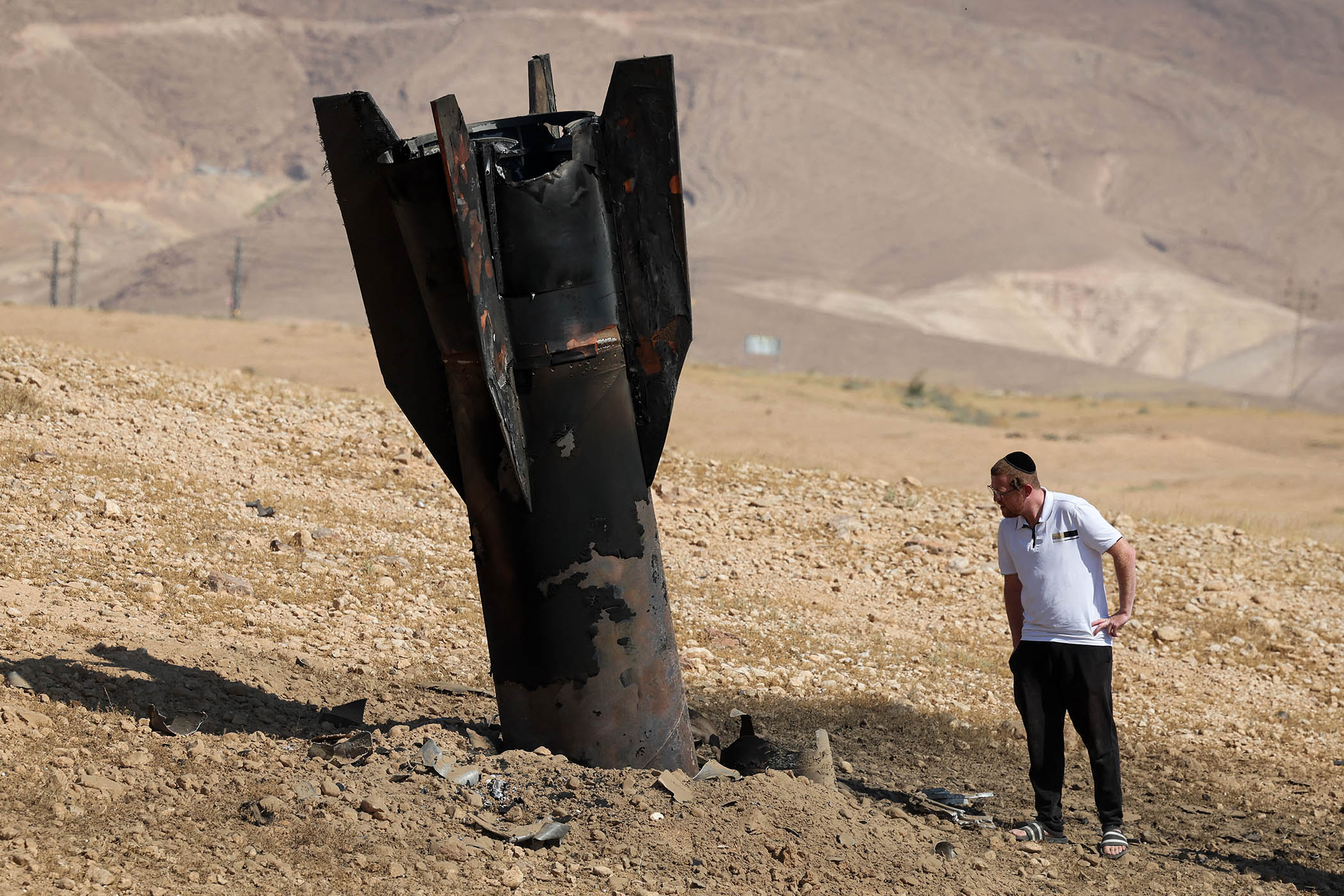

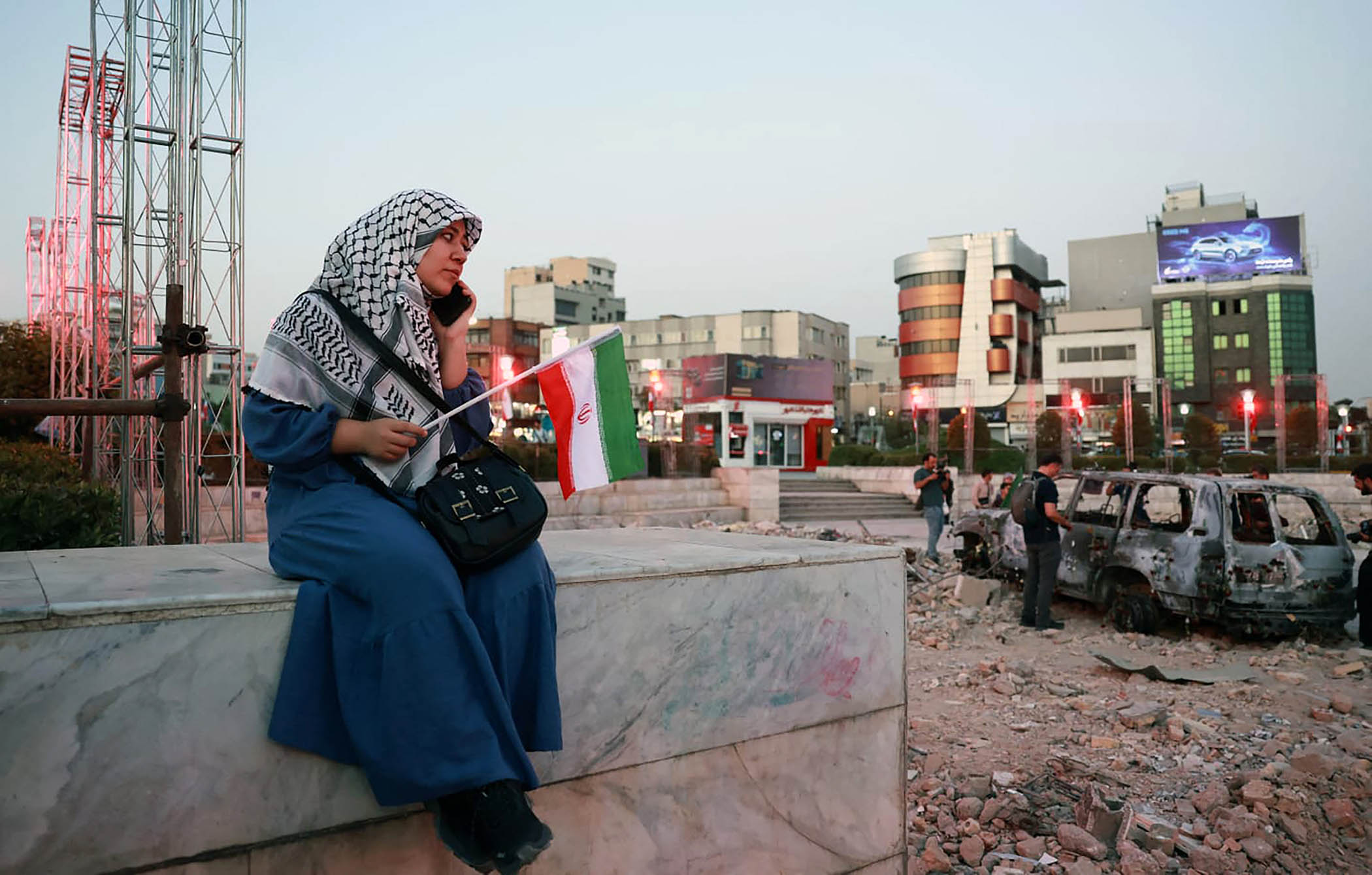
In the early hours of Monday morning, Israeli jets entered Iranian airspace and hit multiple locations with air strikes, claiming to target Iranian ballistic launchers. A few hours earlier Donald Trump had let it be known he wanted Israeli prime minister Benjamin Netanyahu to hold back after Iran fired a barrage of missiles towards Israel, in response to Israel striking southern Beirut. “I call the shots. I call all the shots. He [Netanyahu] doesn’t call the shots,” Trump told the Financial Times.
The reality may be different. As Israel continued its bombing campaign, striking a petrochemical complex in southern Iran before Tehran warned it would hit similar facilities in Haifa, Trump took to social media again. “Israel and Iran must immediately stop “shooting”,” he wrote – later adding a garbled message claiming that despite everything negotiations were continuing and peace was close “subject to ignorance or stupidity getting in its way”.
The peace deal that Trump wants appears a remote possibility. Many fear he is increasingly unlikely to get it as America’s ally flaunts its defiance of its largest backer: the US military did not respond to questions from The Observer about whether Israel had notified them about the strikes on Iran, or Lebanon.
Iran’s military headquarters then abruptly declared it would cease an operation it had warned could last for days – but would resume if Israel strikes Iran or Lebanon again. Ali Akbar Velayati, foreign policy advisor to the supreme leader, Mojtaba Khamenei, said Tehran could use its Yemeni proxy, the Houthis, to close the Bab al-Mandab strait leading to the Red Sea in what would be a further disaster for global shipping. The growing power of Iran’s reclusive new leader flickered in the background as military and security officials issued a barrage of threats.
Trump expressed admiration for his adversary in an interview with NBC, describing Khamenei as “younger, I think more rational” than his father, who was killed on the first day of the US-Israeli bombardment in February. Trump said he thought the new leader was “pretty badly injured – so there’s a certain bravery there”.
The question of who is really calling the shots persisted instead in relation to Trump and Netanyahu. “This war has been humiliating for Trump and American power generally,” senator Chris Murphy, a Democrat, posted on X. “When Trump announces he is going to call Netanyahu and tell him not to retaliate, and within hours Netanyahu retaliates, the humiliation just compounds.”
Former Israeli diplomat Alon Pinkas, a longtime analyst of the Trump-Netanyahu relationship, said the Israeli prime minister was seeking to provoke Iran and negate any possibility of a permanent ceasefire deal, as the American president attempts to distance himself from the war he started. “In the end they’ll both lose, but on this day Netanyahu manipulated Trump into thinking the Lebanon front is not related to Iran – and it is,” he said.
Trump appears unable to end a war that is deeply unpopular at home and abroad while also being unable to force a deal he can credibly claim is better than the 2015 agreement passed by Barack Obama to curb Iran’s nuclear programme. “He can’t attack Netanyahu and confront him clearly because that would reinforce the view of those who say he was dragged into this war, duped by Netanyahu,” Pinkas said.
Others believe Trump does hold the power to halt Netanyahu – but question whether or not he has the patience to reign him in. What is clear is that Israel’s choices in Lebanon and Iran are now actively testing Trump’s will to do this: Israeli media reported that Tel Aviv would also cease fire, despite fears this will only endure as long as Netanyahu wishes. “For you to stop Israel under Netanyahu you need to have sustained, proactive engagement: those words are not synonymous with the Trump administration,” said Mairav Zonszein of the International Crisis Group.
Trump’s pleas about control are better ignored in favour of examining the reality on the ground, Zonszein added. “He didn’t go into this with a coherent plan and he doesn’t have one now. He has the power to stop what is happening, but he goes back and forth daily. In the meantime Israel slips through the cracks.”
Newsletters
Choose the newsletters you want to receive
View more
For information about how The Observer protects your data, read our Privacy Policy
Photograph by Ahmad Gharabli/Getty Images