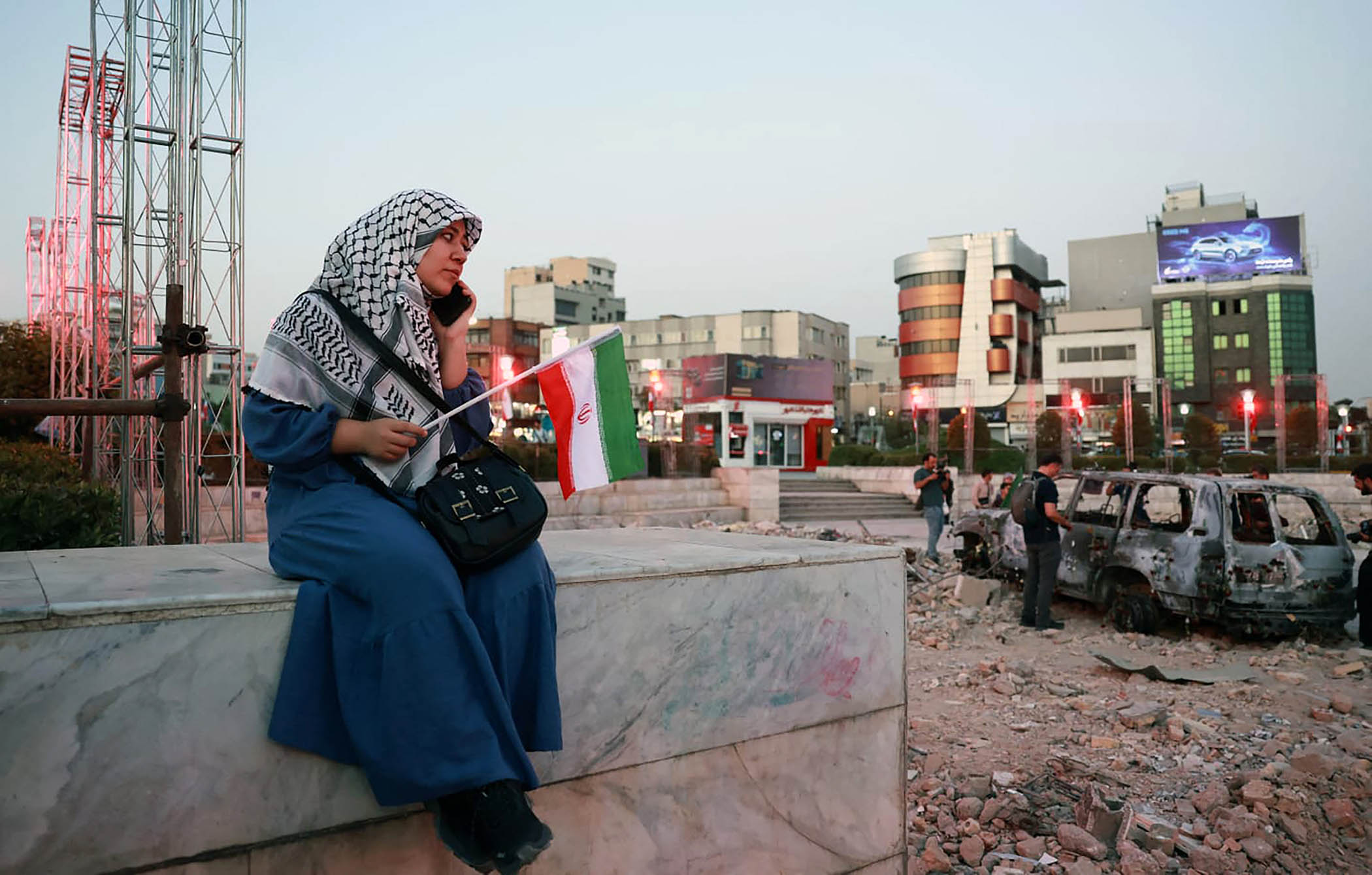

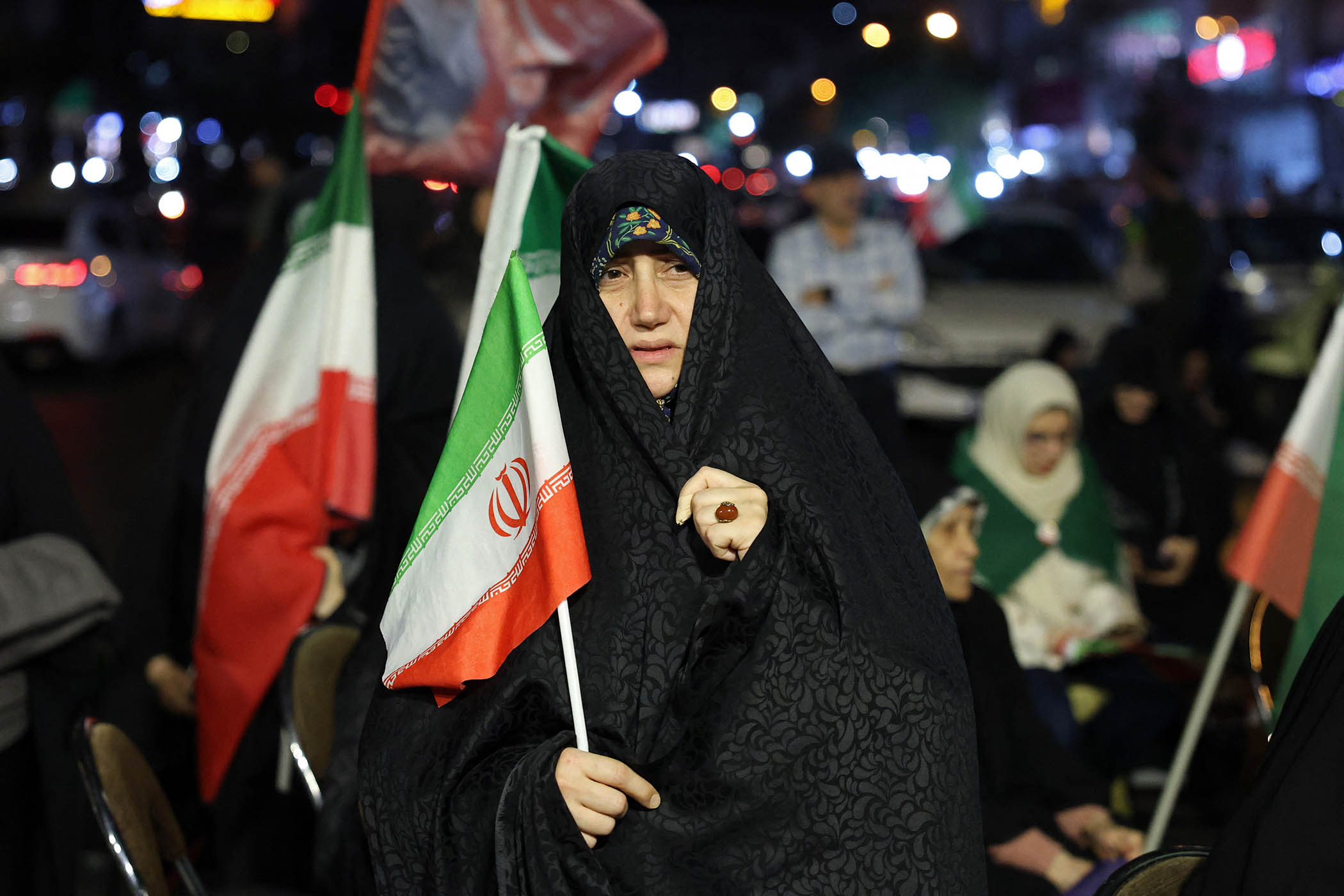

Many people in Iran have limited access to the outside world, so Hesam Alaeddin brought the outside world to Tehran. The 40-year-old businessman owned a shopping mall, a popular pizza chain and food courts that he filled with interpretations of international cuisine – Indian, Chinese, American.
Alaeddin was excited to offer customers a window on far-off places. “Hesam also loved to party and have a good time,” said Arya, a relative whose identity has been concealed. “The family had money, so they were enjoying life.”
The money meant that Alaeddin could afford a VPN – a virtual private network, which encrypts internet traffic and routes it through a remote server. It allowed him unfiltered access to the online world, helping him envision a life beyond the Islamic Republic. He was not an activist, but expressed quiet dissent online, through likes, stories and occasional posts.
In late February, when the US and Israel launched their war against Iran, the country’s regime implemented the longest nationwide internet shutdown in history. The near-total blackout for tens of millions of people lasted nearly three months. Thousands lost jobs and businesses, and rights groups say it also allowed the regime to hide its crimes. As some sought to get round the restrictions, demand and prices for special VPNs surged, while smuggled equipment for satellite services such as Starlink cost thousands of dollars on the black market. Those who used them risked a heavy price.
In late March, the week of the Persian new year, the authorities raided the home of Alaeddin’s brother, Hamid, shooting him in the leg when he refused entry. The family were not clear what he was accused of, but later found a Starlink device at his home. Soon after, they came for Alaeddin.
“They beat him in front of his girls. They are just 11 and 10,” Arya said. “When they took him away, he was unconscious. The beating was so bad that the girls knew Daddy was not coming home.”
For weeks, the family were given shifting explanations as to where Alaeddin was, until, at the end of April, a court issued them instructions to collect his body. Initial reports said he had been killed for using Starlink, though his relatives say it was more broadly connected to online activity and political content. What is clear is that Alaeddin was killed for using the internet.
At the end of May, access to the internet in Iran began to restart after the record restrictions of more than 80 days. The ban was described by authorities as a wartime security measure, but rights groups say it was a tool for controlling information and limiting protest.
“Blackouts like this isolate people completely,” said a representative of the Abdorrahman Boroumand Centre, an Iranian human rights organisation. “The biggest impact is psychological. People feel cut-off, forgotten… and if no one can see what is happening, accountability disappears.”
For the first time in 20 years, countries considered to be autocracies outnumber those viewed as democracies, according to research published last year by the independent institute V-Dem. This sharp rise in global authoritarianism has been accompanied by a growing reliance on information control as a tool of governance, from Turkey, India and China to Cuba, Uganda and Turkmenistan. The internet, once considered an insuppressible democratic force with the power to strengthen civil society, is increasingly becoming a tool for state control.
Newsletters
Choose the newsletters you want to receive
View more
For information about how The Observer protects your data, read our Privacy Policy
Some researchers date this era of digital repression to 2009 and Iran’s Green Movement protests, but the watershed moment came in Egypt in 2011, when the entire country was taken offline. It was a political statement at the height of the Arab Spring as well as a technical turning point.
Shutdowns can now range from full blackouts, when almost nothing connects, to partial shutdowns, when specific apps, platforms or mobile data services are slowed or blocked. Once rare and reserved for extreme crises, they are no longer exceptional. Governments are cutting connections during elections, protests and political unrest, often in the name of security and public order, leaving the void to be filled with unverified rumours or state-controlled information and propaganda.
Last year, there was some sort of shutdown somewhere in the world every single day, according to the digital rights group Access Now: 313 in 52 countries – the highest number recorded since tracking began in 2016. At least 70 of the blackouts coincided with human rights abuses, such as murder, torture, rape and alleged war crimes.
Doug Madory, director of internet analysis at Kentik, an internet monitor, said shutdowns had been a regular occurrence for years. “What is important to follow now is how sophisticated they become,” he added. “The recent one in Iran revealed a greater ability to centrally deactivate the country while selectively favouring individuals. It is a tactic I fear will catch on [in] other countries.”
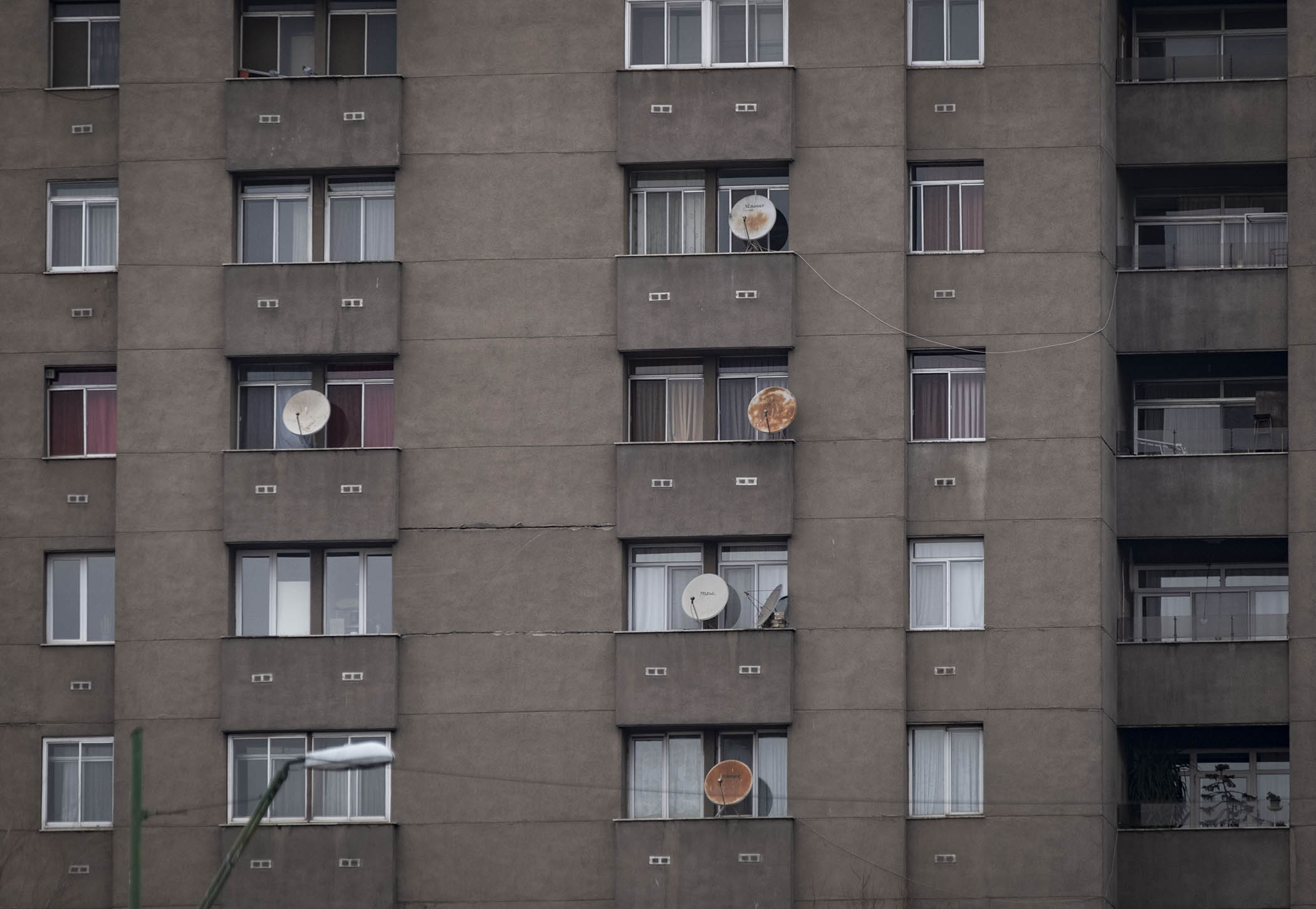
Tehran’s latest shutdown marked a shift from blunt nationwide blackouts to more precise, harder-to-detect control. It created a tiered system, with selectively “whitelisted” services, government-vetted access and retained connectivity for select government bodies, universities and domestic services.
One country thought to be learning from Iran – and vice versa – is Russia. Since the full-scale invasion of Ukraine, Moscow’s internet restrictions have evolved from blocking a few platforms to a much broader system of control. Major foreign social media sites are cut or heavily throttled, from Meta resources such as Instagram and WhatsApp, which are recognised as extremist, to YouTube and more recently Telegram. The authorities are also moving to block VPN protocols, so workarounds become unavailable.
In recent months there have been widespread mobile internet shutdowns across Russia, which the Kremlin has explained as a security measure against drone threats. Some regions, such as Kamchatka in the far east, have been disconnected since last summer. In major cities such as Moscow and St Petersburg, the outages affect all aspects of daily life, from communications to online payments, preventing businesses from being able to function and citizens from accessing services from online healthcare to taxis and even public toilets.
Anastasiya Zhyrmont, eastern Europe and central Asia policy manager at Access Now, said: “Shutdowns are an instrument of control and even surveillance in Russia because in the absence of foreign social media they are trying to introduce domestic alternatives, including a state messaging app called Max.” This app is a domestic alternative to WhatsApp and Telegram, combining chat, payments and services, but unlike western equivalents it is connected to governmental services, including banking apps, potentially allowing for the collection of user data.
“This app is not safe and secure. It gives access to personal data, but it can also track your movements. Some experts think it can potentially grant access to your camera. Basically they can access a whole profile on you,” Zhyrmont said. “People are using it because they have no alternatives and they are pressured to: schoolchildren and parents are pressured by teachers, state workers. There are cases of teenagers having to use Max to access exam results.”
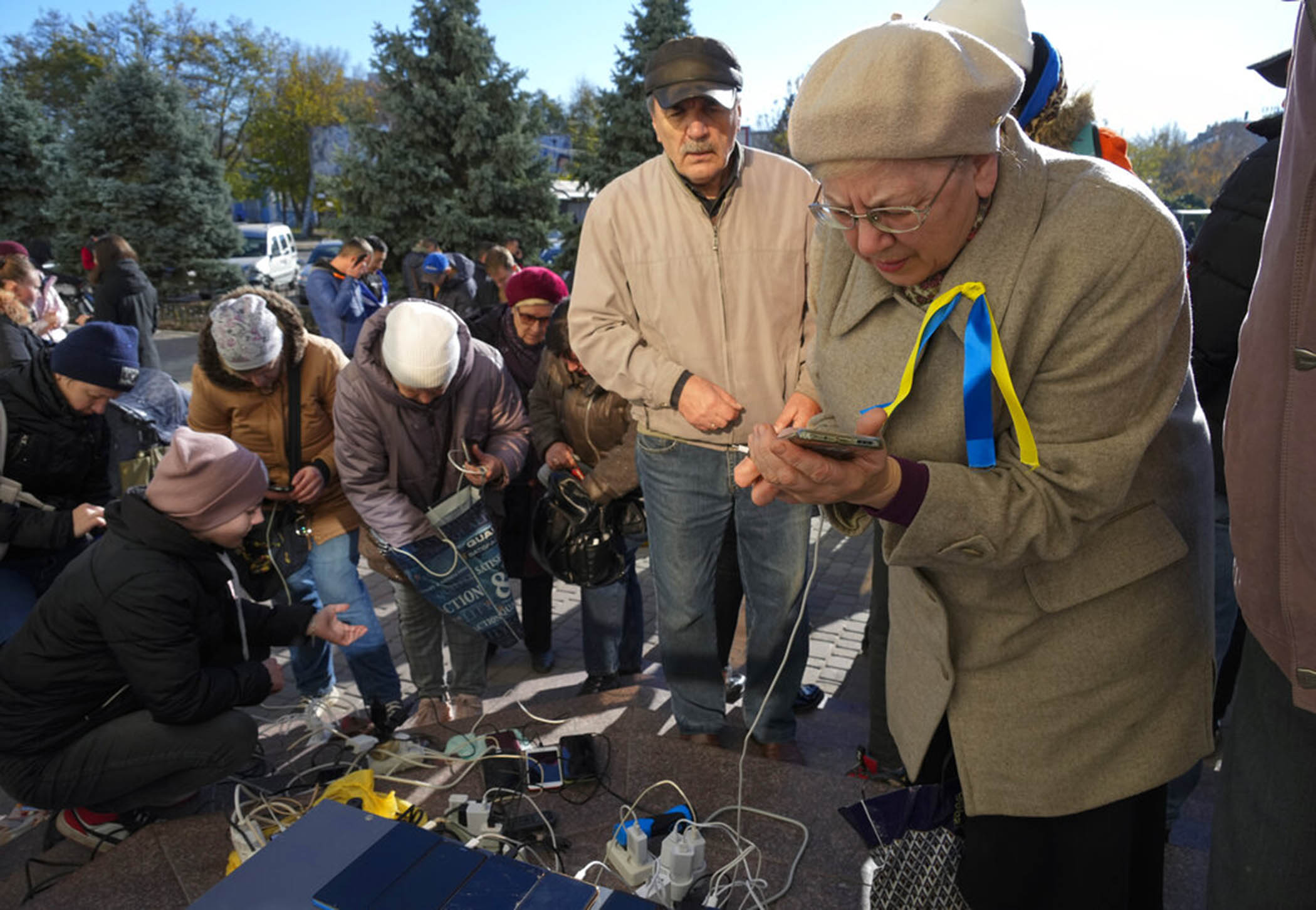
Control of the internet has emerged as a crucial war strategy in occupied Ukraine. During the Russian occupation of Kherson in 2022, telecoms infrastructure was seized and rerouted through Russian-controlled networks. Repeated missile and drone strikes damaged critical communications systems, plunging much of the city into intermittent digital blackout. Although the city has been liberated for the past three years, connectivity remains a problem.
Ukrainians living under occupation can get online only via Russian services, preventing them accessing Ukrainian news, helping to spread Russian propaganda and making it hard to connect to their loved ones. Zhyrmont says she has documented cases of people being forced to sign up for Russian passports in exchange for internet access.
Experts believe Russia’s next step will be to implement layered internet access as in Iran’s recent shutdown: one layer available for state workers or scientists and developers; another heavily restricted layer for ordinary people, giving access only to state-approved resources. The country’s size and relatively advanced digital infrastructure make it hard to switch the whole system off because connectivity is routed through multiple private providers, regional networks and data centres.
In highly centralised systems, such as in Eritrea and Turkmenistan, the internet can be easily switched off through a small set of choke points. Other systems, such as North Korea’s, keep citizens cut off from the global internet entirely, while China’s “Great Firewall” filters the internet, blocking or throttling access to foreign platforms. Myanmar’s telecoms sector, concentrated in a few small operators and controlled gateways, means shutdowns are fairly simple. It is responsible for the largest number globally, with repeated nationwide and regional cutoffs since the 2021 military coup.
India and Pakistan, both considered democracies, consistently rank among the countries with the highest number of internet shutdowns, many of them localised to politically unstable regions such as Kashmir. Blackouts have also impeded communication during the world’s worst active humanitarian crisis in Sudan and Israel’s war in Gaza. According to Access Now, these shutdowns are “inflicting profound and immeasurable harm on people and communities”.
Even robust democracies are not immune. Internet shutdowns in the US and Europe may seem far-fetched because the networks are privately owned, geographically distributed and legally protected. “But we must be vigilant,” Madory said. Governments can still justify localised or targeted restrictions through court orders or during emergencies.
“What people really need to understand,” said the Abdorrahman Boroumand Centre representative, “is that blackouts are not just about control of information [but] about controlling reality itself. Even amid war, the biggest threat to our regime is not external. It is internal.”
Photographs by AFP, Nur Photo via Getty Images, Efrem Lukatsky/AP