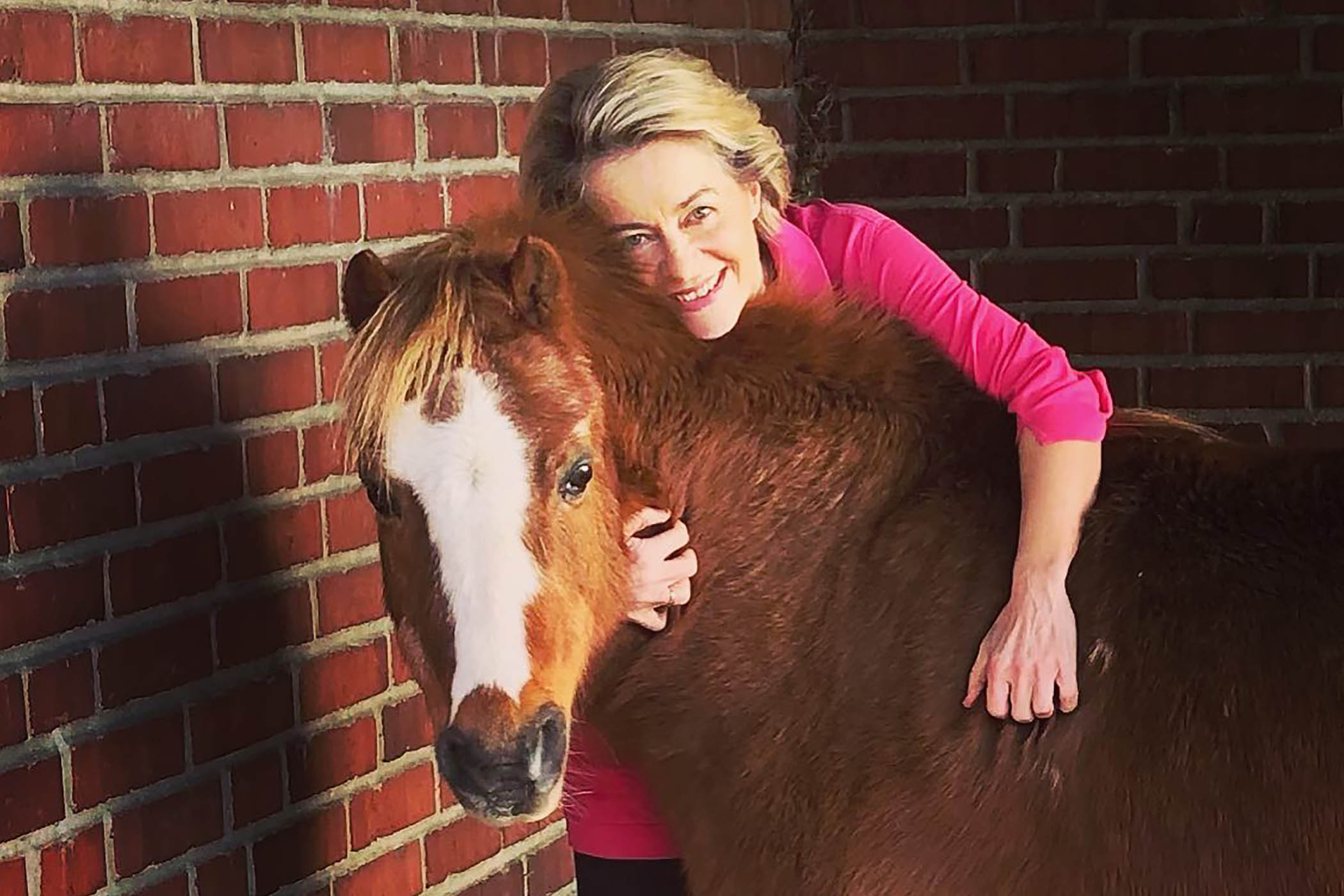



In September 2022, in Lower Saxony, north-west Germany, a grey wolf attacked and killed Dolly, Ursula von der Leyen’s 30-year-old – and apparently favourite – pony. The president of the European Commission (EC) is a passionate equestrian. Her children had learned to ride on Dolly and, despite the pony’s advanced age, she was kept as a treasured pet.
Thousands of farmers across Europe lose livestock to wolves each year, but this time the dead animal’s owner was a high-profile politician who had it in her power to shape the wolf’s future. “The concentration of wolf packs in some European regions has become a real danger for livestock and potentially also for humans,” said von der Leyen in 2023. In the same year, the EC carried out an “in-depth analysis” into the wolf, publishing a report that ultimately led to the animal’s protected status in Europe being downgraded last summer.
A chain of events that began in a field in Lower Saxony culminated in decisions that have made the wolf more vulnerable than it has been for half a century. Yet now, after extensive research into the circumstances surrounding Dolly’s death, it seems as though the story surrounding the demise of Ursula von der Leyen’s pony may just be too good to be true.
Dolly was last seen alive at 10pm on the evening before the attack, about 100 metres from the von der Leyen family home in the hamlet of Beinhorn on the outskirts of Hanover. At 7am on 1 September, the pony’s body was found in her paddock by Heiko, von der Leyen’s husband. Another pony remained in the field unharmed. The subsequent investigation, carried out that day by the chamber of agriculture and a veterinarian, took DNA swabs and documented the carcass. The report found “external subcutaneous puncture-type wounds at the throat, abdomen and hind leg”.
By that evening, it was being reported that Dolly had been killed by a wolf. “The whole family is horribly distressed by the news,” von der Leyen told the German tabloid Bild in an article that ran with the subheading: “The big bad wolf doesn’t just exist in fairytales!” By 3 September, Dolly’s death at the hands of a wolf was news as far away as Pakistan.
That same day, a spokesperson for the Lower Saxony environment ministry said the bite pattern strongly suggested a wolf attack. Yet it would not be until three months later that the DNA analysis was matched to a wolf, specifically one known as GW950m, the adult male of a local pack.
After Dolly’s death, Politico reported EU diplomats in Brussels describing von der Leyen’s fixation on the wolf issue as “pushy” and “bizarre”. In 2022, a European Council decision had found that “based on current data, lowering the protection status of all wolf populations is not justified from a scientific and conservation point of view”, yet the EC now commissioned a Brussels-based consultancy to carry out an analysis on the wolf’s status in Europe.
Despite not being peer-reviewed, or recommending the wolf’s downgrading, the report formed the basis for proposing its downlisting under the Bern convention and the EU habitats directive. More than 400 scientists signed a letter condemning the move, while the Large Carnivore Initiative for Europe, a conservation group, called it “premature and faulty”. But by the summer of 2025 the changes had been enacted, and with them began a whole new chapter in Europe’s relationship with the wolf.
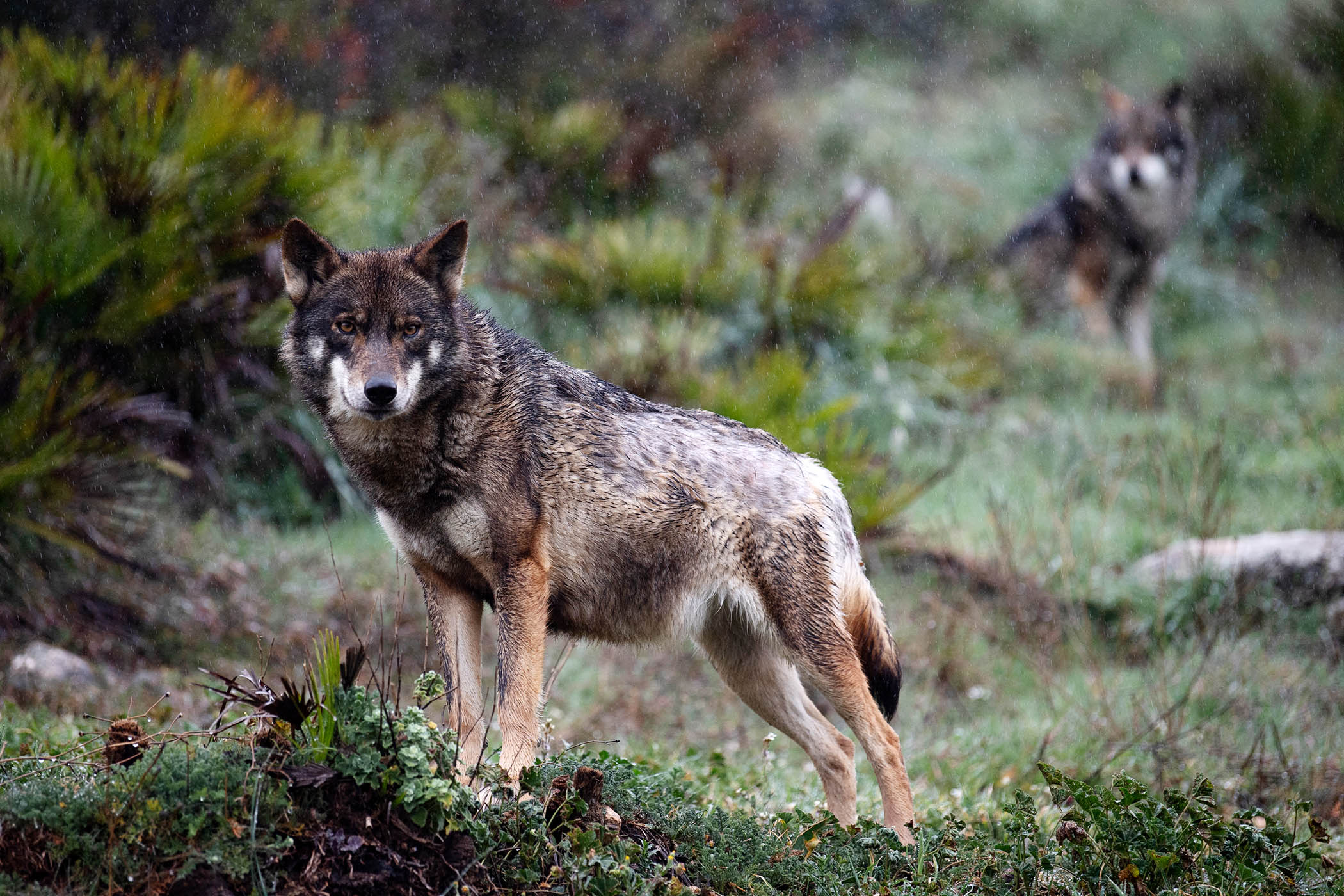
The wolf is undergoing a remarkable resurgence across Europe. Centuries of persecution pushed the species close to extinction in much of the continent, but since the 1960s its numbers have increased by 1,800%. Today there are more than 21,500 in Europe, classifying them as a species of least concern. Their change in fortune, along with those of the bear and the lynx, has been in large part thanks to policies enacted and enforced by the EU – the Bern convention and the habitats directive – that have allowed joined-up conservation measures to be pursued across the continent.
The first resident wolf pack in Germany was documented in Saxony in 2000, and by 2024 there were more than 200 packs across the country. But this conservation success has not been welcomed by many farming communities, already struggling with everything from climate change to inflation, and now being asked to welcome back large carnivores.
Newsletters
Choose the newsletters you want to receive
View more
For information about how The Observer protects your data, read our Privacy Policy
In 2024, 4,300 livestock animals were killed or injured by wolves in Germany, 91.1% of them sheep or goats. Far more die of natural causes, but the psychological toll that the wolf exacts can be immense. Some farmers are also disproportionally affected, losing dozens of animals in one night. Farming bodies have long pushed for lethal management, but until recently wolves were almost untouchable because of their “strictly protected” status.
With tensions high, experts say it is essential that the number of livestock killed by wolves and other carnivores is accurately documented. Yet research carried out by Suzanne Asha Stone, executive director of the International Wildlife Coexistence Network, and seen by The Observer, shows that best scientific practice at kill sites is not being followed throughout Germany, meaning many deaths attributed to wolves have been potentially mislabelled. Those, says Stone, include the case of Dolly.
“Almost everything a field assessor sees — bite marks, torn hide, missing organs, blood, even confirmed wolf DNA — looks the same whether a wolf killed the animal or simply fed on one that was already dead,” says Stone. “The postmortem is the step that tells those two scenarios apart.”
The presence of GW950m’s DNA on Dolly’s corpse cannot confirm that the wolf killed her, only that it interacted with the carcass. Wolves scavenge as well as hunt, and are particularly partial to horse meat. The most reliable way to determine whether a predator killed an animal is to perform a necropsy. Subcutaneous haemorrhaging at the bite site shows the animal was still alive when it was attacked, as blood continues to pump around the body as it dies. A scavenged animal will not display such haemorrhaging. There is no evidence in Dolly’s case that a necropsy was carried out.
“Livestock predation investigations should be treated like a crime scene, the same as investigators would do with a human homicide,” says Carter Niemeyer, a retired biologist and former US Fish and Wildlife Service wolf recovery coordinator with more than three decades of experience investigating wolf predations in North America. “In the absence of good forensics and necropsy evidence, it’s really easy to just jump to conclusions.”
In his forensic review of the photos relating to Dolly’s case, acquired by Stone under an environmental information request, Niemeyer noted that the investigation lacked the indicators typically required to establish death by a predator: specifically, there was no internal examination or record of haemorrhaging. He also noted that there was no documented evidence of drag marks or disturbance at the scene.
“It would be an enormous leap to assume the wolf was a cause, simply because it’s a very rare event in the first place,” says Niemeyer. “In nearly four decades of investigations, I have never seen a verified wolf attack on horses.”
The photographs were also examined by two independent US equine veterinarians, Olin K Balch and Karen Bruhn Balch. Reiterating Niemeyer’s points, they suggested that the trauma visible in the photographs was minimal relative to what would be expected in the killing of an animal of this size. At the time of her death, Dolly was 30, the upper end of a pony’s life expectancy, when they typically have a higher risk of sudden death from colic and other disorders. This, the equine veterinarians say, could explain her sudden overnight death, and is consistent with diarrhoea found near the body.
“The current standard monitoring procedure following livestock kills in Lower Saxony is suitable for determining the cause of the attacks,” said the Lower Saxony environment ministry. Yet not one of the 2,259 livestock kills attributed to wolves between 2008 and March 2026 in Lower Saxony have the internal pathological data that Stone asserts is necessary to accurately determine whether the wolf killed the animal or merely scavenged on it after its death.
“I wouldn’t put a lot of faith in any data set that lacked forensics, including a necropsy,” says Niemeyer. “The data seems to me to be essentially almost worthless.”
Erroneous statistics can have effects that reach further than the deaths of individual animals. “Each high-profile ‘wolf killed a pony’ story compounds a mental model of the wolf as a gratuitous killer of beloved animals,” says Stone. “The emotional architecture of the public debate is partly built on misattributed deaths that no one ever checked.”
While wolves are flourishing from a continental perspective, populations remain in “unfavourable or inadequate conservation status” in all but one of Europe’s biogeographical regions. Human persecution is already the leading cause of wolf deaths across the northern hemisphere, and the downgrading may have emboldened some of those who want to see the wolf gone.
In April at least 21 wolves were found dead in Abruzzo, southern Italy, all with suspected poisoning. A month earlier, the Bundestag voted to recategorise the wolf as a “huntable” species, allowing it to be targeted between 1 July and 31 October – the first time they will be culled in Germany in more than a century. Other countries, from France to Slovakia to Sweden, have been pursuing culls of their own.
Meanwhile, there are several cases before the EU general court – two of them brought by a coalition of non-governmental organisations led by Green Impact – that challenge the downgrading and seek to restore the wolf’s strictly protected status. Yet, for the time being, the culls are scheduled to continue.
“[Dolly’s death] sits near the origin of a continental rollback of protection for an entire species,” says Stone. “At that point, the missing postmortem is no longer a record-keeping detail. It is a question about whether the evidentiary standard applied to one pony in a field in Lower Saxony was ever adequate to the weight that European policy has since placed on it.”
Photographs by Ursula von der Leyen/Instagram, Jorge Guerrero/AFP/Getty Images