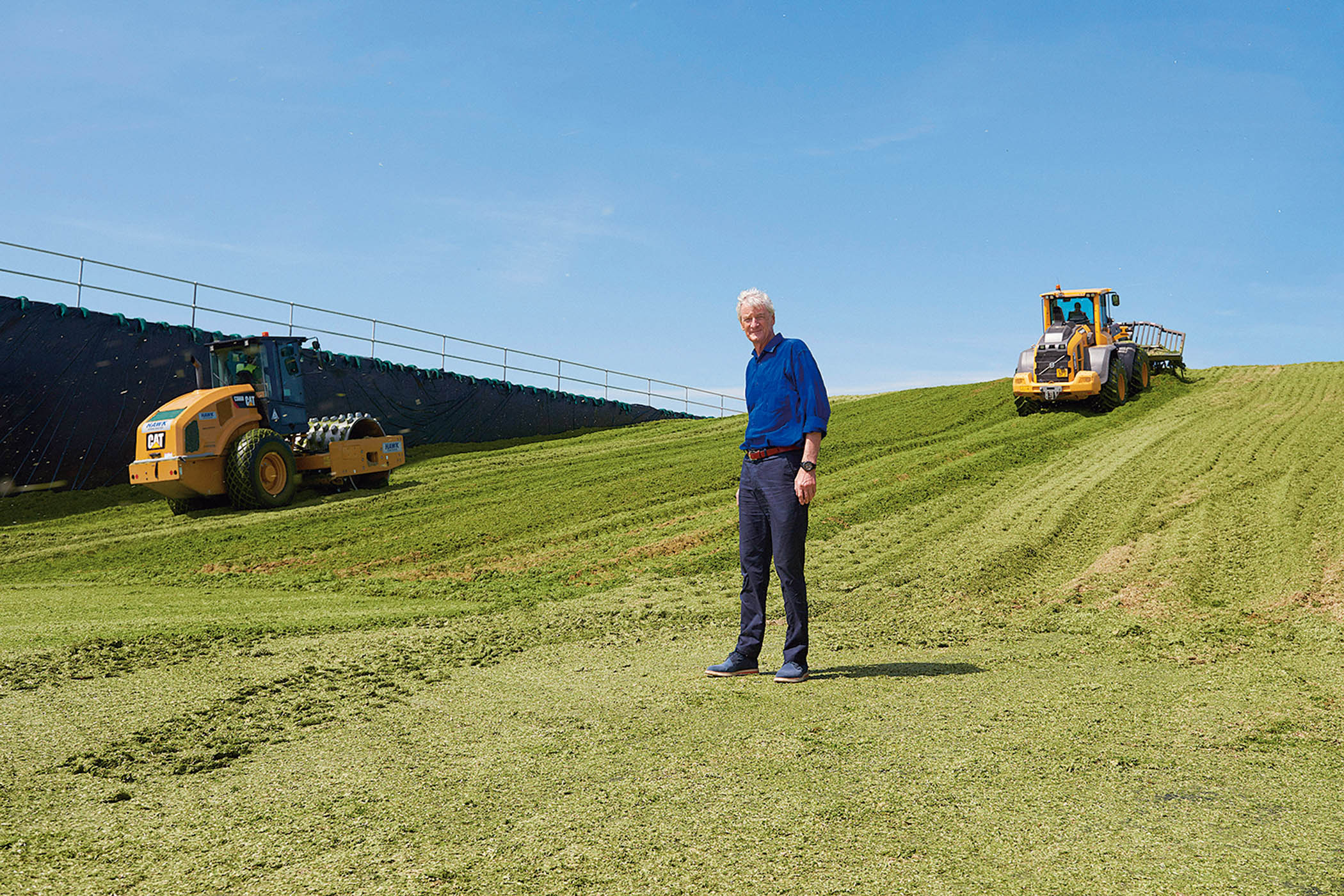


The billionaire inventor James Dyson received £2.2m of public money for his farm business under a post-Brexit green subsidy scheme that the Labour government is reforming over concerns that it unfairly rewards the country’s wealthiest landowners.
The scheme, called the sustainable farming incentive (SFI), encourages farmers to look after the soil and enhance nature. Unlike the EU’s common agricultural policy (CAP), which was paid to farmers based on the area of land they farmed, the SFI links public subsidies to actions such as planting wildflower borders and managing hedgerows.
But the scale of the sums paid out to a tiny minority underlines a conflict at the heart of the green transition in farming, between bigger landowners who benefit from economies of scale and the smaller farmers who make up almost half of all farms.
The details of the farms receiving the incentive were disclosed to The Observer under the Environmental Information Regulations, which cover environmental data held by public bodies.
“The point of moving away from CAP was to establish a just transition across the whole of the farming system,” said Sue Pritchard, chief executive of the Food, Farming and Countryside Commission. She said that instead bigger landowners, who could afford to employ staff to manage their businesses, had “filled their boots”.
The government is expected to announce details of a revised subsidy scheme ahead of the National Farmers’ Union conference, which opens on Tuesday.
The scheme Dyson benefited from paid out over £800m to more than 35,000 farms last year. The three biggest recipients were Dyson Farming; Strutt and Parker Farms in Chelmsford, Essex; and Happy Days Farming in Eastgate, Lincoln.
Strutt and Parker Farms, which received £1.5m under the SFI in 2025, is owned by Robigus, a privately held company named after the Roman god who was invoked to protect wheat fields from disease. Strutt and Parker Farms has more than 30,000 acres of land across Suffolk, Essex and Cambridgeshire, making it one of the largest agricultural holdings in the UK.
Happy Days Farming, which received £840,000, is controlled by Truelove Property and Construction, a family-run construction business building luxury homes in Lincolnshire. Its farm business has more than 5,000 acres of cropland around Lincolnshire and Nottinghamshire.
Since Dyson’s first purchase of farmland just south of Lincoln in 2013, the vacuum cleaner tycoon’s agricultural empire has grown to 35,000 acres, producing wheat, potatoes and strawberries, as well as rearing sheep and cattle.
Newsletters
Choose the newsletters you want to receive
View more
For information about how The Observer protects your data, read our Privacy Policy
According to its website, Dyson Farming uses technology and research to improve yields, “while also reducing our impact on the land and the environment”. Dyson, whose technology company is based in Singapore, has an $18.6bn (£14bn) fortune, according to Bloomberg.
Lydia Collas, head of natural environment at the Green Alliance thinktank, said that while action “at scale” was needed from an environmental perspective, it was important to create a sense of fairness by supporting small farmers. “This is an incredibly ambitious transition away from area-based payment into a system where all payments are dependent on public goods, and there will be difficulties along the way,” she said.
A spokesperson for the Department for Environment, Food and Rural Affairs (Defra) said: “We are making improvements to the sustainable farming incentive to make it simpler, fairer and more transparent so that more farmers can benefit.”
Photograph by Tina Hillier/The Telegraph