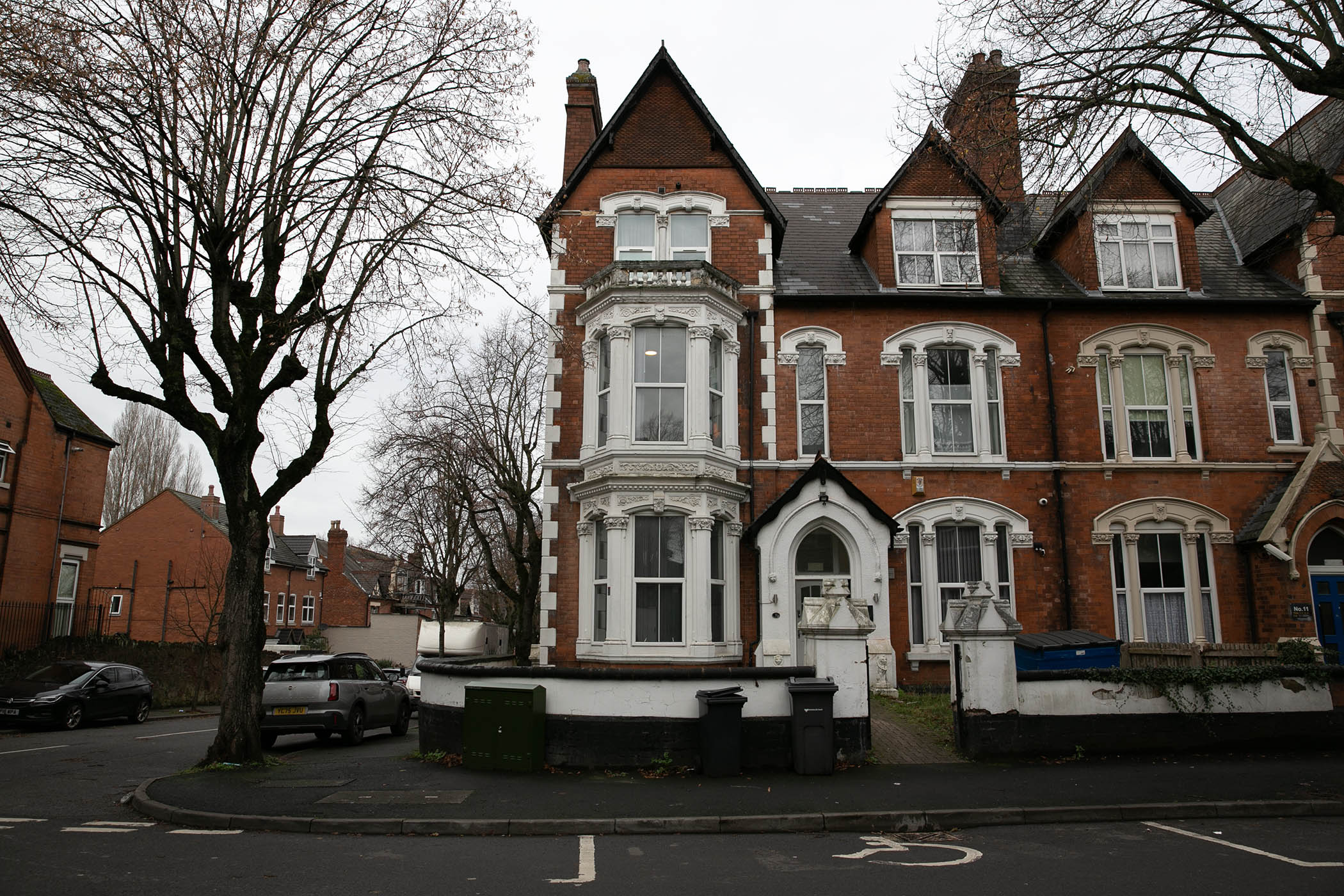




When Mohammed urgently needed somewhere affordable to live, he turned to Gumtree. The classifieds website is awash with adverts offering “supported, exempt accommodation” (SEA) in Birmingham, for which tenants can be charged as little as £15 a week, with the rest taken from benefits. He started firing off messages on WhatsApp to see if he could find a place to stay.
Property agents were only too keen to help. “All you need is to be on some form of benefits, have ID and have your service charge money, and I’ll get you into a room on the day,” one told him.
But that wasn’t strictly true. SEA is a specific type of housing for vulnerable adults, including those with substance abuse issues, who have experienced domestic abuse or are leaving prison. It is exempt from housing benefit regulations – hence the name – freeing it from the cap on rents that can be charged. The level of care, support and supervision offered to tenants is supposed to be “more than minimal”, but the practical effect of the exempt status is that the sector has little regulatory oversight.
One agent offered Mohammed a room that had been advertised as women-only accommodation, despite his self-evidently male name. Even though he told agents he had alcohol troubles, most didn’t ask what support he might need. In general, all they wanted to know was whether he was claiming benefits.
‘The whole system is near-criminal in its ability to harvest public money’
‘The whole system is near-criminal in its ability to harvest public money’
Barry Toon, housing expert
Mohammed was not, in fact, a vulnerable young man, but a reporter working on a joint investigation for The Observer and BBC Radio 4’s The Naked Week, looking at the scale of abuses within the SEA system and its epicentre: Birmingham.
The UK’s second largest city has become a magnet for SEA. Sources say people from other local authorities routinely end up there, and documents seen by The Observer suggest it now has 30,000 SEA units – usually single rooms – with total costs spiralling to around £400m, around half the entire country’s SEA spend. While Birmingham city council covers some of that, the way SEA is administered means that much of it is funded by central government.
The experience of living in SEA is often miserable. Those who work in the sector, and residents, say some buildings have vermin, heating that is remotely controlled and no lightbulbs. Multiple sources said agents did not respond to requests for help, and that identifying the ultimate owner of the properties was virtually impossible.
Safeguarding is another longstanding problem. In 2022, Jess Phillips, the MP for Birmingham Yardley, claimed two women had been murdered in SEA. A report published by the London Assembly Housing Committee said it had also found “evidence of two homicides” in SEA, as well as multiple instances of poor quality and unsafe environments.
Barry Toon, an expert who sits on Birmingham’s SEA forum, said: “The whole system is near-criminal in its ability to harvest public money so that exploitative providers can provide inadequate housing and support to vulnerable people. Even Charles Dickens would have been lost for words. There is a huge impact on public services and neighbourhoods, which adds to the burden on already stretched services.”
In Birmingham, five companies supply more than 70% of SEA. By far the largest – Reliance – is behind some of the properties represented by agents who were only interested in whether Mohammed was on benefits.
Newsletters
Choose the newsletters you want to receive
View more
For information about how The Observer protects your data, read our Privacy Policy
Four years ago, the firm was deemed non-compliant on governance and financial viability grounds. The Regulator of Social Housing (RSH) said Reliance was delegating “significant responsibilities to a large number of third-party managing agents, including the selection and sign-up of new tenants and the assessment of their support needs… and the regulator does not have assurance that sufficient controls are in place to mitigate the risk of third parties not acting in accordance with the agreements in place”.
In response to our investigation, a Reliance spokesperson told us that our “initial enquiry should not be taken as indicative of how assessments are carried out”, and that the firm carries out an eight-week review of what support is being offered before paying agents. They added: “Reliance maintains control and oversight across its placements, supported by structured review points and monitoring arrangements that ensure responsibilities are carried out appropriately.”
Windrush, Birmingham’s second-largest provider, and Ash Shahada, the city’s fourth, have both been found non-compliant recently. Neither responded to requests for comment.
A spokesman for Concept Housing, the third-largest provider in Birmingham, which was censured in 2021, said: “Since then, we have made a number of significant changes and we continue to engage with the regulator... we have a robust framework to ensure that properties are well managed, and residents receive the support they need.”
The agent promising to get Mohammed into his unit with no checks beyond being on benefits and having ID was managing a property owned by another operator, Sustain UK. A spokesman for this firm said: “The first contact for the majority of our residents is during a crisis, and we focus on providing immediate support and stabilisation before determining their individual ongoing accommodation and support needs.” Stressing that the agent was not a Sustain employee, they added: ”Sustain UK was not approached directly and would never respond to an inbound enquiry in the way outlined.”
While the RSH has some limited regulatory powers for the ultimate owners of the properties, it has no oversight of third-party agents. A law passed in 2023 sought to address this but has still not been implemented – breaching its own stipulation that the process begin within a year.
A spokesperson for Birmingham city council said: “The council is aware that some providers have been using inappropriate methods to attract tenants into this type of accommodation. Safeguarding residents and operating robust lettings policies is a fundamental responsibility for any reputable exempt accommodation provider.” The council was “eager for the commencement of the Supported Housing (Regulatory Oversight) Act”, they added.
A spokesperson for the Ministry of Housing, Communities and Local Government said: “This act has not been forgotten and we are absolutely committed to improving the quality of supported housing. These delays have been caused by political upheaval but th is legislation is a priority for the government and implementation will begin next month.”
Even so, the law will not be fully implemented until 2027. Toon said the delay meant “literally billions will have been paid out to provide poor housing, while homelessness increases”.
This is the latest in a series of investigations by The Observer and The Naked Week. To hear the investigation in full, tune in to The Naked Week, on air every Friday from 6.30pm on BBC Radio 4 and on BBC Sounds in the Friday Night Comedy podcast feed.
Photograph by Richard Saker/The Observer